
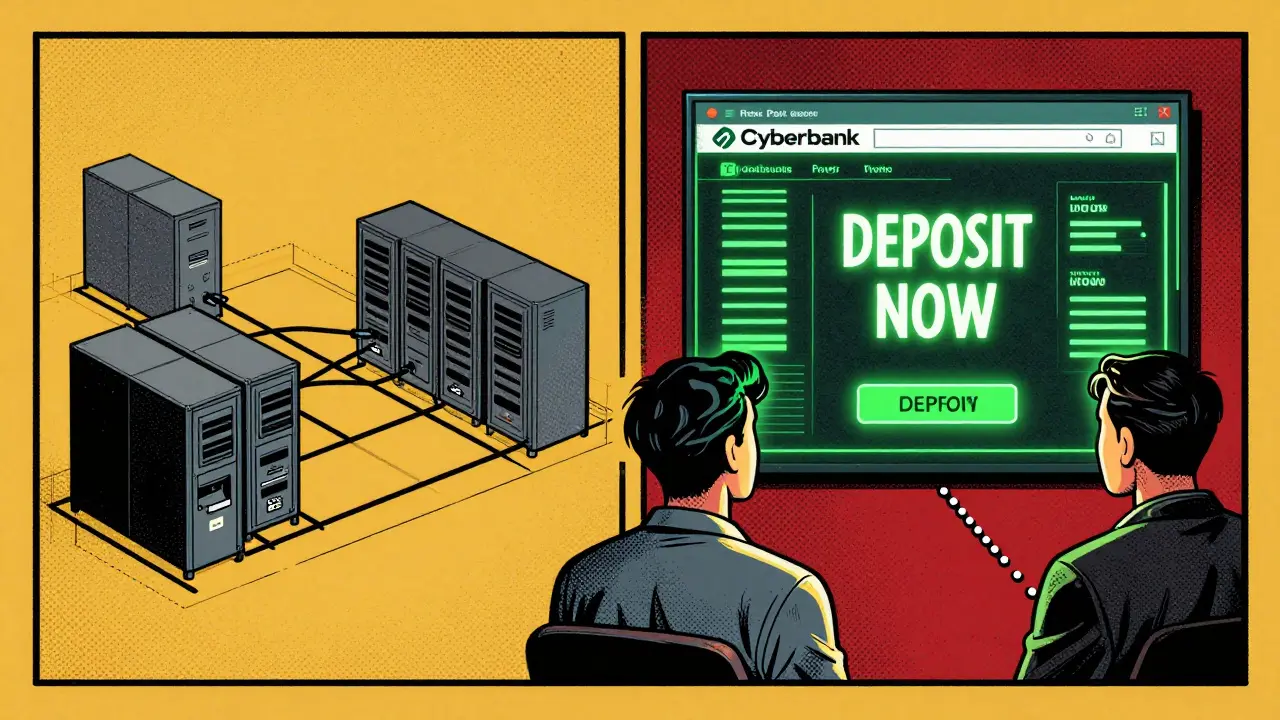
If you've come across a platform called Cyberbank Exchange and are wondering if it's a safe place to trade your digital assets, there is a critical piece of information you need to know immediately: it is not a legitimate cryptocurrency exchange. In fact, the "exchange" you are seeing is likely a fraudulent operation designed to steal your funds by piggybacking on the name of actual corporate banking software.
The Big Confusion: Software vs. Exchange
To understand why this is so dangerous, we have to look at what Cyberbank actually is. According to industry data from Slashdot, Cyberbank is not a trading platform for the public; it is enterprise-grade core banking software developed by Technisys, a company founded back in 1996. This software is built for traditional financial institutions to manage things like ATM networks, retail banking, and compliance tracking.
Technisys provides the plumbing for banks-things like risk management and securities management-but they do not operate a retail crypto exchange. Scammers know that the word "bank" creates a sense of trust and stability, so they create fake websites called "Cyberbank Exchange" to trick people into thinking they are using a professional, bank-backed trading service. It's a classic bait-and-switch.
Warning Signs and Red Flags
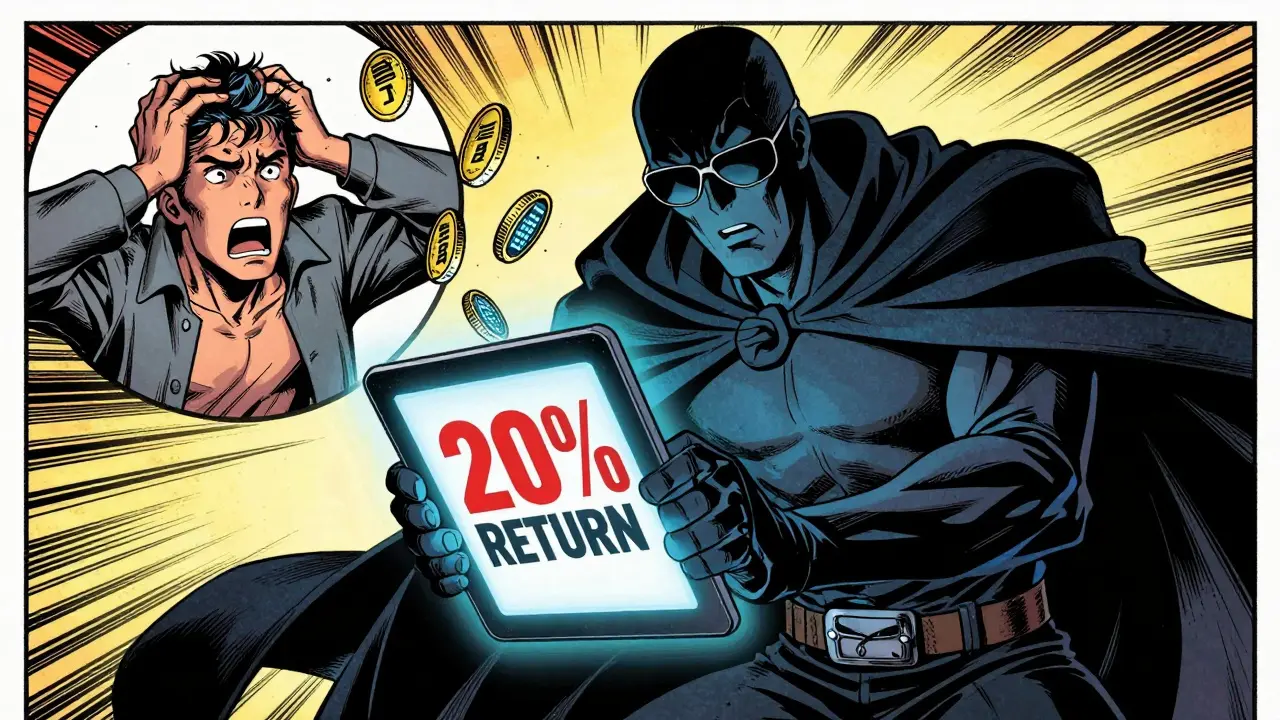
If you are interacting with a site claiming to be Cyberbank Exchange, you'll notice several patterns that legitimate platforms simply don't have. Real exchanges, like Coinbase or Kraken, have transparent fee structures and public API documentation. In contrast, the fake Cyberbank sites often feature "guaranteed returns"-such as the 20% promises reported by victims on Reddit-which is a massive red flag in the volatile world of crypto.
Another warning sign is the onboarding process. A legitimate exchange will put you through a strict KYC (Know Your Customer) process to verify your identity before you trade. Scam sites often use a fake KYC process just to steal your ID documents, or they demand an immediate deposit before you can even see the trading interface. According to reports from Cryptolegal.uk, many users have sent thousands of dollars to "verify" their accounts, only for the platform to vanish the next day.
| Feature | Legitimate Exchanges (e.g., Binance, Kraken) | "Cyberbank Exchange" Scams |
|---|---|---|
| Regulatory Status | Registered MSBs, MiCA compliance | No regulatory record (FinCEN/SEC) |
| Fee Transparency | Public maker/taker fees | Hidden or "commission-free" promises |
| Security | Cold storage, Proof-of-Reserves | No audited reserves; no 2FA |
| Customer Support | 24/7 multilingual support | Slow email-only or non-existent |
How to Spot a Fake Crypto Exchange
With the crypto market reaching a massive $14.8 billion in 2025, the number of clones and fake platforms has exploded. The SEC's Enforcement Division recently noted that nearly a third of fake exchange cases use "bank" terminology to lure in victims. To protect yourself, always check the global fraud databases. If a platform isn't listed on major tracking sites like CoinGecko or CoinMarketCap, you should assume it's a risk.
Ask yourself: Does the platform have a verified track record? For example, Kraken has an 11-year hack-free record and undergoes rigorous penetration testing. A site that appears out of nowhere promising high returns without a history of security audits is almost certainly a rug pull in the making.
Secure Alternatives for Trading
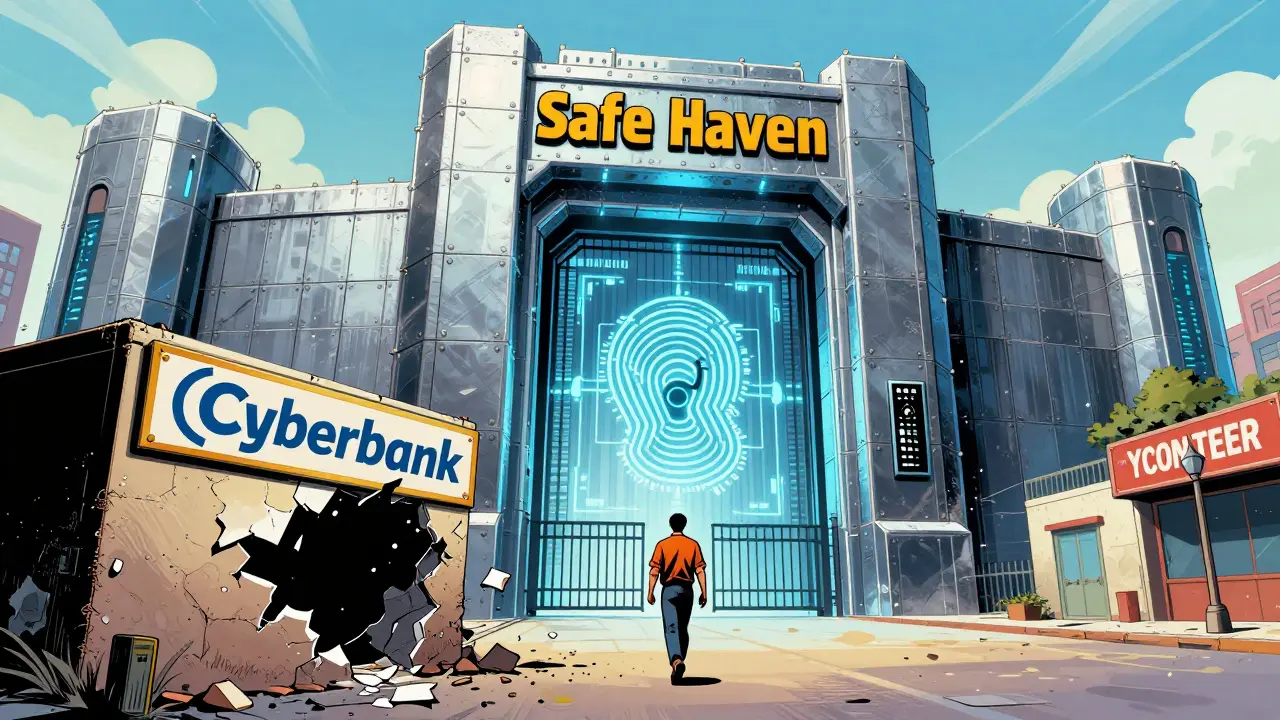
If you're looking for a place to actually trade, stick to the industry leaders who have the infrastructure to protect your money. For those in the U.S., Coinbase is a strong choice because it offers FDIC-insured cash deposits up to $250,000. If you prioritize security and a long history of stability, Kraken's biometric verification and cold storage are gold standards.
For those needing global reach, CEX.IO is highly rated for its versatile tools and support across 185+ countries. These platforms may have fees, but those fees pay for the security and regulatory compliance that keep your assets from disappearing overnight.
What to Do If You've Been Scammed
If you have already sent money or ID documents to a fake Cyberbank site, you need to act fast. First, stop all communication with the scammers. They will often try to convince you to pay a "withdrawal fee" or "tax" to get your money back-this is just a second scam to steal more from you.
- Secure your identity: If you uploaded your passport or ID, monitor your credit reports for identity theft.
- Report it: File a report with the FTC's "Project Crypto Clampdown" or your local financial crimes unit.
- Freeze accounts: If you gave them access to any bank accounts or passwords, change your credentials and notify your real bank immediately.
Is Cyberbank Exchange a real cryptocurrency platform?
No. Cyberbank is actually a piece of core banking software created by Technisys for traditional banks. Any website claiming to be "Cyberbank Exchange" for crypto trading is a fraudulent impersonation intended to steal funds.
Why do scammers use the name Cyberbank?
Scammers use the name because it sounds official and professional. By mimicking a legitimate enterprise software name, they create a false sense of security to trick investors into depositing money.
Can I recover money sent to a fake crypto exchange?
Recovering crypto is extremely difficult due to the nature of blockchain transactions. Be wary of "recovery experts" who claim they can get your money back for a fee; these are usually secondary scams.
How can I tell if a crypto exchange is legitimate?
Check if they are listed on CoinGecko or CoinMarketCap, verify their regulatory licenses (like FinCEN in the US), look for a history of security audits, and ensure they don't promise "guaranteed" returns.
What is the difference between core banking software and an exchange?
Core banking software (like the real Cyberbank) is the backend system banks use to manage accounts and ATMs. A crypto exchange is a marketplace where users buy and sell digital assets using an order book.

There are 21 Comments
Gabrielle Danis
It is imperative to remember that any platform promising guaranteed returns in the cryptocurrency market is inherently fraudulent. Legitimate trading involves significant risk, and the absence of a verifiable regulatory record with FinCEN or the SEC should be an immediate deterrent for any prospective investor.
Noel Mandotah
Imagine actually falling for a site called 'Cyberbank'. Truly a masterclass in gullibility. 🙄
Gabby Puche
Stay safe everyone! 🛡️ It's so scary how these scammers operate, but we can get through this if we look out for each other! ✨💖
Livvy Cooper
I dont get why people care about this. Just dont use weird sites and you'll be fine. Simple.
Robert Smith
Total scam. 🚩
Felix Eduardo Velasquez
The psychological exploitation here is fascinating. Scammers leverage the linguistic association between 'banking' and 'security' to bypass the critical thinking faculties of the victim. By the time the user realizes the disparity between core banking software and a retail exchange, the cognitive dissonance is often drowned out by the greed for those promised 20% returns. It's a textbook example of social engineering where the veneer of professionalism acts as a Trojan horse for theft. We must move toward a society where financial literacy is not just a luxury but a baseline requirement for interacting with digital assets. If you cannot differentiate between a backend API and a frontend trading interface, you are essentially handing your keys to a thief. The tragedy is that the infrastructure for safety exists, yet the desire for shortcut wealth blinds people to the obvious red flags. Education is the only real vaccine against these types of predatory schemes. We need to stop treating crypto like a lottery and start treating it like the complex financial instrument it is. Only then will these low-effort impersonation scams stop working. The irony is that the real Cyberbank software is actually quite impressive, but it's being used as a mask for something vile. Stay vigilant and always verify the source code or regulatory filings before committing a single satoshi.
April D Thompson
Oh the tragedy of the human condition! We crave security so much that we walk straight into the arms of the predator because they used a fancy word like 'bank'. It's a cosmic joke, really, how we trade our hard-earned peace for a digital mirage. Let us open our minds and realize that true wealth isn't found in a fraudulent exchange but in the wisdom to walk away from a lie. 🌌
Aaron Zeiler
just check the domain registration date usually these scam sites are only a few weeks old while real exchanges have years of history
Emily A
It is frankly embarrassing that individuals still struggle to differentiate between enterprise software and a retail platform. A basic search of the corporate entity would have revealed this discrepancy in seconds.
Kara Spadone
The energy of greed always leads to loss... it is just the way of the universe. :(
Arun Prabhu
Such a pedestrian scam. Truly, the lack of sophistication in these fraudulent enterprises is almost as offensive as the greed of the victims themselves.
Lex Harley
Man this is wild.. i feel bad for the ppl who got hit by the rug pull. did any of them use a hardware wallet or was it all on the exchagne? the slippage on those fake sites is laegendary lol
Lloyd I
Great heads-up! Let's all share this so our friends and family don't get tricked. We can all learn from this and get stronger together! 💪
Kristi Swartz
this is a scam and anyone who uses it is foolish no one gives 20 percent returns for free
Harvey Alford
Did you lose money here? I'm struggling too.
Wayne Gillis
Hey! I bet you have some crazy stories about this! 😲 Tell me everything!! Do you think they're operating from overseas? 🌍✈️
Arti Jain
Only fools fall for this. India has better tech anyway.
VIVEK SINGH
Oh, look at the 'experts' explaining how a scam works. How revolutionary. Truly, your insight into the obvious is breathtaking. 🙄
Jehan ZA
I appreciate the detailed comparison table provided. It serves as a very useful reference for those unfamiliar with the industry standards.
Alex Mazonowicz
Keep spreading the word!!! Every single person who reads this is one step closer to safety!!! Great job!!!
Veronica Bago
Thanks for the warning, super helpful.
Write a comment
Your email address will not be published. Required fields are marked *