
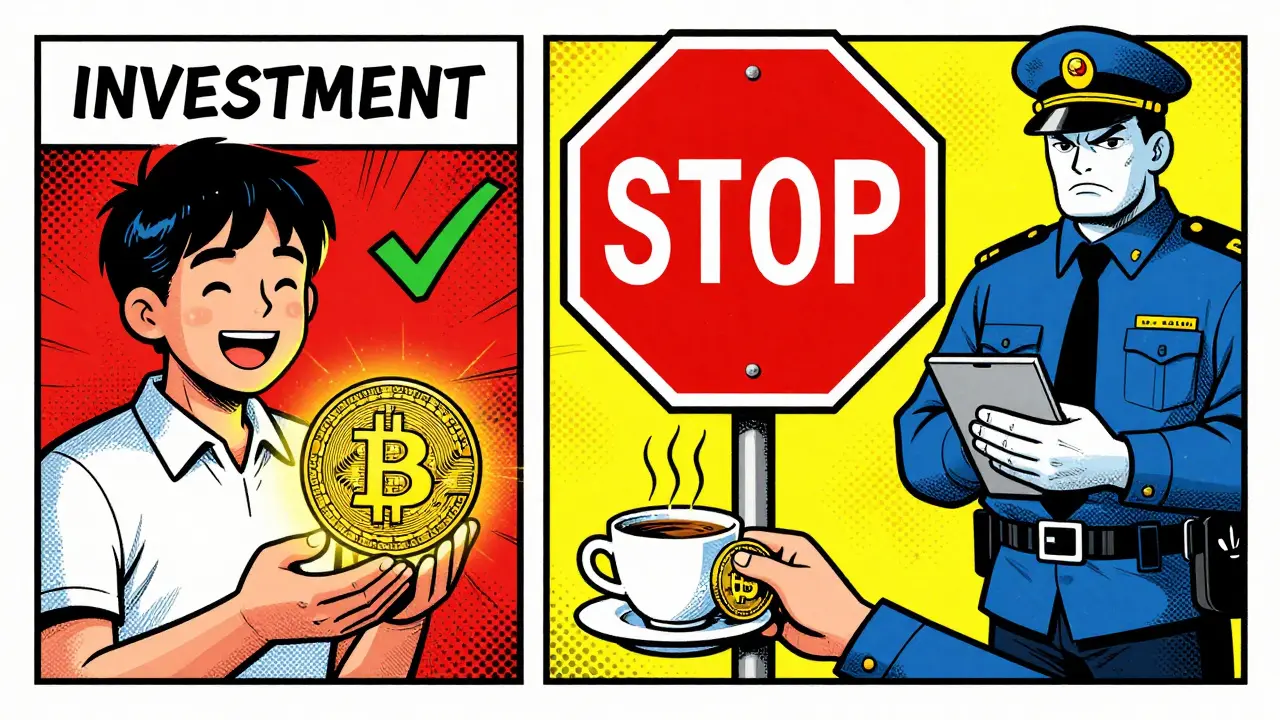
If you're looking to get into the crypto market in Indonesia, you've probably noticed that the rules aren't exactly simple. For a long time, things were a bit vague, but as of 2026, the line is drawn very clearly: you can trade cryptocurrency is a digital or virtual currency that is secured by cryptography, making it nearly impossible to counterfeit or double-spend as an investment, but the moment you try to use it to buy a coffee or pay for a service, you're breaking the law. In Indonesia, the Rupiah is the only legal tender, period.
The biggest shift happened recently when oversight moved from the commodity-focused BAPPEBTI to the OJK is the Otoritas Jasa Keuangan, or Financial Services Authority, which regulates the financial services sector in Indonesia. This means crypto is now treated more like a financial asset (similar to stocks) rather than a commodity like gold or coffee. If you want to stay on the right side of the law, you need to understand the specific platforms, taxes, and verification steps required to trade without risking a freeze on your accounts.
The Golden Rule: Investment vs. Payment
Before you open an app, you have to understand the legal distinction in Indonesia. You are legally allowed to buy Bitcoin or Ethereum to hold them in hopes that the price goes up. This is viewed as a legitimate investment activity. However, using crypto as a payment method violates Bank Indonesia's regulations and the Payment Systems Law.
Essentially, the government wants the tax revenue and the investment growth, but they aren't ready to let go of the Rupiah's dominance. If you're a business owner, avoid accepting crypto for goods; if you're a trader, stick to licensed exchanges that allow you to cash out into Rupiah through a local bank account.
How to Get Started with a Licensed Exchange
To trade legally, you shouldn't just use any global app you find online. You need a platform licensed by the OJK. As of mid-2025, there are about 22 approved platforms. Using these doesn't just keep you legal; it significantly lowers your tax bill. Major players like Indodax is Indonesia's largest cryptocurrency exchange, serving millions of registered users and Tokocrypto is a major Indonesian crypto exchange acquired by Huobi, known for its integration with global liquidity dominate the market.
The onboarding process is stricter than it used to be. You can't just sign up with an email and start trading in five minutes. Here is the exact path you'll follow:
- Platform Selection: Choose an exchange from the official list at ojk.go.id.
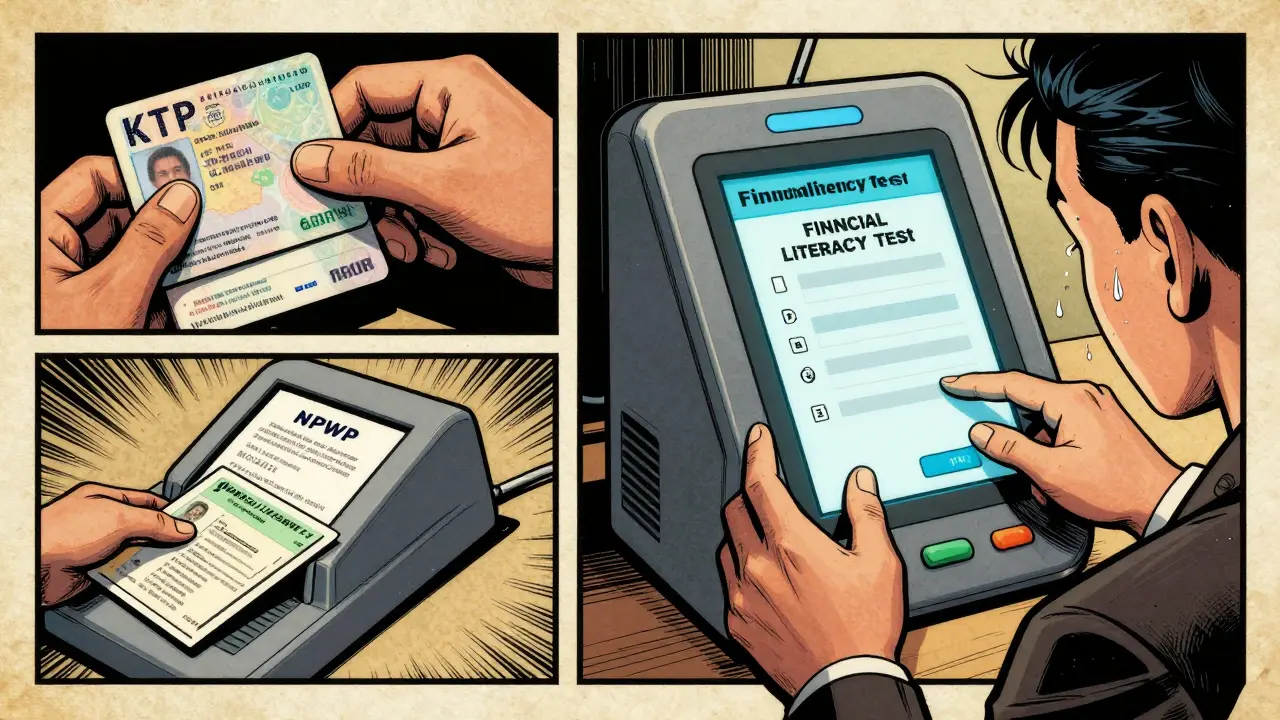
- Identity Verification: You'll need to upload your National Identity Card (KTP) and your Tax Identification Number (NPWP). No NPWP usually means you can't trade legally or will face higher tax hurdles.
- Financial Literacy Test: This is a newer requirement. You'll have to answer a 15-question quiz about crypto risks. You need a score of 80% or higher to pass. It's designed to stop people from gambling money they can't afford to lose.
- Bank Integration: Link a bank account registered with Bank Indonesia for your fiat deposits and withdrawals.
Expect this to take anywhere from 3 to 7 business days. It's a bit slower than the old days, but it's the price of having a regulated environment.
Understanding the New Crypto Tax Rules
Taxes are where most Indonesians get confused. On August 1, 2025, PMK 50/2025 is a Ministry of Finance regulation that governs Value Added Tax and Income Tax on crypto asset trading transactions changed the game. The most important thing to know is that Value Added Tax (VAT) on crypto transactions has been eliminated. Now, you only deal with a final Income Tax.
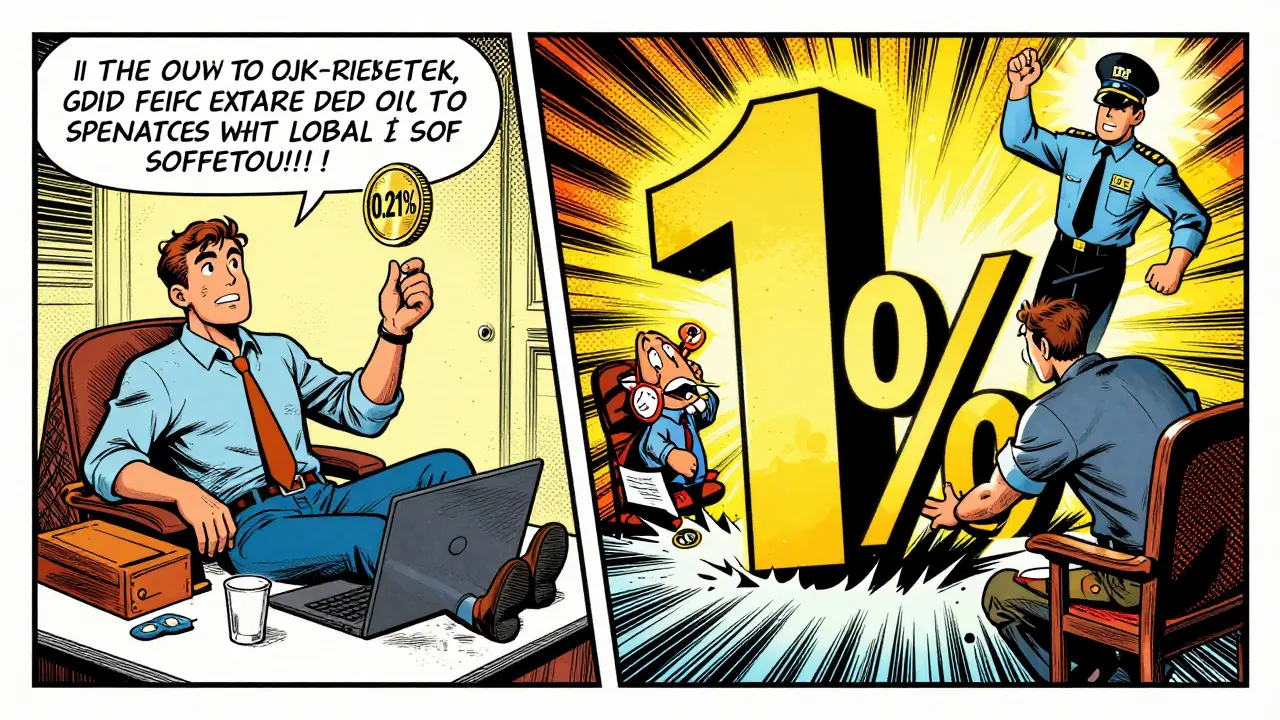
The rate you pay depends entirely on where you trade. If you use a domestic, OJK-licensed exchange, the tax is a tiny 0.21%. But if you use a foreign platform or try to self-report, that rate jumps to 1%. That's a massive difference that makes domestic exchanges far more attractive for active traders.
| Feature | OJK-Licensed Exchange | Foreign/Unlicensed Platform |
|---|---|---|
| Final Income Tax Rate | 0.21% | 1.00% |
| VAT | 0% (Eliminated) | 0% |
| Tax Collection | Automatic (withdrawn by exchange) | Self-reported by user |
| Reporting Complexity | Low (Quarterly statements provided) | High (Manual calculation) |
For most people, the automatic collection by domestic exchanges is a lifesaver. The platforms remit the tax within 72 hours and give you a quarterly statement by the 10th business day of the next quarter, which you can use for your annual tax return.
Pitfalls to Avoid and Compliance Tips
Even if you use a licensed exchange, there are a few traps that can land you in hot water with the OJK or the tax office. First, be careful with cross-border remittances. If you are moving more than IDR 100 million (roughly $6,500) out of the country, you need special OJK approval under Circular Letter No. 15/SEOJK.04/2025. Ignoring this can lead to your bank account being flagged for suspicious activity.
Second, beware of the "gray area" of Decentralized Finance (DeFi). While trading on a centralized exchange like Pintu is clear-cut, using DeFi protocols for lending or liquidity mining is still technically in a legal gray zone. The government hasn't banned it, but they haven't fully blessed it either. If you're moving huge volumes through DeFi, keep meticulous records of your entry and exit points into the licensed system.
Finally, don't ignore the 1% tax if you insist on using a global exchange. Some traders think the 1% is a suggestion, but the Directorate General of Taxes (DGT) is increasingly using data sharing to find unreported offshore gains. Paying 0.79% more is cheaper than paying a penalty for tax evasion.
The Future of the Indonesian Market
The market is maturing quickly. We're seeing a push toward more transparency, with mandatory proof-of-reserves audits for all licensed exchanges starting in January 2026. This is great news for users because it means the exchange can't just lie about how much Bitcoin they actually hold in their vaults.
There is also talk about stablecoins. The OJK and Bank Indonesia are discussing whether certain stablecoins could be allowed for cross-border remittances. While we aren't there yet, it suggests that the government is looking for ways to make digital assets useful for the economy without compromising the Rupiah's role in the local market.
Is it legal to own Bitcoin in Indonesia?
Yes, it is completely legal to own and trade Bitcoin and other cryptocurrencies as investment assets. The only thing that is illegal is using them as a payment method for goods or services within Indonesia.
Do I need an NPWP to trade crypto legally?
Yes, OJK Regulation No. 27/2024 requires licensed exchanges to collect your Tax Identification Number (NPWP) during the KYC process. Without it, you will likely be unable to open an account on a legal domestic platform.
What happens if I use a foreign exchange instead of a local one?
It is not illegal to use a foreign exchange, but you are responsible for self-reporting your taxes. Under PMK 50/2025, the income tax rate for foreign platform transactions is 1%, compared to 0.21% for domestic licensed platforms.
How long does the account verification process take?
Due to stricter OJK requirements, including the mandatory financial literacy test and identity verification, it typically takes between 3 to 7 business days to get fully verified.
Can I use crypto to send money abroad legally?
Generally yes, but if the amount exceeds IDR 100 million, you must seek approval from the OJK under Circular Letter No. 15/SEOJK.04/2025 to avoid being flagged for money laundering or suspicious transactions.
Next Steps for New Traders
If you're just starting out, your first move should be to visit the OJK Crypto Asset Trading Portal (portal.lkd.ojk.go.id). This ensures you don't fall for a fake exchange that promises 10% daily returns but has no legal standing. Get your KTP and NPWP ready, brush up on the basics of volatility so you can pass the literacy test, and stick to the 0.21% tax path by using a domestic exchange.
If you already have funds on a global exchange, consider migrating them to a licensed Indonesian platform before the next tax quarter. This will simplify your reporting and save you a significant amount in taxes over the long run.



There are 25 Comments
Robert Smith
Huge difference in those tax rates 📈
Emily A
The distinction between investment and payment is quite elementary, yet many struggle with it. One must adhere to the OJK guidelines to avoid unnecessary legal complications. Precision in choosing a platform is not optional if you wish to maintain a clean financial record.
Alex Mazonowicz
This is such a helpful breakdown!! I love how clear the tax comparison is... definitely makes it easier for newcomers to jump in!!
Felix Eduardo Velasquez
The transition from BAPPEBTI to OJK reflects a broader global trend where digital assets are being integrated into traditional financial frameworks. By classifying crypto as a financial asset rather than a commodity, Indonesia is effectively streamlining the regulatory process and reducing the ambiguity that previously plagued the market. This structural shift allows for better consumer protection and more systemic stability, though it inevitably introduces more friction via KYC and literacy tests. The move toward mandatory proof-of-reserves is particularly critical as it addresses the trust deficit caused by previous exchange collapses globally. It's a pragmatic approach to balancing innovation with fiscal sovereignty. From a philosophical standpoint, this represents the inevitable collision between decentralized ideals and the centralized need for state control. The tax disparity between domestic and foreign exchanges is a clever nudge by the state to ensure visibility into the flow of capital. Ultimately, the success of this model depends on the OJK's ability to keep pace with the rapid evolution of DeFi without stifling the very growth they seek to tax.
Gabby Puche
Passing that 15-question quiz sounds like a bit of a hurdle but it's actually a great way to protect people! ✨ Good luck to everyone starting their journey! 🚀
Bevon Findley
Only 0.21% tax? Quite a bargain :)
Kristi Swartz
people who use foreign exchanges are just asking for trouble and it is wrong to evade taxes like that
Arti Jain
Typical. Always adding more bureaucracy.
VIVEK SINGH
Oh sure, a 15-question quiz is definitely going to stop people from gambling their life savings. Absolute genius. I'm sure the 'financial literacy' is just a formality before the government takes its cut.
Lloyd I
I think the literacy test is a really inclusive way to make sure everyone is on the same page before they start investing!
Harvey Alford
I tried this and got frozen. Worst day ever.
Michael Repak
Glad to see the VAT was eliminated!! That's a huge win for the community... keeps the entry barrier low!!
Mitali Rajvanshi
The domestic exchange route seems much more sustainable for long-term traders.
Ralph Espinosa
Having the quarterly statements provided automatically is such a time-saver!! Definitely beats manual spreadsheets!!
Lex Harley
Wait so the slippage on those low-tax local exchnges might offset the 0.79% diff compared to global orderbooks? Just wonderin bout the liquidity depth in OJK labs.
Tony Phan
Man I just want the gains! Who cares about the NPWP if the pump is happening now!
Livvy Cooper
Why bother with a quiz? It's just a way for the state to feel important while they tax your money anyway.
Rain Richardsson
Sounds fair.
Iestyn Lloyd
It's quite similar to how the UK handles certain digital assets, although the tax rates here are remarkably competitive.
April D Thompson
My soul just screams at the thought of a 15-question quiz to enter the wild world of crypto! It's such a vibe kill but I guess the government wants to play it safe!
Kara Spadone
True enlightenment comes when you realize the state is just a giant hedge fund with a flag 🙄
Arun Prabhu
Pedantic rules for a primitive market.
Jehan ZA
I find the requirement for OJK approval on remittances exceeding 100 million IDR to be a prudent measure to ensure financial integrity.
Lynne Teperman
super colorful way to handle money’s dance with the law
Veronica Bago
I'm just glad the rules are finally clear, it makes it way less scary to start.
Write a comment
Your email address will not be published. Required fields are marked *