

Crypto Payment Compliance Checker
Check Your Crypto Usage Compliance
Jordan's new law allows crypto as an investment asset but prohibits using it as a payment method. This tool helps you determine if your intended use complies with regulations.
Just a year ago, if you tried to buy Bitcoin through a Jordanian bank, you’d hit a wall. The Central Bank of Jordan had banned cryptocurrency transactions since 2014. No deposits. No withdrawals. No exchanges. Even peer-to-peer trades happened in the shadows, risky and unregulated. But on September 14, 2025, everything changed.
The Ban Is Officially Over
Law No. 14 of 2025, the Virtual Assets Transactions Regulation Law, didn’t just tweak the rules-it flipped them. Jordan went from being one of the strictest countries in the Middle East on crypto to one of the most structured. The old warnings? Gone. The banking freeze? Lifted. Now, licensed banks can legally exchange cryptocurrencies for Jordanian dinars and hold them in custody for clients.This isn’t a free-for-all. The Central Bank of Jordan (CBJ) still holds tight control. Banks can’t send crypto directly between users. They can’t create crypto wallets for customers without approval. And they definitely can’t let crypto transactions bypass the Jordanian financial system. The goal? Let innovation happen, but keep it tied to the dinar, under supervision, and away from capital flight risks.
Who Can Now Operate Legally?
Only licensed Virtual Asset Service Providers (VASPs) are allowed to run crypto exchanges, custody services, or trading platforms. These aren’t random startups. They need to meet the same standards as banks: full Know Your Customer (KYC) checks, transaction monitoring, suspicious activity reports, and annual audits by regulators. The Anti-Money Laundering Unit now has direct oversight, and the Jordan Securities Commission watches for investment fraud.Before you can operate, you need to submit detailed business plans, tech infrastructure specs, and proof of financial stability. The CBJ doesn’t just approve applications-they test them. That’s thanks to the FinTech Regulatory Sandbox, running since 2018, where companies tried out blockchain tools under watchful eyes. Those real-world tests shaped the final law.
What Banks Can and Can’t Do
Here’s the real shift: banks are now part of the system, but with limits.
- Can do: Exchange crypto for JOD, hold crypto in secure custody for clients, offer advisory services on digital assets (with compliance oversight).
- Cannot do: Transfer crypto between accounts like a normal bank transfer, allow crypto payments for goods/services, open accounts for unlicensed exchanges, or let crypto become a parallel currency.
This isn’t accidental. It’s a deliberate design. Jordan wants crypto to be an asset class-not a replacement for cash. If you want to trade Ethereum, you can. But you can’t use it to pay your electricity bill. That keeps the dinar strong and prevents shadow banking.

What Happens If You Break the Rules?
Running an unlicensed crypto exchange? You could face up to a year in jail. Fines range from 50,000 to 100,000 JOD-roughly $70,000 to $140,000 USD. Equipment gets seized. Premises get shut down. The law doesn’t mess around.
Even individuals aren’t completely safe. If you’re running a Telegram group that matches buyers and sellers for crypto, you could be charged as an unlicensed VASP. The law doesn’t clearly say whether casual peer-to-peer trades between friends are illegal-but if you’re doing it regularly, advertising it, or taking a cut, you’re in danger. Most people who traded informally before 2025 are now either licensed or staying quiet.
Why This Matters Beyond Jordan
Jordan didn’t act alone. It cleaned up its financial reputation first. In October 2023, it was removed from the FATF grey list after fixing 32 out of 40 anti-money laundering benchmarks. That made international banks more willing to work with Jordanian institutions. Suddenly, global crypto firms saw Jordan as a safe place to build.
Compare that to neighbors. Egypt, Kuwait, and Iraq still ban crypto entirely. The UAE has a booming crypto scene-but it’s a federal system with multiple free zones and complex rules. Jordan’s approach is simpler: one national law, clear oversight, and no gray areas. That’s attracting fintech startups looking for stability, not chaos.

What’s Still Missing?
The law doesn’t cover everything. Digital securities, tokenized stocks, and central bank digital currencies (CBDCs) are left out. They’ll get their own rules later. That’s smart. Trying to regulate everything at once would’ve caused chaos.
Also, there’s no official guidance yet on how to handle lost private keys, what happens if a VASP goes bankrupt, or how taxes on crypto gains will be calculated. These gaps will be filled over the next 12-18 months. For now, users are advised to treat crypto like stocks: keep records, don’t trust unlicensed platforms, and assume the government will tax you eventually.
What This Means for You
If you’re a Jordanian citizen: You can now legally buy and hold Bitcoin, Ethereum, or other major cryptos through licensed banks or VASPs. But don’t expect to use it like PayPal. It’s an investment, not a payment tool.
If you’re a business owner: You can apply for a VASP license, but it’s not cheap or easy. You’ll need legal counsel, tech security experts, and compliance staff. But the payoff? Being one of the first regulated players in a region that’s still mostly closed.
If you’re an investor: Jordan’s move signals a shift in the Middle East. It’s no longer just about Dubai or Saudi Arabia. Jordan is positioning itself as a compliant, stable gateway for digital assets in a region that’s been hostile to crypto for a decade.
What Comes Next?
Expect to see more banks rolling out crypto custody services in early 2026. The first licensed VASPs are already in testing. The CBJ is working with regional banks to create a shared compliance database. And by mid-2026, we’ll likely see the first crypto-linked savings accounts-where you earn interest in stablecoins, but the underlying value is pegged to the dinar.
Jordan’s transformation didn’t happen overnight. It took a decade of warnings, underground trading, international pressure, and finally, political will. The result? A law that balances innovation with control. It’s not perfect. But for the first time, crypto in Jordan isn’t illegal-it’s regulated.
Can I still buy Bitcoin in Jordan after the ban was lifted?
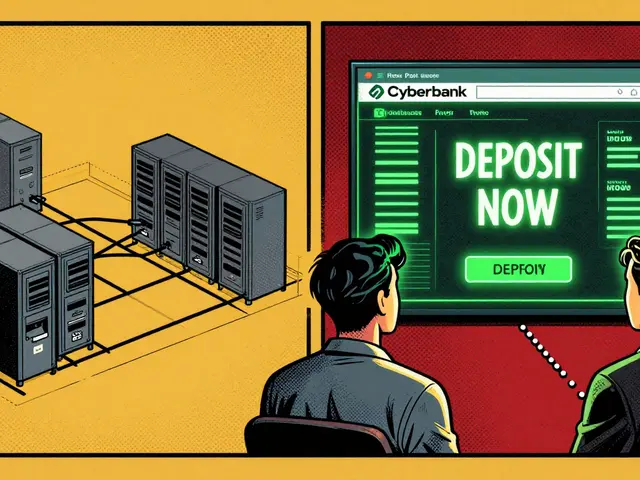
Yes, but only through licensed Virtual Asset Service Providers (VASPs) or banks that have received approval from the Central Bank of Jordan. You can’t use unlicensed exchanges, Telegram groups, or peer-to-peer apps without risking legal penalties. Always check if the platform is officially registered with the CBJ before depositing money.
Are Jordanian banks allowed to process crypto transfers?
No. Banks can exchange crypto for Jordanian dinars and hold crypto in custody for clients, but they cannot transfer crypto between users or allow crypto payments. This restriction is intentional-to prevent crypto from becoming a parallel currency and to keep financial flows tied to the dinar and regulated banking channels.
What happens if I run a crypto exchange without a license in Jordan?
You face serious penalties: at least one year in prison, fines between 50,000 and 100,000 Jordanian Dinars (roughly $70,000-$140,000 USD), closure of your business premises, and confiscation of equipment. The law treats unlicensed crypto operations as criminal activity, not just a regulatory violation.
Is crypto mining legal in Jordan?
The law doesn’t specifically mention mining, but it’s not explicitly banned either. However, mining requires significant electricity and infrastructure. If you’re operating at scale, you may need permits from energy regulators. Also, if you sell mined crypto through unlicensed channels, you could be violating the VASP licensing rules. Proceed with caution and consult legal experts.
Can I use crypto to pay bills or buy goods in Jordan?
No. The law prohibits using cryptocurrency as a direct payment method for goods, services, or utilities. Even if a store accepts Bitcoin, it’s technically against the rules. The government wants crypto treated as an investment asset-not a currency. Any business accepting crypto for payments risks penalties under anti-money laundering regulations.
How does Jordan’s crypto law compare to the UAE’s?
The UAE has a more open, multi-layered system with free zones, federal oversight, and heavy crypto adoption-over 500,000 daily traders. Jordan’s approach is tighter: one national law, centralized control by the Central Bank, and stricter limits on how crypto can be used. Jordan prioritizes stability and compliance over speed and scale. It’s not as flashy as Dubai, but it’s less risky for investors seeking regulated environments.
Will Jordan launch its own digital currency?
Not yet. The 2025 law explicitly excludes central bank digital currencies (CBDCs) from its scope. The Central Bank of Jordan is studying CBDCs separately, but no timeline has been announced. For now, the focus is on regulating private cryptocurrencies, not replacing the dinar with a digital version.



There are 18 Comments
Nicholas Ethan
Regulatory clarity is a prerequisite for institutional adoption. Jordan’s structured framework-KYC, AML compliance, custody licensing-aligns with FATF Recommendation 16. This is not liberalization. It’s containment.
Caroline Fletcher
So they let you buy crypto but not spend it? Classic. Next they’ll tell you you can own a Ferrari but only park it in your garage.
Kathleen Sudborough
This is actually kind of beautiful. They didn’t just open the door-they built a gated community with security cameras, a guardhouse, and a rulebook. People who wanted freedom got control instead. But maybe that’s what safety looks like now.
Claire Zapanta
Let me guess-the CIA helped draft this. The US has been pressuring Jordan since 2020 to ‘stabilize’ its financial system. Now banks can custody crypto? Funny how that lines up with the Fed’s CBDC push. They’re not letting crypto in-they’re letting it in so they can watch it better.
Jessica Petry
Oh please. You think this is innovation? It’s a cage lined with compliance paperwork. Real crypto is permissionless. This isn’t adoption-it’s assimilation. They turned Bitcoin into a mutual fund with extra steps.
Taylor Fallon
It’s so nice to see a country actually think this through. Not everyone wants to be a wild west. Some of us just want to know our money won’t vanish because some guy on Telegram ran off with it. Thank you, Jordan. You’re doing it right.
PRECIOUS EGWABOR
Let me be the first to say it: this law was written by lawyers who’ve never held a private key. They think ‘custody’ means ‘safe’-but if your keys are held by a bank, you don’t own crypto. You own a receipt for crypto. And receipts can be revoked.
Kathryn Flanagan
Can I just say how proud I am of Jordan? I mean, think about it-they had underground crypto traders for over a decade, and instead of cracking down harder, they sat down, listened, and built something that actually works. No chaos. No panic. Just slow, careful, thoughtful change. That’s leadership. And it’s rare. So rare. So, so rare.
Toni Marucco
What’s fascinating here isn’t the regulation-it’s the restraint. Most nations either ban crypto or let it run wild. Jordan chose a third path: controlled integration. They didn’t surrender sovereignty. They didn’t embrace libertarian fantasy. They engineered a system where crypto serves the state, not the other way around. That’s a masterclass in governance.
Alex Warren
Miners are in a gray zone. That’s intentional. The law avoids addressing mining because it’s hard to regulate without knowing power usage patterns. If you’re mining at home, you’re probably fine. If you’re running a warehouse full of ASICs, you’re already on the radar.
Heath OBrien
One year in jail? For trading crypto? This isn’t regulation. This is witch hunt season. They’re terrified of people owning anything outside their control. Next they’ll ban cash. Then books. Then thoughts.
Vidhi Kotak
As someone from India where crypto is also a mess, I’m impressed. Jordan didn’t panic. They studied. They tested in the sandbox. They listened to real users. That’s how you do it. No hype. No fear. Just process.
amar zeid
Interesting that they excluded CBDCs. That tells me they’re not trying to replace the dinar-they’re trying to contain crypto. Smart. If you let a digital currency compete with your national one, you lose control. This is about preserving monetary sovereignty, not embracing decentralization.
JoAnne Geigner
I just want to say-thank you to everyone who worked on this. The regulators, the fintech teams, the lawyers who stayed up late figuring out custody rules. This isn’t perfect, but it’s brave. And it’s real. And for people who just want to buy Bitcoin without hiding it in a USB drive, this matters. You didn’t just change a law-you changed lives.
Kim Throne
What happens if a VASP goes bankrupt? The law doesn’t say. That’s a critical gap. Custody assets must be segregated, but without clear insolvency protocols, users could lose everything. This needs an amendment by Q3 2026.
Kathy Wood
So now you can own crypto… but you can’t use it? That’s like being allowed to own a Ferrari… but only if you never drive it. This isn’t freedom. It’s psychological torture. And the government knows it. They’re not trying to help you-they’re trying to make you feel safe while they quietly take your freedom.
Anselmo Buffet
Good job, Jordan. Not flashy, not wild, but solid. Feels like they actually listened to the people who were already doing it underground. That’s rare.
Taylor Farano
Let me get this straight: you can legally buy Bitcoin through your bank, but if you try to pay for coffee with it, you go to jail? This isn’t regulation. It’s satire written by a bureaucrat who thinks crypto is a virus.
Write a comment
Your email address will not be published. Required fields are marked *