Mining Pool Fees Explained: What You Pay and Why It Matters
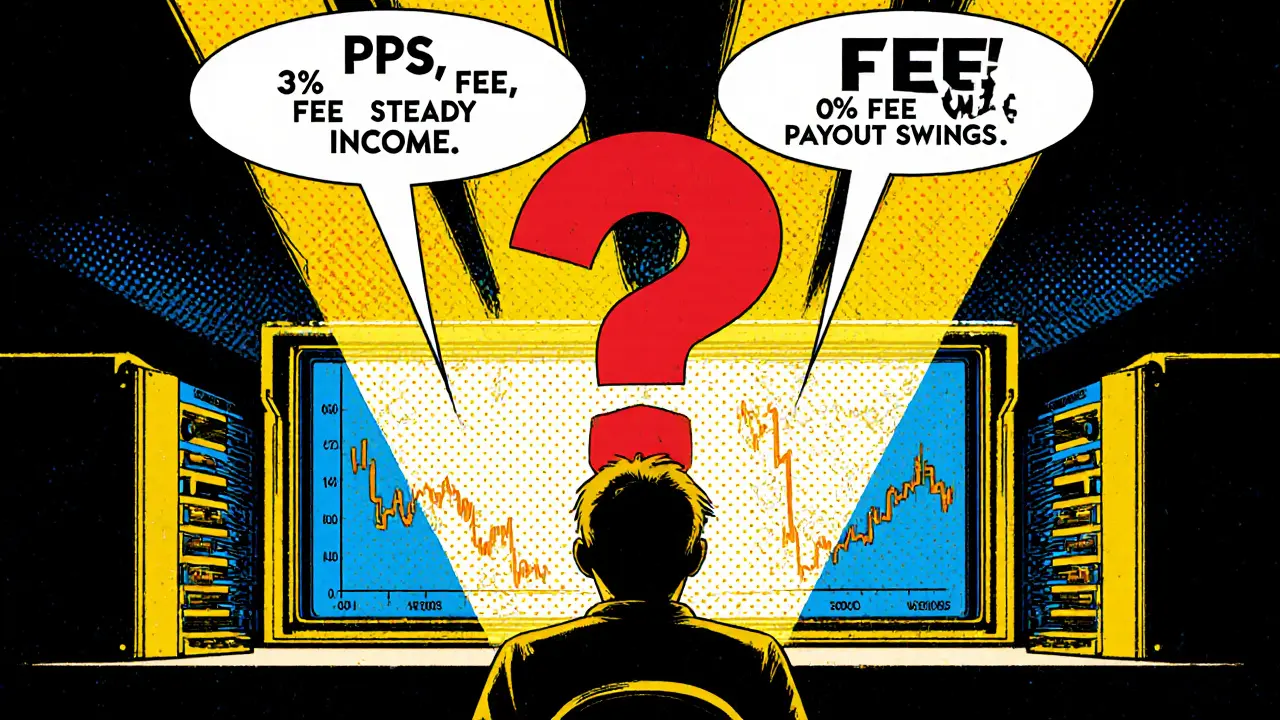
When you join a mining pool, a group of miners who combine their computational power to increase the chance of finding a block and sharing the reward. Also known as mining collective, it lets smaller miners earn steady payouts instead of waiting months for a solo win. But every pool takes a fee — usually between 0.5% and 3% — for running the infrastructure, paying staff, and covering server costs. These fees aren’t hidden, but they’re often misunderstood. If you’re mining Bitcoin, Ethereum Classic, or any other proof-of-work coin, your net profit depends heavily on what the pool charges.
It’s not just about the percentage. Some pools charge extra for payout processing, others have minimum thresholds before you get paid, and a few even take a cut from your shares even if the pool doesn’t find a block. That’s why comparing mining difficulty, how hard it is to find a new block, adjusted every few days to keep block times consistent and hash rate, the total computing power being used to mine a blockchain alone isn’t enough. You need to see the full picture: how often payouts happen, how transparent the pool is about fees, and whether the fee structure changes based on your hashrate. A pool charging 1% but paying daily is often better than one charging 0.5% but only paying once a week with a $50 minimum.
High mining difficulty means more competition, so pooling your resources makes sense. But if your fees eat up 3% of every payout and your hardware isn’t efficient, you’re just giving away profit you could’ve kept. Some pools offer zero fees — but they make up for it with slower payouts or less reliable infrastructure. Others charge more but provide better support, real-time dashboards, and instant notifications when you hit a payout. The best choice depends on your setup, your patience, and your goals. Are you mining as a side hustle or as a serious operation? That changes what’s worth paying for.
You’ll find posts here that break down real mining pool fee structures, compare top pools by actual earnings after fees, and show how mining difficulty shifts impact your bottom line. Some cover how to calculate your true profit after fees and electricity. Others warn about pools that promise low fees but hide costs in payout delays or low share accuracy. You’ll also see how hash rate trends affect pool performance — and why some pools thrive during difficulty spikes while others collapse. This isn’t theory. It’s what miners are seeing right now, in real time, with real numbers.