
Mining Pool Earnings Calculator
Estimate Your Net Earnings
Your Estimated Earnings
Based on current pool dataEstimated BTC Earned
0.00000000
Pool Fees
0.00000000
Net BTC After Fees
0.00000000
Understanding Your Results
Your payment model selection has significant implications:
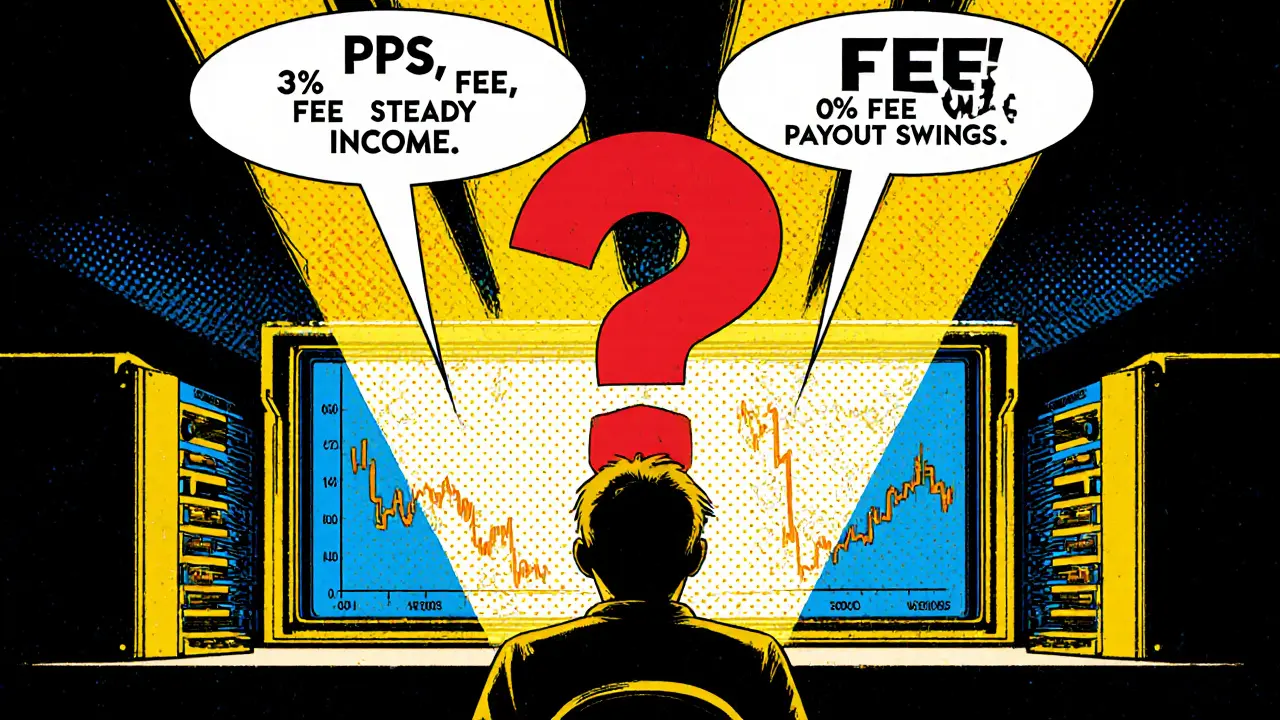
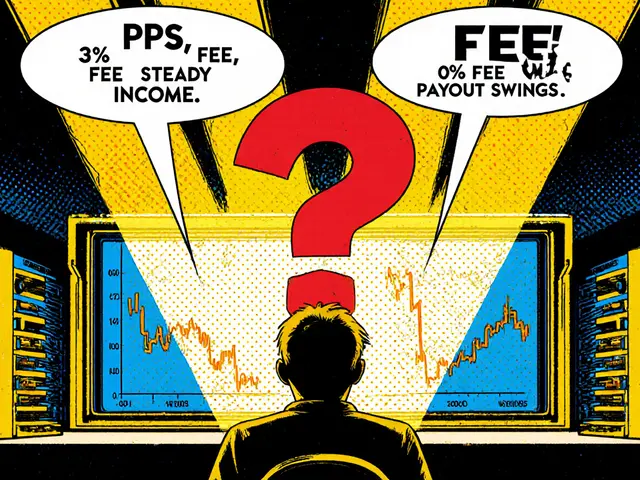
- PPS: Stable daily payouts, but highest fees (3-4%). Best for small miners who want predictable income.
- PPLNS: Lowest fees (0%), but payout depends on pool success. Good for large miners who can handle volatility.
- FPPS: Best balance (1.5-2.5% fees) with transaction fees included. Most common choice.
| Pool | Fee | Best For | Withdrawal |
|---|---|---|---|
| Foundry USA | 2.5% | Small & medium miners | 0.001 BTC daily |
| Antpool | 0% (PPLNS) 4% (PPS+) |
Large miners | 0.001 BTC daily |
| BTC.com | 1.5% | Beginners | 0.001 BTC daily |
| Poolin | 2% (base) | Dynamic fee users | 0.001 BTC daily |
| F2Pool | 2.5% | Multi-currency miners | 0.005 BTC daily |
Note: All estimates assume $60,000 BTC price and 100% pool uptime. Actual earnings may vary based on Bitcoin price volatility and pool performance.
Why mining pool fees aren’t just a number
You’re mining Bitcoin. Your ASICs are humming. Your electricity bill is steady. But your payouts? They’re lower than you expected. Why? It’s not your hardware. It’s not the price of Bitcoin. It’s the mining pool fee.
Most new miners think a 1% fee is better than a 2.5% fee. Simple math. But that’s where they get stuck. The fee is just one piece. What matters more is how that fee is applied, what you’re actually getting in return, and whether the pool’s payout system matches your mining style.
How mining pools work (and why you need one)
Mining Bitcoin solo today is like trying to win the lottery with one ticket. The network difficulty is too high. Your single miner has almost zero chance of finding a block. That’s where mining pools come in.
A mining pool combines the computing power (hashrate) of hundreds or thousands of miners. When the group finds a block, the reward gets split based on how much work each miner contributed. But here’s the catch: the pool takes a cut. That’s the fee.
Without a pool, you might wait months-or years-to earn a single Bitcoin. With a pool, you get small, regular payouts. That’s the trade-off: less reward per payout, but way more frequent.
Fee types: PPS, PPLNS, FPPS - what do they mean?
Not all fees are created equal. The fee percentage only tells part of the story. The real difference is in the payment model behind it.
- PPS (Pay Per Share): You get paid for every valid share you submit, regardless of whether the pool finds a block. The pool absorbs all the risk. That’s why PPS fees are usually higher-often 3% to 4%. You pay for stability.
- PPLNS (Pay Per Last N Shares): You only get paid when the pool finds a block, and your reward is based on your shares submitted in the last N shares before the block. No upfront payment. Lower fees-sometimes 0%-but payouts are unpredictable. Great if you’re confident and patient.
- FPPS (Full Pay Per Share): This is the middle ground. You get paid per share, and transaction fees from the block are included in your payout. Most major pools use this now. Fees are typically 1.5% to 2.5%. It’s the sweet spot for most miners.
Antpool offers both PPLNS (0% fee) and PPS+ (4% fee). That’s not a mistake. It’s a choice. Pick PPLNS if you’re okay with wild swings in payouts. Pick PPS+ if you want to treat mining like a salary.
Top 5 mining pools in 2025 - fee breakdown
Here’s what the top players are charging right now, based on Q2 2025 data:
| Pool | Standard Fee | Payment Model | Minimum Withdrawal | Withdrawal Frequency | Special Features |
|---|---|---|---|---|---|
| Foundry USA | 2.5% | FPPS | 0.001 BTC | Daily | Transparent fee breakdown, enterprise support, 24/7 monitoring |
| Antpool | 0% (PPLNS) 4% (PPS+) |
Both | 0.001 BTC | Daily | Most flexible, largest hashrate after Foundry |
| BTC.com | 1.5% | FPPS | 0.001 BTC | Daily | Real-time fee calculator, SEC-compliant disclosures |
| Poolin | 2% (base) 2.5% (premium) |
FPPS | 0.001 BTC | Daily | Dynamic fees (dropped to 1.5% during high-fee periods) |
| F2Pool | 2.5% | FPPS | 0.005 BTC | Daily | Supports 40+ altcoins, multi-currency payouts |
Foundry USA leads in hashrate and trust. BTC.com has the lowest standard fee and the clearest fee reporting. Poolin’s dynamic fee system is a game-changer-if you’re mining during a spike in transaction fees, you pay less. F2Pool’s higher withdrawal threshold is a pain if you’re a small miner, but if you’re mining Litecoin or Ethereum too, it’s worth it.
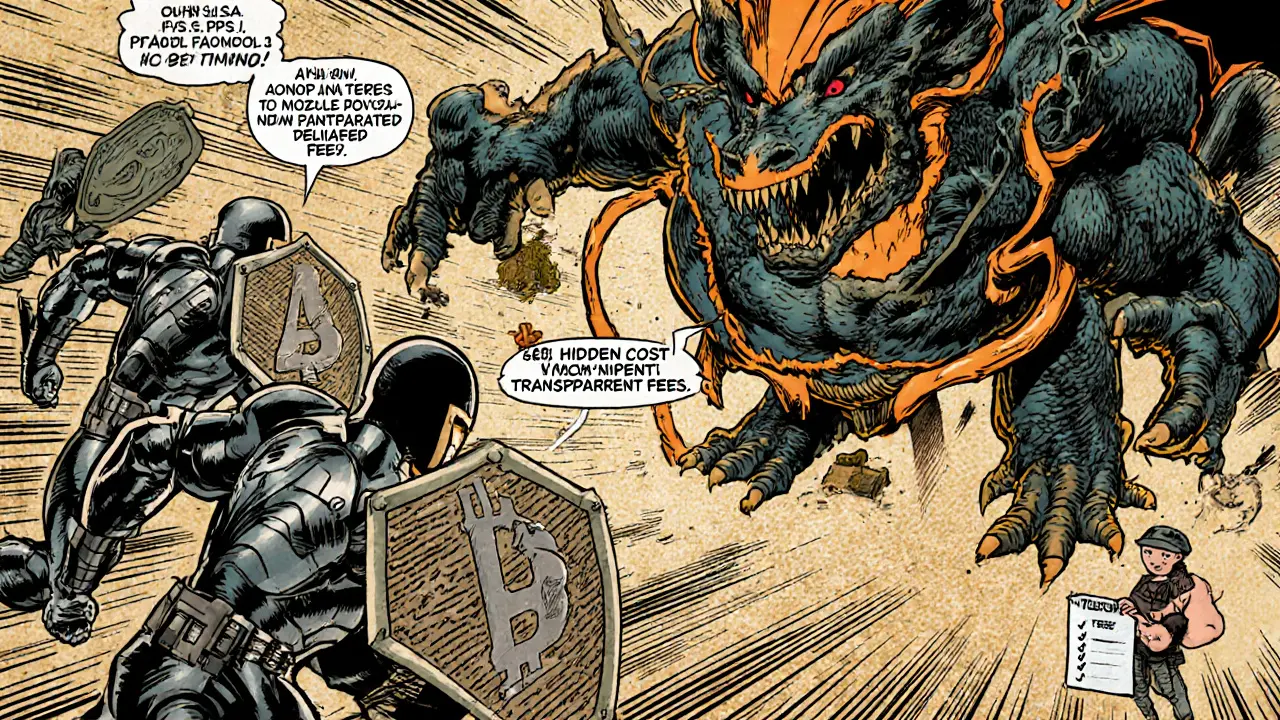
Hidden costs you’re probably ignoring
A 1.5% fee sounds great until you realize your pool doesn’t include transaction fees in payouts. Or your withdrawal threshold is 0.005 BTC, and you’re only earning 0.002 BTC per day. You’re stuck waiting two weeks just to cash out.
Another hidden cost: time. If your pool’s dashboard is clunky, or their support takes 48 hours to reply, you’re losing money. Every hour you spend troubleshooting is an hour you could’ve spent optimizing.
And don’t forget: some pools charge extra for advanced features. Poolin’s analytics dashboard bumps your fee from 2% to 2.5%. Slush Pool gives you real-time hashrate graphs and historical payout reports for free. That’s value.
What your mining style says about your ideal pool
Not every miner is the same. Your ideal pool depends on how you operate.
- Small-scale miner (under 100 TH/s): Go with FPPS and a 2% fee or lower. Foundry USA, BTC.com, or Poolin. You want steady payouts. Don’t risk waiting for blocks.
- Large-scale miner (over 1 EH/s): You can handle PPLNS. Antpool’s 0% fee saves you thousands a month. But you need rock-solid infrastructure and monitoring tools. Foundry USA’s tiered fee (0.5% off for 1 EH/s+) is worth considering.
- Multi-currency miner: F2Pool is your only real option. They support Ethereum, Litecoin, Dogecoin, and more. The 2.5% fee is fair for that flexibility.
- Decentralization-focused: Ocean Pool (backed by Block Inc.) charges variable fees and runs on open-source tech. It’s slow, small, and experimental-but if you care about Bitcoin’s core values, it’s the only choice.
How to pick the right pool - step by step
- Calculate your daily earnings. Use WhatToMine.com or MinerStat. Know your expected BTC/day.
- Check the pool’s payment model. Is it FPPS? PPLNS? Don’t just look at the fee percentage.
- Compare withdrawal thresholds. If you earn 0.0015 BTC/day, avoid F2Pool’s 0.005 BTC minimum.
- Look at payout frequency. Daily is standard. Anything less than every 2 days is a red flag.
- Check if transaction fees are included. FPPS includes them. PPS does too. PPLNS doesn’t-so your payout can swing wildly.
- Read miner reviews on Bitcointalk and Reddit. Look for patterns: "payouts delayed," "support ghosted me," "fees changed without notice."
- Test it. Start with a small hashrate. Run it for two weeks. Track your net income. Then switch if needed.
The future of mining pool fees
2025 is changing the game. Pools are no longer just fee collectors-they’re service providers.
Foundry USA is giving discounts to miners using renewable energy. Poolin adjusts fees based on Bitcoin’s transaction volume. BTC.com now shows you exactly how much of your fee goes to server costs, security, and transaction processing.
By 2027, Gartner predicts 80% of profitable miners will use pools with fees that match their risk profile. That means you won’t just pick the cheapest pool. You’ll pick the one that fits your mining strategy.
And if regulation tightens in the U.S. or EU? Fees could jump 0.5% to 1% across the board. Transparency will become mandatory. Pools that hide fees won’t survive.
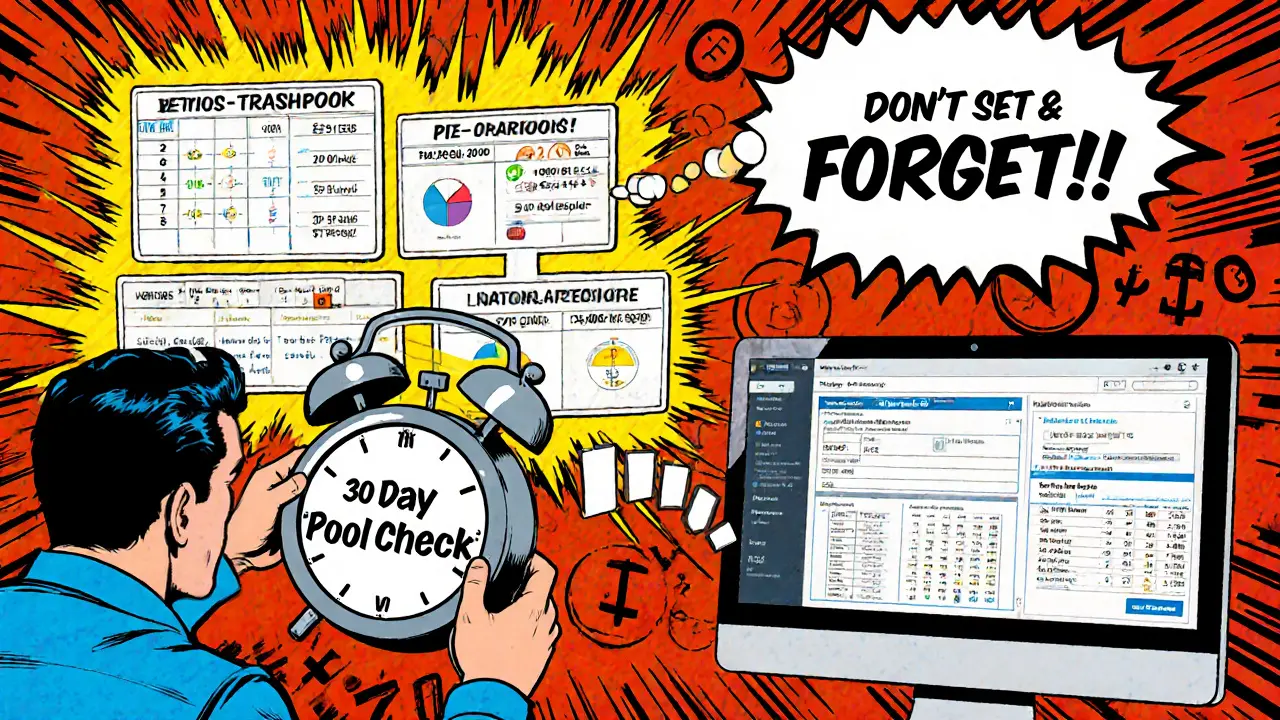
Final tip: Don’t set it and forget it
Miners who check their pool every month earn 12-18% more annually than those who don’t. Why? Because pools change. Fees shift. Payout models evolve. A pool that was perfect in January might be a drain by June.
Set a calendar reminder. Every 30 days, run a quick comparison. Use MinerStat. Check your payout history. See if another pool gives you more net BTC after fees, withdrawals, and time.
It’s not about finding the "best" pool. It’s about finding the one that works for you today-and being ready to switch when it doesn’t anymore.
Are 0% mining pool fees really free?
No. A 0% fee usually means you’re on a PPLNS payment model. You only get paid when the pool finds a block, and your share depends on your recent hashrate. If the pool has a bad week, your payout drops to zero. You’re not paying a fee, but you’re taking on all the risk. It’s not free-it’s a gamble.
Can I mine without a pool?
You technically can, but it’s not practical. The chance of a single ASIC miner finding a block is less than 1 in 10 billion per day. You might wait 5-10 years to earn one Bitcoin. Mining pools exist because solo mining is economically broken. Unless you’re running a data center with thousands of ASICs, skip solo mining.
Do mining pool fees affect my hashrate?
No. Your hashrate is determined by your hardware. The fee only affects how much of the reward you keep. A 2.5% fee doesn’t slow down your miner-it just takes 2.5% off your payout. But a poorly run pool with high downtime or connection issues can make your hashrate appear lower.
Which pool is best for beginners?
Start with BTC.com or Foundry USA. Both use FPPS, have 0.001 BTC withdrawal thresholds, pay daily, and have clean dashboards. Their 1.5%-2.5% fees are transparent, and they offer 24/7 support. You won’t get lost. You’ll get paid. That’s all a beginner needs.
Why do some pools charge more for PPS+?
PPS+ guarantees you a payout for every share, even if the pool doesn’t find a block. The pool takes on the risk of variance. That’s expensive. To cover that risk, they charge a higher fee-usually 3-4%. If you want stable income and don’t mind paying for it, PPS+ is worth it. If you’re okay with waiting, PPLNS saves you money.
Is it safe to use a mining pool?
Yes-if you use a reputable one. All top pools now require 2FA, IP whitelisting, and DDoS protection. Avoid obscure pools with no reviews. Check their history. If they’ve been around since 2018 and have thousands of users, they’re likely safe. If they popped up last month with a 0.5% fee? Run. Too good to be true.

There are 18 Comments
Sharmishtha Sohoni
Jess Bothun-Berg
Althea Gwen
Steve Savage
Rod Filoteo
Marsha Enright
Andrew Brady
Durgesh Mehta
Joe B.
Layla Hu
Nelia Mcquiston
Mohamed Haybe
Sarah Roberge
Philip Mirchin
Britney Power
Maggie Harrison
Lawal Ayomide
Paul McNair
Write a comment
Your email address will not be published. Required fields are marked *