
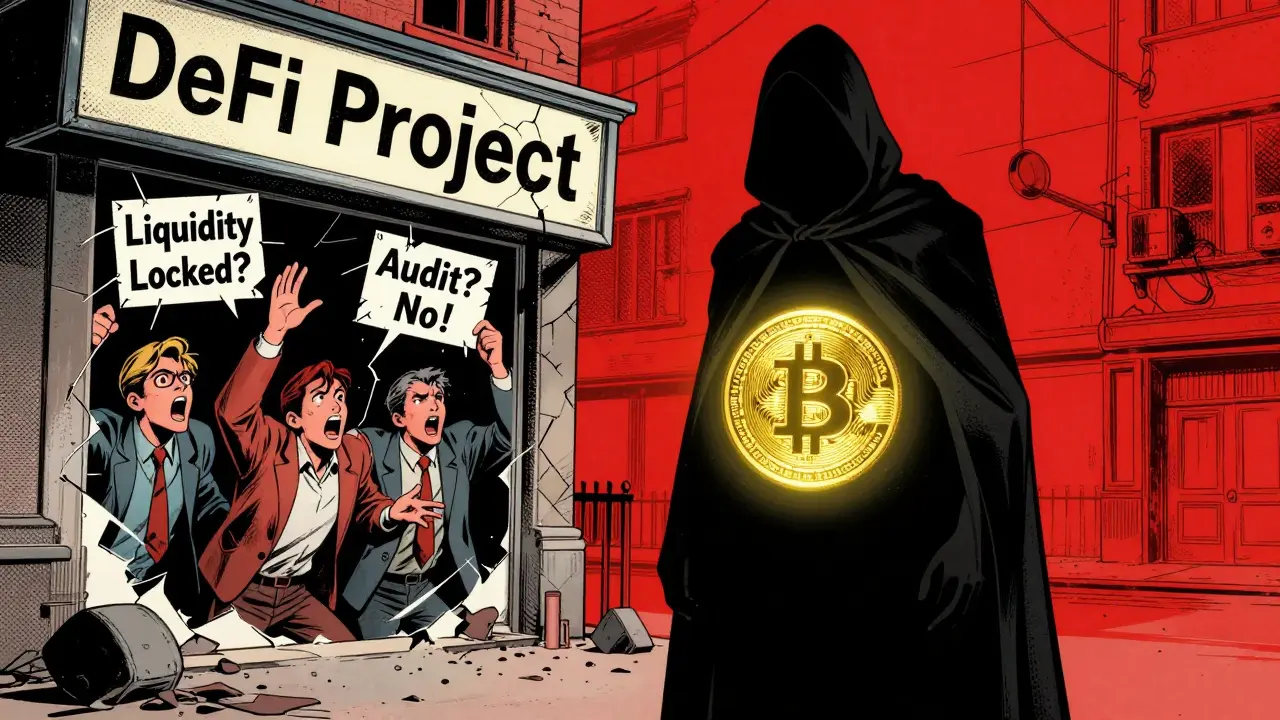
A rug pull in cryptocurrency is one of the most common and destructive scams in the space. It happens when the creators of a new crypto project suddenly vanish with all the money investors put in, leaving behind a token worth nothing. Think of it like a con artist building a fake storefront, getting people to buy products, then locking the door and disappearing with the cash - except this happens on a blockchain, and the losses can be massive.
Unlike traditional fraud, rug pulls don’t require years of operation. They’re fast, brutal, and often rely on the open, unregulated nature of decentralized finance (DeFi). According to Solidus Labs, over 300,000 scam tokens were created in 2022 alone, and around 2 million investors lost money. That’s more victims than all the collapses of FTX, Celsius, and Voyager combined.
How a Rug Pull Actually Works
A rug pull doesn’t start with a hack. It starts with a lie. Developers create a new token - often with a flashy name, a trending meme, or a fake partnership (like claiming to be the "official" token of a popular game or brand). They set up a website, post on Twitter, and pay influencers to promote it. Then they list the token on a decentralized exchange like Uniswap or PancakeSwap.
At first, everything looks real. Prices rise. People buy in. Trading volume spikes. But behind the scenes, the smart contract - the code that runs the token - is rigged. Here’s how it breaks:
- Locked liquidity? Most legitimate projects lock their liquidity (the money in the trading pool) for months or years. Rug pulls rarely do. If liquidity isn’t locked, or the lock expires in a few days, that’s a red flag.
- Can’t sell? Some contracts block investors from selling their tokens while letting the devs dump theirs. This is called a "honeypot." You think you own the token - but you can’t cash out. Only the team can.
- Unlimited minting? The devs can create more tokens out of thin air. When they dump, they flood the market, crashing the price.
- No audit? Legitimate projects get their code reviewed by firms like CertiK or OpenZeppelin. Rug pulls skip this. If you can’t find an audit report, walk away.
The moment the token hits its peak price - often within days - the devs drain the liquidity pool. They sell everything, withdraw the funds, and shut down the website and social media. The token crashes to zero. Investors are stuck with digital trash.
Hard vs. Soft Rug Pulls
Not all rug pulls are built the same. There are two main types:
Hard Rug Pulls
These involve malicious code. The devs build a trap into the smart contract from day one. The $SQUID token in late 2021 was a textbook example. Developers used a honeypot to block sells, pumped the price with fake volume, then pulled the plug. Over $3 million vanished in under a week.
Hard pulls are harder to detect because they need code analysis. Tools like RugDoc.io and TokenSniffer scan contracts for these traps. But even then, scammers find ways to hide - like using proxy contracts that look clean but redirect to hidden malicious code.
Soft Rug Pulls
These don’t use code tricks. Instead, devs use hype. They create a token, flood social media with fake news, pay influencers, and run wash trading (buying and selling among themselves to fake volume). When the price peaks, they sell their holdings and ghost the project.
Soft pulls are more common - about 32% of all rug pulls, according to Coinbase’s 2023 data. They’re harder to prove as fraud because there’s no code violation. It’s just manipulation. But the result is the same: investors lose money.
Who Gets Hit the Hardest?
Rug pulls don’t target big institutions. They target everyday people. Coinbase’s data shows 87% of victims are retail investors - people who saw a post on Twitter, jumped into a presale, and invested their savings.
The most common targets are projects on BNB Chain and Ethereum. In 2022, 48% of all rug pulls happened on BNB Chain. Why? Because it’s cheap and fast to launch a token there. No one checks who you are. No one asks for ID. You can create a token in 10 minutes.
Meanwhile, exchange hacks - where hackers steal from centralized platforms like FTX - are bigger in total value, but they’re rare. Rug pulls happen every day. They’re the #1 crime in crypto.
Red Flags You Can’t Ignore
Here’s what to look for before you invest:
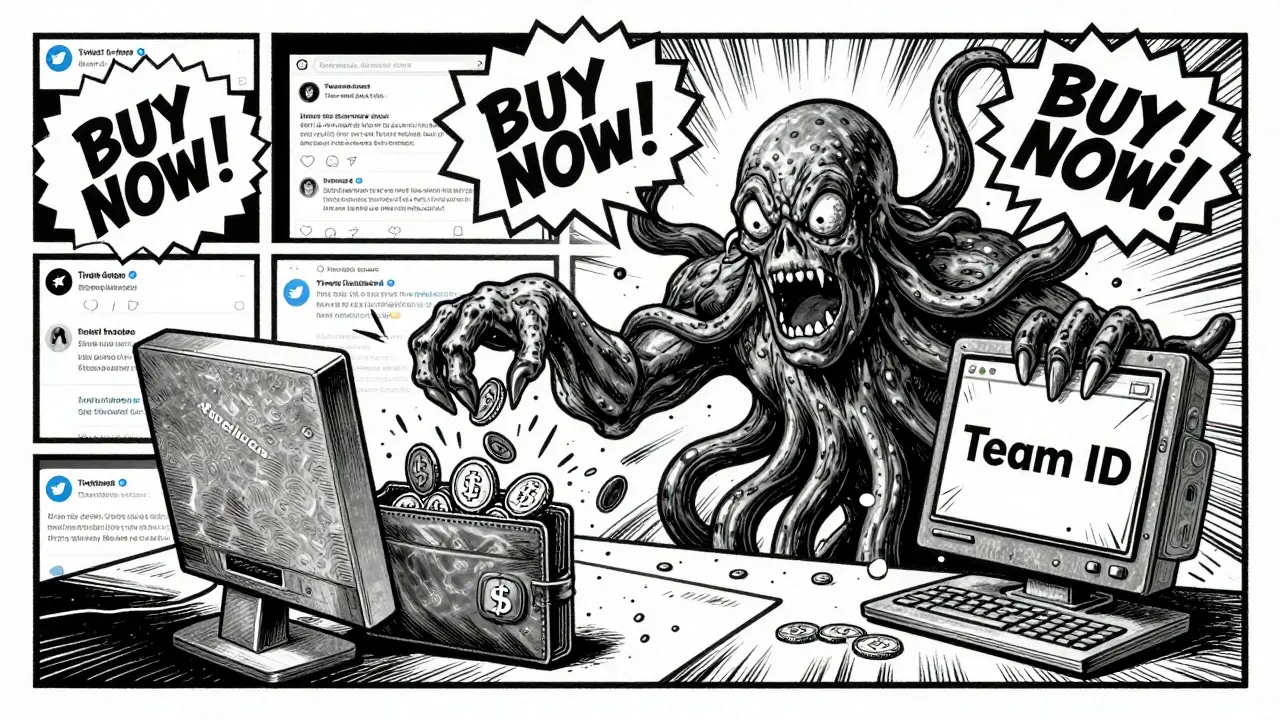
- Anonymous team - If you can’t find a LinkedIn profile, real name, or video of the team, run. 92% of rug pulls have anonymous devs.
- Unrealistic APYs - "Earn 10,000% daily"? That’s not a yield. That’s a trap. Legit DeFi projects offer 5-15% annually. Anything higher is a warning sign.
- No audit - If the project says "audit in progress," that’s not good enough. Wait for a published report from CertiK, PeckShield, or OpenZeppelin.
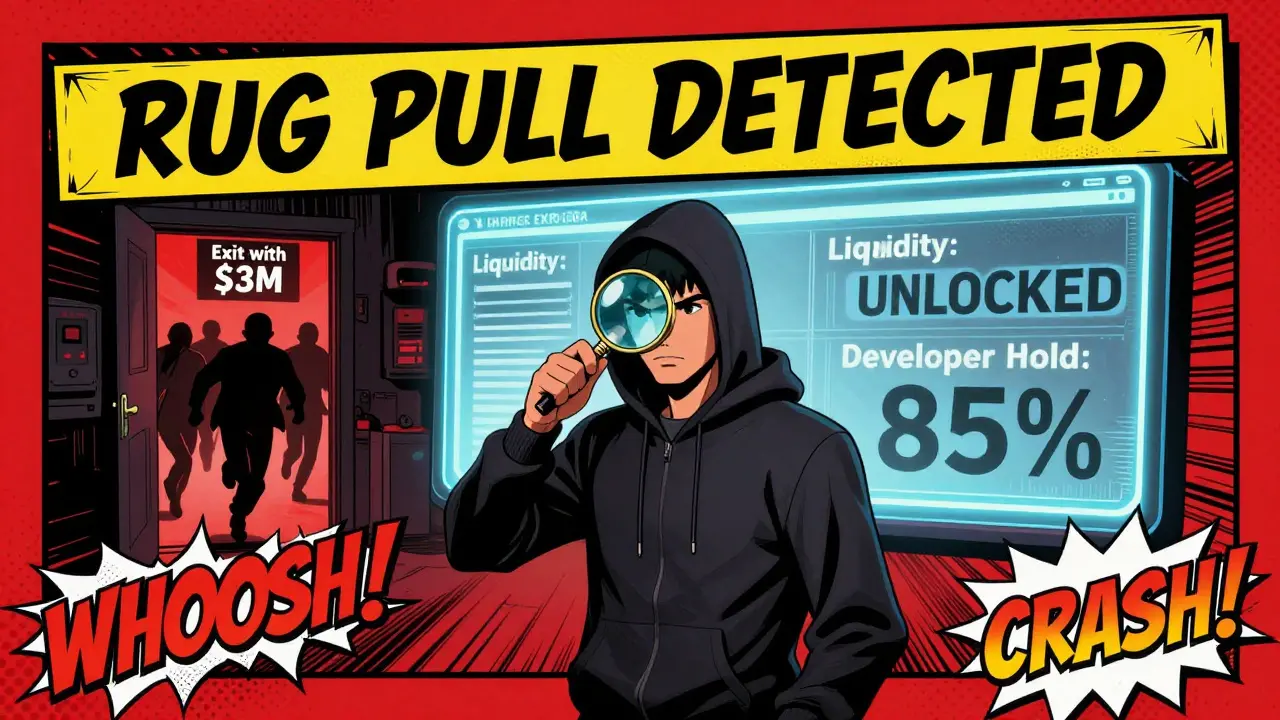
- Developer allocation over 15% - If the team holds more than 15% of the total supply, they have too much control. That’s a red flag.
- Liquidity not locked - Use BscScan or Etherscan to check. If the liquidity pool can be removed anytime, it’s a waiting game.
Reddit users in r/CryptoCurrency reported that 78% of them were lured by "limited-time presales" or "exclusive whitelist access." These are classic traps. If it feels too good to be true - it is.
How to Protect Yourself
There’s no 100% guarantee, but you can drastically lower your risk with these steps:
- Check the team - Google their names. Look for interviews, past projects, GitHub profiles. If they’re completely invisible, walk away.
- Verify liquidity lock - Go to Etherscan or BscScan. Find the liquidity pool. Check if it’s locked with a time lock (like 12 months). If it’s unlocked or has a short lock, don’t invest.
- Read the audit - Download the full audit report. Don’t trust a screenshot. Read the executive summary. Look for phrases like "no critical vulnerabilities" - not "no issues found."
- Use detection tools - RugDoc.io, TokenSniffer, and CoinHunters scan contracts for honeypots and hidden functions. They’re not perfect, but they catch 70% of known scams.
- Watch community sentiment - If everyone on Telegram is posting "BUY NOW!" in all caps, and no one is asking questions - that’s a sign of coordinated shilling.
Experienced users say it takes 8-12 hours of learning to read blockchain explorers well. Start small. Test with $10. If the project survives a week without crashing, maybe it’s real.
What’s Being Done About It?
The industry is fighting back. Binance now requires all new tokens on its Launchpad to have a minimum 12-month liquidity lock. Coinbase mandates third-party audits for every new listing. The EU’s MiCA regulations, effective in 2024, will require full identity disclosure for crypto projects - making anonymous rug pulls much harder.
Technologies like Unicrypt and TimeLock are making it easier to lock liquidity securely. And more projects are "doxxing" - publicly revealing their real identities. Coinbase found that projects with verified teams have 89% fewer rug pulls.
Still, experts warn: rug pulls won’t disappear. MIT’s Digital Currency Initiative says they’re an inevitable part of permissionless systems. You can’t eliminate risk without killing innovation. But you can protect yourself.
What Happens After a Rug Pull?
Once the devs vanish, there’s almost no way to recover your money. Blockchain is immutable. Once the funds are gone, they’re gone. Law enforcement rarely steps in unless millions are involved.
The SEC has filed 17 rug pull cases since 2022 - including the $11 million Flokinomics case. But most scams are too small, too global, or too anonymous to track. Recovery is rare.
That’s why prevention is everything. If you don’t check the basics before investing, you’re gambling. Not trading.
Can you get your money back after a rug pull?
Almost never. Once the developers drain the liquidity pool and disappear, the funds are gone forever. Blockchain transactions are irreversible. Law enforcement rarely recovers funds unless the scam involves millions and the devs are identifiable. Your best defense is prevention - never invest without checking liquidity locks, audits, and team identities.
Are all new crypto projects rug pulls?
No, but the vast majority of new tokens are risky. Most new DeFi projects fail within weeks. Only a tiny fraction survive long-term. The key is not to avoid all new projects - but to verify them. Look for team transparency, locked liquidity, and third-party audits. Legit projects make this information easy to find.
Do exchanges prevent rug pulls?
Major exchanges like Binance and Coinbase have reduced rug pulls on their platforms by requiring audits and long-term liquidity locks. But decentralized exchanges (DEXs) like Uniswap and PancakeSwap have no review process - anyone can list a token. That’s why 73% of rug pulls happen on DEXs. Never assume a token is safe just because it’s listed somewhere.
Is a rug pull the same as a pump and dump?
They’re similar, but not the same. A pump and dump usually involves a real token that gets artificially inflated and then sold off. A rug pull is a complete scam - the token often has no real utility, and the code is designed to trap investors. In a pump and dump, you might still be able to sell (even at a loss). In a rug pull, you can’t sell at all - the contract blocks you.
How can I tell if a liquidity lock is real?
Go to Etherscan (for Ethereum) or BscScan (for BNB Chain). Find the token’s contract address. Look for the liquidity pool. Click on "Contract" and check the "Liquidity Lock" section. A real lock will show a time-stamped lock with a duration (like 12 months) and a verified owner. If the lock says "unlocked" or "no lock," it’s dangerous. Tools like DeFiYield can also verify locks automatically.
There are 18 Comments
yogesh negi
Wow, this is such an important breakdown! I’ve seen so many new investors get wrecked by these rug pulls, especially on BNB Chain. The key is always checking the liquidity lock - if it’s not locked for at least a year, walk away. I always use BscScan to verify before even thinking about connecting my wallet. And please, stop chasing 10,000% APYs - that’s not DeFi, that’s a casino with blockchain graphics.
Also, don’t ignore the team’s socials. If they’re anonymous but posting 10x daily on Twitter, that’s a red flag. Real teams have GitHub, LinkedIn, even YouTube channels. I’ve lost money before because I trusted a meme name. Never again.
Nikki Howard
Let’s be brutally honest: 90% of these "new projects" are just exit scams waiting to happen. You think you’re investing in innovation? No-you’re funding a group of anonymous devs who’ve never coded anything real in their lives. The fact that Coinbase and Binance now require audits is the only reason this ecosystem hasn’t collapsed entirely. And yet, people still jump in with their life savings because a Telegram group said "HODL."
There’s no such thing as "low-risk crypto." If you’re not reading the smart contract, you’re not investing-you’re gambling. And if you lose? That’s on you.
Tarun Krishnakumar
Did you know the real rug pull isn’t the devs vanishing-it’s the entire crypto industry pretending this is a market and not a pyramid scheme with extra steps? The audits? Fake. The liquidity locks? Often time-locked but with backdoors. I’ve reverse-engineered three contracts last month-two had hidden mint functions that only the owner could trigger after 48 hours. And the "verified" team on Twitter? One was a bot farm run out of a basement in Manila.
The EU’s MiCA regulations? Too little, too late. By the time they’re enforced, every rug puller will be in a country with zero extradition. And don’t get me started on how the "tools" like RugDoc.io are just paid shills for the same devs who make the scams. It’s all theater. The blockchain doesn’t care. It just records the theft.
They say "do your own research." But how? The code is obfuscated. The team is fake. The audits are cherry-picked. The only thing that’s real? The fact that you’re being played. And you’re still here. Why?
Charrie VanVleet
Love this breakdown!! Seriously, so many newbies don’t even know where to start. I always tell people: if you can’t find a single real person behind the project, it’s a trap. I once invested $50 in a token because the logo looked cool. Lost it all. 😅
Now I check: team names? LinkedIn? GitHub commits? Audit report? Liquidity locked? If any one of those is missing-I skip it. Even if it’s "the next Bitcoin."
Start small. Test with $10. If it’s still alive after a week? Maybe it’s legit. If not? Move on. No shame in walking away.
Rajib Hossaim
The distinction between hard and soft rug pulls is critical. Many investors assume that if the code appears clean, the project is safe. This is a dangerous misconception. Soft rug pulls, while technically not fraudulent under current regulatory frameworks, are ethically indefensible. The manipulation of social sentiment, coupled with wash trading and influencer payoffs, constitutes a systemic exploitation of retail investors.
Furthermore, the normalization of anonymous teams has eroded accountability in decentralized finance. While pseudonymity is a foundational principle of blockchain, its abuse in this context undermines the very ethos of transparency that crypto purports to uphold. Regulatory bodies must evolve beyond traditional securities law to address these novel forms of market manipulation.
Beth Erickson
Jenn Estes
You’re all being too nice. If someone can’t figure out that anonymous devs + no audit + unlocked liquidity = scam, they shouldn’t be investing at all. This isn’t rocket science. It’s basic due diligence. You don’t buy a house without a title search. Why would you throw money at a token with no paper trail?
And don’t tell me "but I did research!" You Googled the name and saw 500 people saying "BUY NOW" on Twitter. That’s not research. That’s peer pressure with a blockchain.
If you’re not reading the contract on Etherscan, you’re not an investor-you’re a donation.
Jeremy Fisher
As someone who’s lived in three countries and worked with crypto teams across Asia, Europe, and the US, I can say this: the biggest problem isn’t the scams-it’s the culture of instant gratification. People don’t want to spend 8 hours learning how to read a blockchain explorer. They want to get rich before lunch.
I’ve seen developers in Bangalore build real DeFi protocols with real utility. But they get drowned out by meme coins from Telegram groups with 10k members who all post "1000x" at 3 a.m.
The solution isn’t more regulation-it’s education. Teach kids in school how to read a whitepaper. Teach them how to verify a lock. Teach them that if it’s too good to be true, it’s probably a honeypot. Crypto’s future depends on smarter users-not stricter laws.
Anandaraj Br
OMG I just lost $12K on a token called "DOGE2.0" because I trusted a guy who said he "worked with Vitalik"-turns out he was a 19-year-old in Kerala with a fake LinkedIn profile. I cried for three days. Then I screamed at my phone. Then I screamed at the sky.
Now I only invest in coins that have been around for over 6 months. And I check the team’s Instagram. If they’re posting gym selfies and crypto memes? Red flag. If they’re posting technical deep dives? Maybe. But I still wait. Always wait.
PS: If you’re reading this and thinking "I can get rich fast"-you’re already scammed. Stop. Breathe. Walk away.
AJITH AERO
So let me get this straight. You spent 10 minutes reading this article and now you think you’re an expert? Congrats. You’re now one step closer to losing your life savings.
Real talk: nobody cares about your "red flags." The devs don’t care. The blockchain doesn’t care. The only thing that matters is: did you connect your wallet? If yes? You already lost.
Save yourself. Don’t invest. Just scroll. You’re happier that way.
Paul David Rillorta
THEY’RE ALL FAKE. I’VE SEEN IT. THE "AUDITS"? THEY’RE WRITTEN BY THE SAME GUYS WHO MADE THE CONTRACT. THE "LOCKED LIQUIDITY"? IT’S LOCKED… UNTIL THEY USE A PROXY CONTRACT TO UNLOCK IT. I’M NOT KIDDING. I SPENT 3 WEEKS DECOMPILING A TOKEN CALLED "BRAINDEAD" AND FOUND A BACKDOOR THAT TRIGGERED AT 3:33 AM ON A SATURDAY.
AND THE BEST PART? THE DEV WAS A 17-YEAR-OLD IN BANGLADESH WHO GOT PAID IN MONERO. NOBODY CAN TRACE HIM. NOBODY WILL.
CRYPTO ISN’T INVESTING. IT’S A DIGITAL CASINO WHERE THE HOUSE ALWAYS WINS… AND YOU’RE THE ONE HOLDING THE DECK.
Jennifer Riddalls
This was so helpful! I’m still learning and I appreciate how clear this is. I used to think if a token had a cool logo and a Discord server, it was legit. Now I check the contract first. Even if it’s just $5, I test it.
Also, I always look at the transaction history on Etherscan. If the top 10 wallets are all new addresses that just got created yesterday? That’s a red flag. Real projects have a few big holders who’ve been there since launch.
Thanks for keeping it real. I’m gonna share this with my sister-she’s about to invest in a new meme coin. I’ve got to save her 😅
Kyle Tully
It’s funny how people act like they’re pioneers when they’re really just throwing money into a black hole and hoping for a miracle. You don’t get to call yourself a "crypto investor" if you don’t know how to read a smart contract. You’re a tourist. And tourists get robbed.
And yet, you all keep coming back. Like moths to a flame. The devs know this. That’s why they keep making new tokens. Because you’re not just easy targets-you’re repeat customers.
There’s no innovation here. Just exploitation dressed up in blockchain jargon.
kieron reid
Too much info. I read half and got bored. If it’s not on Coinbase or Binance, it’s trash. End of story.
Ruby Ababio-Fernandez
andy donnachie
I’ve been in crypto since 2017 and seen dozens of rug pulls. The truth is, the ones that survive are the ones that build real utility-not hype. I invested in a DeFi lending protocol last year because the team had a GitHub with 200 commits, a real team photo, and a 24-month liquidity lock. It’s still alive. No 1000x, but steady growth.
Don’t chase pumps. Chase progress. Look for code commits, not Twitter followers. Real innovation doesn’t need influencers. It just needs time.
Avantika Mann
Thank you for writing this. I’m new to crypto and I was terrified of getting scammed. This guide made me feel like I actually understand what to look for. I checked the liquidity lock on a token yesterday and found it was unlocked-so I walked away. Felt proud of myself!
One thing I didn’t know: checking the audit report’s executive summary. I always just looked for the word "clean." Now I know to look for "no critical vulnerabilities." Small thing, huge difference.
Keep sharing this kind of stuff. We need more clear, calm voices in this space.
yogesh negi
Just saw @JeremyFisher’s comment about education. Couldn’t agree more. I started teaching my nieces and nephews how to check contracts. One of them, 14, just flagged a honeypot on BscScan last week. She’s better at this than half the "experts" on YouTube.
Maybe the future of crypto isn’t regulation. Maybe it’s kids with curiosity.
Write a comment
Your email address will not be published. Required fields are marked *