
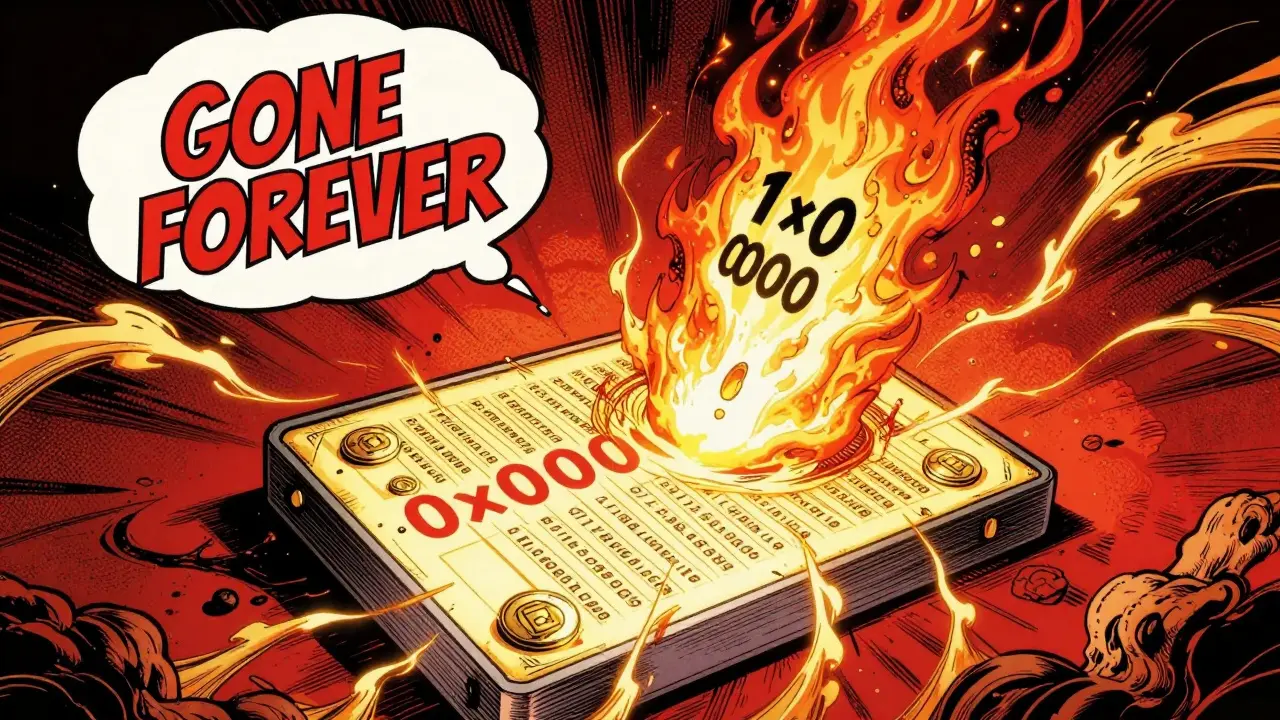
When you hear about a cryptocurrency project burning millions of tokens, it sounds like magic-money disappearing into thin air. But in blockchain, token burning isn’t illusion. It’s a deliberate, technical move to reduce supply, and it’s now part of the DNA of most major crypto projects. You might think burning tokens makes them worthless, but the opposite is true: removing tokens from circulation can make the ones left behind more valuable-if done right.
What Exactly Is a Token Burn?
Token burning means permanently removing cryptocurrency tokens from circulation. This isn’t deleting a file or wiping a database. It’s sending tokens to a special wallet address that no one can access-not even the project founders. These are called burn addresses. On Ethereum, the most common one is0x0000000000000000000000000000000000000000. Once tokens hit that address, they’re gone forever. The blockchain ledger still records the transaction, but no private key exists to unlock them. They’re mathematically unreachable.
This isn’t just symbolic. When tokens are burned, the total supply of that cryptocurrency drops. If a project started with 1 billion tokens and burns 100 million, only 900 million remain. That’s scarcity in action. And in economics, scarcity often drives value-especially when demand stays steady or grows.
Why Do Projects Burn Tokens?
Projects don’t burn tokens just because they can. There are clear reasons behind each burn:- Create scarcity: Reducing supply can push prices up if demand holds steady. This is the most common goal.
- Reduce inflation: Many tokens are minted over time. Burning offsets that inflation, keeping the economy balanced.
- Build trust: Regular burns show commitment. Binance’s quarterly BNB burns since 2017 have reduced supply by over 40%. That’s transparency.
- Improve tokenomics: Some projects use burns as part of a larger system-like balancing minting and burning to maintain equilibrium.
- Signal confidence: When a team burns its own holdings, it says: ‘We believe in this long-term.’
How Token Burning Is Implemented
There’s no single way to burn tokens. Different projects use different methods, each with trade-offs.1. Scheduled Burns
These happen at fixed times-weekly, monthly, quarterly. Binance’s BNB burns are the gold standard. Every quarter, they use 20% of their profits to buy back BNB from the open market and burn it. As of August 2023, they’d burned over 20.5 million BNB tokens worth $607 million. The schedule is public. Everyone knows when the next one’s coming. That predictability builds trust. But markets often price in these burns ahead of time, so the actual price impact can be muted.2. Transaction Fee Burns
Ethereum’s EIP-1559, launched in August 2021, changed how fees work. Instead of going to miners, the base fee for every transaction is burned. This makes Ethereum’s monetary policy deflationary under heavy usage. As of October 2023, over 2.5 million ETH-worth roughly $4.5 billion-had been burned. This isn’t controlled by a company. It’s automatic. Every time someone sends ETH, a portion disappears. It’s elegant, transparent, and embedded into the protocol itself.3. Buyback and Burn
Projects use their treasury to buy tokens from exchanges and then burn them. MEXC did this during the LUNA collapse, spending $10 million to buy back tokens and burn them. It’s direct. It reduces supply fast. But it’s expensive. If the market crashes, the project burns through cash just to keep the token alive. Not sustainable long-term.4. Community-Driven Burns
Shiba Inu’s burn portal lets anyone send SHIB to a burn address and get a free NFT in return. Over 410 trillion SHIB have been burned this way-over 41% of the original supply. It’s a brilliant engagement tool. Users feel like they’re helping. But it relies on participation. If people stop burning, the supply stops shrinking.5. Burn-and-Mint Equilibrium
Some projects, like Chainlink’s proposed model, adjust burning based on network activity. More usage? More tokens burned. Less usage? Fewer burned. It’s dynamic. This approach aims to stabilize token value without manual intervention. It’s complex, but it’s the future.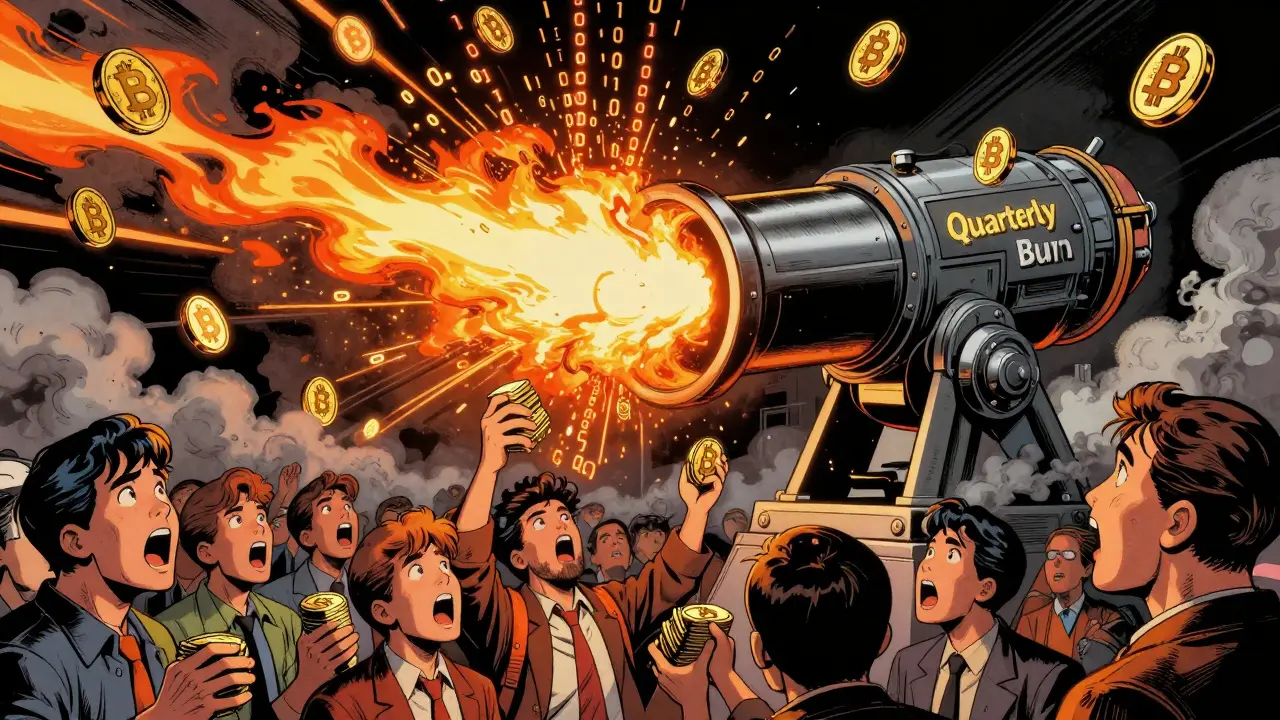
What Can Go Wrong?
Token burning sounds simple, but it’s easy to mess up. One common mistake? Sending tokens to the wrong address. A developer once sent $2.3 million in tokens to a wallet that looked like a burn address but actually had a private key. Someone else could’ve claimed them. That’s not a burn-it’s a gift. Poor access controls are another risk. If any user can trigger a burn, someone could drain the treasury. Multi-signature wallets help. They require 2 or 3 team members to approve a burn. And then there’s the psychological trap. Projects like Safemoon burned 2% of every transaction, claiming it would boost value. Instead, the token crashed from $0.000003146 to nearly zero. Why? The burn didn’t fix the underlying problem: no real use case. People weren’t using it-they were just trading it. The burn felt like a scam.Are Token Burns Effective?
The answer isn’t yes or no. It’s: ‘It depends.’ Binance’s BNB burn works because it’s tied to profits and transparency. Ethereum’s EIP-1559 works because it’s protocol-level and automatic. Shiba Inu’s burn works because it turns users into participants. But projects that burn just to look good? They fail. The SEC warned in February 2023 that token burns could be seen as unregistered securities manipulation if used to artificially inflate price. Ripple had to change its burn strategy after that. A 2023 study by the University of Zurich concluded that burns give short-term psychological boosts but don’t create long-term value without utility. That’s the key. Burning tokens is like pruning a tree. It helps if the roots are healthy. If the tree’s dying, cutting branches won’t save it.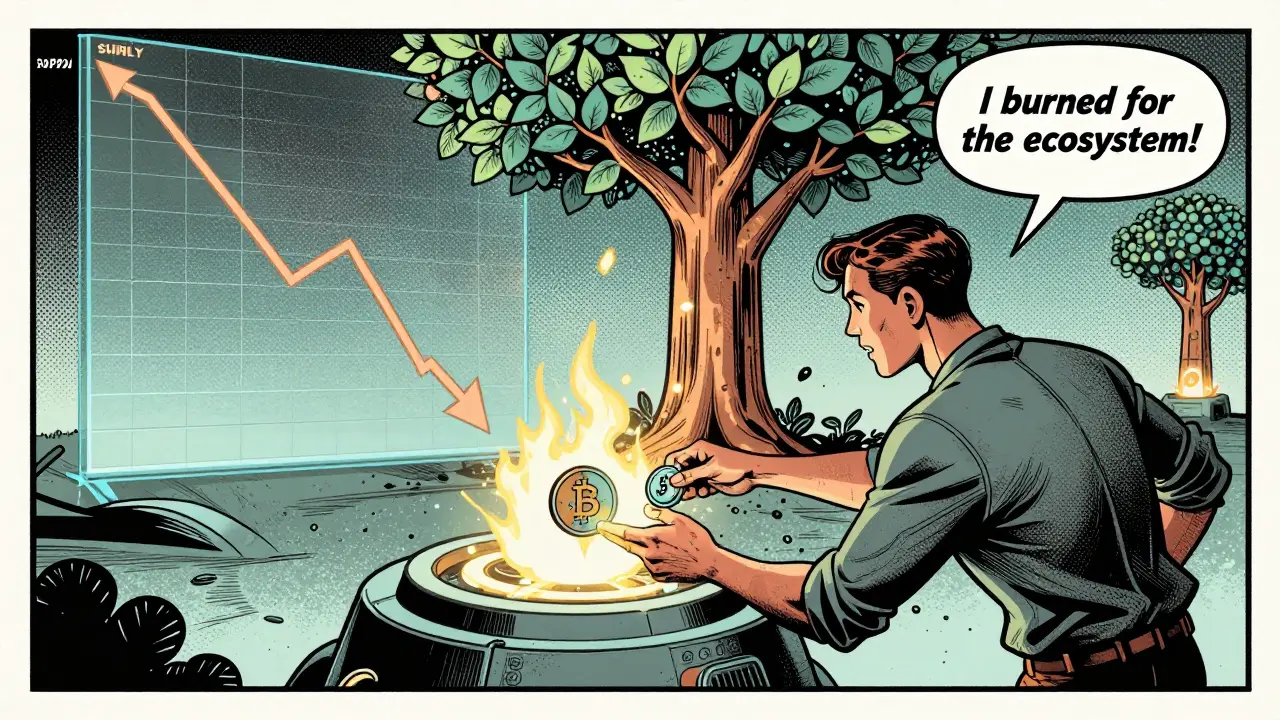
What’s Next for Token Burning?
The next wave of burns won’t just reduce supply-they’ll unlock access. Projects like STEPN are testing ‘burn-to-access’ models. Burn 100 tokens? Get VIP features. Burn 500? Unlock exclusive NFTs. This turns burning from a passive supply control into an active user incentive. Polygon is preparing to launch its own version of EIP-1559 in Q1 2024, with tiered burn rates based on transaction priority. Higher fees? More burned. It’s a market-driven system. And by 2025, Galaxy Digital predicts 68% of new tokens will use multi-dimensional burn strategies-combining scheduled, fee-based, and utility-driven burns into one system. Regulators are watching. ESMA flagged burns as potential market manipulation vectors. That means future projects will need to disclose why they’re burning, how often, and how much. Transparency will be mandatory.Final Takeaway
Token burning isn’t a magic bullet. It’s a tool. Used well, it can align incentives, reduce inflation, and build trust. Used poorly, it’s just a flashy distraction. If you’re evaluating a crypto project, don’t just check how many tokens they’ve burned. Ask: Why are they burning? Is it tied to real usage? Is it automated or controlled by a few people? Is it part of a larger economic model-or just a marketing tactic? The best burns don’t shout. They work quietly in the background, making the system more efficient, more predictable, and more valuable over time.Can burned tokens ever be recovered?
No. Once tokens are sent to a true burn address-like Ethereum’s 0x000...0000-they’re permanently removed from circulation. These addresses have no private key, so no one can access them. Even the project founders can’t retrieve them. The transaction is permanent and verifiable on the blockchain.
Does burning tokens always increase their price?
Not always. A 2021 University of Cambridge study found only 32% of token burns led to a measurable price increase within seven days. Price depends on demand, utility, and market sentiment. Burning reduces supply, but if no one wants to use the token, the price won’t rise. Burning without utility is like removing seats from a bus that no one rides.
What’s the difference between a burn address and a regular wallet?
A regular wallet has a private key that lets the owner send and receive tokens. A burn address is intentionally created without a private key. It’s a one-way destination. Tokens sent there vanish from circulation forever. Common burn addresses include Ethereum’s 0x000...0000 and the standardized 0x000...dEaD, which has burned over 1.2 million different tokens since 2020.
Can I burn my own tokens?
Yes-if the project provides a way. Shiba Inu, for example, has a public burn portal where users can send SHIB to a burn address and receive a free NFT. Some wallets and exchanges also allow users to initiate burns. But you can’t burn tokens unless the smart contract allows it. Always check the project’s official documentation before attempting a burn.
Are token burns regulated?
Yes, increasingly so. The U.S. SEC warned in 2023 that burns used to manipulate token prices could be considered unregistered securities transactions. The European Securities and Markets Authority (ESMA) has flagged burns as potential market manipulation tools. Projects now need to be transparent about why they’re burning and how it affects tokenomics. Future regulations may require public disclosures for every burn event.
There are 18 Comments
Devyn Ranere-Carleton
Raju Bhagat
laurence watson
Elizabeth Jones
Rachel Stone
Gurpreet Singh
Christopher Michael
Freddy Wiryadi
Brianne Hurley
christal Rodriguez
Gustavo Gonzalez
Mark Ganim
Gavin Francis
Rob Duber
Gary Gately
Joshua Clark
Brandon Vaidyanathan
Gareth Fitzjohn
Write a comment
Your email address will not be published. Required fields are marked *