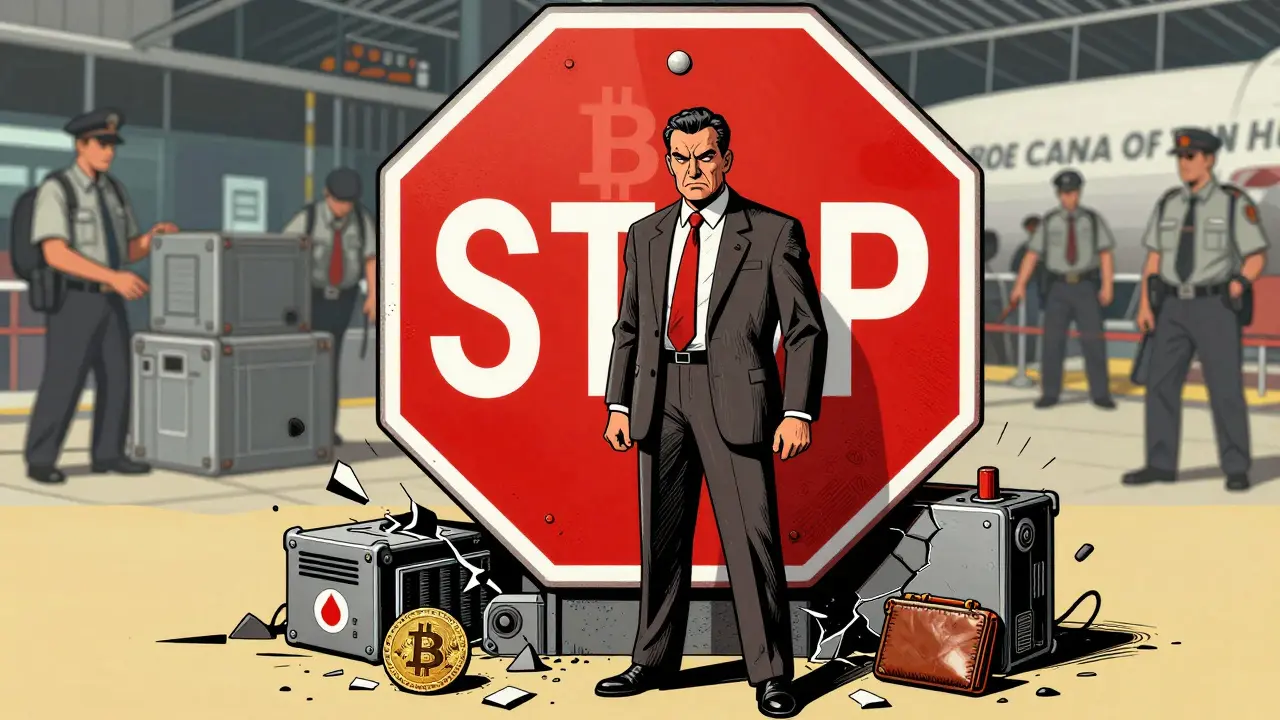
Tunisia doesn’t just restrict cryptocurrency-it bans it entirely. Since May 2018, the Central Bank of Tunisia (the national monetary authority responsible for issuing currency and overseeing financial stability) has made it illegal to buy, sell, mine, or trade any form of cryptocurrency within the country. Unlike many nations that regulate digital assets, Tunisia chose to shut the door completely. If you’re caught using Bitcoin, Ethereum, or any other crypto, you could face up to five years in prison and heavy fines under the country’s currency control laws.
Why Did Tunisia Ban Crypto So Strictly?
The ban didn’t come out of nowhere. Between 2013 and 2017, Bitcoin trading happened quietly through chat rooms and peer-to-peer networks. No one was officially in charge. People exchanged crypto without banks, without oversight, and without any way to track where the money went. That chaos worried the Central Bank of Tunisia. They feared capital flight-Tunisians moving their dinars abroad by converting them into crypto and sending it overseas. They also worried about money laundering and unregulated financial activity slipping through the cracks. In 2018, the bank issued a clear order: no crypto transactions without state permission. That meant banks had to block card payments to foreign exchanges. Customs started seizing mining rigs at airports. Merchants who tried accepting Bitcoin were told to stop. The message was simple: if you want to use digital money, you need the government’s approval-and they’re not giving it.What’s Illegal Under Tunisia’s Crypto Rules?
The restrictions are total. Here’s what you can’t do in Tunisia without breaking the law:- Buy or sell any cryptocurrency, even on international exchanges, if the transaction involves Tunisian dinars or local bank accounts
- Mine Bitcoin or other coins using ASIC hardware-importing mining equipment is a customs violation
- Operate a crypto exchange or wallet service inside Tunisia
- Accept crypto as payment for goods or services
- Market or promote any digital token to the public
- Hold crypto in personal wallets if it was acquired through local channels
Who’s in Charge? The Institutional Web Behind the Ban
The Central Bank of Tunisia isn’t acting alone. It works with two other key agencies: the Ministry of ICT & Digital Economy and the Financial Market Council (CMF). The CMF would oversee tokenized securities if the ban ever lifted. The Ministry handles digital infrastructure and innovation policy. This multi-agency setup shows how seriously Tunisia treats digital finance. It’s not just about stopping crypto-it’s about controlling all digital financial pathways. Even though the Central Bank was granted independence under a 2016 law (a condition of an IMF loan), its ability to act without political interference has weakened in recent years as the government pushes for more borrowing. That tension makes crypto policy even more complicated: the bank wants stability, but the government needs cash.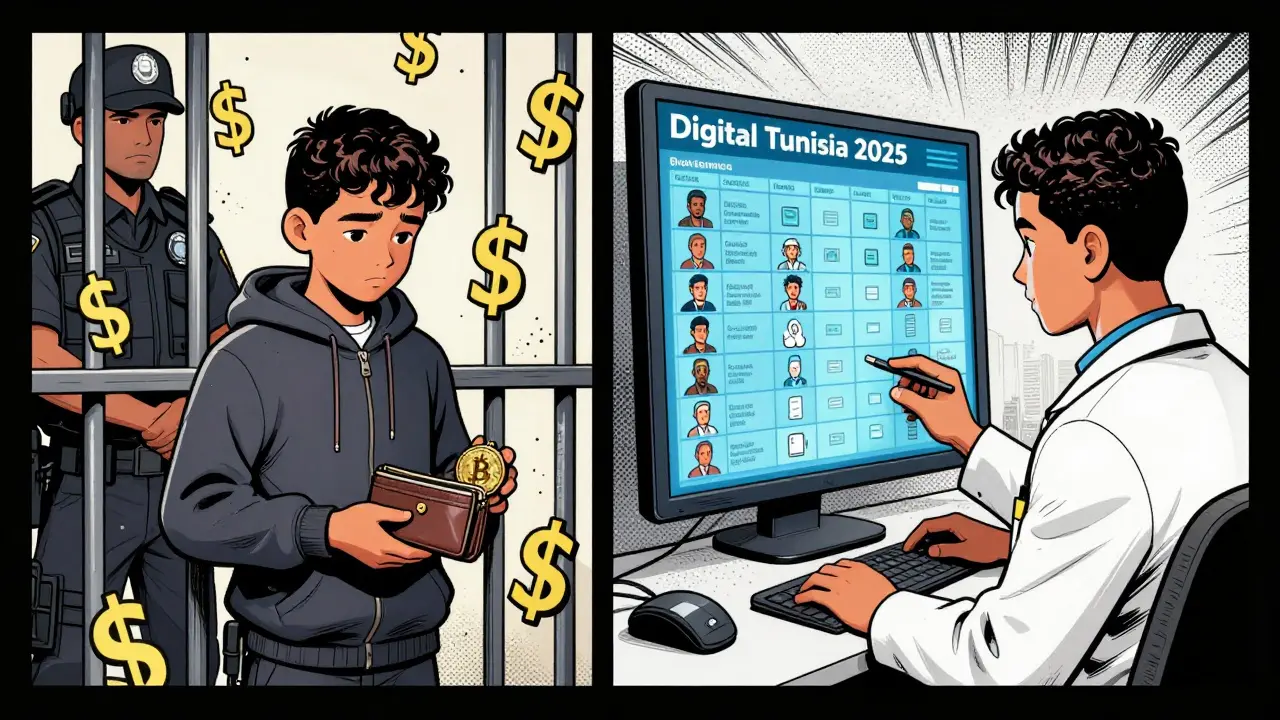
Blockchain Is Allowed-But Only If the Government Controls It
Here’s the twist: Tunisia doesn’t hate blockchain. It just hates open, decentralized crypto. The government’s Digital Tunisia 2025 project explicitly lists blockchain as a tool for modernizing public services-on permissioned ledgers, meaning only authorized entities can access or change the data. Government pilots are already testing blockchain for:- Digitizing land registries to prevent fraud
- Distributing targeted subsidies to farmers and low-income families
- Tracking supply chains for food and pharmaceuticals
The Regulatory Sandbox: A Backdoor for Innovation?
Since 2020, the Central Bank of Tunisia has run a regulatory sandbox-a controlled environment where fintech startups can test blockchain-based tools under strict supervision. This isn’t a loophole for crypto trading. It’s a laboratory for approved use cases. Startups like VFunder (crowdfunding platform), Hydro E-Blocks (carbon credit tracking), and No Phobos (AI-generated NFTs) have participated. But here’s the catch: they host their servers outside Tunisia. They use the sandbox to prove their tech works, then operate internationally. No local users can access their crypto features. The sandbox isn’t a path to legal crypto-it’s a path to exportable tech. The program runs in six- to twelve-month cycles, with strict limits on users and transaction volume. It’s a smart move: the bank gets to study blockchain’s potential without risking financial stability. It also gives local startups a chance to build skills and attract foreign investment.What About the E-Dinar? Was a Central Bank Digital Currency Ever Considered?
In 2019, the Central Bank of Tunisia quietly explored a Central Bank Digital Currency (CBDC) called the E-Dinar. It was a proof-of-concept-just a test, no rollout. The idea was to create a digital version of the Tunisian dinar, issued and controlled by the bank. The project was shelved. But its existence tells us something important: the bank isn’t anti-digital money. It’s anti-decentralized money. A CBDC would give the bank full control over transactions, tracking, and policy tools. That’s exactly what they want. A state-issued digital currency is acceptable. A decentralized coin like Bitcoin? Not even close.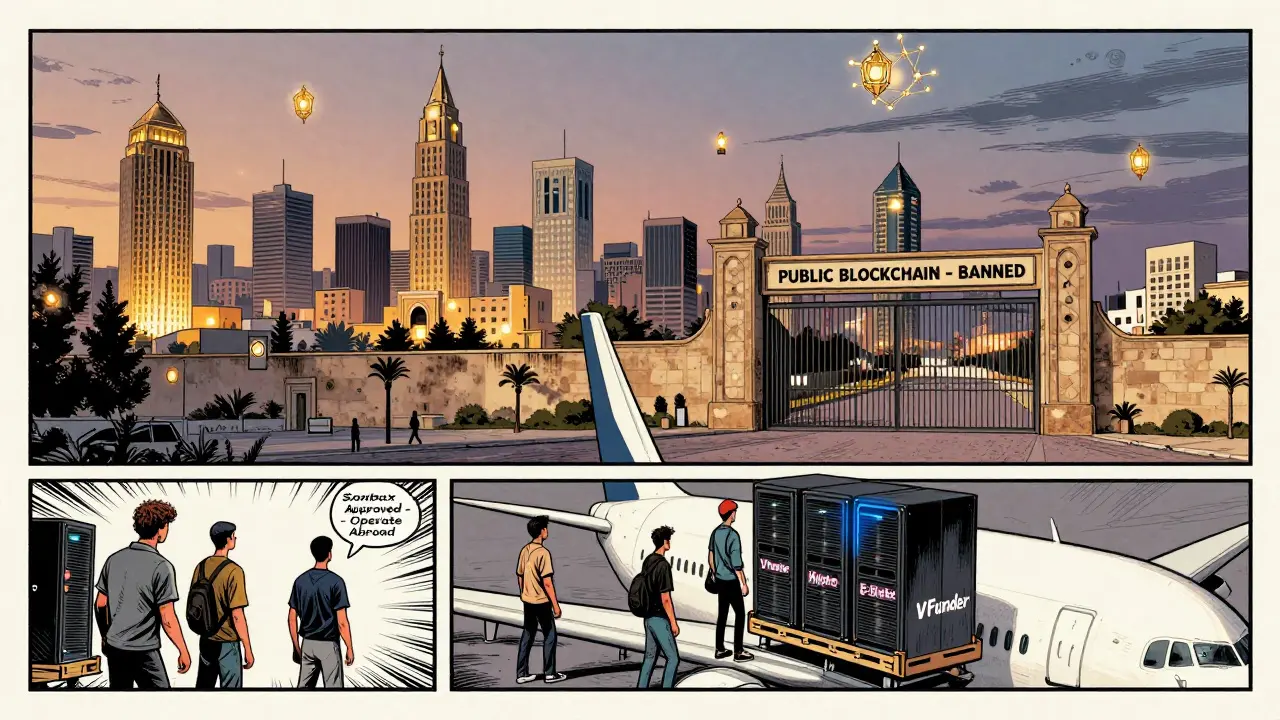
How Does Tunisia Compare to Other Countries?
Tunisia is part of a small group of nations with total crypto bans. Others include China, Egypt, Algeria, Morocco, Nepal, Bangladesh, and Qatar. Most of these countries cite similar concerns: capital flight, money laundering, and loss of monetary control. But the world is moving in the opposite direction. Countries like El Salvador made Bitcoin legal tender. The U.S., EU, Japan, and Singapore have clear regulatory frameworks. Big companies like PayPal, Microsoft, and Tesla accept crypto payments. Tunisia is an outlier. Still, Tunisia isn’t completely isolated. It’s part of the Financial Stability Board (FSB) Middle East and North Africa Regional Consultative Group, which includes Saudi Arabia, Egypt, and 10 other countries. This group regularly discusses crypto risks and global standards. Tunisia’s voice matters in regional talks-even if its policy stays rigid.What’s Next? Will the Ban Ever Lift?
There’s no official sign the ban will change. But two things suggest it might evolve: First, the regulatory sandbox keeps running. It’s been active since 2020. That shows the bank is still curious about blockchain’s potential. If the sandbox proves safe and useful, pressure could grow to expand its scope. Second, the 2021 prison case sparked cabinet-level discussions. Some officials questioned whether jailing teenagers over small crypto trades made sense. No policy shift followed, but the fact that it was debated at the highest level matters. The real barrier isn’t technology-it’s economics. Tunisia’s economy is fragile. Foreign currency reserves are low. The government borrows heavily from local banks. Any new financial tool that could let citizens move money out of the country is seen as a threat. Until those pressures ease, the ban will likely stay.What Should Tunisians Do?
If you’re in Tunisia, the safest move is to avoid crypto entirely. Even holding Bitcoin in a personal wallet could get you flagged if you tried to cash out. Don’t risk fines or jail time over digital assets that offer no legal protection. If you’re a developer or entrepreneur, focus on permissioned blockchain projects. Build tools for supply chain tracking, public records, or government services. Use the sandbox. Learn from international partners. Build skills that will be valuable when-if-the policy changes. The world is moving toward digital money. Tunisia isn’t. But it’s not standing still. It’s building its own version-one where the state controls every step. Whether that’s the future of finance in Tunisia, or just a temporary pause, only time will tell.Is cryptocurrency illegal in Tunisia?
Yes. Since May 2018, the Central Bank of Tunisia has banned all cryptocurrency transactions, including buying, selling, mining, and trading. Using crypto for payments or holding it locally can lead to fines or up to five years in prison.
Can I mine Bitcoin in Tunisia?
No. Importing cryptocurrency mining equipment like ASIC rigs is illegal. Customs authorities actively seize such devices at borders. Mining crypto within Tunisia violates the 2018 banking directive and carries criminal penalties.
Does Tunisia have a central bank digital currency (CBDC)?
No official CBDC is in circulation. However, the Central Bank of Tunisia tested a digital dinar (E-Dinar) prototype in 2019. The project was shelved, but it confirms the bank’s interest in state-controlled digital money-not decentralized crypto.
Is blockchain technology banned in Tunisia?
No. Blockchain is actively encouraged-but only in permissioned, government-controlled systems. The Digital Tunisia 2025 plan includes blockchain for land registries, subsidy distribution, and supply chain tracking. Public blockchains like Bitcoin are banned; private ones are welcome.
Can Tunisian startups work with crypto?
Not directly. Startups can join the Central Bank’s regulatory sandbox to test blockchain applications, but they must host infrastructure abroad and avoid local crypto transactions. The sandbox is for research, not commercial crypto services.
What happens if I get caught using crypto in Tunisia?
You could face criminal charges under currency control laws. Penalties include fines and up to five years in prison. Enforcement has targeted individuals (like a teenager jailed in 2021) and businesses that accept crypto payments or operate exchanges.
Is Tunisia planning to legalize crypto in the future?
There are no official plans to legalize open-market cryptocurrency. The regulatory sandbox suggests the government is open to blockchain innovation under strict control, but the core ban remains unchanged as of 2025. Any future change would likely depend on economic stability and regional policy shifts.