

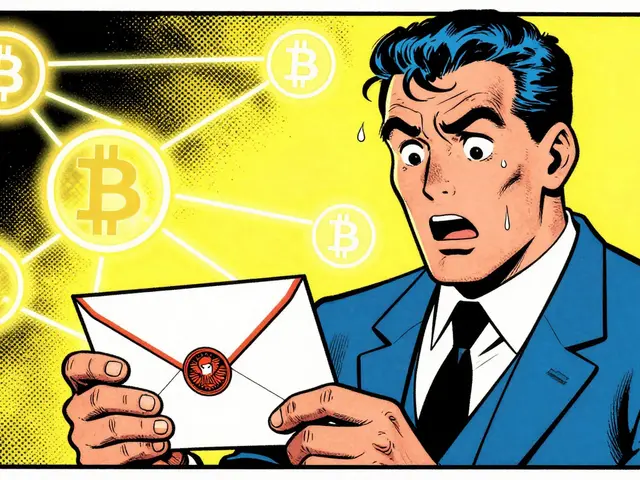
Imagine running a small business in Ho Chi Minh City and deciding to accept Bitcoin to stay trendy and attract tech-savvy customers. It seems like a smart move until you realize you've just handed the government a reason to fine you up to 200 million VND. In Vietnam, the gap between how people actually use digital assets and what the law allows is wide, and crossing that line can be incredibly expensive.
The Cost of Breaking the Rules
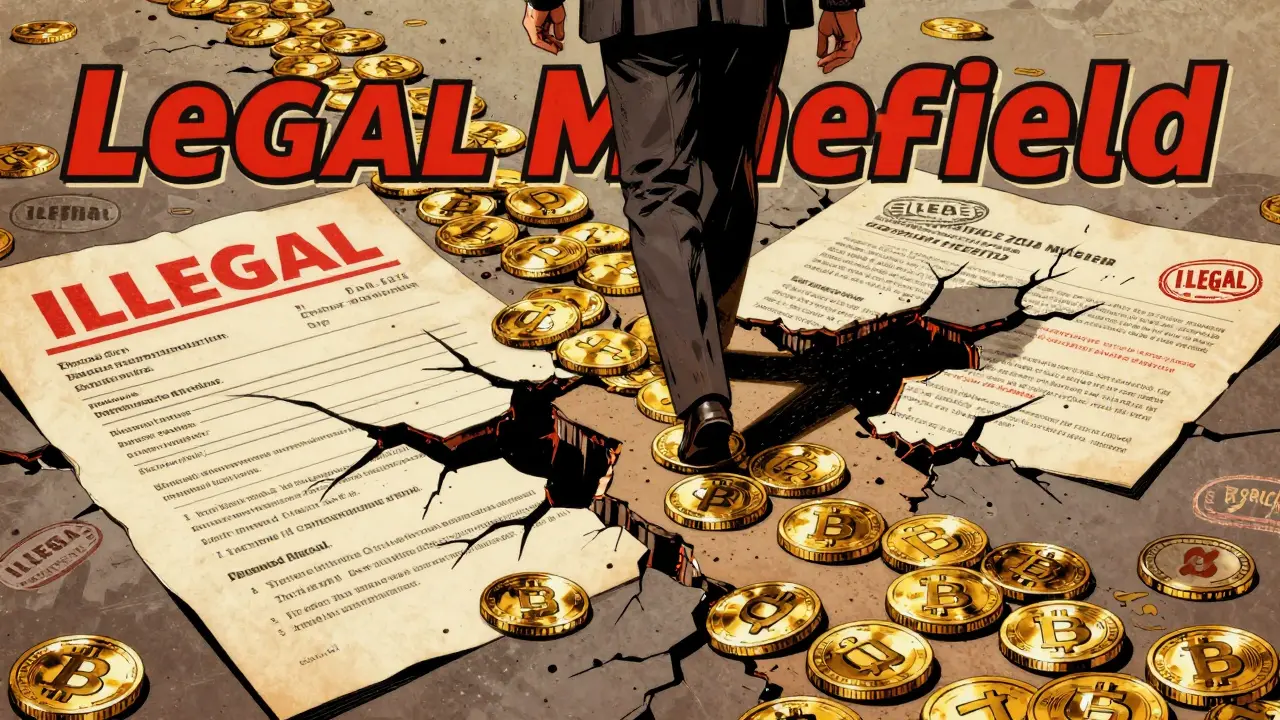
If you use cryptocurrency to pay for a coffee, a laptop, or a professional service in Vietnam, you are stepping into a legal minefield. The State Bank of Vietnam is the central bank of the Socialist Republic of Vietnam, responsible for monetary policy and banking supervision. Also known as SBV, it has made it crystal clear: cryptocurrencies are not legal tender.
Under Decree No. 96/2014/ND-CP is a legal regulation detailing administrative sanctions in monetary and banking activities within Vietnam , specifically Clause 6 of Article 27, the act of issuing, supplying, or using virtual currencies as a means of payment is strictly prohibited. If you get caught, the administrative fines range from 150 million to 200 million VND (roughly $6,500 to $8,900 USD). For many small business owners or individuals, a hit of 200 million VND can wipe out an entire year's profit.
Asset vs. Payment: The Great Gray Area
Here is where it gets confusing. There is a massive difference between owning a coin and spending a coin. The Vietnamese government hasn't explicitly banned you from buying Bitcoin or Ethereum as an investment. You can hold them in a wallet, trade them on global exchanges, and watch the price fluctuate. However, the moment you use that asset to settle a debt or buy a product, it transforms from an "investment asset" into an "illegal payment instrument."
This distinction is rooted in Decree 101/2012/ND-CP is the primary regulation governing non-cash payments in Vietnam . This law only recognizes a handful of legal payment methods: checks, payment orders, bank cards, and other SBV-approved instruments. Since Bitcoin isn't on that list, using it as a currency is an illegal act.
| Activity | Legal Status | Potential Risk |
|---|---|---|
| Holding Crypto as an Asset | Gray Area / Not Prohibited | Low (until tax laws evolve) |
| Trading on Exchanges | Not explicitly banned | Moderate (unregulated) |
| Accepting Crypto for Goods/Services | Illegal | High (150-200M VND fine) |
| Issuing a New Token for Payment | Illegal | High (Prosecution possible) |
Why is the SBV So Strict?
You might wonder why a country that ranks so high in global crypto adoption-often in the top 10 according to Chainalysis-would maintain such a harsh ban. The SBV's logic boils down to three main concerns: monetary sovereignty, tax evasion, and financial stability.
When a government allows a decentralized currency to take over, it loses its grip on the economy. If everyone starts paying in Bitcoin is the first decentralized cryptocurrency that uses a peer-to-peer network to record transactions on a public ledger called a blockchain , the central bank can't effectively control inflation or manage the value of the Vietnamese Dong. Furthermore, crypto payments are notoriously hard to track. This opens the door for illegal money transfers and massive tax leaks, making the economy a "black box" for regulators.
Comparing Vietnam to Its Neighbors
Vietnam's approach is far more rigid than what you'll find in Singapore or Thailand. For example, the Monetary Authority of Singapore created a licensing regime for digital payment tokens, allowing companies to operate legally as long as they follow strict Anti-Money Laundering (AML) rules. Thailand similarly allows licensed exchanges to operate.
Vietnam, conversely, chose a "blanket ban" on payments. While this keeps the central bank in control, critics argue it pushes the entire industry underground. Instead of a regulated market where the government can collect taxes and monitor risks, Vietnam has a thriving P2P (peer-to-peer) market where transactions happen in the shadows to avoid those 200 million VND fines.
Real-World Enforcement and the "Invisible" Market
Does the government actually catch everyone? Not exactly. Most of the heavy fines are aimed at high-profile cases. A few years back, a university tried to accept Bitcoin for tuition. The SBV stepped in almost immediately, forcing them to scrap the plan before it even launched. For the average person buying a freelance service via crypto, enforcement is harder because the transactions are private.
However, the risk increases when you use a formal business entity. If a company's accounting books show revenue coming from "crypto payments," it becomes a red flag for auditors. The SBV has coordinated with other agencies to penalize these acts, and while they don't publish every single fine, the threat is used as a deterrent to keep businesses aligned with state-sanctioned digital payments.

The Future: Taxes and Virtual Assets
The tide might be shifting slightly. While the ban on crypto payments Vietnam remains firmly in place, there is a growing conversation about treating crypto as a taxable asset. The Ministry of Finance has floated ideas about tax management for virtual assets. This suggests that the government is moving from a phase of "total denial" to a phase of "monetization." They may never let you buy a bowl of Pho with Dogecoin, but they might start asking for a cut of your trading profits.
Currently, the government is pushing the National Financial Inclusion Strategy. They want you to use digital payments, but they want them to be through apps and banks they control, not through a decentralized blockchain.
Can I be fined for simply owning Bitcoin in Vietnam?
Owning cryptocurrency as an investment is not explicitly illegal. The fines of 150-200 million VND apply specifically to the use of cryptocurrency as a means of payment for goods or services, or the act of issuing/supplying it as a payment method.
What exactly is Decree 96/2014/ND-CP?
It is the regulatory framework that sets out administrative sanctions for violations in monetary and banking activities. Clause 6 of Article 27 is the specific section used to penalize those who use virtual currencies for payments.
Is the 200 million VND fine a one-time penalty?
Administrative fines are typically per violation. Depending on the severity and the scale of the operation, repeated violations could lead to further sanctions or even criminal prosecution if the activity is linked to larger financial crimes.
Are stablecoins like USDT exempt from this ban?
No. The law refers to "bitcoin and other similar virtual currencies." Stablecoins are considered virtual currencies and are subject to the same payment ban and potential fines.
What should a business do if they want to accept digital payments legally?
Businesses should use SBV-approved non-cash payment methods, such as bank transfers, e-wallets, or credit cards. These are legal under Decree 101/2012/ND-CP and do not carry the risk of cryptocurrency-related fines.
What to Do Next
If you are a resident or business owner in Vietnam, the safest path is to keep your crypto activities strictly in the "investment" lane. Avoid adding "We Accept Bitcoin" signs to your storefront or listing crypto as a payment option on your checkout page. If you are moving large sums of money, consult a local legal expert who understands the latest SBV directives, as the interpretation of "virtual assets" is still evolving toward a potential tax framework.

There are 13 Comments
Mike Word
The contrast between high adoption rates and strict laws is pretty striking. It's interesting how the P2P market just absorbs the risk when the official channels are closed off.
Caiaphas Konkol
Naturally, the central bank is terrified. They aren't just protecting the Dong, they're protecting their absolute grip on the population's wealth. This is a textbook move to ensure that the elite keep their monopoly on financial movement while the plebeians are left to trade in the shadows like criminals. It's quite quaint that people think a "tax framework" is a sign of progress rather than just another leash.
Benjamin Forg
just more control from the state man they want to see every cent you move so they can decide if you deserve to eat or not its all a game to keep us in line and these laws are just the fence
Jennifer Taylor
The government is watching everyone. They know exactly who is using Bitcoin even if you think it's private. They probably have some secret software that finds every single transaction and they're just waiting to take all your money at once to scare the rest of us. It's all a trap to get people to use those bank apps they want us to use so they can track our every move and know what we eat for breakfast.
Sarah Ingrams
sounds so stressful for those business owners
Yvette P
Oh, honey, let me enlighten you on the sheer absurdity of this regulatory arbitrage. While the SBV is playing musical chairs with Decree 96, they're essentially creating a massive liquidity vacuum that only benefits the most unscrupulous P2P operators who love the lack of KYC. It's a delightful little irony that the state's obsession with monetary sovereignty is actually fostering a shadow economy that's practically impervious to the very oversight they crave. Honestly, the systemic inefficiency here is almost a work of art if you enjoy watching financial policy crash and burn in real-time. You've got this weird hybrid of hyper-adoption and draconian prohibition that would make any serious macroeconomist laugh out loud. The sheer audacity of thinking a 200 million VND fine will stop a generation of tech-native youth in a country where the digital economy is exploding is just peak comedy. I'm sure the transition to a taxable asset phase will go just swimmingly, assuming the government can even identify the wallets without some sort of massive surveillance state upgrade. It's just such a wonderful mess of contradictions and I can't wait to see which part collapses first. Truly a masterclass in how to alienate your most innovative entrepreneurs while pretending to lead a digital transformation. Just purely gold.
Gloris Young
It's a bit of a tough spot for entrepreneurs there. Staying in the investment lane seems like the only way to go for now.
Doc Coyle
It's simple. Laws are there for a reason. If you choose to ignore the rules of a country and use an illegal payment method, you deserve the fine. People act like it's some big conspiracy when it's really just about following the law.
Tony Gurley-Ward
Imagine the poetic irony of a digital currency being treated as a physical contraband item in the 21st century! It's like trying to ban the wind by making it illegal to breathe. A colorful little dance between the old world and the new.
Gary Lingrel
who cares about some small business in vietnam while our own economy is a joke :( i bet they just want to cheat the system anyway
Jason M
This is a heartbreaking situation for anyone trying to innovate! We must guide these business owners toward legal alternatives with passion and strength! Do not let the fear of fines crush your entrepreneurial spirit, just pivot to the legal e-wallets and keep climbing!
Eric Raines
I've seen this a million times. The government always says it's about stability but they just want to be the ones holding the keys. Everyone knows the P2P market is where the real action is anyway because the banks are too slow.
Kyle Bush
USA is way better than this!! 🇺🇸 We don't have some crazy bank just slapping people with 200 million whatever-they-call-it just for being techy! This is why the US is the king of crypto!! 🚀💰🔥
Write a comment
Your email address will not be published. Required fields are marked *