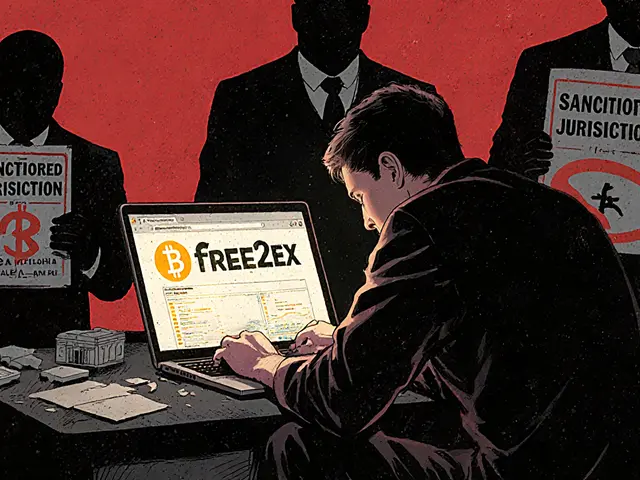
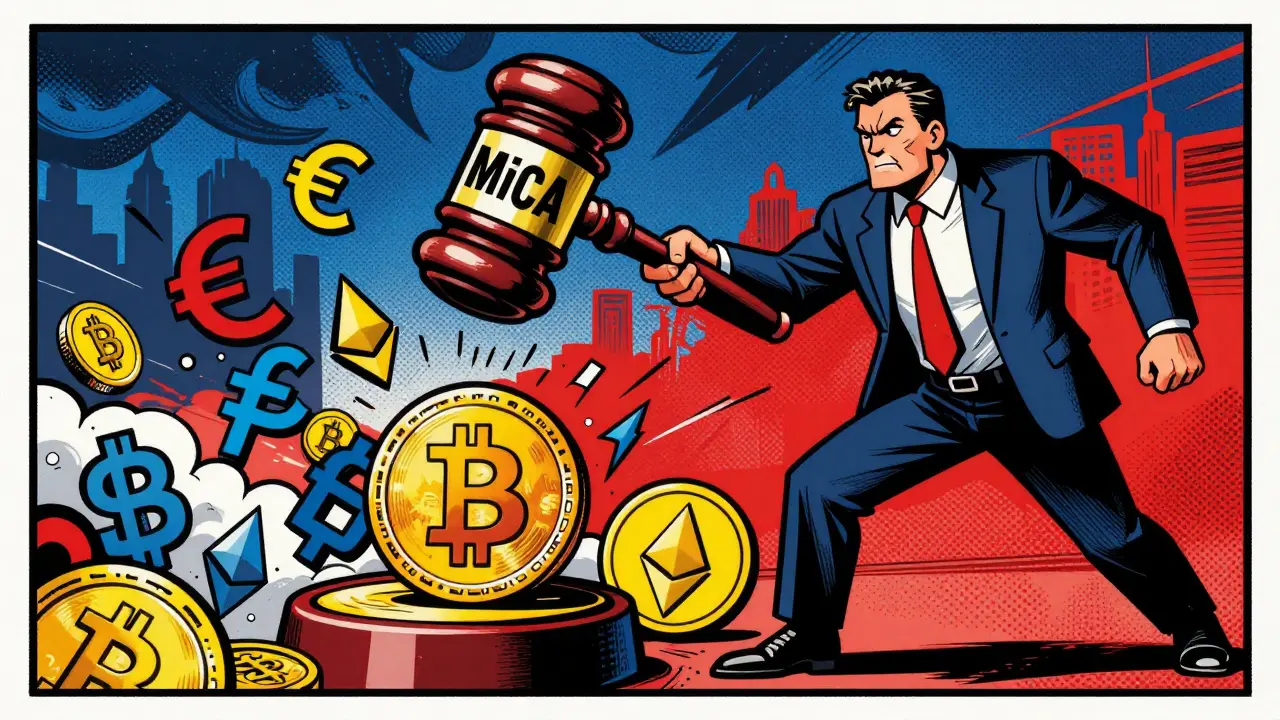
You might be wondering why your favorite trading platform suddenly feels like it’s walking on eggshells. If you trade crypto in Europe, you’ve likely noticed stricter KYC checks, delayed withdrawals during volatile market swings, or platforms quietly moving their headquarters to more lenient jurisdictions. The culprit? A sweeping regulatory overhaul led by the European Central Bank (ECB), which has shifted from passive observation to active scrutiny of cryptocurrency exchanges.
In its May 2025 Financial Stability Review, the ECB published a special feature titled 'Just another crypto boom? Mind the blind spots.' This isn’t just bureaucratic paperwork; it’s a direct signal that the era of wild west crypto trading in the Eurozone is over. The report highlights systemic risks, citing a $2.8 trillion surge in market capitalization between January 2024 and May 2025 as a trigger for deeper intervention. For traders, this means higher standards for security, transparency, and liquidity. But what exactly does the ECB want, and how does it affect your daily trades?
The Core Concerns: Why the ECB Is Watching Your Trades
The ECB doesn’t care about your profit margins; it cares about financial stability. Their primary fear is that a crash in the crypto market could spill over into traditional banking systems. With $125 billion in assets under management for spot Bitcoin exchange-traded products (ETPs) in the US and significant exposure through European banks, the stakes are high.
The May 2025 review identified three critical vulnerabilities that keep regulators up at night:
- Custody Risks: 78% of major exchanges store more than 40% of customer assets in "hot wallets" (connected to the internet), making them prime targets for hackers. In 2024 alone, five of the top ten exchanges suffered breaches resulting in $1.27 billion in losses.
- Lack of Reserves: A staggering 87% of the top 37 exchanges operate with less than 10% reserves backing customer assets. This creates massive settlement risk if a bank run occurs.
- Operational Fragility: During high-volatility events (defined as >15% price movement in 24 hours), average settlement times on major exchanges jump from 2.3 minutes to nearly 48 minutes, with failed transactions spiking by 320%.
If you’ve ever tried to sell your Bitcoin during a panic drop only to find the button grayed out or the transaction stuck in limbo, you’ve experienced these operational failures firsthand. The ECB wants to eliminate this chaos.
MiCA and the Fragmented Regulatory Landscape
To understand the current state of European crypto exchanges, you have to look at the Markets in Crypto-Assets (MiCA) regulation. While MiCA provides a unified framework, its implementation is still messy. The ECB’s analysis shows that only 14 of the 37 major reviewed exchanges (38%) have obtained full MiFID II authorization. The remaining 22 operate under national temporary permissions, creating a patchwork of rules that confuses both users and businesses.
This fragmentation has real costs. Exchanges spend an average of €417,000 annually per additional jurisdiction to comply with varying local interpretations of the law. For traders, this often translates to limited product offerings. For instance, Germany’s BaFin banned pure single-asset crypto ETFs in March 2024, while France authorized pledges over digital assets in April 2025. Meanwhile, the UK lifted its ban on retail access to crypto exchange-traded notes (ETNs) in August 2025, drawing investors away from stricter EU markets.
| Regulator | Stance on Single-Asset ETFs | Retail Access to Derivatives | Key Focus Area |
|---|---|---|---|
| ECB / EU | Restricted (Risk-diversification required) | Limited (High barriers) | Systemic Risk & Consumer Protection |
| SEC (USA) | Approved (Spot Bitcoin ETPs) | Open | Market Integrity & Investor Disclosure |
| FCA (UK) | Under Review | Lifting Ban (Oct 2025) | Financial Promotion Rules |
| BaFin (Germany) | Prohibited | Strictly Limited | Capital Requirements & Solvency |
Security Standards: What Compliance Actually Looks Like
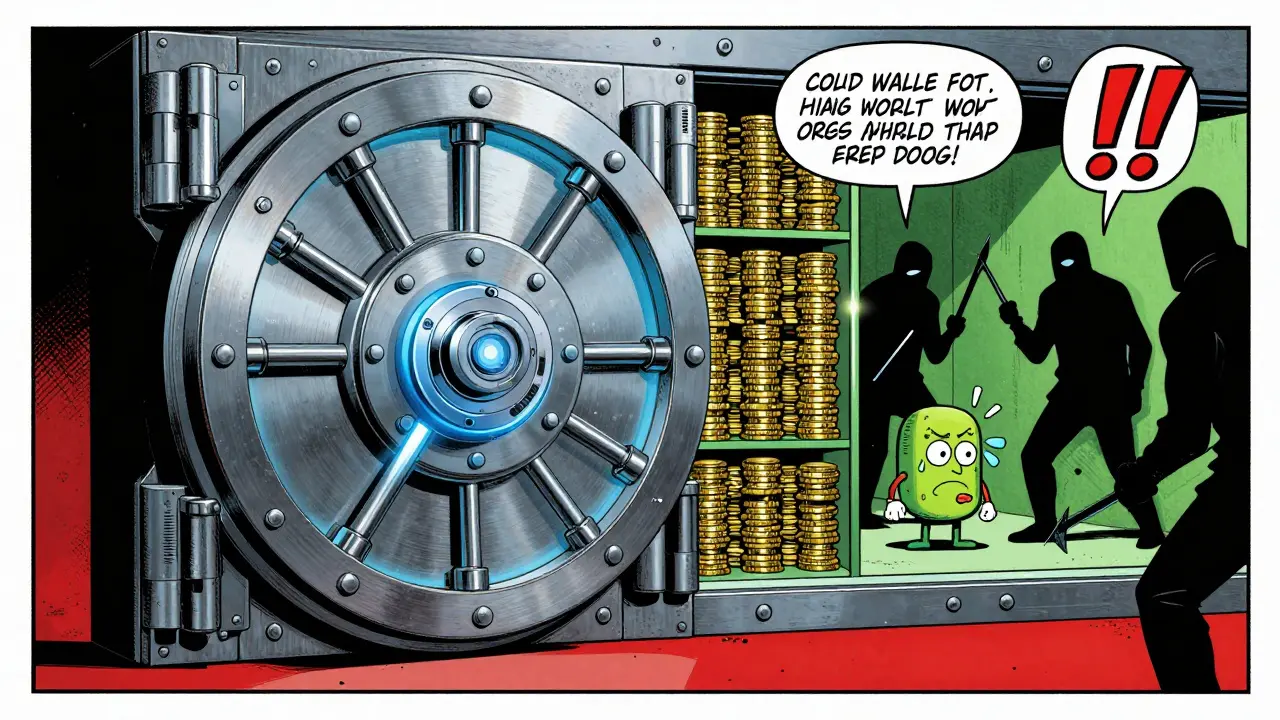
If you’re running an exchange or choosing one to trust, the ECB’s recommended custody framework sets a new gold standard. It’s not just about having a lock on the door; it’s about architectural resilience.
The ECB guidelines suggest that compliant exchanges must:
- Cold Storage Mandate: Keep at least 80% of customer assets in offline cold storage.
- Multi-Signature Withdrawals: Require multi-signature approval for any withdrawal exceeding €50,000.
- Daily Proof-of-Reserves: Provide daily attestations proving they hold enough assets to cover user liabilities.
- Rapid Response Teams: Maintain 24/7 monitoring with less than a 5-minute response time to security incidents.
Currently, only 28% of smaller exchanges (those with under €100 million in annual revenue) meet these requirements. This disparity explains why Trustpilot ratings vary so wildly: platforms with full MiFID II authorization average 4.1/5 stars, while those on temporary permits average 3.4/5. The gap isn’t just about service quality; it’s about structural safety.
The Digital Euro vs. Cryptocurrency
A recurring theme in the ECB’s messaging is the preference for Central Bank Digital Currencies (CBDCs) over private cryptocurrencies. President Christine Lagarde made it clear in early 2025 that Bitcoin would not be included in central bank reserve portfolios. Instead, the ECB allocated €320 million to the digital euro project in 2025, compared to just €18 million for crypto market oversight.
Why the bias? The ECB views stablecoins and decentralized exchanges (DEXs) as threats to monetary sovereignty. They worry that if citizens lose faith in the euro, they might flock to dollar-backed stablecoins or Bitcoin, undermining the ECB’s ability to control inflation and interest rates. However, this stance is facing pushback. The Czech National Bank recently acquired a test portfolio including Bitcoin and stablecoins, signaling that even central banks are curious about the technology despite official rhetoric.

Impact on Traders and Innovation
For the average trader, the ECB’s strictness is a double-edged sword. On one hand, you get better protection against fraud and insolvency. On the other, you face reduced innovation and higher costs. A September 2025 survey found that 58% of European crypto users believe regulatory uncertainty has impacted their trading activity, with many reducing usage or moving to non-EU platforms.
Innovation is fleeing. There was a 37% year-over-year increase in European crypto startups establishing headquarters outside the EU in 2025. One trader on Reddit noted relocating his business from Frankfurt to Singapore, costing €78,000 upfront but saving €220,000 annually in compliance fees. This brain drain poses a long-term risk to Europe’s fintech sector.
What’s Next? The 2026 Outlook
The landscape is shifting. In September 2025, the ECB announced the creation of a Crypto-Asset Supervision Task Force with 45 dedicated staff members, set to launch in January 2026. This suggests a move from general warnings to specific enforcement actions.
Christine Lagarde acknowledged in September 2025 that institutional adoption requires "more nuanced regulatory approaches," hinting at potential softening on certain restrictions. Analysts predict a 60% probability that the ECB will issue formal guidance on stablecoin-backed exchange products by Q2 2026. Until then, expect continued friction, especially around cross-border transfers and derivative products.
Is the European Central Bank banning cryptocurrency exchanges?
No, the ECB is not banning crypto exchanges. Instead, it is implementing stricter regulations under the MiCA framework to ensure financial stability. Exchanges must comply with rigorous security, reserve, and reporting standards to operate legally within the Eurozone.
How does the ECB's review affect my ability to trade Bitcoin?
You can still trade Bitcoin, but you may experience tighter KYC (Know Your Customer) checks, limited access to certain leveraged products, and potentially slower settlement times during high volatility. Platforms are also required to provide more transparent proof of reserves, which enhances your safety.
You can still trade Bitcoin, but you may experience tighter KYC (Know Your Customer) checks, limited access to certain leveraged products, and potentially slower settlement times during high volatility. Platforms are also required to provide more transparent proof of reserves, which enhances your safety.
What is the difference between the ECB's approach and the US SEC?
The US SEC focuses heavily on securities law and investor disclosure, allowing spot Bitcoin ETFs. The ECB prioritizes systemic financial stability and monetary sovereignty, leading to stricter bans on single-asset ETFs and greater emphasis on consumer protection against exchange insolvency.
The US SEC focuses heavily on securities law and investor disclosure, allowing spot Bitcoin ETFs. The ECB prioritizes systemic financial stability and monetary sovereignty, leading to stricter bans on single-asset ETFs and greater emphasis on consumer protection against exchange insolvency.
Will the digital euro replace cryptocurrencies?
Unlikely in the short term. The digital euro is designed for payments and monetary policy, not investment speculation. While the ECB prefers CBDCs, cryptocurrencies like Bitcoin continue to grow in institutional adoption, suggesting a coexistence rather than replacement.
Unlikely in the short term. The digital euro is designed for payments and monetary policy, not investment speculation. While the ECB prefers CBDCs, cryptocurrencies like Bitcoin continue to grow in institutional adoption, suggesting a coexistence rather than replacement.
Are European crypto exchanges safe?
Safety varies. Exchanges with full MiFID II authorization and MiCA compliance are significantly safer due to mandatory cold storage and proof-of-reserves. However, 87% of top exchanges still operate with low reserve backing, so users should verify their platform's regulatory status before depositing large amounts.
Safety varies. Exchanges with full MiFID II authorization and MiCA compliance are significantly safer due to mandatory cold storage and proof-of-reserves. However, 87% of top exchanges still operate with low reserve backing, so users should verify their platform's regulatory status before depositing large amounts.