
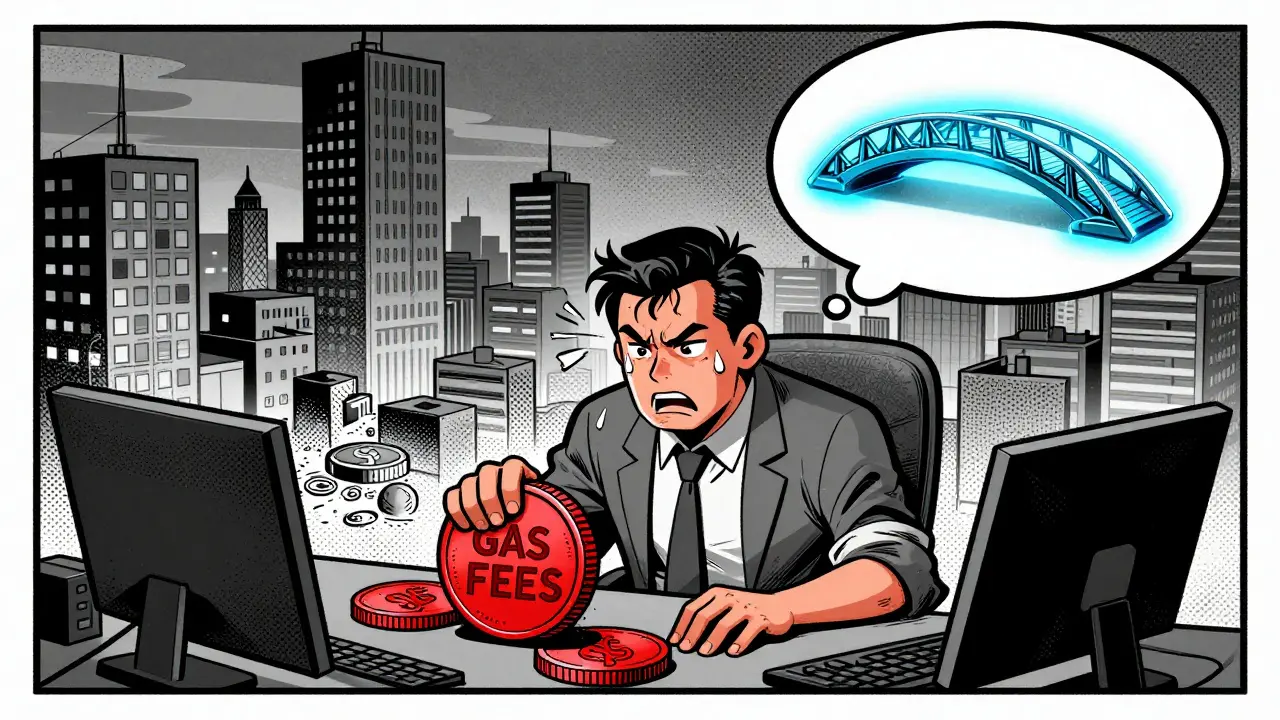
Trading crypto on Ethereum mainnet feels like paying rent for a luxury apartment you can barely afford. Gas fees eat your profits before you even click 'swap.' If you are looking for a way to trade without those headaches, Ekubo is a decentralized exchange built on Starknet that uses super-concentrated liquidity to offer ultra-low fees and high capital efficiency. It claims to be the 'AMM endgame,' but does it actually deliver for regular traders?
I’ve spent weeks testing Ekubo’s interface, analyzing its fee structure, and comparing it against giants like Uniswap V3. The short answer? Ekubo is incredibly powerful if you understand how concentrated liquidity works. But if you just want to set it and forget it, you might find the learning curve steep. Let’s break down whether this protocol fits your trading style.
What Exactly Is Ekubo?
Ekubo isn’t just another copy-paste of Uniswap. It is a specialized Automated Market Maker (AMM) designed specifically for Starknet, a Layer 2 scaling solution for Ethereum. Launched in early 2024, Ekubo focuses on one thing: making your capital work harder.
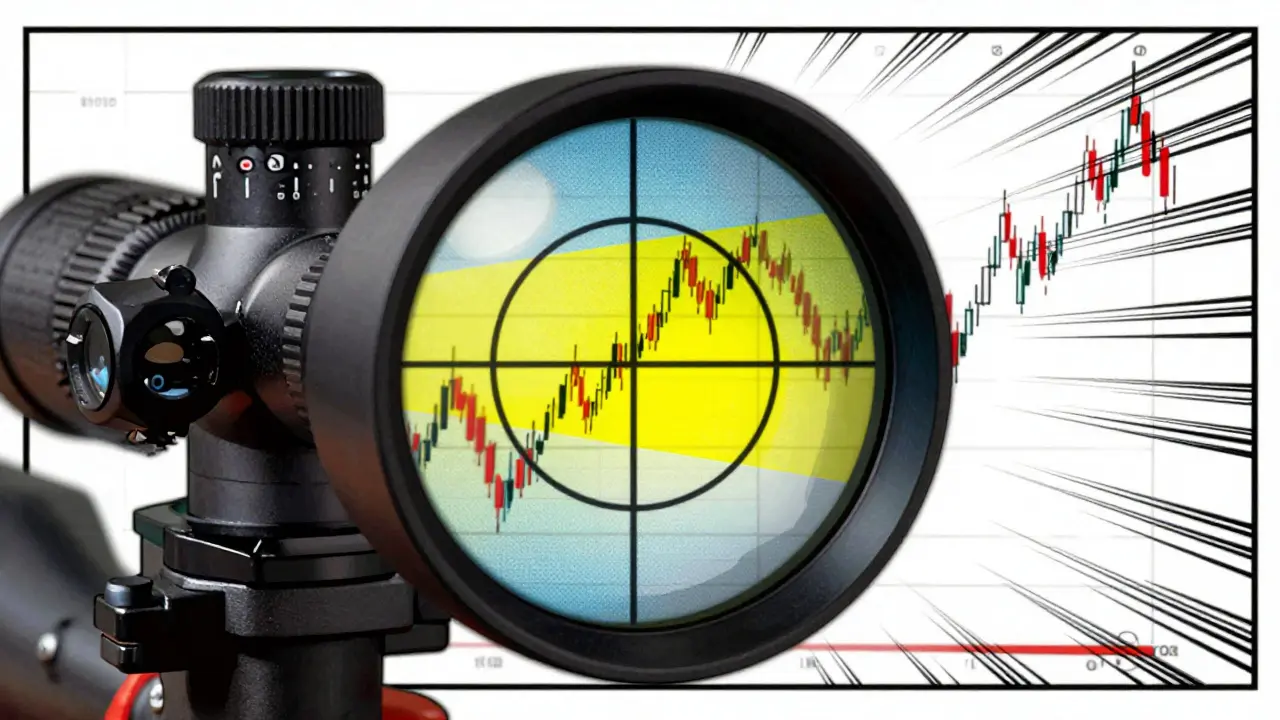
Most AMMs spread your liquidity across all possible price ranges. This means much of your money sits idle, not earning fees. Ekubo changes this by allowing you to concentrate your liquidity into tiny, specific price bands-down to 0.0001% precision. Think of it like placing a sniper shot instead of spraying bullets. You only earn fees when the price is within your chosen range, but while it is there, you earn significantly more per dollar invested.
| Feature | Uniswap V3 (Ethereum) | Ekubo (Starknet) |
|---|---|---|
| Average Swap Fee | $0.25 - $0.50 | $0.0012 |
| Liquidity Precision | 0.01% | 0.0001% |
| Capital Efficiency | Standard | Up to 100x higher |
| Network | Ethereum L1 | Starknet L2 |
This precision allows Ekubo to achieve up to 4 million times greater capital efficiency compared to older models. For stablecoin pairs like USDC/USDT, this translates to yields that dwarf traditional options. In late 2025, users reported APYs around 18.7% on these pairs, compared to roughly 3.2% on Uniswap V3.
Fees and Costs: Where Ekubo Shines
Let’s talk about what matters most: your wallet balance. Because Ekubo runs on Starknet, which uses ZK-Rollup technology, gas costs are negligible. A typical swap on Ekubo costs about 15,000 gas units, translating to roughly $0.0012 during normal network conditions.
Compare that to PancakeSwap V3 on BNB Chain, where fees average $0.018, or Ethereum mainnet, where they can spike to $5.00 or more during congestion. If you are a frequent trader or a liquidity provider who rebalances often, these savings add up quickly. Over a year of active trading, you could save hundreds, if not thousands, of dollars in fees alone.
However, remember that low gas fees don’t mean zero risk. You still need to manage slippage and impermanent loss. Ekubo’s dynamic fee adjustment algorithm, introduced in version 1.2, helps mitigate slippage during volatile periods, reducing it by 23% according to internal tests. This is a smart feature that protects your trades when the market goes wild.
User Experience: Beautiful but Complex
Here is the catch. Ekubo is not as simple as clicking 'Swap' on Coinbase. The interface at app.ekubo.org is clean and modern, but it requires you to make decisions about price ranges. You need to decide: "Do I think the price will stay between $60,000 and $62,000?" If you guess wrong, your position exits early, and you stop earning fees.
User feedback reflects this divide. On Reddit’s r/Starknet community, experienced traders praise the high yields. One user, 'ZK_Trader89', reported earning 22.3% APY over six months with minimal impermanent loss. But they also admitted it took three hours to master the interface. Trustpilot reviews show a 3.8/5 rating, with 63% of negative comments citing the 'steep learning curve.'
If you are new to DeFi, expect to spend 12-15 hours learning the ropes. Ekubo provides an 'Akubo Academy' with 28 interactive modules and a YouTube series totaling 6.2 hours of content. Their Discord server has over 14,000 members, many of whom are happy to help. But you cannot skip the education phase if you want to avoid costly mistakes.
Security and Trust
In crypto, security is non-negotiable. Ekubo takes this seriously. All smart contracts are written in Cairo, a language optimized for Starknet’s security model. More importantly, they have undergone rigorous audits.
Leading firms OpenZeppelin and ConsenSys Diligence audited the code before launch. They identified and resolved seven critical and twelve high-severity issues. As of late 2025, Ekubo operates on version 1.2 of its smart contracts, with updates every two to three weeks. This regular maintenance shows the team is active and responsive.
However, no system is perfect. There was a case where a user lost $320 due to incorrect price range selection during a stablecoin depeg event. This wasn’t a hack; it was user error. It highlights that while the platform is secure, your own knowledge is your best defense. Always double-check your price ranges and understand the assets you are providing liquidity for.
The EKUBO Token: Governance and Utility
Ekubo has its own governance token, EKUBO. Launched in March 2024, it has seen significant growth, rising from $0.82 to over $4.50 by late 2025. But what does it do?
Primarily, it is used for governance. Holders can vote on proposals, such as fee structures and liquidity incentives. In September 2025, Proposal #14 allocated 1.2 million tokens to boost liquidity mining, resulting in a 37% TVL increase within two weeks. This shows the token has real utility in driving protocol growth.
Some users find the token’s value proposition unclear beyond governance. Bitget surveys indicate 68% of users struggle to assess its utility outside of voting. If you are buying EKUBO, you are betting on Ekubo’s continued dominance on Starknet. Keep in mind that 57% of participants are institutional players, so retail investors should watch whale movements closely.
Who Should Use Ekubo?
Ekubo is not for everyone. Here is who benefits most:
- Active Liquidity Providers: If you monitor markets daily and enjoy optimizing positions, Ekubo offers unmatched yields.
- Stablecoin Traders: The capital efficiency for pairs like USDC/USDT is superior to almost any other DEX.
- Cost-Conscious Traders: If you hate paying high gas fees, Ekubo’s near-zero costs are a game-changer.
It is less suitable for:
- 'Set and Forget' Investors: If you want passive income without monitoring prices, stick to broader-range AMMs.
- Crypto Novices: The complexity can lead to losses if you don't understand concentrated liquidity.
- Volatile Asset Speculators: High volatility requires frequent rebalancing, which can be tedious and risky.
Final Verdict
Ekubo is a technical marvel. It solves real problems in DeFi: high fees and inefficient capital use. With 62.3% of Starknet’s DEX volume, it is clearly trusted by the market. The combination of sub-cent fees and high-yield opportunities makes it a top choice for sophisticated users.
But power comes with responsibility. You must learn how to use it. Don’t rush in with large sums. Start small, use the tutorials, and join the Discord. If you put in the effort, Ekubo can become one of the most profitable tools in your crypto arsenal. If you prefer simplicity, you might find the complexity frustrating. Know your limits, and trade accordingly.
Is Ekubo safe to use?
Yes, Ekubo is considered safe. Its smart contracts have been audited by top firms like OpenZeppelin and ConsenSys Diligence. However, always remember that DeFi carries inherent risks, including smart contract vulnerabilities and user error. Never invest more than you can afford to lose.
How do I get started with Ekubo?
First, download a Starknet-compatible wallet like Braavos or Argent X. Bridge some ETH or stablecoins to Starknet using an official bridge. Then, visit app.ekubo.org, connect your wallet, and explore the 'Learn' section to understand concentrated liquidity before adding funds.
What are the fees on Ekubo?
Gas fees on Ekubo are extremely low, averaging around $0.0012 per transaction. Trading fees vary by pool but are generally competitive. The low cost is one of Ekubo's biggest advantages over Ethereum-based exchanges.
Can I use Ekubo for passive income?
Not really. Ekubo requires active management because of its concentrated liquidity model. If the price moves out of your selected range, you stop earning fees. Passive investors might prefer protocols with wider liquidity ranges.
What is the EKUBO token used for?
The EKUBO token is primarily used for governance. Holders can vote on protocol upgrades, fee structures, and incentive programs. It also serves as a reward mechanism for liquidity providers through staking and farming campaigns.




There are 16 Comments
Michelle Bonahoom
another scammy dex trying to steal your money with fancy words like zk-rollup and super-concentrated liquidity
stick to eth mainnet where at least you know what you are paying for
Matt Davis
You are absolutely deluded if you think Ethereum mainnet is 'safer' just because it costs more. Paying $50 in gas fees to swap $100 worth of tokens isn't a security feature; it's a tax on stupidity. Starknet isn't going anywhere, and Ekubo's audits by OpenZeppelin are more thorough than half the garbage deployed on L1. Grow up and look at the actual capital efficiency metrics instead of clinging to your expensive nostalgia.
Michelle Bonahoom
i dont care about your metrics mr smart pants
just keep your money safe
Jesse Alston
Hey everyone! 👋 Just wanted to add a quick tip for anyone new to Ekubo. The biggest mistake I see people making is setting their price range too tight during high volatility periods. If you're trading ETH/USDC, try keeping a slightly wider buffer unless you're actively rebalancing every few hours. Also, check out the 'Akubo Academy' modules mentioned in the post-they’re genuinely helpful for understanding how the dynamic fee adjustment works. Happy trading! 🚀💰
Bianca Vilas Boas Lourenço
Oh wow, another 'tip' from someone who probably lost their shirt last week 😒🙄
I love how these bots always show up with emojis and fake enthusiasm. Like, thanks Jesse, I didn't realize I needed to read a manual to click a button. But sure, keep telling yourself it's 'genuinely helpful' while your portfolio bleeds out 💀📉
Jesse Alston
No hard feelings! 😊 Everyone has bad days in DeFi. The point is just to minimize unnecessary losses through proper range management. If you found the tips useful, great! If not, that's okay too. Stay safe out there! ✨
Yash Lodha
The centralized narrative surrounding Starknet is a deliberate distraction from the underlying vulnerabilities inherent in ZK-Rollup architectures. One must consider who truly controls the sequencer and whether the 'audits' by firms like ConsenSys Diligence are merely rubber stamps for institutional interests. The user error cited in the article regarding the $320 loss is likely a cover-up for systemic flaws in the price oracle integration. Trust no one, verify everything, and remember that the house always wins in these digital casinos.
Sudarshan Anbazhagan
It is quite evident that the individual writing this comment lacks a fundamental understanding of cryptographic verification principles
The assertion that audits are mere rubber stamps is a baseless conspiracy theory devoid of empirical evidence
OpenZeppelin and ConsenSys Diligence are industry standards for security validation
To suggest otherwise is to ignore the rigorous mathematical proofs underpinning Starknet's validity system
Furthermore the concept of user error is well documented in decentralized finance literature as a primary risk factor independent of protocol integrity
One should educate themselves before spreading misinformation
Yash Lodha
Your reliance on institutional authority figures is precisely why you will remain a pawn in this game. The 'mathematical proofs' you cite are often obfuscated by proprietary code and closed-source components. Who audited the auditors? The silence of the masses is deafening when they are being sheared like sheep. Wake up.
Ankush Pokarana
There is a profound philosophical tension between the desire for financial autonomy and the necessity of technological literacy
We often seek tools that promise freedom yet demand servitude to complex interfaces
Ekubo represents this paradox beautifully
It offers liberation from high fees but binds us to the discipline of constant monitoring
Perhaps the true value lies not in the yield itself but in the mindfulness required to manage it
In this sense the act of trading becomes a meditation on impermanence and control
We must ask ourselves whether we are seeking profit or mastery
Bijan Das
Ugh, can we stop with the philosophy major nonsense?
Just tell me if I can make money or not
This whole 'meditation on impermanence' crap is just a way to sound smart while losing your principal
I'm not here to meditate I'm here to eat
Ankush Pokarana
And yet the pursuit of immediate gratification often leads to long-term dissatisfaction
The simplicity you crave may indeed provide quick results but it rarely sustains wealth over time
Consider that the complexity is a filter designed to separate those who understand the mechanism from those who merely gamble
Perhaps there is wisdom in the difficulty itself
Sharada Vakkund
Let's bring some positivity to this thread! 🌟 I've been using Ekubo for stablecoin pairs and the yields are genuinely impressive compared to traditional savings accounts. It's important to remember that learning new tech takes time, so don't be too hard on yourselves if it feels confusing at first. Join the Discord, ask questions, and support each other. We're all in this together! 💪✨
Kimberly Herbstritt
Sure, let's all hold hands and sing kumbaya while our funds get drained by a bug in the Cairo code.
I find the idea of 'supporting each other' hilarious when the entire premise of crypto is competitive zero-sum gaming.
But hey, keep dreaming Sharada.
Sharada Vakkund
I hear your skepticism Kimberly, and it's valid to be cautious. However, collaboration often leads to better security outcomes because users share insights and spot issues faster. A community that supports itself is stronger than one that tears each other down. Let's focus on constructive dialogue rather than cynicism. 🌈
beti macedo
hi friends
i just started looking into ekubo yesterday and i am so excited!
the fees are really low which is good for my budget
i hope i can learn fast and make some profit
thanks for the info in the post it was very helpfull
cheers!
Write a comment
Your email address will not be published. Required fields are marked *