
FairySwap crypto exchange review
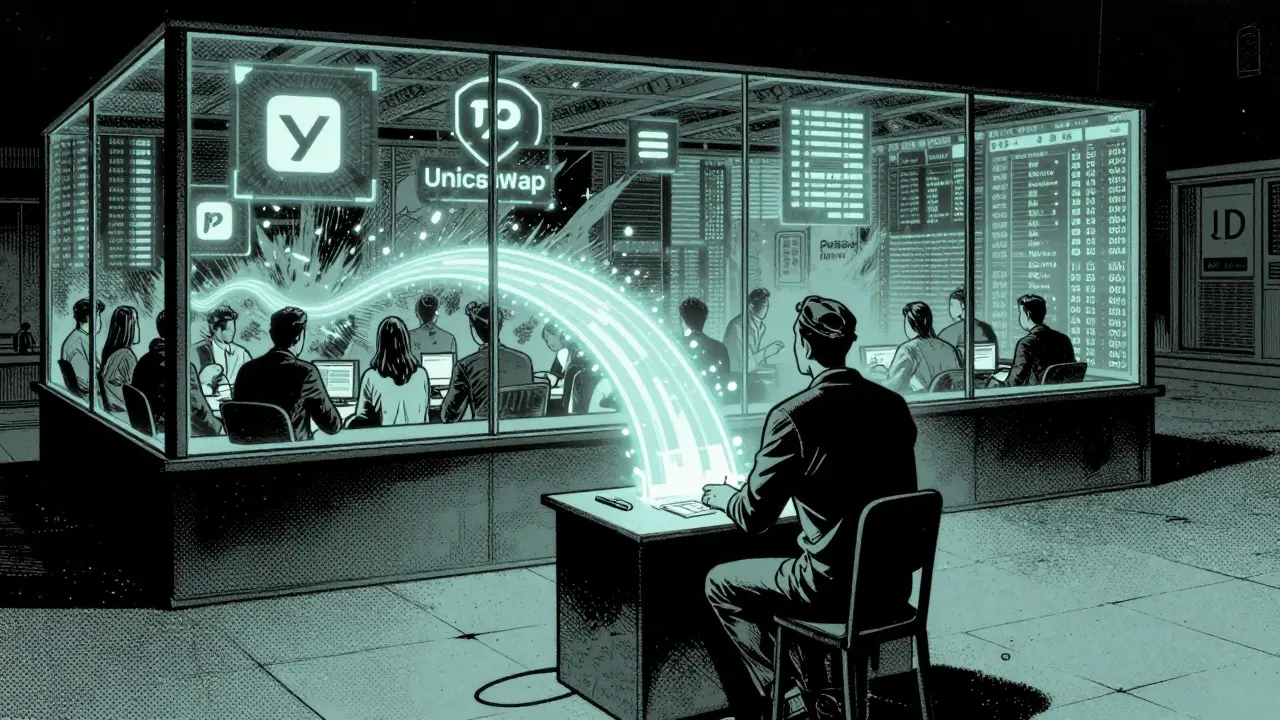
FairySwap isn’t another Uniswap clone. It doesn’t brag about high trading volumes or flashy referral programs. Instead, it makes a quiet promise: privacy. Built on the Findora blockchain, FairySwap lets you trade crypto without exposing your transaction history to the public ledger. That sounds great-if you care about financial privacy. But here’s the catch: no one seems to be using it.
On paper, the tech is solid. FairySwap uses zero-knowledge proofs (ZKPs), the same advanced cryptography that lets you prove you know a secret without revealing the secret itself. In practice, this means you can send tokens, swap assets, or lock liquidity-and no one on the blockchain can see how much you traded, who you traded with, or what wallet you used. Only the network verifies the transaction is valid. That’s a big deal in a space where every trade is public by default. Most DEXs, like PancakeSwap or SushiSwap, show every detail: your wallet address, the exact amount swapped, even the time of day. FairySwap hides that. It’s like trading in a private room while everyone else is stuck in a glass house.
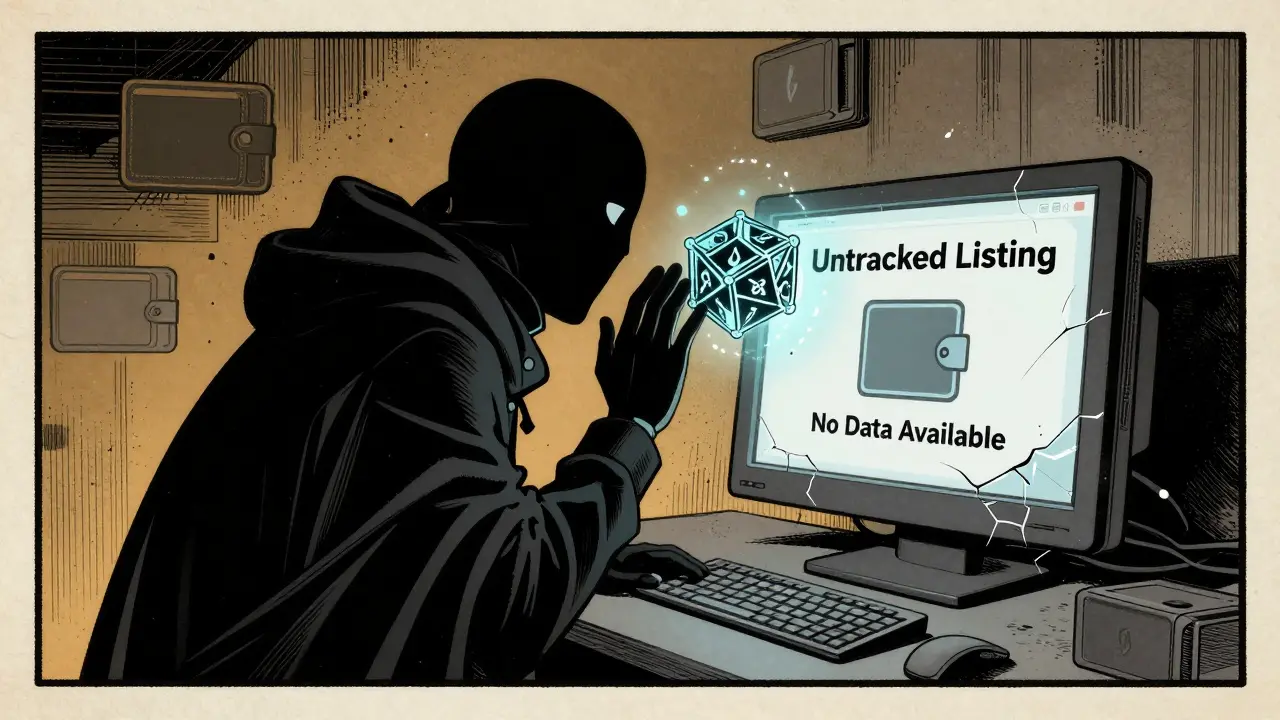
But here’s where it gets tricky. If you check CoinMarketCap, FairySwap shows up as an Untracked Listing. That means no trading volume, no liquidity data, no active markets. The page says, “No data is available now.” That’s not a glitch. It’s a red flag. CoinMarketCap only tracks exchanges that meet minimum standards for volume, market maker activity, and API reliability. If FairySwap isn’t on their radar, it’s either too new, too small, or not set up for real-world use. There’s no way to tell if the platform actually works under load. Can you swap 10 ETH without slippage? Is there enough liquidity in the USDT-FAIR pair? Nobody knows. Not even the people who built it.
Privacy-focused DEXs have a hard road. Tornado Cash got sanctioned by the U.S. Treasury in 2022. Regulators see anonymity tools as risky-even if they’re used by ordinary people who just don’t want their financial history sold to advertisers or tracked by governments. FairySwap walks that same line. It’s not designed for criminals. It’s designed for people who don’t want their crypto activity turned into public data. But in today’s climate, that’s enough to make exchanges nervous. Banks won’t touch it. Wallet providers might block it. Exchanges might refuse to list its token. Without regulatory clarity, FairySwap could be stuck in limbo forever.
And what about the team? There’s no public roadmap. No GitHub commits. No LinkedIn profiles for the developers. No Twitter updates. No Medium posts explaining their progress. That’s not just quiet-it’s invisible. Most successful DeFi projects share their development milestones. They post audits. They run bug bounties. They answer questions on Discord. FairySwap doesn’t. That doesn’t mean it’s a scam. But it does mean you’re putting your money into something with zero transparency. If a smart contract has a bug, who fixes it? If the platform goes down, who do you contact? There’s no customer support page. No FAQ. No email. No help center.
What tokens can you trade? Unknown. What are the fees? Unknown. Is there a minimum deposit? Unknown. Can you use it from the U.S.? Unknown. Is KYC required? Unknown. These aren’t minor details-they’re dealbreakers. You wouldn’t open a bank account without knowing the fees or whether you can withdraw your money. Why would you trust a crypto exchange with your life savings if you can’t even find basic info?
Compare this to established privacy tools. Tornado Cash, despite its sanctions, had a public codebase, active developers, and a clear use case. FairySwap has none of that. Even newer privacy DEXs like Aztec or Zcash-based projects have documentation, community forums, and at least some trading activity. FairySwap has silence. That silence isn’t mysterious-it’s risky.
Some might say, “It’s early. Give it time.” Maybe. But time without users doesn’t build liquidity. Liquidity without volume doesn’t attract traders. Traders without trust don’t stick around. FairySwap’s model depends on adoption. But adoption requires proof of reliability-and there’s nothing to prove.
There’s also the question of Findora, the blockchain it runs on. Findora is promising. It’s built for privacy finance. But it’s not Ethereum. It’s not Solana. It’s not even Polygon. It’s a niche layer-1 with limited dApp support. If you want to use FairySwap, you need to bridge your assets to Findora first. That means extra steps, extra fees, extra risk. Most users won’t bother. Why jump through hoops for a DEX that might not even work?
The real test? Try to swap something. Go to the website. Connect your wallet. Pick a token. Hit swap. What happens? Does it work? Does it show an error? Does it hang? Does it disappear? There are no user reports. No YouTube tutorials. No Reddit threads. No Twitter threads. If no one’s talking about it, no one’s using it. And if no one’s using it, the privacy feature is just a theoretical experiment.
FairySwap has potential. The tech is real. The idea is valid. But potential without execution is just a dream. Right now, it’s a crypto exchange with no users, no data, no transparency, and no clear path forward. For now, it’s better to stick with platforms that show their numbers-like Uniswap or Curve-unless you’re willing to risk your funds on a project that hasn’t proven it can even function.
Frequently Asked Questions
Is FairySwap safe to use?
There’s no way to confirm FairySwap’s safety. No smart contract audits have been published. No bug bounty program exists. No team members are publicly identified. Without these basic safeguards, using FairySwap means trusting an anonymous team with your assets. That’s a high-risk gamble, especially when safer, audited DEXs are available.
Does FairySwap have trading volume?
No. FairySwap is listed as an ‘Untracked Listing’ on CoinMarketCap, meaning its trading volume is not being reported or verified. This suggests either extremely low activity or no infrastructure to report data. Without volume, liquidity is likely too thin for meaningful trades.
What blockchain is FairySwap built on?
FairySwap runs on the Findora blockchain, which specializes in privacy-preserving financial transactions using zero-knowledge proofs. This gives it strong technical privacy features, but also limits its compatibility with other networks. Users must bridge assets to Findora first, adding complexity and cost.
Can I use FairySwap if I’m in the U.S.?
It’s unclear. There’s no public information about geographic restrictions. However, given the regulatory scrutiny on privacy tools in the U.S.-like the Tornado Cash sanctions-it’s likely FairySwap could face legal risks or be blocked for U.S. users. Proceed with extreme caution.
How does FairySwap compare to Uniswap?
Uniswap is transparent-every trade is visible on the blockchain. FairySwap hides transaction details using zero-knowledge proofs. But Uniswap has billions in liquidity, millions of users, and public audits. FairySwap has none of that. If you want privacy, FairySwap offers it theoretically. But if you want reliability, Uniswap is the only proven choice.
Is FairySwap a scam?
There’s no evidence FairySwap is a scam. But there’s also no evidence it’s legitimate. No team, no audits, no activity, no documentation. That’s not proof of fraud-it’s proof of extreme risk. Until those gaps are filled, treat it like a prototype, not a platform.
Should I invest in FairySwap’s token?
No. There’s no public token contract, no listing on major exchanges, and no market data. Even if a token exists, there’s no way to verify its supply, distribution, or utility. Investing in an unknown token on an untracked DEX is not investing-it’s gambling.



There are 18 Comments
Akhil Mathew
Tom Sheppard
Ramona Langthaler
Robert Mills
Joseph Pietrasik
Raju Bhagat
laurence watson
Elizabeth Jones
Pamela Mainama
Rachel Stone
Nickole Fennell
Gurpreet Singh
Will Pimblett
Christopher Michael
Parth Makwana
Elle M
Rico Romano
Devyn Ranere-Carleton
Write a comment
Your email address will not be published. Required fields are marked *