

Token airdrops used to be simple: sign up, get free crypto, cash out. But that era is over. By 2025, airdrops have become one of the most powerful tools for building real, lasting blockchain communities-not just marketing stunts. Projects don’t just hand out tokens anymore. They’re carefully selecting who gets them, why, and what those tokens are meant to do long after the hype fades.
From Freebies to Fuel for Ecosystems
Back in 2018, NEO’s airdrop of 0.2 ONT tokens to its holders turned into over $40 million in value when ONT hit $2. That kind of windfall made headlines. But today, the goal isn’t just to make people rich. It’s to make them invested. Projects now design airdrops to reward people who actually use their protocols-people who lend, borrow, provide liquidity, or even report bugs. If you’re just holding a wallet and hoping for a free payout, you’re less likely to qualify.
Take Uniswap’s 2020 airdrop. It gave away 400 UNI tokens to users who had traded on the platform before September 2020. Those users didn’t just get tokens-they got voting power. Suddenly, they weren’t passive observers. They were stakeholders with a say in how the protocol evolved. That’s the new standard.
Two Types of Airdrops-And Why It Matters
There are still two main kinds of airdrops, but the line between them is blurring.
- Standard airdrops require minimal effort: register your wallet, follow a Twitter account, join a Discord. These are still around, but they’re shrinking. Projects know too many people game these systems with dozens of wallets.
- Bounty airdrops demand real work: write a guide, moderate a forum, create a video tutorial, or help test a beta feature. These are becoming the norm because they filter out opportunists and bring in builders.
Look at how Arbitrum handled its 2021 airdrop. Instead of just rewarding wallet addresses, they tracked on-chain activity across multiple DeFi protocols. Only users who had interacted with Arbitrum-based lending, swapping, or staking apps qualified. The result? A more active, engaged community from day one.
Why Projects Care About Who Gets Tokens
It’s not just about fairness. It’s about survival. When airdropped tokens flood exchanges immediately after distribution, prices crash. That kills confidence. Projects now design airdrops to prevent that.
Some use vesting schedules-tokens unlock over months, not all at once. Others tie tokens to governance rights, so recipients have a reason to hold. Ethereum Name Service (ENS) did this in 2021: recipients got ENS tokens and the ability to vote on domain policies. That turned token holders into active participants, not cash-out speculators.
Even big names like Chainlink and Polygon have shifted toward loyalty-based airdrops. Instead of targeting new users, they reward long-term holders with surprise token drops. It’s a way to say, “Thanks for sticking with us.” And it works. People who feel valued are less likely to sell.
The Rise of Utility-Based Qualification
Future airdrops won’t care if you follow 10 Twitter accounts. They’ll care if you’ve used their protocol 15 times in the last 90 days. Or if you’ve provided liquidity to their pool. Or if you’ve staked for six months.
Projects are building reputation systems that track on-chain behavior. Did you interact with their smart contracts? Did you help fix a bug? Did you translate their docs? These actions are now measurable. And they’re what determine eligibility.
Some platforms are even testing social graph analysis-looking at who you interact with in their community, not just what you do. If you’re consistently helping new users or contributing to discussions, you’re more likely to get rewarded than someone who just signs up and leaves.
Fraud Is Getting Sophisticated-So Are Defenses
Scammers have caught on. Fake airdrop websites now look identical to real ones. They ask for your seed phrase. They send phishing links disguised as “claim your tokens.” In 2024, over $200 million was lost to airdrop-related scams, according to Chainalysis.
Legitimate projects now respond with clear, consistent messaging:
- Never share your private key or seed phrase.
- Only claim tokens through the official website-double-check the URL.
- Follow verified accounts on Twitter and Discord.
- If it asks for payment to “unlock” your tokens, it’s a scam.
Some protocols are adding multi-factor authentication for airdrop claims. Others use wallet reputation scores-accounts with a history of safe, active use get priority. The goal isn’t just to stop fraud. It’s to protect the community’s trust.
Regulators Are Watching-And That’s Changing Airdrops
The SEC and other global regulators are taking a hard look at airdrops. Are these tokens securities? If so, they need registration, disclosures, and investor protections. That’s a nightmare for decentralized projects.
So now, smart teams are designing airdrops with compliance in mind. Some restrict participation to certain countries. Others avoid giving tokens to U.S. residents entirely. Some structure airdrops as “community rewards” rather than “investments,” arguing they’re gifts for participation, not financial instruments.
Projects like Solana and Cosmos have hired legal teams just to navigate this. The future won’t be wild west anymore. It’ll be carefully structured.
Technology Is Making Airdrops Smarter
Gas fees used to kill small airdrops. Sending tokens to thousands of wallets on Ethereum cost millions in fees. Now, Layer 2 networks like Polygon, Arbitrum, and Optimism have slashed those costs by 90% or more.
That means projects can now afford to reward smaller, more frequent distributions. Instead of one big drop per year, you might get small monthly tokens for consistent usage. Cross-chain bridges also let projects distribute tokens across multiple networks-so if you’re active on both Ethereum and Base, you can qualify on both.
Smart contracts are getting smarter too. They can now automatically verify your activity, track your contributions, and trigger payouts without human intervention. The process is faster, cheaper, and harder to cheat.
What’s Next? Airdrops as Identity
The most exciting shift? Airdrops are becoming a form of digital identity.
Imagine this: your wallet doesn’t just hold tokens. It holds a history. You’ve contributed to three DeFi protocols. You’ve written three community guides. You’ve staked for 18 months. That history becomes your reputation. And future airdrops? They’ll recognize you-not because you signed up, but because you’ve earned it.
Some projects are already testing this. A new protocol called LayerZero is testing “activity passports”-a verifiable record of your on-chain contributions. If you’ve been active across multiple chains, you get priority for future airdrops. It’s like a resume for blockchain participation.
This isn’t just about money anymore. It’s about recognition. The people who build, help, and stay are the ones who get rewarded. And that’s the future.
What You Should Do Now
If you want to benefit from future airdrops, stop chasing free tokens. Start building real engagement.
- Use DeFi protocols regularly-not just once to qualify.
- Join project Discord servers and help others. Be active.
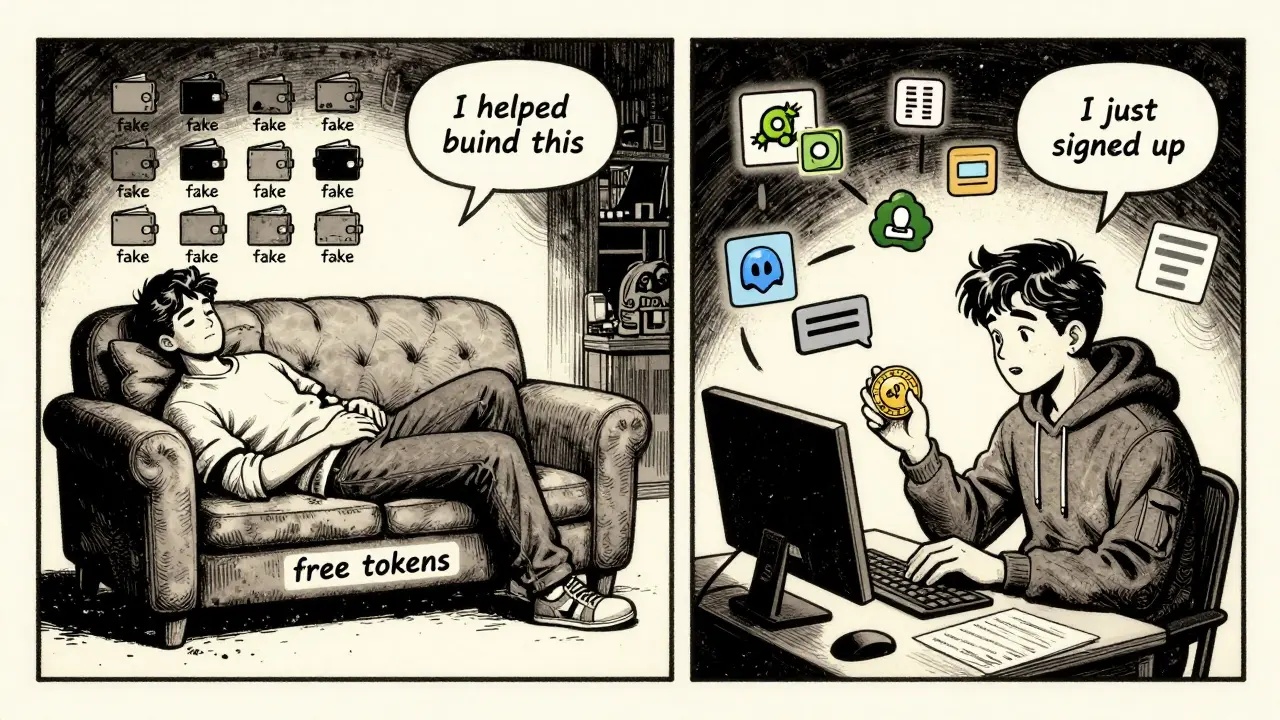
- Don’t create multiple wallets. One clean, active wallet matters more than ten fake ones.
- Learn how to spot scams. If it asks for your seed phrase, walk away.
- Track your on-chain activity. Use tools like Zerion or DeBank to see what you’ve done.
The days of easy airdrops are gone. But the ones that matter now? They’re worth far more than cash. They’re a chance to be part of something that lasts.
Are airdrops still worth it in 2025?
Yes-but only if you’re focused on long-term participation, not quick cash. The biggest payouts now go to users who’ve actively used protocols for months, not those who signed up for five free tokens. Projects reward real contributors, not opportunists.
Can I get rich from airdrops?
Some people have, but it’s rare. Early Uniswap and ENS airdrops made users thousands. But those were one-time events. Today, airdrops are smaller and tied to usage. The real value isn’t in selling the tokens-it’s in gaining governance power and long-term access to growing ecosystems.
What’s the biggest risk with airdrops?
Scams. Fake websites and phishing links pretending to be official airdrops are everywhere. Never share your private key. Always verify the official website through the project’s verified social media accounts. If it asks for payment to claim tokens, it’s a scam.
Do I need to pay gas fees to claim an airdrop?
Sometimes. Claiming tokens requires a blockchain transaction, which costs gas. But legitimate projects never charge you to receive the tokens themselves. If you’re asked to pay a fee to unlock your airdrop, it’s a scam. The gas fee is the only cost-and it’s paid to the network, not the project.
How do I know if an airdrop is real?
Check the project’s official website and verified social media profiles (blue checkmarks). Look for announcements on reputable crypto news sites like CoinDesk or The Block. Never trust links from DMs, Reddit posts, or unverified Discord channels. If the airdrop isn’t listed on the project’s official blog, assume it’s fake.
Can I participate in airdrops if I’m in the U.S.?
Many projects exclude U.S. residents due to regulatory uncertainty. Some airdrops are geo-restricted to avoid SEC scrutiny. Always read the terms before participating. If you’re unsure, check the project’s official FAQ or legal disclaimer.
What’s the difference between an airdrop and a token sale?
A token sale requires you to buy tokens, usually with ETH or USDT. An airdrop gives you tokens for free, usually for participating in the ecosystem. Airdrops are meant to reward users and spread ownership. Token sales are fundraising tools. They’re very different in purpose and legal treatment.
Do I need to report airdrops for taxes?
In most countries, yes. Airdropped tokens are usually treated as income when you receive them. You’ll owe taxes based on their fair market value at that time. Keep records of when you received tokens and their value in USD. Use crypto tax tools like Koinly or TokenTax to track this.


There are 23 Comments
Jackson Storm
Michelle Slayden
Vernon Hughes
Alison Hall
Haritha Kusal
Mike Reynolds
Antonio Snoddy
Rajappa Manohar
prashant choudhari
surendra meena
Mike Pontillo
Joydeep Malati Das
rachael deal
Elisabeth Rigo Andrews
Adam Hull
Steve Williams
Jack and Christine Smith
Raja Oleholeh
Prateek Chitransh
christopher charles
Amy Garrett
dayna prest
Jackson Storm
Write a comment
Your email address will not be published. Required fields are marked *