
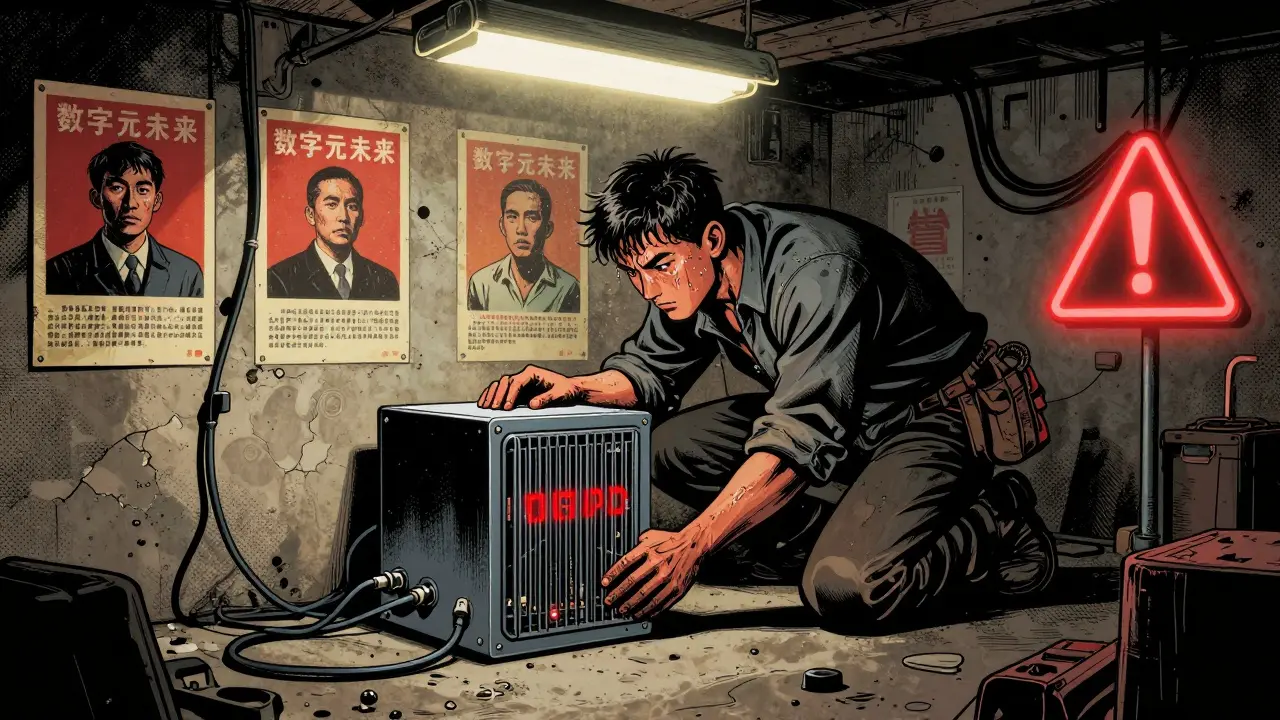
As of 2025, crypto mining in China is not just restricted-it’s a criminal offense. If you’re caught running a mining rig, even in your basement, you could face fines, asset seizure, or arrest. This isn’t a rumor. It’s the law. And it’s been building for over a decade.
How China Went from Crypto Capital to Crypto-Free Zone
In 2013, China started warning banks not to process Bitcoin transactions. That was the first crack in the door. By 2017, they shut down all domestic cryptocurrency exchanges and banned ICOs, calling them illegal fundraising. At the time, China still controlled over 70% of the world’s Bitcoin mining power. Miners were running huge farms in Sichuan and Inner Mongolia, using cheap hydropower and coal to crank out coins. Then came 2021. The People’s Bank of China declared all cryptocurrency transactions illegal. Mining was banned nationwide. Thousands of operations shut down overnight. Miners packed up their rigs and moved to Kazakhstan, the U.S., and Canada. China went from being the heart of Bitcoin to a ghost town for miners. But the crackdown didn’t stop there. In 2023, the government allowed blockchain tech-only if it was controlled by state-approved entities. Decentralized networks? Still banned. Then, on May 31, 2025, everything changed. Authorities announced a comprehensive ban on all cryptocurrency activities: mining, trading, holding, even receiving crypto as payment. Now, owning Bitcoin or Ethereum is a legal risk.Why Did China Ban Crypto Mining?
It wasn’t just about control. There were four clear reasons. First, energy use. Bitcoin mining guzzles electricity. In 2020, Chinese mining operations used more power than the entire country of Argentina. That clashed with China’s 2060 carbon neutrality goal. Coal-fired plants in Inner Mongolia were running 24/7 to power rigs. The government couldn’t afford that kind of emissions. Second, financial control. Crypto moves money outside the banking system. People could send value overseas without going through the State Administration of Foreign Exchange. That meant capital flight-rich Chinese citizens moving wealth out of the country. The government saw that as a threat to economic stability. Third, crime. Crypto was tied to money laundering, fraud, and underground markets. In 2024, Chinese authorities seized over $2.3 billion in crypto-linked assets from illegal operations. They traced transactions from darknet markets to offshore wallets. The link was undeniable. Fourth, the digital yuan. China spent over $10 billion developing its own central bank digital currency-the e-CNY. It’s fully traceable, government-controlled, and integrated into every payment app. They didn’t want a rival. Bitcoin and Ethereum? They’re decentralized. Untrackable. Uncontrollable. That’s the opposite of what the Chinese state wants.How the Ban Is Enforced
It’s not just police knocking on doors. China uses a network of high-tech monitoring tools. Electricity providers now report abnormal power usage to the government. If a factory in Guangdong suddenly starts using 5 megawatts of power at night-with no industrial equipment running-it triggers an alert. Miners often hide rigs in warehouses or repurpose data centers. But the grid knows. Banks are required to flag any transaction involving crypto wallets. If you deposit $10,000 from a Bitcoin exchange, your account gets frozen. The People’s Bank of China cross-checks this data with the Cyberspace Administration, which tracks digital wallet addresses and blockchain activity. The Ministry of Industry watches for bulk purchases of ASIC miners. If a company orders 500 Antminer S21 units, regulators show up. They don’t need proof of mining-just the equipment purchase is enough to start an investigation. In 2024, over 300 people were arrested for crypto mining. Assets-including homes, cars, and mining rigs-were seized. Some miners got jail time. Others paid fines up to 10 times the value of their crypto holdings.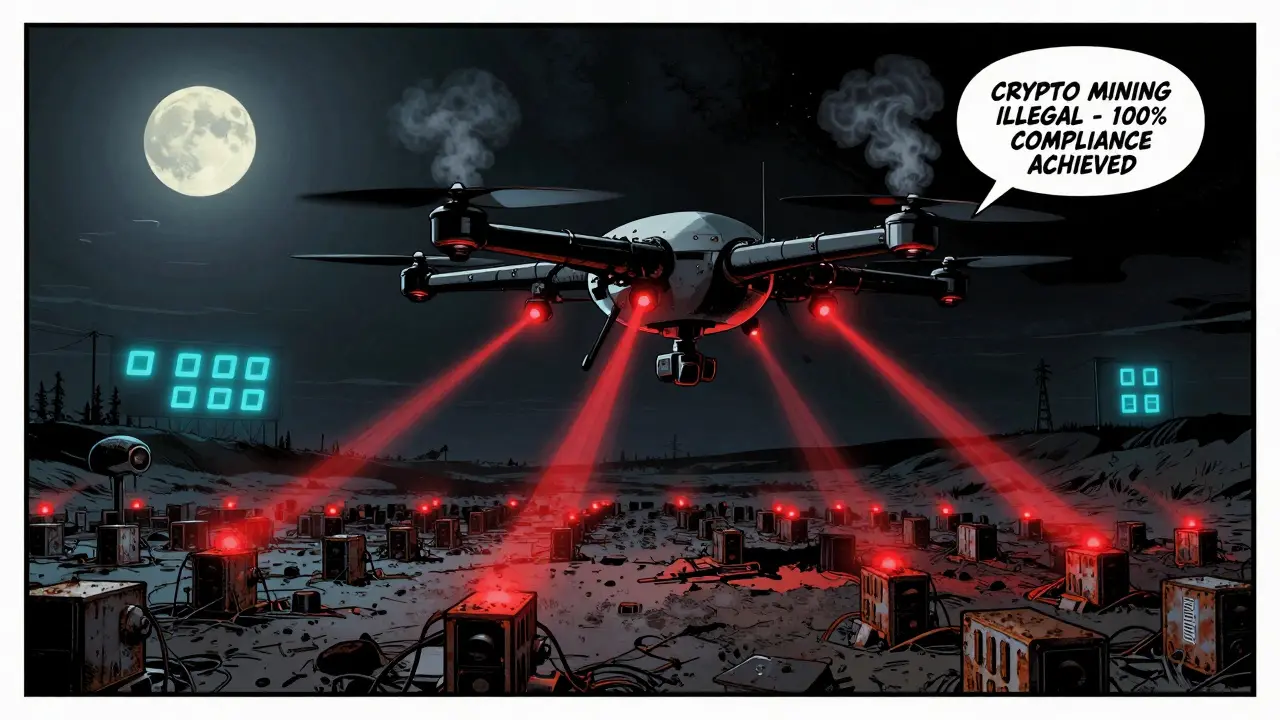
Is Mining Still Happening in China?
Yes-but underground. And it’s getting harder. Studies from the University of Cambridge estimate that China still accounts for 12-15% of global Bitcoin hashrate as of late 2025. That’s down from 70% in 2020, but it’s not zero. These are small, scattered operations: a few rigs in a rural home, hidden in a basement, powered by stolen grid electricity. The risks are huge. If caught, you’re not just losing your gear. You’re risking criminal charges. And with AI-powered energy monitoring and facial recognition in mining districts, detection rates are rising. Some miners use solar panels or backup generators to avoid grid detection. Others mine during power outages, when monitoring systems are offline. But these are short-term hacks. The government’s tools are getting smarter. By 2026, they plan to roll out nationwide AI systems that predict mining activity based on usage patterns-before it even happens.What Happened to the Miners Who Left?
The exodus reshaped the global crypto mining industry. The U.S. became the new leader. Texas, Georgia, and Washington State now host over 35% of the world’s Bitcoin mining. Companies like Riot Platforms and Marathon Digital moved entire farms across the Pacific. They got tax breaks, cheap natural gas, and friendly regulators. Canada, Kazakhstan, and even Iceland picked up the slack. Kazakhstan’s mining output jumped 200% after China’s 2021 ban. But it came with its own problems-blackouts, corruption, and unstable power grids. The result? A more decentralized, resilient network. Bitcoin’s hashrate didn’t drop-it grew. Miners in the U.S. and Europe now use more efficient hardware, powered by renewable energy. The shift forced innovation. ASIC chips today are 40% more efficient than those made in 2020.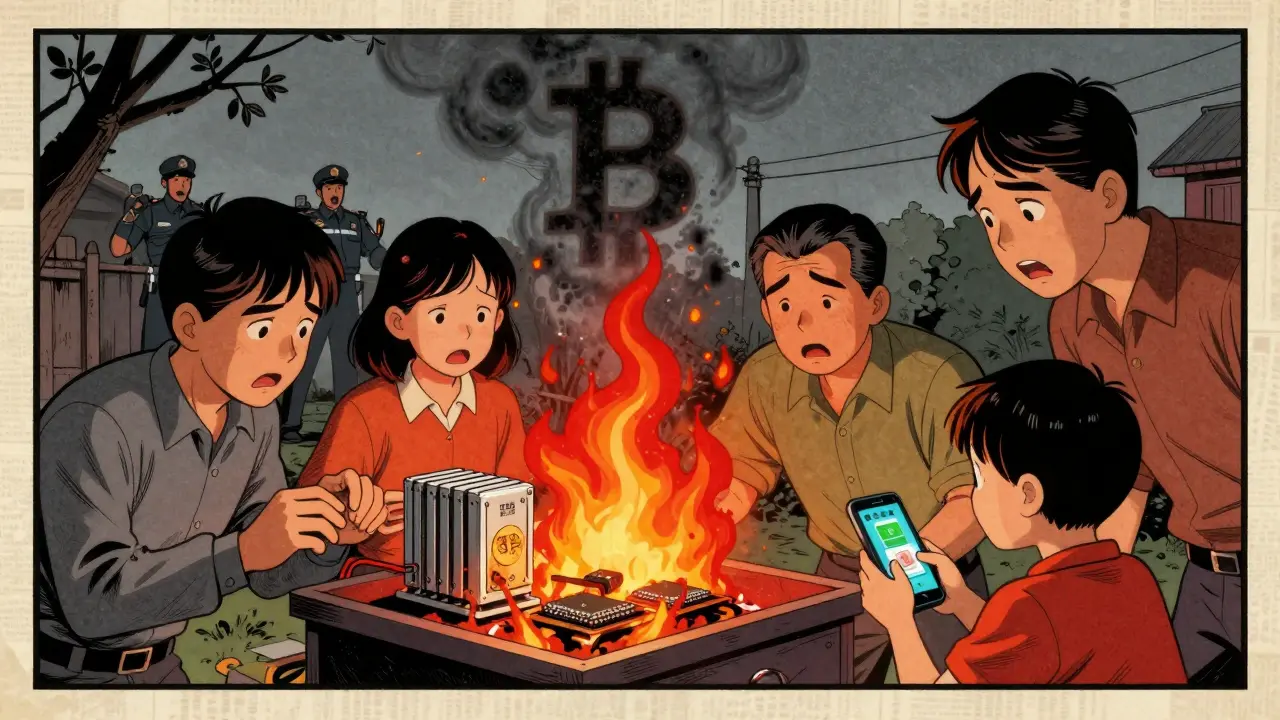



There are 24 Comments
Rishav Ranjan
Steve B
Rebecca F
Ashley Lewis
Jacob Lawrenson
Zavier McGuire
Luke Steven
Ellen Sales
Vijay n
Alison Fenske
Jayakanth Kesan
Tristan Bertles
Earlene Dollie
Dusty Rogers
Kevin Karpiak
Amit Kumar
chris yusunas
Naman Modi
Mmathapelo Ndlovu
Tyler Porter
Sheila Ayu
Janet Combs
Radha Reddy
Shubham Singh
Write a comment
Your email address will not be published. Required fields are marked *