
Imagine sending a payment to a friend instantly, with zero fees, and no waiting for blockchain confirmations. Sounds too good to be true? It’s not. That’s what state channels and payment channels make possible - and they’re already powering real-world blockchain use cases today.
Blockchains like Bitcoin and Ethereum were never built to handle thousands of transactions per second. Bitcoin maxes out at 7 TPS. Ethereum manages 15-30. That’s fine for occasional transfers, but useless for streaming payments, micropayments, or high-frequency trading. Enter state channels: a way to move transactions off-chain while keeping the security of the main blockchain.
What Exactly Is a Payment Channel?
A payment channel is the simplest form of a state channel - designed for one thing: sending money back and forth without touching the blockchain for every transaction.
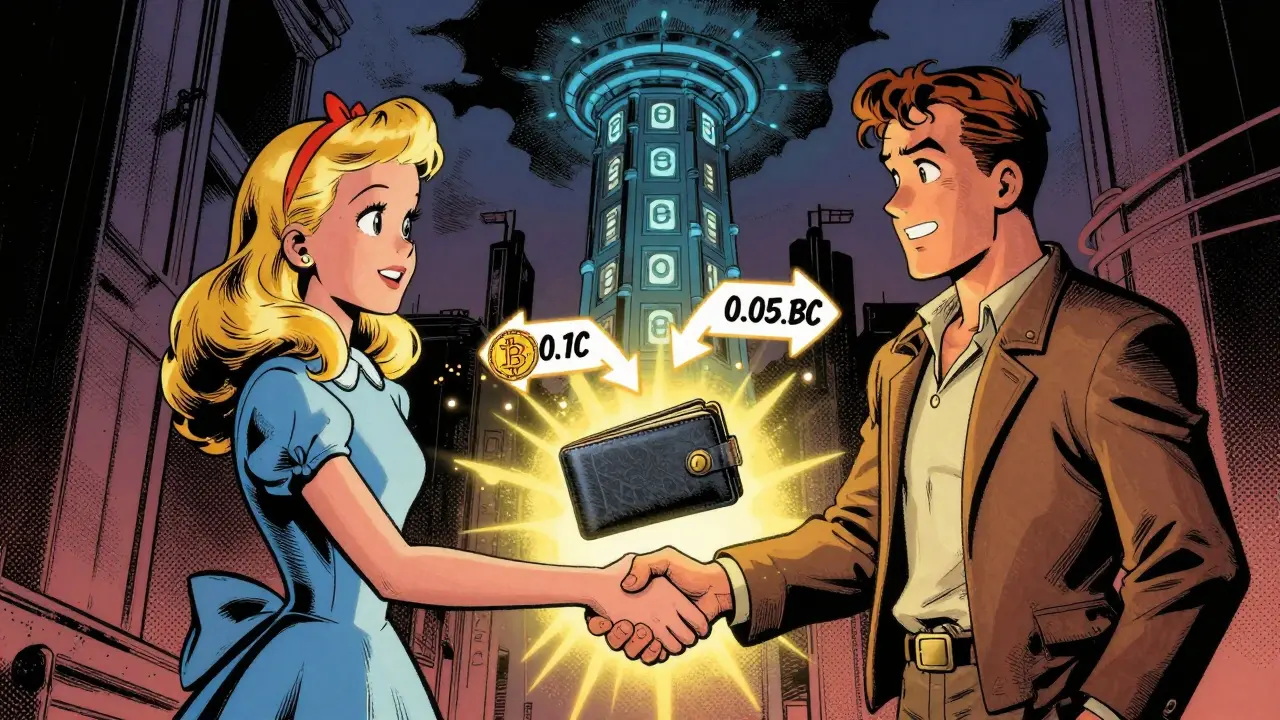
Here’s how it works in practice. Two people, say Alice and Bob, want to make dozens of small payments to each other. Instead of broadcasting each one to the Bitcoin network (which costs money and takes time), they create a shared wallet on-chain. They each lock up, say, 0.5 BTC into a 2-of-2 multisig address. That’s $1 total locked in.
Now, they start transacting off-chain. Alice sends Bob 0.1 BTC. She signs a transaction that updates the balance: Alice has 0.4 BTC, Bob has 0.6 BTC. She sends this signed transaction to Bob. He signs it back. Now they both have a copy of the latest balance. The next time Alice pays Bob 0.05 BTC, they do the same thing - update the balance, sign, exchange. No one else sees these transactions. No miners. No fees. No delays.
Only two on-chain transactions ever happen: the initial funding, and the final settlement. Everything else? Instant. Free. Secure.
How State Channels Go Beyond Payments
Payment channels are great for money. But state channels? They’re for anything that changes state - game moves, contract updates, data exchanges, even voting.
Think of a multiplayer blockchain game. Each move changes the game state: who controls which territory, how many resources are spent, who won the last battle. If every move went on-chain, the network would collapse. With state channels, players open a channel, exchange signed state updates off-chain, and only settle the final score on-chain.
The same applies to decentralized applications (dApps). A rental agreement could use a state channel to log daily payments, maintenance logs, and usage rights - all without clogging the blockchain. The final agreement, with all changes recorded, gets settled once at the end.
Unlike payment channels, which are mostly one-way (money moving), state channels can handle complex, multi-step interactions - as long as both parties agree on the rules.
The Lightning Network: The Poster Child of Payment Channels
The Lightning Network is the most successful implementation of payment channels. Launched in 2018, it turned Bitcoin’s scaling problem on its head.
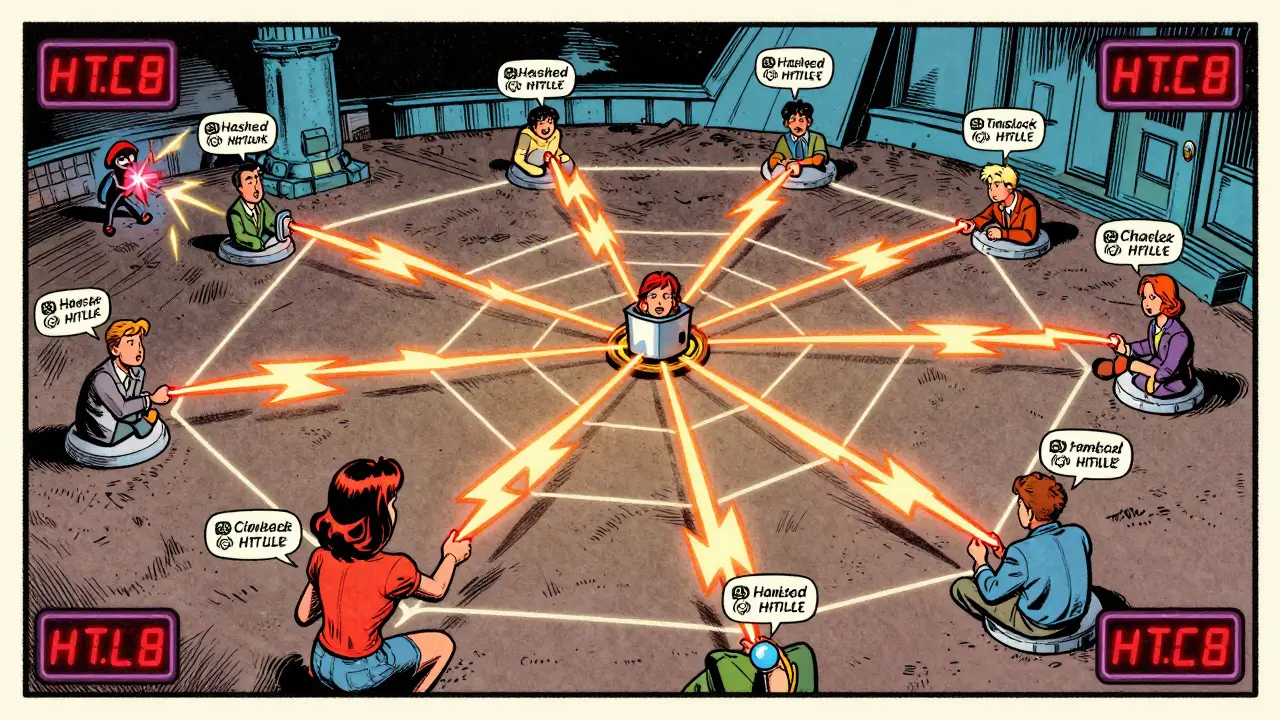
Here’s the twist: you don’t need a direct channel with everyone you pay. Lightning uses a network of interconnected channels. If Alice wants to pay Charlie, but they don’t have a direct channel, she can route the payment through Bob - who has a channel with Charlie. This is called multi-hop routing.
Each hop uses a Hashed Timelock Contract (HTLC). It’s a clever trick: the payment is locked with a secret hash. Only when the final recipient reveals the secret does the money flow backward through the chain of intermediaries. If anyone tries to cheat, the timelock kicks in and the funds are returned.
As of 2023, the Lightning Network processes around $15.7 million in daily volume. Average fees? 1-5 satoshis - that’s $0.0003 to $0.0015. Compare that to on-chain Bitcoin fees that spiked over $50 during congestion.
Real users are already benefiting. One Reddit user reported 137 payments over six months - total fees: $0.18. Starbucks, in partnership with Strike, lets customers pay with Lightning. Transactions settle in under a second.
Why State Channels Beat Other Scaling Solutions
There are other layer-2 solutions: sidechains, rollups. So why choose state channels?
- Speed: Settlements happen in milliseconds. Rollups take minutes. Sidechains depend on their own consensus.
- Cost: Only two on-chain transactions per channel. Rollups require constant proof submissions. Sidechains need separate security.
- Security: State channels inherit the main chain’s security. If someone tries to cheat, the blockchain enforces penalties. Rollups rely on fraud proofs or zero-knowledge proofs - which add complexity.
- Privacy: Only the opening and closing are public. All intermediate transactions stay private. Rollups keep a public ledger.
But state channels aren’t perfect. They need participants to stay online to monitor for fraud. That’s where watchtowers come in - third-party services that monitor channels on your behalf. You pay them a small fee, but you don’t have to be glued to your device.
The Big Limitations: Liquidity and Usability
Here’s the catch: state channels lock up capital. If Alice wants to pay Bob $10, she needs to have at least $10 in her channel. If she wants to pay five people, she needs five separate channels - each with enough balance.
That’s called liquidity fragmentation. A 2023 Cornell study found that in a network of 10,000 users, each person would need to open about 150 channels with at least 0.05 BTC each to achieve 90% connectivity. That’s over $7,500 locked up - just to make payments.
And usability? Still rough. Early adopters spent hours learning how to manage channels. Now, with guided wallets like Phoenix or Breez, it’s down to 20-30 minutes. But most users still don’t understand rebalancing, fee rates, or watchtower setup.
According to the Lightning Network Daemon (LND) team, 63% of support tickets in Q1 2023 were about liquidity issues. Merchants love the speed - but 41% say they don’t have tools to manage their channel balances effectively.
Real-World Use Cases That Actually Work
State channels aren’t just theory. They’re live in places you wouldn’t expect.
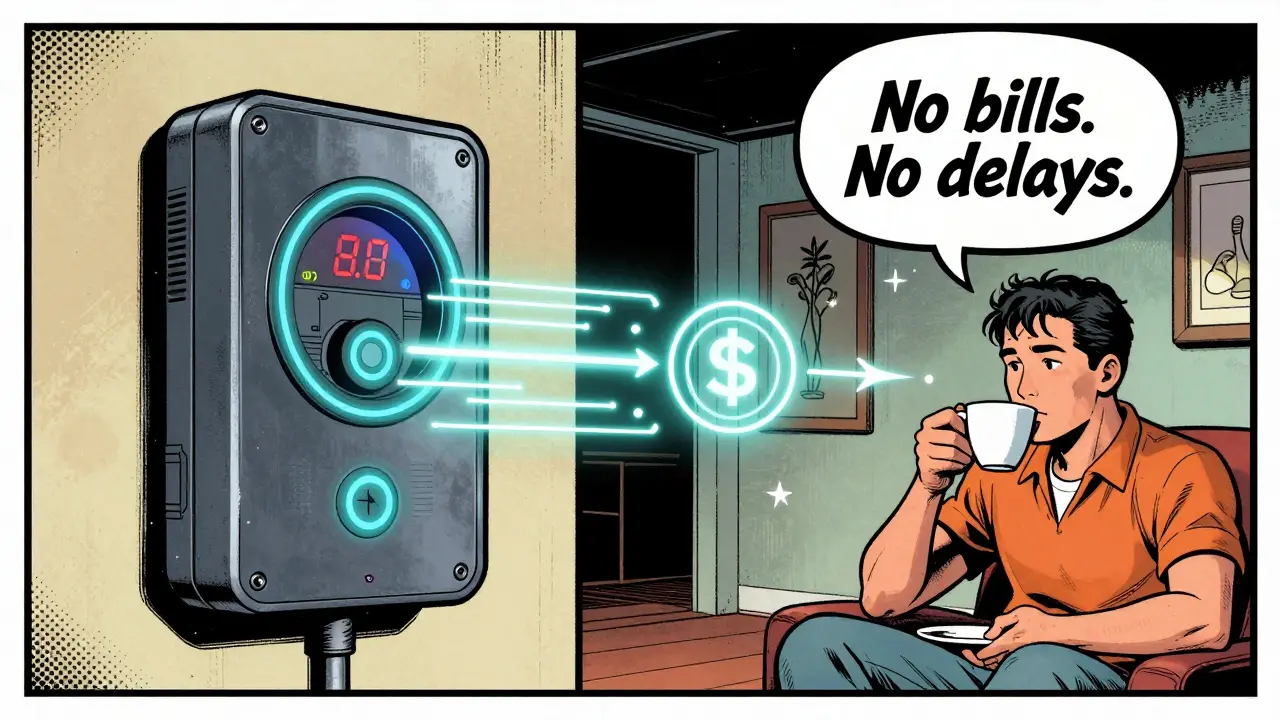
- Streaming payments: A smart meter in New Zealand could use a state channel to charge you per kilowatt-hour as you use electricity - no monthly bills, no delays.
- Digital content: A blogger could charge 1 satoshi per article read. No ads. No paywalls. Just instant, frictionless micropayments.
- High-frequency trading: Crypto exchanges use state channels to settle trades between each other in milliseconds, reducing counterparty risk.
- Telecom micropayments: 22 of the top 50 global telcos are testing state channels for pay-as-you-go data top-ups.
Strike, a Lightning-based payment processor, moved $127 million in 2022. That’s not a startup fluke - it’s enterprise-grade adoption.
What’s Next? The Future of State Channels
Protocol upgrades are making state channels better.
The Bitcoin Taproot upgrade (2021) cut channel opening transaction sizes by 25-30% using Schnorr signatures. That means lower fees and more efficient use of blockchain space.
Eltoo, a proposed upgrade, eliminates the need for watchtowers by allowing users to update channel states without signing each one. It’s cleaner, simpler.
And then there’s AMP - Atomic Multipath Payments. Soon, you’ll be able to split a $100 payment across five different channels at once. No more worrying if one channel doesn’t have enough balance.
But here’s the reality check: Ethereum’s future is rollups. Vitalik Buterin said it plainly - rollups will handle most scaling. State channels? They’re for the niche: instant, low-value, high-frequency interactions.
That’s not a failure. It’s specialization. State channels aren’t trying to replace the blockchain. They’re making it possible to do things the blockchain never could - at scale.
Final Thoughts: Are State Channels Worth It?
If you’re a developer building a dApp that needs real-time updates? State channels are your best friend.
If you’re a user sending small payments daily? Lightning Network is already faster and cheaper than your bank.
If you’re a business looking to cut payment processing fees? State channels are already saving millions.
They won’t replace on-chain transactions. But they make the blockchain usable for everyday life. That’s the real win.
Are payment channels the same as state channels?
Payment channels are a type of state channel - but not all state channels are for payments. Payment channels only handle money transfers between two parties. State channels can manage any kind of state change - game states, contracts, data logs - as long as both parties agree on the rules. Think of payment channels as a subset of state channels, focused purely on financial transactions.
Do I need to be online all the time to use a state channel?
Not necessarily. Early versions required users to stay online to monitor for fraud. Today, watchtowers - third-party services - handle this for you. You pay a small fee (often in crypto) for them to watch your channel. If someone tries to cheat by broadcasting an old state, the watchtower submits proof to the blockchain and you get your funds back. Most modern wallets like Phoenix or Breez include this automatically.
Why don’t more people use Lightning Network if it’s so fast?
Two main reasons: liquidity and complexity. To use Lightning, you need to lock up funds in channels. If you want to pay five different people, you need five separate channels - each with enough balance. Most users don’t know how to manage this. Also, not every merchant supports it yet. While adoption is growing, only 8% of crypto users have used Lightning for payments, compared to 34% who use centralized exchanges.
Can state channels be used on Ethereum?
Yes - the Raiden Network was built for Ethereum. But Ethereum’s focus has shifted to rollups like Optimism and zkSync, which handle more complex smart contracts and offer public verifiability. State channels still work on Ethereum, but they’re mostly used for niche, high-frequency payments. For general-purpose dApps, rollups are now the preferred solution.
What happens if one party disappears and won’t settle the channel?
Each channel has a dispute window - usually between 100 and 1,000 blocks (about 10 minutes to several days). During this time, the other party can submit the latest signed state to the blockchain and claim their funds. If the missing party tries to cheat with an old state, the system detects it and penalizes them. The timelock ensures there’s always time to respond. Watchtowers help automate this process so users don’t have to monitor constantly.

There are 20 Comments
Andrew Midwood
State channels are wild when you think about it. You lock up some BTC, start ping-ponging signed txs with a buddy, and boom - instant, zero-fee transfers. No miners, no mempool drama. It’s like having a private blockchain just for you two.
Lightning’s been a game-changer for coffee runs and tipping devs. I paid $0.02 in fees over 6 months for 137 payments. My wallet didn’t even blink.
Still, liquidity is a nightmare. I’ve got 3 channels open and half of them are sitting at 0.001 BTC because I didn’t rebalance. Ugh.
Kayla Thompson
This whole ‘off-chain scaling’ thing is just a band-aid on a broken system. Blockchains aren’t meant to be fast - they’re meant to be slow and trustless. You’re trading decentralization for convenience, and that’s a trap.
Who needs micropayments for blog reads? People who don’t understand value. Pay for content with attention, not satoshis.
Brijendra Kumar
Let’s cut the marketing fluff. State channels are only viable if you’re a whale with 5+ BTC locked up and a dev team to manage watchtowers. The average user? They’re stuck trying to figure out why their Phoenix wallet says ‘insufficient liquidity’ while they’re staring at a 0.0003 BTC balance.
And don’t get me started on multi-hop routing - one bad node and your payment vanishes into the void. It’s a house of cards built on trustless protocols that still require trust.
Meanwhile, rollups are scaling Ethereum at 100k TPS with verifiable fraud proofs. State channels? They’re a relic from 2017.
Ananya Sharma
I like how this explains it without hype. The part about streaming electricity payments made me pause. That’s actually useful.
Also, watchtowers are way less scary than I thought. Feels like having a neighbor keep an eye on your house while you’re away.
Florence Pardo
I’ve been using Lightning for a few months now and honestly, the biggest hurdle isn’t the tech - it’s the mental shift. You have to stop thinking of crypto like a bank. It’s not about holding value, it’s about moving it. Like water through pipes.
Before, I’d wait 20 minutes for a transaction to confirm. Now, I send a $0.50 tip to a streamer and it’s done before I finish typing the message. The feeling is… liberating.
But yeah, liquidity is brutal. I opened 4 channels and now I’m stuck with 3 that are nearly empty. I’m trying to figure out how to rebalance without paying 10% in fees. It’s like playing chess with your own money.
I’ve started using Breez’s auto-rebalance feature - it’s not perfect, but it’s better than manually juggling UTXOs. Also, I didn’t know telcos were testing this. That’s huge. Imagine paying for data in real-time as you use it. No more monthly bills.
And the fact that Starbucks is on it? That’s not a gimmick. That’s adoption. Real people, real transactions, zero fees. If you told me 5 years ago that I’d be paying for coffee with Bitcoin and it’d be faster than Apple Pay, I’d have laughed.
It’s not perfect. But it’s working. And that’s more than I can say for half the ‘layer 2’ projects out there.
Also, the HTLC mechanism is genius. It’s like a trustless game of telephone where no one can cheat. The math is beautiful.
Alicia Speas
While the technical merits of state channels are undeniable, I believe we must consider the broader implications of decentralization. By moving transactions off-chain, we risk fragmenting the network’s transparency and auditability.
Though privacy is a benefit, we must not forget that public verifiability is the cornerstone of blockchain’s value proposition. Rollups, despite their complexity, preserve this integrity.
That said, I appreciate the elegance of state channels for niche, high-frequency use cases - they are not meant to replace, but to complement.
Kevion Daley
State channels? More like state *chaos*. You need to stay online? Pay watchtowers? Rebalance channels? Bro, I just want to send my dog a crypto treat. This isn’t tech - it’s a full-time job.
And don’t even get me started on Lightning’s routing failures. I’ve lost 3 payments. 3! 😤
Tammy Stevens
Y’all are overcomplicating this. State channels are just smart contracts with a timeout. The fact that you need watchtowers means it’s not truly peer-to-peer - you’re outsourcing security.
But honestly? I don’t care. I use Lightning to pay for tacos and it’s instant. I don’t need to understand HTLCs to enjoy them.
Also, the $0.18 in fees over 137 payments? That’s the real story. That’s not innovation - that’s liberation.
Justin Credible
so like… if i open a channel with my buddy and he goes ghost, i just wait like 2 days and the chain gives me my money back right? no big deal?
also why do we still call them ‘channels’? sounds like a tv thing. maybe ‘offchain pipes’ is better lol
Dheeraj Singh
Let’s be real - this whole ‘Bitcoin scaling’ narrative is a distraction. Bitcoin’s purpose is to be slow and secure. If you want speed, use Solana. Stop trying to force Bitcoin into something it was never meant to be.
Lightning Network is just a Ponzi scheme for devs who want to charge routing fees. And don’t tell me about ‘zero fees’ - someone’s always paying, whether it’s you or the watchtower operator.
Also, why are we still talking about this in 2023? Rollups are the future. State channels are a dead end.
Nicolette Lutzi
Who’s funding these state channel projects? Big Tech? The Fed? Let me guess - it’s all just a backdoor for central banks to track every microtransaction under the guise of ‘decentralization.’
You think you’re avoiding surveillance? You’re just handing your data to watchtower operators who report to the IRS.
And don’t even get me started on Strike partnering with Starbucks. That’s not innovation - that’s corporate capture. The blockchain is being sold out.
Domenic Dawson
I’ve been using state channels for my indie game’s in-app purchases and it’s been flawless. Players can buy power-ups in real time without a single blockchain confirmation.
One thing I didn’t see mentioned - the UX improvements are insane. We used to have a 3-step payment flow. Now it’s one tap. Conversion rates jumped 40%.
And yeah, liquidity is a pain. We built a simple tool that auto-allocates funds across channels based on user behavior. It’s not perfect, but it cuts manual work by 80%.
Also, the fact that we can log every in-game action off-chain and only settle the final score? That’s pure magic. No one else can do that at this scale without clogging the chain.
Sam Harajly
The comparison to rollups is apples and oranges. Rollups are for complex smart contracts. State channels are for state changes that are bilateral and frequent.
They’re not competing - they’re complementary. It’s like saying ‘why use a bicycle if you have a car?’
Also, the privacy aspect is critical. For legal contracts, medical data exchanges, or voting systems - you don’t want every intermediate state on a public ledger. State channels preserve confidentiality without sacrificing security.
And yes, liquidity is a problem. But so was usability in 2013. We’re still early.
Alice Clancy
So you’re telling me I have to trust third-party watchtowers? That’s not decentralization - that’s outsourcing your security to strangers who could be hacked or colluding.
This whole thing is a scam. If it was truly secure, why do you need babysitters? The blockchain was supposed to remove middlemen. Now we’re paying them in crypto.
Also, why is everyone so obsessed with micropayments? People don’t want to pay a satoshi per article. They want free content. This is just a way to monetize attention.
Dominic Taylor
Lightning’s been quietly revolutionizing cross-border payments. I’ve sent €500 to a friend in Poland - settled in 0.8 seconds, fee was 0.00004 BTC.
Meanwhile, my bank took 3 days and charged €12. This isn’t crypto hype - this is financial justice.
And yeah, liquidity’s a pain. But tools are improving. We’re not stuck in 2019 anymore.
Shelley Dunbrook
How charming. A blockchain solution that requires you to pay extra to monitor your own transactions. How very 2023.
It’s like hiring someone to watch your front door… while you’re sleeping. And paying them in Bitcoin.
Bravo. You’ve turned decentralization into a subscription service.
Aman Kulshreshtha
Used Lightning to pay for chai in Delhi - 3 seconds, 2 satoshis. No card, no app, just a QR scan.
My aunt still thinks I’m cheating her. She says ‘how do you know I didn’t get extra chai?’
Told her: ‘Because the blockchain knows.’ She didn’t believe me. Still didn’t believe me when I showed her the on-chain settlement.
People aren’t ready. But the tech? It’s here.
Leona Fowler
One thing people overlook: state channels reduce blockchain bloat. Every off-chain transaction means less data on-chain. That’s good for the network’s long-term health.
And watchtowers? They’re not a flaw - they’re an evolution. Just like how email clients auto-archive - you don’t have to do it yourself.
The real win is enabling use cases that were impossible before: streaming payments, real-time gaming, automated IoT billing. That’s not just convenience - it’s new economic models.
Neil MacLeod
State channels: where ‘trustless’ becomes ‘trust someone else to watch your back while you nap.’
It’s like building a vault with a key you can’t carry - so you hire a guy with a clipboard to hold it for you.
And we call this innovation? I call it ‘crypto’s midlife crisis.’
Misty Williams
Locking up capital to enable off-chain transactions is not innovation - it’s financial manipulation. You’re creating artificial scarcity to justify fees. This is not decentralized finance - it’s centralized finance with a blockchain sticker.
Write a comment
Your email address will not be published. Required fields are marked *