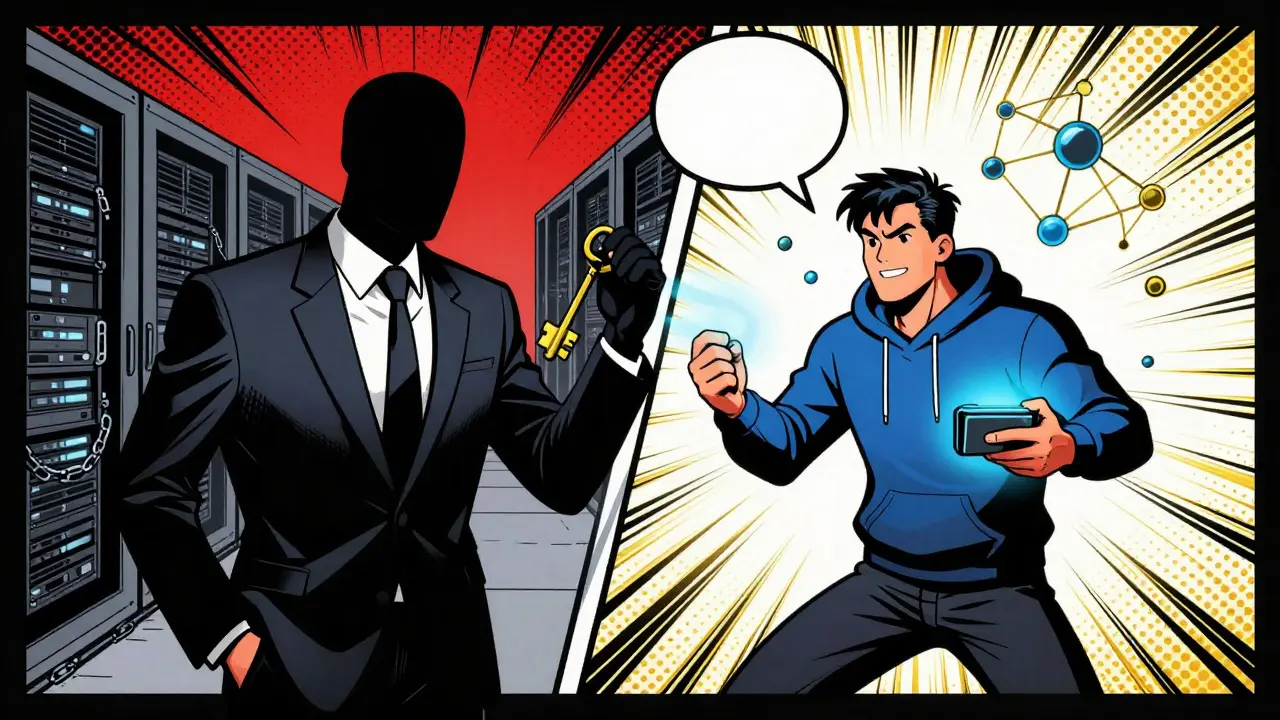
Trading futures used to mean handing over your keys to a centralized broker. You trusted them with your funds, your data, and your ability to withdraw when things went south. SynFutures v3 is a decentralized derivatives trading platform that allows users to trade futures contracts on virtually any asset without intermediaries. It launched in December 2024 as the third iteration of this protocol, aiming to fix the trust issues inherent in traditional finance by keeping everything on-chain.
If you are looking for a place to trade leveraged positions on cryptocurrencies, tokenized real-world assets, or even NFTs without giving up custody of your wallet, SynFutures v3 is worth a serious look. But is it ready for prime time? Let’s break down how it works, what makes its technology different, and whether the risks are worth the potential rewards.
How SynFutures v3 Works: The oAMM Engine
The core innovation here isn’t just another order book. Most decentralized exchanges (DEXs) rely on Automated Market Makers (AMMs) like Uniswap, which use liquidity pools and mathematical formulas to set prices. While great for simple swaps, traditional AMMs struggle with complex derivatives trading because they lack efficient price discovery for leveraged positions.
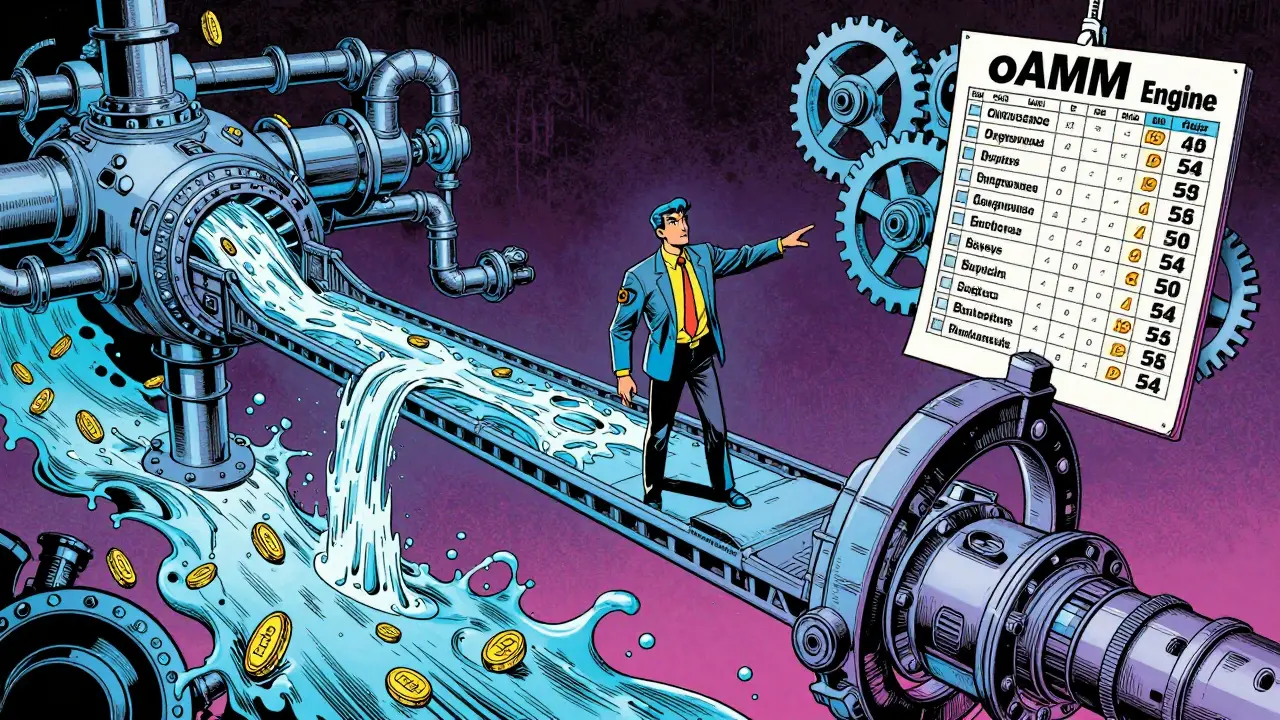
SynFutures solves this with its proprietary Oyster Automated Market Maker (oAMM) a hybrid model combining automated market making with an on-chain order matching engine. Think of it as a bridge between two worlds:
- Automated Liquidity: Like standard AMMs, it provides continuous liquidity so you can always enter or exit a trade.
- On-Chain Order Matching: Unlike pure AMMs, it uses an order book mechanism to match buyers and sellers directly, reducing slippage and improving capital efficiency.
This hybrid approach means you get the instant execution of a DEX with the precision of a centralized exchange’s order book. All trades happen on the Ethereum mainnet the primary blockchain network where SynFutures operates, ensuring security and decentralization, meaning no single entity controls the ledger or can freeze your account.
What Can You Trade?
One of the biggest draws of SynFutures v3 is its permissionless nature. You aren’t limited to Bitcoin or Ethereum futures. Because the protocol is built to handle synthetic assets, you can create and trade futures on:
- Cryptocurrencies (BTC, ETH, SOL, etc.)
- Tokenized Real-World Assets (RWAs) like gold or stocks
- Non-Fungible Tokens (NFTs)
- Any other ERC-20 compatible asset
This flexibility opens up arbitrage opportunities and hedging strategies that were previously impossible on most DeFi platforms. For example, if you hold a large position in a specific NFT collection, you could theoretically hedge against its value dropping by shorting a synthetic future tied to that collection’s index.
The $F Token: Utility and Governance
Every DeFi protocol has a native token, and SynFutures uses $F the native governance and utility token of the SynFutures ecosystem with a capped supply of 10 billion. Here’s what you need to know about it:
- Governance: Holding $F gives you voting rights on platform upgrades, fee structures, and new asset listings.
- Staking Rewards: You can stake your tokens to earn rewards from trading fees generated on the platform.
- Fee Discounts: Stakers may receive reduced trading fees, incentivizing long-term holding.
- Supply Cap: There are only 10 billion $F tokens in existence, creating a fixed scarcity model.
The token also serves as collateral for certain types of trades, depending on the specific contract parameters. However, keep in mind that using volatile tokens as collateral introduces liquidation risk if the market moves sharply against you.
Price Analysis and Market Sentiment (May 2026)
Let’s talk numbers. As of May 2026, the $F token has experienced significant volatility, which is typical for mid-cap DeFi projects. Recent data shows the token trading around $0.012, with a market capitalization hovering near $30 million. Technical indicators paint a mixed picture:
| Metric | Value | Interpretation |
|---|---|---|
| Fear & Greed Index | 49 | Neutral sentiment among traders |
| 50-Day SMA | $0.0103 | Short-term support level |
| 200-Day SMA | $0.0137 | Long-term resistance level |
| 14-Day RSI | 44.87 | Neither overbought nor oversold |
Analysts remain divided on the long-term outlook. Conservative models suggest a potential rise to $0.15-$0.30 by late 2026 if DeFi adoption accelerates. More bullish scenarios project prices above $1.00 if institutional investors begin integrating SynFutures into their portfolios. However, bearish forecasts warn of further declines to below $0.01 if regulatory pressures mount or if competitors capture more market share.
Security and Backing
In DeFi, security isn’t just about code-it’s about who’s behind the project. SynFutures has secured backing from some of the most respected names in crypto venture capital:
- Pantera Capital
- Polychain Capital
- Dragonfly Capital
This institutional support signals confidence in the team’s ability to execute their roadmap. Additionally, because the platform operates fully on-chain, there is no central server to hack. Your funds remain in your wallet until you explicitly approve a transaction. This eliminates the counterparty risk associated with centralized exchanges like FTX or Binance.
However, smart contract risk still exists. If there is a bug in the oAMM logic or the order-matching engine, exploits are possible. Always check if the platform has undergone audits from reputable firms before depositing significant capital.
Pros and Cons: Is It Right for You?
No platform is perfect. Here’s a balanced look at the strengths and weaknesses of SynFutures v3:
| Pros | Cons |
|---|---|
| Non-custodial trading (you keep your keys) | High gas fees during peak Ethereum congestion |
| Access to diverse assets including RWAs and NFTs | Complex user interface compared to CEXs |
| Transparent on-chain order book | Liquidity depth varies by asset pair |
| Governance rights via $F staking | Regulatory uncertainty in major markets |
If you prioritize control over your assets and want exposure to niche markets, SynFutures is a strong contender. If you prefer simplicity and low fees, you might find the learning curve steep and the Ethereum gas costs prohibitive.
Comparing SynFutures to Competitors
How does SynFutures stack up against other derivatives platforms? Let’s compare it briefly with dYdX a popular decentralized exchange focused primarily on perpetual futures trading and GMX a leading decentralized perpetual exchange known for its high capital efficiency.
| Feature | SynFutures v3 | dYdX | GMX |
|---|---|---|---|
| Network | Ethereum | Avalanche / Starknet | Arbitrum / Avalanche |
| Asset Diversity | High (Crypto, RWAs, NFTs) | Medium (Mainly Crypto) | Low (Major Cryptos) |
| Order Book Type | Hybrid (oAMM + On-Chain) | Central Limit Order Book | Automated Market Maker |
| User Experience | Advanced | Intermediate | Beginner-Friendly |
SynFutures stands out for its asset diversity and hybrid matching engine. dYdX offers a more familiar experience for traders coming from centralized exchanges, while GMX simplifies the process but limits asset choice. Your choice depends on whether you value variety, familiarity, or simplicity.
Getting Started: A Quick Guide
If you decide to try SynFutures v3, here’s how to get started safely:
- Connect Your Wallet: Use MetaMask or another Ethereum-compatible wallet. Ensure you have enough ETH to cover gas fees.
- Fund Your Account: Deposit stablecoins (like USDC or USDT) or ETH to use as collateral.
- Choose a Market: Browse the available futures contracts. Look for pairs with sufficient liquidity to minimize slippage.
- Set Leverage: Decide how much leverage you want. Higher leverage increases potential profits but also raises liquidation risk.
- Execute Trade: Place your order. Since it’s on-chain, confirm the transaction in your wallet.
- Monitor Positions: Keep an eye on your margin levels. Set alerts to avoid unexpected liquidations.
Start small. Test the platform with minimal capital to understand the interface and fee structure before committing larger amounts.
Is SynFutures v3 safe to use?
SynFutures v3 is non-custodial, meaning you retain control of your funds in your own wallet. This reduces counterparty risk compared to centralized exchanges. However, all DeFi platforms carry smart contract risk. It is crucial to verify that the platform has undergone recent security audits and to never invest more than you can afford to lose.
What is the minimum amount required to start trading?
There is no strict minimum deposit set by the protocol itself. However, you need enough ETH to pay for gas fees on the Ethereum network, which can range from $1 to $50+ depending on network congestion. Additionally, each trading pair may have a minimum collateral requirement to open a position, typically starting around $10-$50 equivalent.
Can I trade NFT futures on SynFutures?
Yes, one of the unique features of SynFutures v3 is its support for synthetic assets, including NFTs. You can trade futures contracts based on the value of specific NFT collections or indices, allowing you to speculate on NFT market trends without owning the underlying digital art.
How do I earn rewards with the $F token?
You can stake your $F tokens within the SynFutures dashboard to earn a portion of the trading fees generated on the platform. Stakers also gain voting power in governance decisions and may qualify for discounted trading fees, depending on current protocol parameters.
Why is SynFutures considered better than traditional AMMs?
Traditional AMMs often suffer from impermanent loss and poor price discovery for leveraged trades. SynFutures’ oAMM V3 combines automated liquidity with an on-chain order book, providing deeper liquidity, lower slippage, and more efficient capital usage for derivatives trading.