AML Crypto: What It Is and Why It Matters for Crypto Users
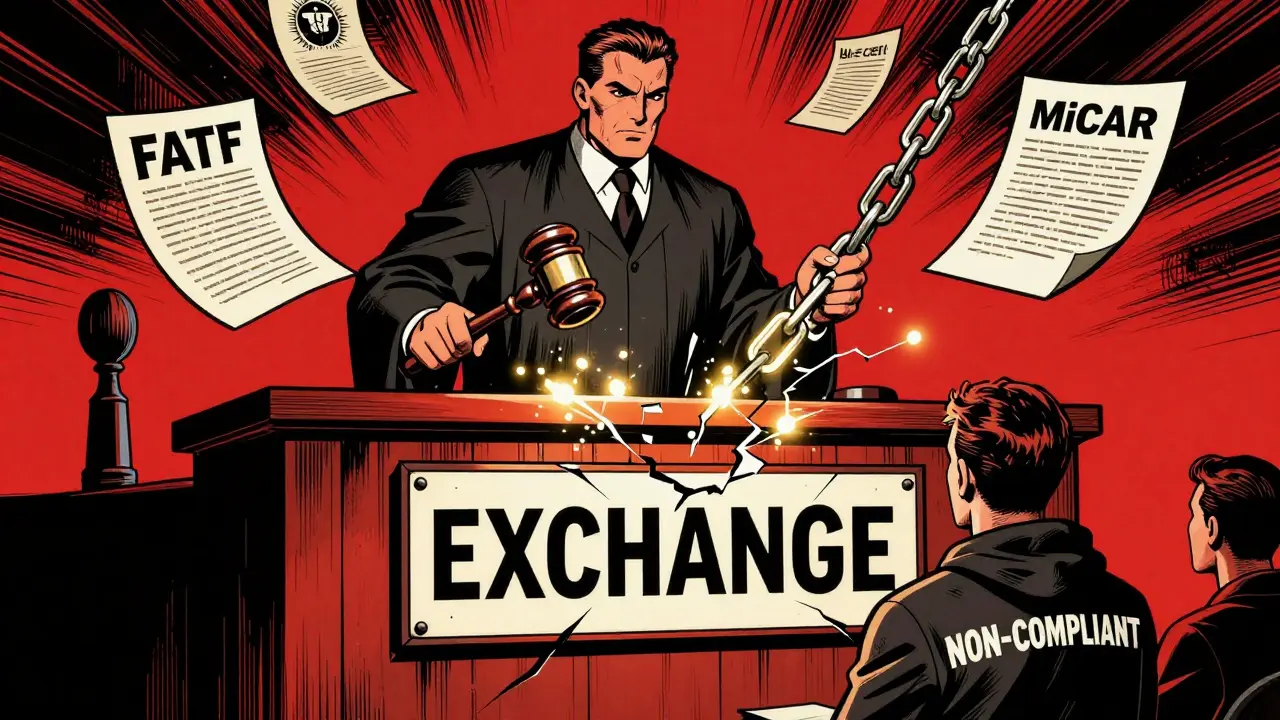
When you hear AML crypto, anti-money laundering rules applied to cryptocurrency transactions to prevent illegal activity. Also known as crypto compliance, it's the set of rules exchanges, wallets, and even DeFi platforms must follow to stay legal. This isn’t about stopping innovation—it’s about keeping bad actors out. If you’ve ever been asked to upload your ID to trade on an exchange, you’ve run into AML crypto in action.
AML crypto ties directly to KYC, the process of verifying a user’s identity before allowing crypto transactions. Also known as know your customer, it’s the first line of defense. Without KYC, AML rules can’t be enforced. And without both, regulators shut platforms down—like what happened to Upbit, which faced a $34 billion potential penalty for failing to verify users properly. It’s not theoretical. It’s real money, real fines, and real consequences.
But AML crypto doesn’t just affect exchanges. It shapes how you use wallets, interact with DeFi protocols, and even claim airdrops. Projects like Arch Network and PAXW that promise free tokens often require KYC to participate—because if they don’t, they risk being labeled unregulated and shut down. Even decentralized identity tools, like those used in self-sovereign identity systems, are being built to meet AML standards, not bypass them. You can’t ignore AML crypto if you want to keep using crypto legally.
Some people think AML crypto is just government overreach. But think about it: if your money can be traced, stolen, or used for scams, you want systems that protect you too. The same rules that stop drug cartels from laundering crypto also stop scammers from cleaning up stolen funds from hacks like the ones that wiped out PAXW or BODA Token. AML crypto isn’t about trust—it’s about transparency. It’s about making sure the tools you use don’t become weapons for criminals.
And it’s changing fast. Countries like Tunisia ban crypto outright, while others, like South Korea, slap massive fines on exchanges that skip KYC. The U.S. demands full reporting. The EU enforces strict transaction tracking. There’s no global standard, but there’s one clear rule: if you’re trading, staking, or holding crypto, you’re in the AML system. Ignoring it won’t make it disappear—it’ll just make your access disappear instead.
Below, you’ll find real-world examples of how AML crypto impacts exchanges, tokens, and users. Some posts show how platforms like Blockchain.com and Alterdice handle compliance. Others reveal what happens when projects ignore it—like the vanished PAXW airdrop or the risky BODA Token. You’ll see how regulation shapes what’s available, what’s safe, and what’s a trap. This isn’t theory. It’s the landscape you’re already living in.