Bitcoin Mining Pool: How They Work and Why They Matter
When you mine Bitcoin, you’re competing against thousands of others using powerful machines to solve complex math problems. But doing it alone? Almost impossible. That’s where a Bitcoin mining pool, a group of miners who combine their computational power to increase the chance of finding a block and sharing the reward. Also known as mining pool, it’s the only practical way most people earn Bitcoin through mining today. Without a pool, you might wait years for one payout. With one, you get small, regular payouts—enough to keep the lights on.
How does it actually work? Miners connect their hardware to a pool server. The server sends out work units—tiny pieces of the Bitcoin puzzle—and each miner tries to solve them. When one miner finds the full solution, the whole pool gets rewarded. That reward is split based on how much work each miner contributed. This system relies on hash rate, the total computing power being used across the Bitcoin network to validate transactions and secure the blockchain. Higher hash rate means more competition, which drives up mining difficulty, the automatic adjustment that keeps Bitcoin blocks coming every 10 minutes, no matter how many miners join or leave. If your hash rate drops or difficulty spikes, your earnings shrink fast.
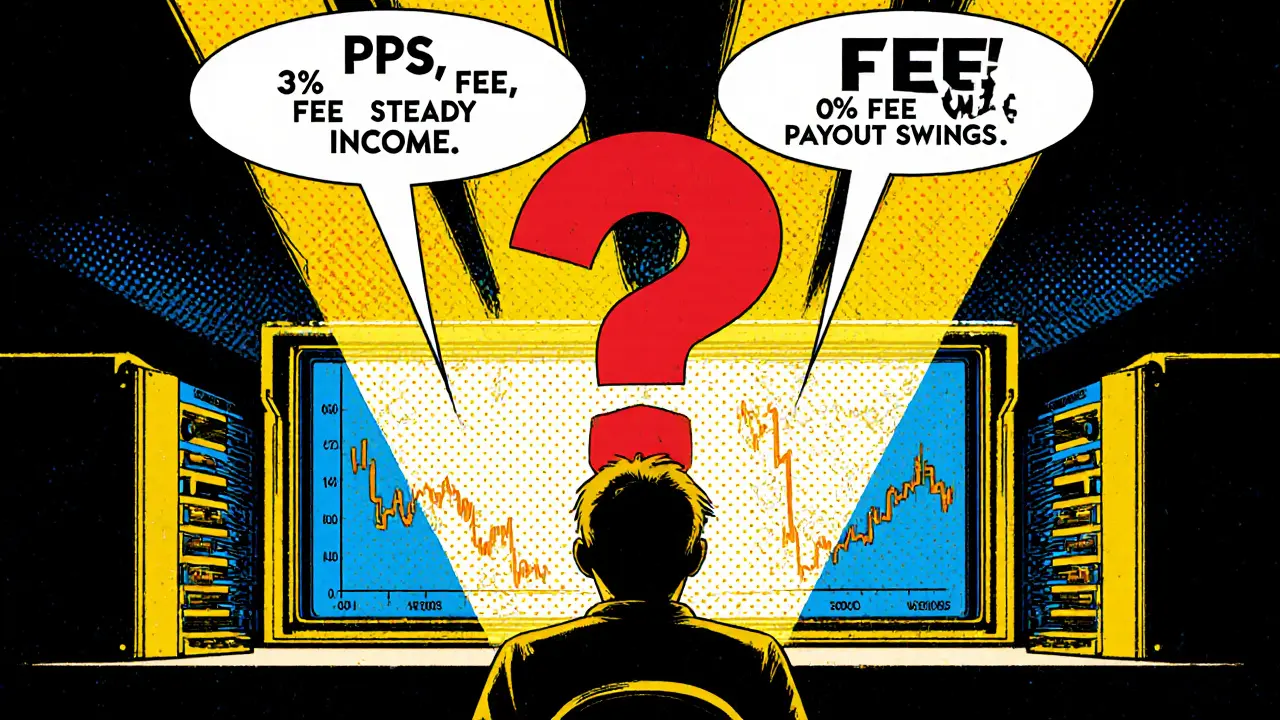
Not all pools are the same. Some charge higher fees. Others pay out more often. Some are huge and stable; others are small and risky. You need to pick one that matches your setup and goals. And don’t forget: electricity costs matter more than you think. A pool might pay well, but if your power bill eats 80% of your profit, you’re losing.
Behind every Bitcoin mining pool is the same core idea: collaboration over competition. It’s not about being the fastest solo miner—it’s about being part of a team that works reliably. And while Bitcoin’s proof-of-work model gets criticized, it’s still the most secure way to run a decentralized currency. Mining pools keep that system alive by letting regular people participate without needing a warehouse full of ASICs.
What you’ll find below are real-world breakdowns of how pools operate, what fees to watch out for, which ones actually deliver, and how mining difficulty changes impact your bottom line. No fluff. No hype. Just what you need to know before you plug in your rig—or decide it’s not worth it.