Utility Tokens vs Security Tokens: Key Differences, Risks & Opportunities
Learn the key differences, risks, and opportunities of utility tokens versus security tokens, including tech, regulation, market data, and future trends.
Read More
When you hear the term Digital Assets, any tokenized value that lives on a blockchain, ranging from coins and tokens to NFTs and derivatives. Also known as crypto assets, they let you store, trade, and earn value without needing a traditional bank. Digital assets encompass Cryptocurrency, digital money like Bitcoin or Ethereum that can be transferred peer‑to‑peer, Non‑Fungible Token (NFT), unique digital collectibles or artwork secured on chain, and Stablecoin, price‑pegged tokens such as USDT that aim to keep volatility low. All of these run on Blockchain, a distributed ledger that records transactions in a tamper‑proof way. Digital assets therefore combine three key ideas: (1) they are tokenized value, (2) they rely on blockchain technology, and (3) they open new ways to invest, earn, and create. Understanding how these pieces fit together is the first step toward smart investing.
Investors now look beyond simple coin buying. A crypto ETF, for example, lets you gain exposure to Bitcoin or Ethereum without holding the raw coins, blending traditional finance with blockchain assets. Meanwhile, airdrops and tokenomics—like the recent Coin98 Wallet or WorldShards giveaways—show how projects distribute value directly to users, turning community participation into real‑world gains. DePIN projects (decentralized physical infrastructure networks) illustrate how digital assets can back tangible services such as wireless coverage or storage, expanding the scope of what a token can represent. On the risk side, slashing protection for proof‑of‑stake validators and funding‑rate dynamics in perpetual futures highlight the need for solid technical knowledge. Forks, from soft to hard, reshape entire ecosystems, while wrapped assets (WBTC, WETH) let you move liquidity across chains, keeping markets fluid. Add to that emerging trends like self‑sovereign identity (SSI) and modular blockchains such as Celestia, and you see a landscape where each digital asset type interacts with layers of protocol, regulation, and user behavior.
Below you’ll find a curated collection of guides that break down these concepts piece by piece. Whether you’re curious about how a Bitcoin ETF launched in Canada reshaped regulation, want a step‑by‑step walkthrough of claiming a MetaSoccer NFT airdrop, or need a deep dive into blockchain forks and their market impact, the articles listed here cover the full spectrum of digital‑asset knowledge. Dive in to get practical tips, real‑world examples, and the tools you need to navigate this fast‑moving space with confidence.
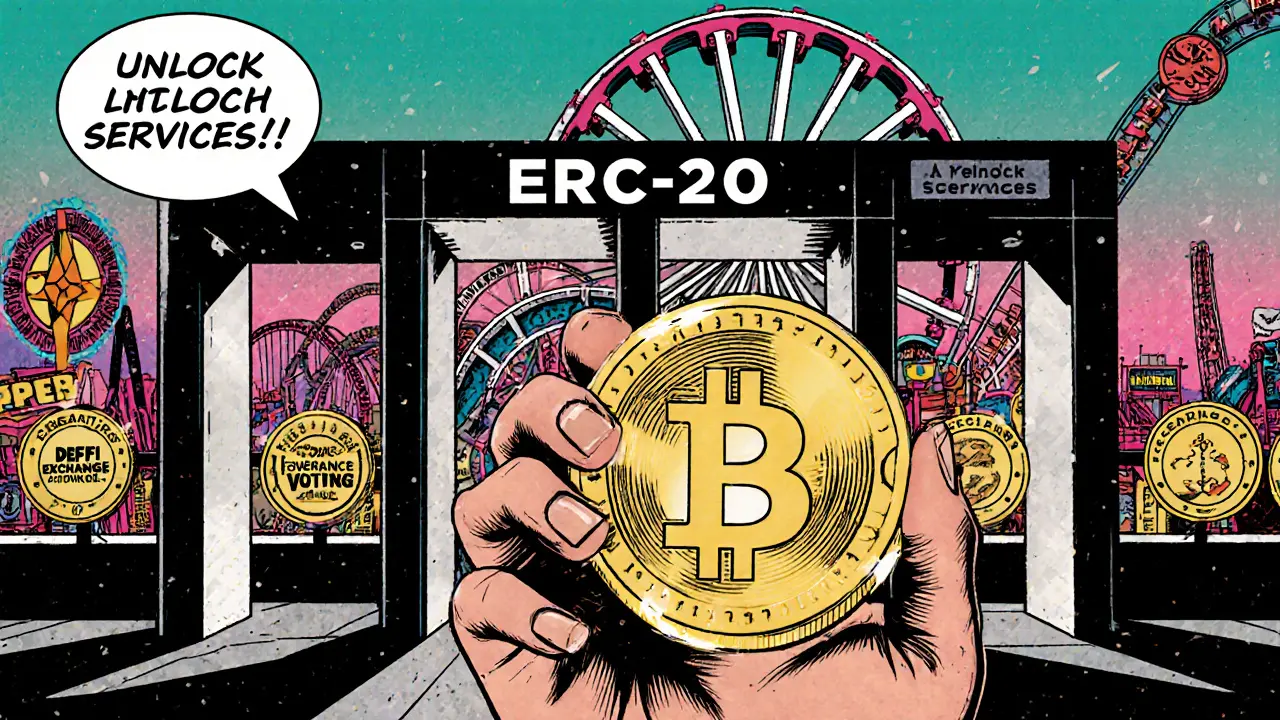
Learn the key differences, risks, and opportunities of utility tokens versus security tokens, including tech, regulation, market data, and future trends.
Read More