Stablecoin Rules: What You Need to Know About Regulation, Risks, and Real-World Use
When you hold a stablecoin, a cryptocurrency designed to maintain a stable value by pegging to a fiat currency like the US dollar. Also known as digital dollar tokens, they’re meant to be the bridge between crypto and everyday money. But stablecoin rules aren’t about tech anymore—they’re about laws, audits, and who gets to control the money supply. In 2025, if you’re using USDC or USDT without knowing the rules, you’re playing with fire.
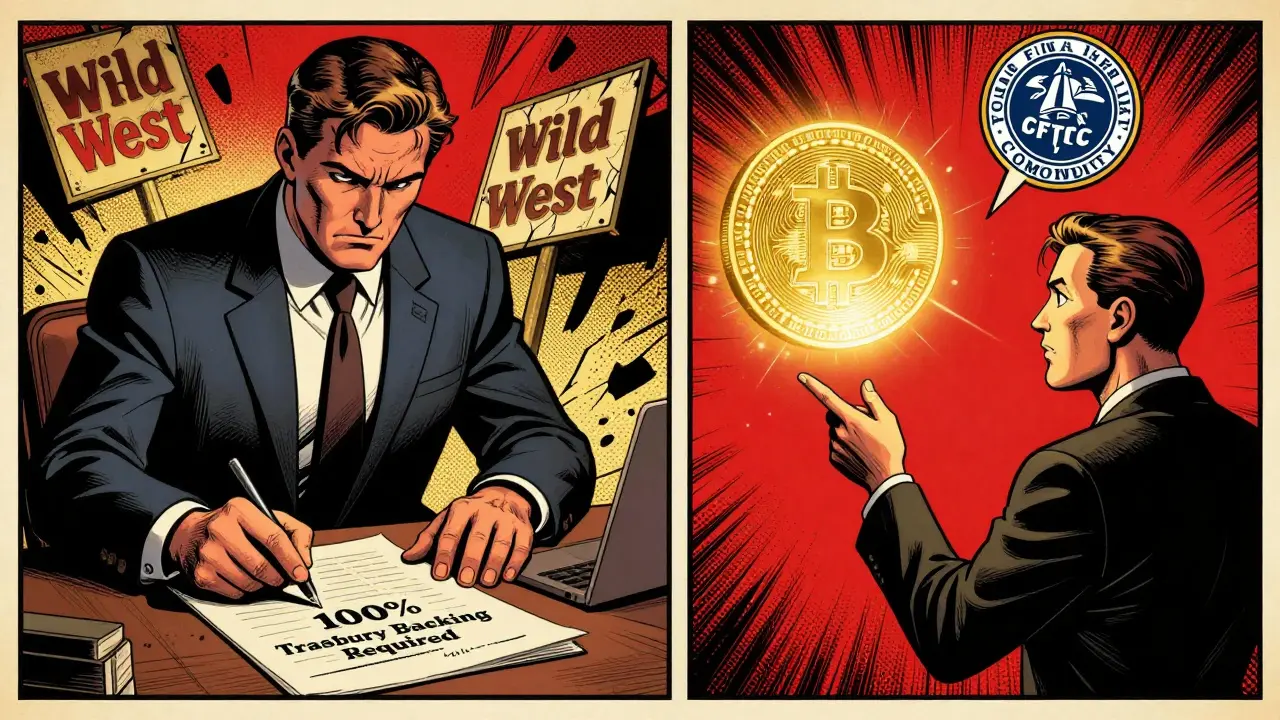
Stablecoin rules are no longer just suggestions. The U.S. is pushing for federal oversight, the EU’s MiCAR law is in full force, and countries like Tunisia have outright banned crypto transactions. These coins aren’t just digital cash—they’re financial instruments now, and regulators treat them like banks. That means issuers must hold real reserves, submit to audits, and follow KYC rules. If a stablecoin issuer can’t prove it has enough dollars in the bank, it’s not just a risk—it’s a violation. And we’ve seen what happens when that trust breaks: TerraUSD collapsed, PaxWorld vanished, and Upbit faced a $34 billion penalty for failing KYC checks. Stablecoins aren’t immune to failure—they’re the most watched part of crypto because they’re the most used.
Not all stablecoins are the same. USDC, a fully reserved, regulated stablecoin issued by Circle and backed by real U.S. dollars and short-term Treasuries follows strict rules. USDT, Tether’s version, has faced years of scrutiny over its reserve transparency. Then there are experimental ones like CBDCs, central bank digital currencies issued by governments, like China’s digital yuan or Sweden’s e-krona—these aren’t crypto at all, but they’re designed to replace cash, not compete with it. The difference matters. USDC and USDT are private, CBDCs are state-controlled. One gives you freedom, the other gives you compliance.
Stablecoin rules affect you whether you trade, stake, or just hold. If you’re using a wallet that doesn’t check for compliance, you could get frozen out. If you’re earning yield on a stablecoin from an unregulated DeFi protocol, you’re exposed to legal risk. And if you’re thinking about buying a new stablecoin because it offers 20% APY—stop. BODA Token and PAXW were once hyped too. They vanished. The ones that survive are the ones that play by the rules.
Below, you’ll find real breakdowns of what’s happening—from the FATF Travel Rule forcing exchanges to track stablecoin transfers, to how institutions are forced to use HSMs to secure their reserves. You’ll see why Wrapped USDR doesn’t exist, how KYC is now mandatory worldwide, and what happens when a stablecoin issuer lies about its backing. This isn’t theory. It’s what’s happening right now. Know the rules—or get left behind.