
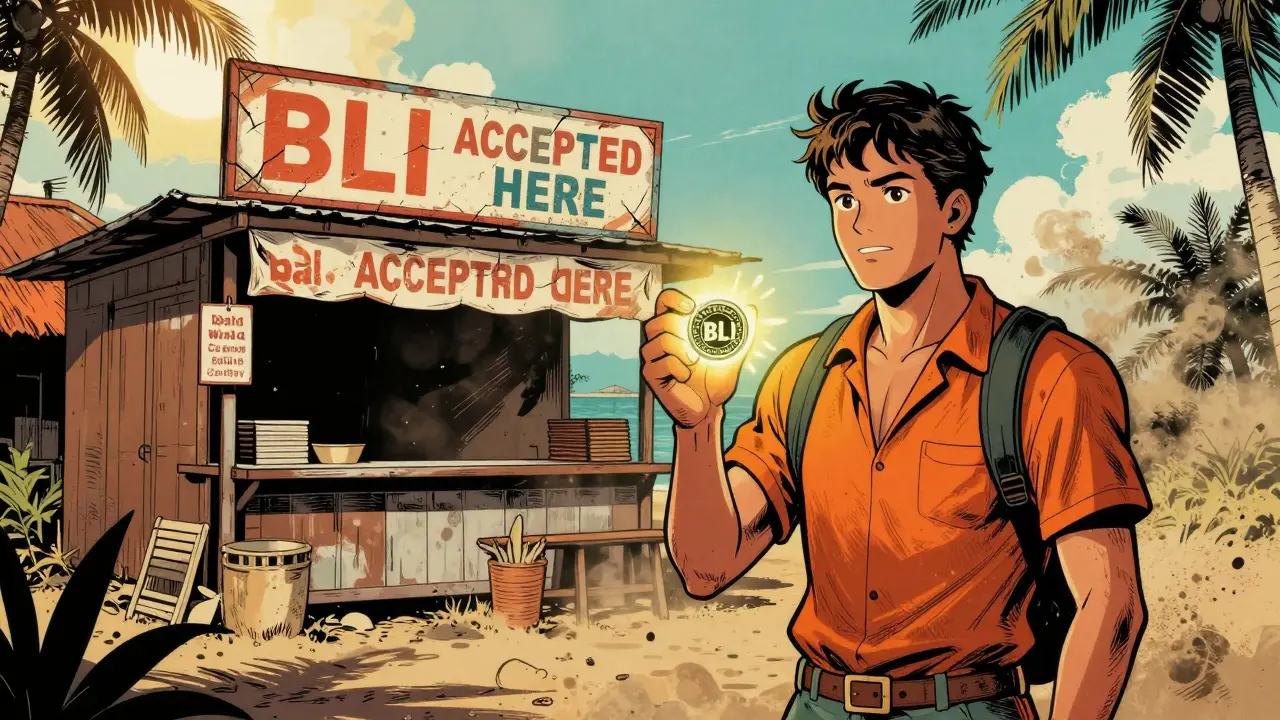
The BALI TOKEN (BLI) is a cryptocurrency built to help revive Bali’s tourism economy after the pandemic. It wasn’t created just as another digital coin - it was designed to solve a real problem: how to get money back into the hands of local businesses when hotels, restaurants, and tour operators had shut down overnight. In 2021, a team of Indonesian professionals from tourism, tech, and blockchain launched BLI as the official utility token for the Bali World Crypto Center (BWCC). Their goal? Bring in 50 trillion Indonesian rupiah (roughly $3.3 billion USD) to rebuild the island’s economy through digital payments.
BLI runs on two blockchains: Ethereum and Binance Smart Chain. This means users can trade it on platforms that support either network. The total supply is huge - 900 trillion tokens. But here’s the catch: almost all of them are still sitting in wallets, not circulating. No one knows exactly how many are actually being used. That’s why market data is messy. On some sites, BLI ranks as the 8,178th largest crypto by market cap. On others, it’s 10,688th. That kind of inconsistency shows how little real trading is happening.
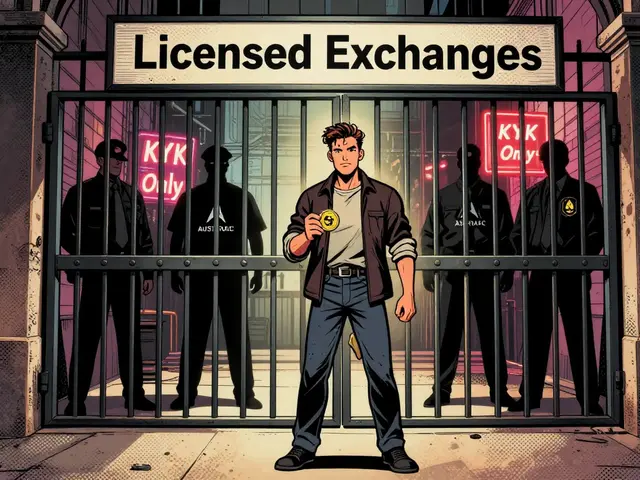
As of early 2026, BLI trades for about $0.0000000917. That’s less than one-hundredth of a cent. You can buy millions of tokens for just a few dollars. Sounds cheap? It is - but that’s not a sign of opportunity. It’s a sign of low demand. The daily trading volume hovers around $80. For comparison, even the smallest popular coins trade millions in volume each day. BLI doesn’t even make it onto major exchanges like Binance or Coinbase. If you want to buy it, you’ll need to use a decentralized exchange (DEX) like PancakeSwap or Uniswap. That means you need a crypto wallet, some ETH or BNB for gas fees, and the patience to deal with slippage on a thin order book.
What can you actually do with BLI? The project says you can use it to pay for hotel stays, local tours, food at restaurants, and even buy Balinese crafts online. There’s talk of a future e-commerce marketplace where only Balinese SMEs can sell products - think hand-woven textiles, coffee, and traditional art. Token holders might get discounts or early access. There’s also a roadmap for staking, where you lock up your BLI to earn more. But none of this has rolled out at scale. You won’t find a single hotel in Seminyak accepting BLI as payment right now. No app shows it as a payment option. No tour guide lists it as accepted. The theory sounds good. The real-world use? Still missing.
Experts are blunt. CoinCodex says they can’t predict BLI’s price because there’s not enough historical data. That’s rare. Most coins, even obscure ones, have weeks or months of trading history. BLI barely has hours. That’s not a glitch - it’s a red flag. If no one is buying or selling, how can the market trust it? Even if you believe in Bali’s recovery, why would you hold a token that’s nearly impossible to trade? The project’s ambition - building its own blockchain, launching a DEX, funding 50 trillion rupiah - sounds like a startup pitch, not a working product. There are no public updates. No team announcements. No progress reports. It’s like a construction site with no workers.
Compare this to other tourism-related crypto projects. Some, like the now-defunct Travel Token, at least had partnerships with real airlines and hotels. Others, like the Thai baht-backed crypto, were backed by government agencies. BLI has no such backing. It’s not listed on Indonesia’s official crypto registry. It doesn’t appear in any central bank reports. The Indonesian government hasn’t endorsed it. That’s not to say it’s a scam - there’s no evidence of fraud. But it’s also not a solution anyone is using.
For investors, BLI is a speculative bet on a future that hasn’t arrived. For tourists, it’s invisible. For local businesses, it’s irrelevant. The token’s low price makes it feel accessible, but accessibility without utility is just noise. You can buy 10 million BLI for $1 - but what can you buy with them? Nothing, right now. The ecosystem it promises - restaurants, transport, shops, marketplaces - doesn’t exist in practice. Until you can walk into a warung in Ubud and pay with BLI, it’s just a number on a screen.
The bigger question is this: can a token meant to save a tourism economy survive without adoption? Bali’s tourism industry is recovering. Hotels are full again. Flights are packed. But BLI isn’t part of that recovery. It’s stuck in the past - a well-intentioned idea that never made the leap from concept to reality. The blockchain is there. The code is live. But the people? They’re not using it.
If you’re curious about BLI, you can find its contract on Etherscan: 0x42BE29132756ddd6e8B3B94584cA0bAb20545EEc. But don’t expect answers. Don’t expect volume. Don’t expect progress. Just expect a very quiet market.
Is BALI TOKEN (BLI) a good investment?
As of 2026, BLI is not a viable investment for most people. Its market cap is tiny, trading volume is under $100 per day, and it’s not listed on any major exchange. The lack of liquidity means you might not be able to sell your tokens when you want to. There’s no price data to analyze trends, and no evidence of real-world use. While the project’s mission is meaningful, the token itself has no track record of adoption or growth. Treat it as a high-risk speculative asset at best.
Can I use BALI TOKEN to pay for hotels or tours in Bali?
No, not currently. Despite claims that BLI is meant for tourism payments, there are no verified businesses in Bali - hotels, restaurants, or tour operators - that accept it as payment. The e-commerce platform and payment system are still in the planning stage. Any website claiming you can buy Bali trips with BLI is either misleading or running a test with no real customers.
Where can I buy BALI TOKEN (BLI)?
You can only buy BLI on decentralized exchanges (DEXs) like PancakeSwap (on BSC) or Uniswap (on Ethereum). You’ll need a wallet like MetaMask or Trust Wallet, some BNB or ETH for transaction fees, and the ability to navigate low-liquidity markets. Be warned: slippage can be extreme, and price changes between quote and trade are common. Never use centralized exchanges like Binance - BLI is not listed there.
Why is BLI’s price so low?
BLI’s price is low because demand is extremely low. With a total supply of 900 trillion tokens and almost no trading activity, each token has almost no value. Its all-time high was around $0.000020 in early 2022, but since then, interest has faded. The token lacks partnerships, listings, or real users. Low price doesn’t mean it’s cheap - it means it’s unpopular.
Is BALI TOKEN backed by the Indonesian government?
No. While the project claims to support Indonesia’s economic recovery, there is no official partnership with the Indonesian government, central bank, or tourism ministry. The Bali Token Global company is registered in Indonesia, but it operates as a private initiative. The government has not endorsed BLI, nor has it integrated it into any national digital payment systems.

There are 22 Comments
Amanda Markwick
Sriharsha Majety
Tabitha Davis
Vishakha Singh
Don B.
Arya Dev
Leslie Cox
Andrew Hadder
Derek Sasser
Neeti Sharma
Nadia Shalaby
Fiona Monroe
Molley Spencer
John Fuller
Maggie House
maya keta
Curtis Dunnett-Jones
bella gonzales
Paul Reinhart
Robert Conmy
Amita Pandey
Amanda Markwick
Write a comment
Your email address will not be published. Required fields are marked *