

There’s a new crypto coin floating around social media with a frog logo, a ridiculous name, and a supply so huge it’s almost meaningless: Peezy (PEEZY). If you’ve seen it on TikTok, Reddit, or a small exchange like MEXC, you might be wondering - is this the next Dogecoin? Or just another empty hype train with no destination?
The short answer? Peezy is a meme coin with zero real utility, no team behind it, and a market cap smaller than your monthly coffee budget. It’s not a scam in the traditional sense - there’s no fake whitepaper or locked wallets. But it’s also not an investment. It’s a gamble wrapped in a joke.
What is Peezy (PEEZY) actually?
Peezy is an ERC-20 token built on the Ethereum blockchain. That means it runs on the same network as Ethereum, Uniswap, and most other crypto tokens. Its branding claims it’s "everything Pepe wishes he could be" - a hip-hop frog with "main character energy." It’s funny. It’s absurd. And that’s the whole point.
Unlike Bitcoin or Ethereum, Peezy doesn’t solve a problem. It doesn’t offer faster payments, decentralized finance tools, or smart contracts. It doesn’t even have a website, GitHub repo, or development roadmap. There’s no team. No founders. No updates. Just a token with a funny name and a logo.
The total supply is 420,690,000,000,000 tokens - that’s 420.69 trillion. Why that number? Because 420 and 69 are internet memes tied to cannabis culture. It’s not a technical choice. It’s a joke. And it’s a common trick in the meme coin world. Dogecoin had 100 billion. Shiba Inu had 1 quadrillion. Peezy just went bigger.
The price is almost nothing - and that’s the problem
Peezy trades at around $0.0000000002. That’s two ten-billionths of a dollar. To most people, that sounds cheap. "I can buy a billion tokens for $2!" But here’s the catch: price doesn’t matter. Market cap does.
With 420.69 trillion tokens in circulation, Peezy’s market cap sits around $72,000. That’s less than the cost of a used car. Compare that to Dogecoin ($13.5 billion) or even Pepe ($232 million). Peezy isn’t just small - it’s microscopic.
And the price? It jumps around like a rubber band. One day it’s $0.00000000017, the next it’s $0.00000000022. A 30% swing in 24 hours sounds exciting - until you realize it’s because 12 people traded 500 million tokens each. That’s not a market. That’s a casino.
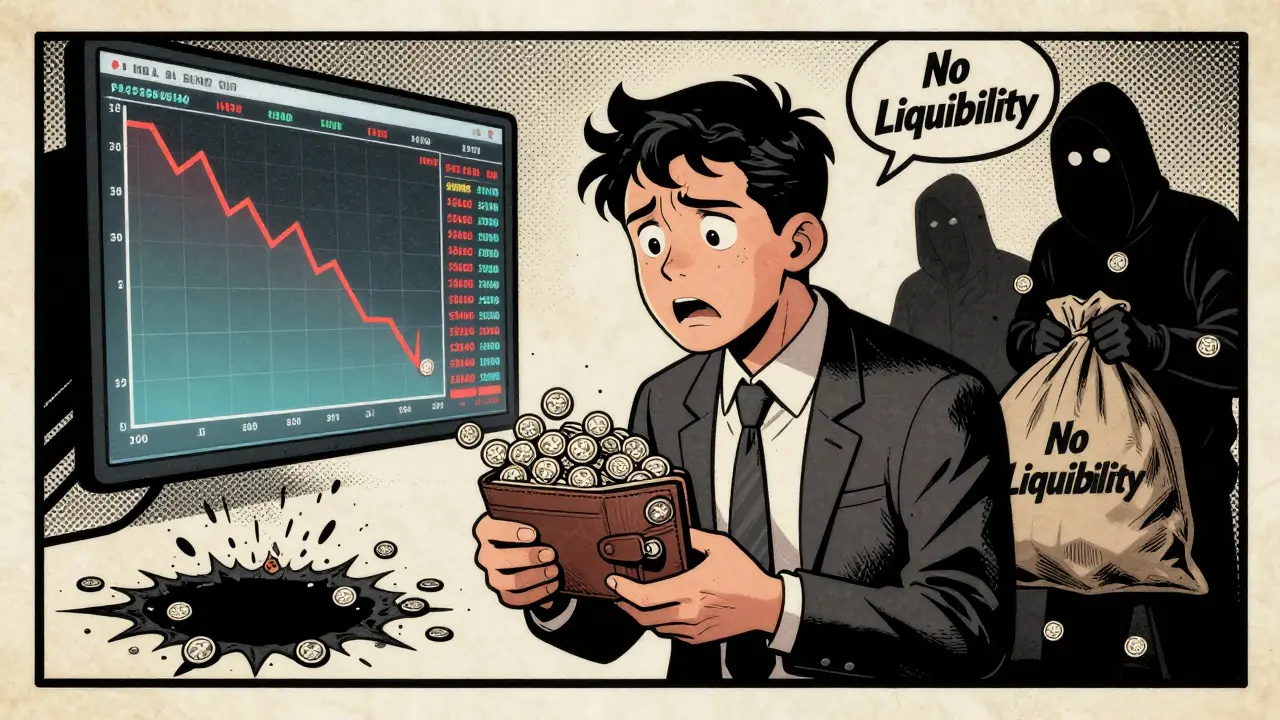
There’s no liquidity - you can’t sell if you want to
Liquidity is the lifeblood of any crypto asset. It means people are buying and selling regularly. For Peezy? There’s almost none.
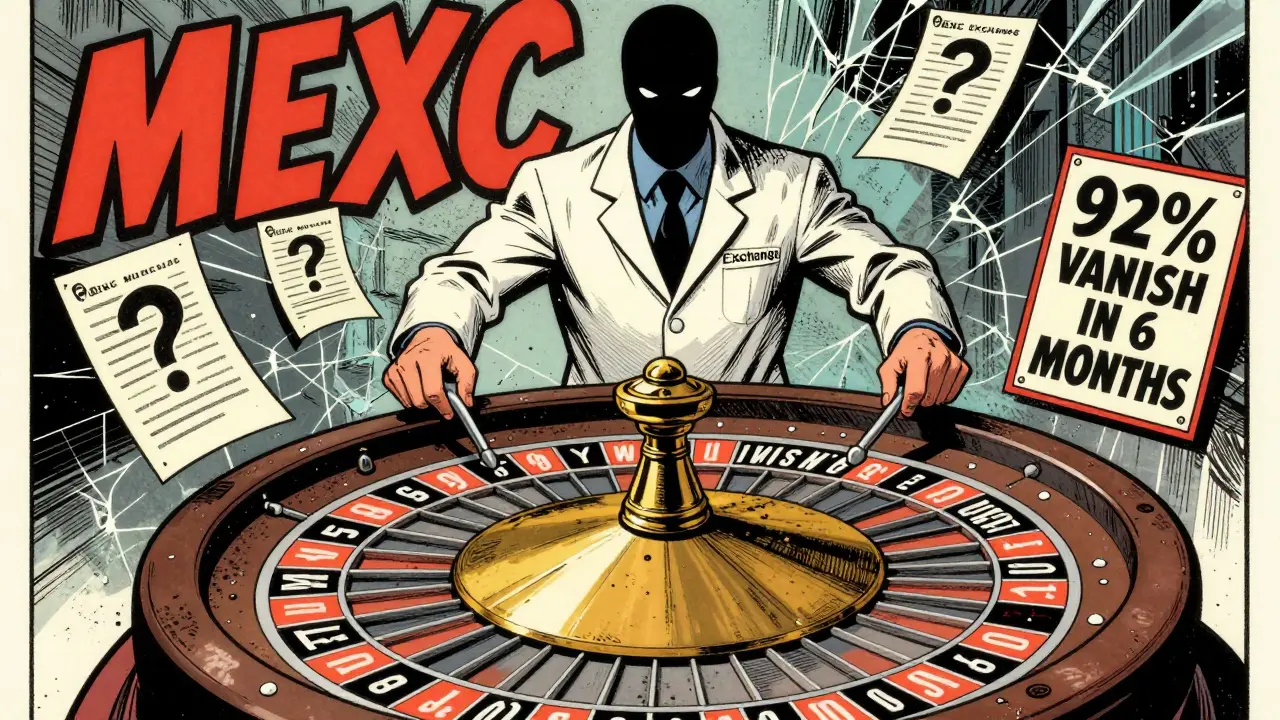
On MEXC, the only major exchange listing it, the 24-hour trading volume hovers between $30 and $130. That’s less than what you’d spend on a single NFT. On Uniswap, trying to trade Peezy often results in "Insufficient liquidity" errors. If you buy 10 million tokens and try to sell them later, you’ll either get stuck or lose 20% of your value just from slippage.
Real traders don’t hold Peezy. They try to flip it fast - buy during a pump, sell before the next one crashes. But here’s the trap: when the pumps stop, there’s no one left to buy. And because the market cap is so tiny, just a few large wallets can move the price.
The contract address is a mess
One of the biggest red flags? No one agrees on the real contract address.
CoinGecko lists one address. Etherscan shows another. Some users swear by a third. That’s not a glitch - it’s a sign the project is either abandoned, poorly managed, or deliberately confusing. If you’re trading a token, you need to know the exact contract. Mistake one digit, and you send your money to a dead address. There’s no customer support. No refund. No way back.
Even worse, the top 10 wallets hold over 51% of all Peezy tokens. That means a handful of people control the entire market. They can dump their holdings at any time - and you’d be stuck holding the bag.
Who’s buying this? And why?
Most buyers are either:
- Complete beginners who think "low price = high upside"
- Speculators chasing quick 2x or 5x gains during pump events
- People who got sucked in by TikTok videos saying "This is the next Pepe!"
Some claim they made money. One Reddit user said they turned $20 into $60 in 24 hours. But that’s the exception. Most stories end the same way: "I bought at $0.0000000002, now it’s at $0.00000000008. I can’t sell. My wallet’s stuck. I lost $50."
Trustpilot reviews from people who tried to withdraw Peezy from MEXC report 37% failure rates. Some say they waited days for a withdrawal that never arrived. Others say they got a partial refund - after paying $3 in gas fees just to try.
Why does this even exist?
Peezy exists because the meme coin ecosystem is a feedback loop of hype, FOMO, and low barriers to entry. Anyone can create a token on Ethereum in under 10 minutes. No KYC. No approval. No rules.
Platforms like MEXC list these tokens because they earn trading fees. The more obscure the coin, the more people trade it - and the more money the exchange makes. The creators of Peezy? Probably anonymous. Maybe they made a quick $10,000 from early buyers and vanished. Maybe they’re still watching the charts.
There’s no innovation here. No technology. No vision. Just a frog with sunglasses and a very, very big supply.
Is Peezy a scam?
Technically? No. It’s not a Ponzi. No one promised returns. No one locked your funds. But is it safe? Absolutely not.
Experts like Michael van de Poppe and firms like Chainalysis warn that tokens under $100,000 market cap with no team, no utility, and inconsistent data are almost always doomed. VanEck’s 2026 report says fewer than 5% survive past 2027. Chainalysis found 92% of similar tokens vanish within six months.
Peezy doesn’t even have a security audit. No CertiK. No Quantstamp. No public code review. That means the contract could have hidden functions - like a "kill switch" that lets the owners burn everyone’s tokens. Or a tax that drains 10% every time you trade. You don’t know. And you can’t check.
Should you trade Peezy?
If you’re asking this question, you’re probably not ready.
Trading Peezy requires:
- Understanding Ethereum gas fees - you might pay $2 to trade $10 worth of PEEZY
- Knowing how to verify contract addresses
- Accepting that you could lose everything with no recourse
- Being okay with zero liquidity and extreme slippage
Even then, you’re not investing. You’re gambling. And the odds are stacked against you.
For every person who made $500 on Peezy, 100 people lost $50. The market doesn’t reward patience here. It rewards timing - and even that’s a crapshoot.
What’s the alternative?
If you like meme coins for fun, stick to ones with real traction: Dogecoin, Shiba Inu, or even Pepe. They have communities. They have exchanges. They have audits. They have history.
If you want to speculate, use a small amount - like $5 or $10 - that you’re willing to lose. Don’t go all in. Don’t borrow. Don’t use your rent money.
And if you’re looking for real crypto value? Look at projects with teams, whitepapers, and actual use cases. Not frogs with sunglasses.
Final thoughts
Peezy isn’t the future of crypto. It’s a symptom of its worst tendencies: hype without substance, speculation without logic, and excitement without safety.
It’s a joke. And like most jokes, it’s funny until you’re the one paying for it.
If you see someone pushing Peezy as a "sure thing," walk away. The only thing it’s guaranteed to deliver is regret.
Is Peezy (PEEZY) a real cryptocurrency?
Yes, Peezy is technically a cryptocurrency - it’s an ERC-20 token on the Ethereum blockchain. But it has no team, no utility, no roadmap, and no real-world use. It exists only as a speculative asset with no foundation beyond its meme branding.
Can I make money trading Peezy?
Some people have made small, short-term profits during pump events, but these are rare and unsustainable. The vast majority of traders lose money due to low liquidity, high slippage, and sudden price drops. Trading Peezy is gambling, not investing.
Why is the supply so high - 420.69 trillion?
The number 420 and 69 are internet memes tied to cannabis culture. Meme coins often use absurdly large supplies to make the price seem "cheap," even though the market cap is tiny. It’s a psychological trick, not a technical advantage.
Is Peezy listed on major exchanges like Binance or Coinbase?
No. Peezy is only listed on smaller, less-regulated exchanges like MEXC. It’s not available on Binance, Coinbase, Kraken, or any other major platform. This limits liquidity and increases risk.
What’s the risk of holding Peezy long-term?
Extremely high. With no development team, no utility, and a market cap under $100,000, Peezy has less than a 5% chance of surviving past 2027, according to industry analysts. Most similar tokens are delisted or become worthless within six months. Holding it long-term is almost guaranteed to result in a total loss.
How do I buy Peezy safely?
There’s no safe way to buy Peezy. If you still want to try, use only small amounts you can afford to lose. Verify the contract address across multiple sources (but know they conflict). Use limit orders with 10-15% slippage. Never use a centralized exchange you don’t trust. And never assume you can sell later - liquidity is nearly nonexistent.
Why do people still trade Peezy if it’s so risky?
Because of FOMO and the illusion of low entry cost. A price of $0.0000000002 makes people think they can buy millions of tokens for a few dollars. But the real cost isn’t the token price - it’s the risk of losing everything with no chance of recovery. Most traders don’t understand liquidity or market cap. They see a chart going up and assume it will keep rising.
Has Peezy been audited or verified by any security firm?
No. There is no evidence of any security audit from firms like CertiK, Quantstamp, or PeckShield. The smart contract code has not been publicly reviewed. This means it could contain hidden functions that allow the creators to drain funds or freeze wallets at any time.




There are 17 Comments
Alexis Dummar
kristina tina
Lauren Bontje
Stephanie BASILIEN
Deb Svanefelt
Haley Hebert
Jill McCollum
Hailey Bug
Dustin Secrest
Josh V
Stephen Gaskell
CHISOM UCHE
Ashlea Zirk
Liza Tait-Bailey
nathan yeung
Bharat Kunduri
Chris O'Carroll
Write a comment
Your email address will not be published. Required fields are marked *