Imagine trying to send money across borders using Bitcoin in Dhaka. You might think it’s just a transaction on your phone, but in Bangladesh, that simple act could land you in serious legal trouble. The country maintains one of the strictest cryptocurrency enforcement regimes in Asia. While there is no single law that explicitly says "cryptocurrency is illegal," the regulatory environment acts as a de facto ban. This ambiguity creates a high-risk landscape for anyone holding, trading, or mining digital assets.
If you are looking to invest in crypto while based in Bangladesh, or if you are a business trying to understand cross-border payment risks, you need to know exactly how these rules work. The government’s stance isn’t just about discouraging use; it’s about preventing money laundering, terrorist financing, and capital flight. Let’s break down what this means for you, from the specific laws being used to arrest people to the confusing gap between blockchain technology acceptance and crypto rejection.
The Regulatory Landscape: Implicit Ban vs. Explicit Law
To understand why crypto is so restricted in Bangladesh, we have to look at who is calling the shots. The primary authority here is Bangladesh Bank, which is the central banking authority responsible for issuing currency and maintaining financial stability in Bangladesh. Since 2014, Bangladesh Bank has issued multiple warnings against cryptocurrency usage. They argue that virtual assets lack official recognition and pose significant risks to the national economy.
Here is the tricky part: there is no specific "Crypto Act" in Bangladesh. Instead, enforcement happens through existing financial regulations. Authorities rely on the Foreign Exchange Regulations Act of 1947 and the Money Laundering Prevention Act of 2012. If you use crypto to move money out of the country without going through an authorized bank, you are violating foreign exchange laws. If you use it to hide the source of funds, you are violating anti-money laundering (AML) laws.
This creates a complex situation. Owning a few dollars worth of Bitcoin in a private wallet might not immediately trigger a jail sentence, but the moment you try to trade it, cash it out, or use it for commerce, you step into legal danger zones. The Financial Intelligence Unit (FIU) of Bangladesh monitors these risks closely, tracking suspicious transactions that involve digital currencies.
Why Is Mining Strictly Illegal?
You might hear about countries like Canada or Sweden turning into mining hubs because of cheap renewable energy. Bangladesh takes the opposite approach. As of 2025 and continuing into 2026, cryptocurrency mining is explicitly illegal in Bangladesh.
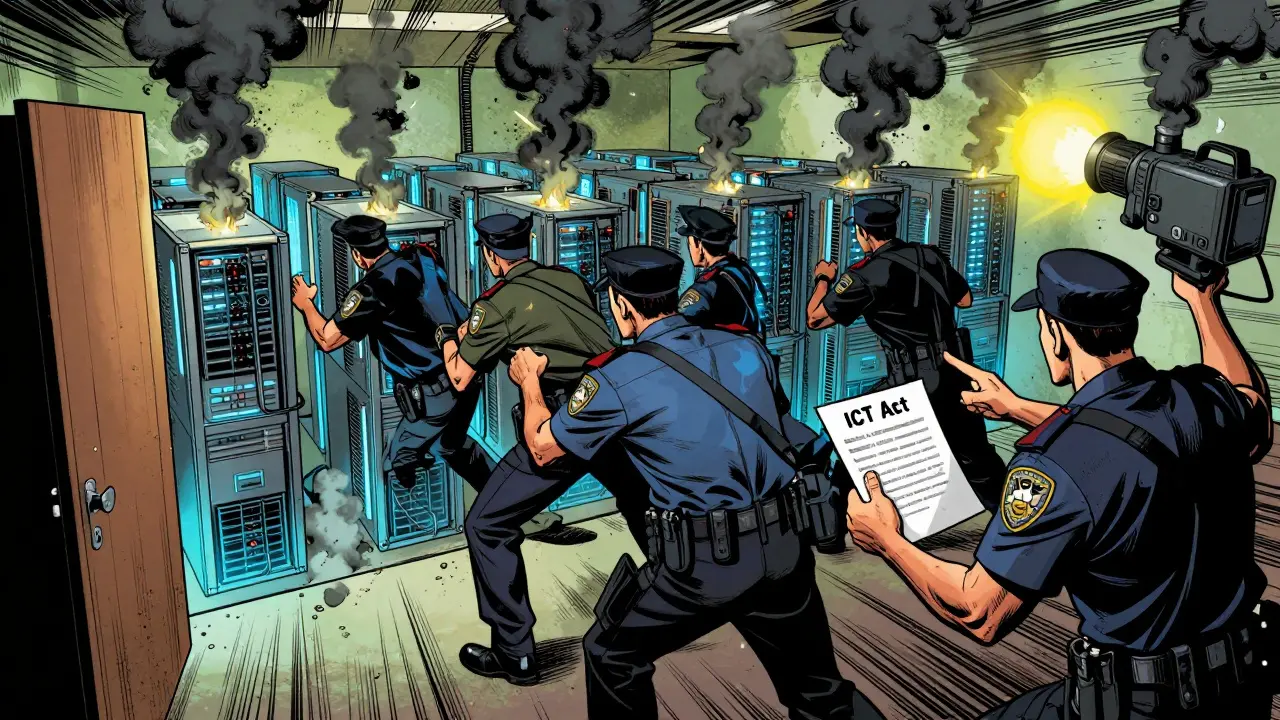
Why? The government views mining operations as violations of anti-money laundering laws and a drain on national electricity resources. In 2024, authorities in Dhaka arrested several individuals for running clandestine mining farms. These weren’t small home setups; they were organized operations deemed to be facilitating illicit financial flows. The arrests sent a clear message: the state will prosecute those who attempt to bypass traditional banking channels using decentralized technology.
The Information and Communication Technology (ICT) Act provides additional legal framework for prohibiting unauthorized digital currency activities. When combined with AML laws, this gives law enforcement broad powers to shut down servers, seize hardware, and detain operators.
Enforcement Actions and Real-World Consequences
It’s easy to ignore warnings until you see them in action. Bangladesh’s enforcement is not theoretical. The Criminal Investigation Department (CID) has been instructed by Bangladesh Bank to treat cryptocurrency-related money laundering as a serious crime. Here is what that looks like on the ground:
- Arrests for Trading: Individuals caught operating informal exchange desks or peer-to-peer (P2P) trading networks face prosecution under foreign exchange violation charges.
- Mining Raids: Police raids on hidden mining facilities result in confiscation of ASIC miners and potential imprisonment for the owners.
- Scam Prosecutions: Authorities have cracked down on Ponzi schemes disguised as crypto investments. For example, the MTFE scam attracted thousands of investors before collapsing, leading to investigations into how digital wallets were used to move stolen funds.
The decentralized nature of crypto makes monitoring difficult. Anonymous wallets, particularly those on the TRC20 network, are often used to obscure money trails. However, this anonymity doesn’t protect users from local enforcement. If you are identified as part of a network moving illicit funds, the lack of a formal crypto license means you have no legal recourse.
The Blockchain Paradox: Tech Accepted, Crypto Banned
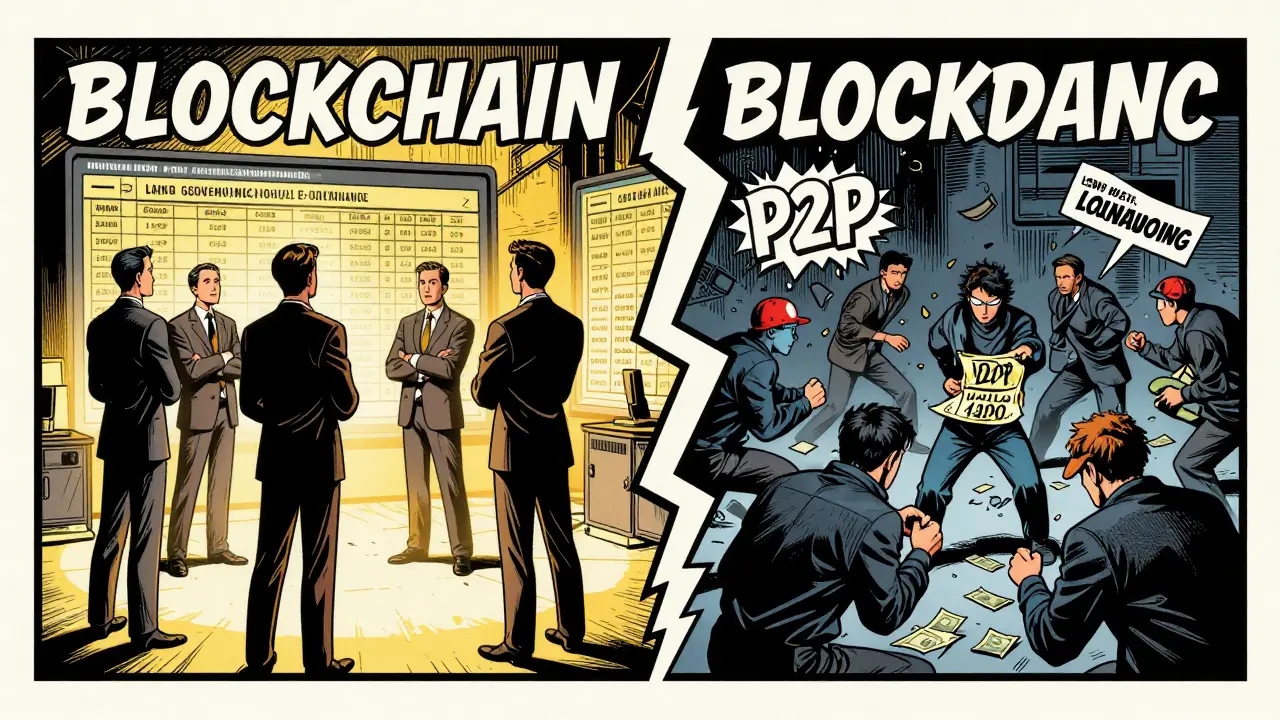
There is a major contradiction in Bangladesh’s policy that confuses many observers. On one hand, the government bans Bitcoin and Ethereum. On the other hand, it actively promotes blockchain technology for government use.
In 2020, the National Blockchain Strategy was released under the guidance of the Bangladesh Computer Council. This strategy recognized blockchain’s importance for securing land records, identity systems, and e-governance. The government sees the utility of immutable ledgers for transparency in public services but rejects the speculative and unregulated nature of cryptocurrencies.
This distinction matters. It shows that the ban isn’t about hating technology; it’s about controlling finance. The state wants to keep monetary policy tight and prevent capital flight. By allowing blockchain for government databases but banning it for private wealth storage, they maintain control over the financial system while still modernizing administrative processes.
Tax Implications and Revenue Gaps
If you are wondering whether you can at least pay taxes on your crypto gains, the answer is complicated. There is no specific cryptocurrency tax regime in Bangladesh. However, the National Board of Revenue (NBR) applies the general Income Tax Ordinance of 1984 to all transactions.
Technically, any profit made from selling crypto could be considered taxable income. But because the activity itself is discouraged and largely underground, reporting these gains is rare. This creates a gray area where users neither declare their assets nor feel protected by the system. For businesses, this uncertainty is a huge deterrent. Without clear tax guidelines, companies cannot legally integrate crypto payments without risking audits and penalties.
International Pressure: The FATF Challenge
Bangladesh’s isolation in the crypto world isn’t just domestic; it’s international. The country faces pressure to comply with standards set by the Financial Action Task Force (FATF), a global body that sets anti-money laundering standards. Specifically, FATF Recommendation 15 deals with virtual assets.
Currently, Bangladesh’s framework does not fully align with these recommendations. While the country is a pioneer in mobile money (with services like bKash dominating daily life), its lack of a structured regulatory framework for crypto creates gaps in addressing modern money laundering techniques. As global adoption of fintech surges, this non-compliance becomes a liability. International banks may hesitate to process transactions involving Bangladeshi entities if they suspect links to unregulated crypto markets.
This puts Bangladesh at a disadvantage compared to neighbors like Pakistan. In May 2025, Pakistan established the Pakistan Digital Assets Authority (PDAA) to regulate exchanges and even allocated power for Bitcoin mining. Bangladesh, by contrast, remains rigid. This divergence suggests that unless Bangladesh updates its laws, it risks falling further behind in the regional fintech race.
| Feature | Bangladesh | Pakistan (as of 2025) | India |
|---|---|---|---|
| Legal Status | Implicit Ban / High Risk | Regulated via PDAA | Restricted but Recognized as Property |
| Mining | Illegal | Supported (Strategic Reserve) | Legally Ambiguous / Discouraged |
| Primary Regulator | Bangladesh Bank | State Bank of Pakistan + PDAA | Reserve Bank of India |
| FATF Compliance | Gaps in Virtual Asset Rules | Aligning with Global Standards | Strict AML/KYC Requirements |
What Should You Do? Practical Advice
If you live in Bangladesh and are interested in cryptocurrency, you must prioritize safety and legality. Here are the key takeaways:
- Avoid Local Exchanges: There are no licensed crypto exchanges in Bangladesh. Using underground P2P platforms exposes you to scams and legal scrutiny.
- Do Not Mine: The risk of raid and prosecution is too high. The cost of hardware and electricity outweighs any potential gain when you factor in legal fees and jail time.
- Understand Your Rights: While mere possession might not always lead to immediate arrest, any transaction that violates foreign exchange rules is prosecutable. Keep your finances within the traditional banking system to stay safe.
- Watch for Policy Shifts: The Ministry of Finance could introduce new legislation. Stay informed about updates from Bangladesh Bank and the FIU, as the regulatory landscape could tighten further or, less likely, open up slightly for institutional use.
The current environment is designed to discourage participation. Until there is explicit legal clarity, the safest path is to treat cryptocurrency as a prohibited activity in your daily financial life.
Is owning cryptocurrency illegal in Bangladesh?
Owning cryptocurrency exists in a legal gray area. While there is no specific law that criminalizes mere possession, Bangladesh Bank has declared that crypto lacks official recognition. Engaging in trading, mining, or using crypto for payments is strictly prohibited and can lead to prosecution under anti-money laundering and foreign exchange laws.
Can I use Binance or other exchanges in Bangladesh?
No. Bangladesh Bank has blocked access to many international crypto exchanges and warned citizens against using them. Transferring funds to these platforms via bank transfer is considered a violation of foreign exchange regulations. Users often resort to informal peer-to-peer methods, which carry high risks of fraud and legal action.
Why is Bitcoin mining banned in Bangladesh?
Bitcoin mining is banned because the government views it as a waste of national electricity resources and a tool for money laundering. Authorities have raided mining operations, seizing equipment and arresting operators under the ICT Act and anti-money laundering laws.
How does Bangladesh compare to Pakistan regarding crypto?
Pakistan has moved toward regulation, establishing the Pakistan Digital Assets Authority (PDAA) in 2025 to oversee exchanges and support mining. Bangladesh maintains a restrictive, implicit ban, creating a stark contrast in regional approaches to digital assets.
Will Bangladesh legalize cryptocurrency in the future?
As of 2026, there are no signs of imminent legalization. The focus remains on protecting the traditional banking system and complying with FATF standards. However, the acceptance of blockchain technology for government use suggests that policymakers recognize the tech's value, even if they reject its financial applications.