
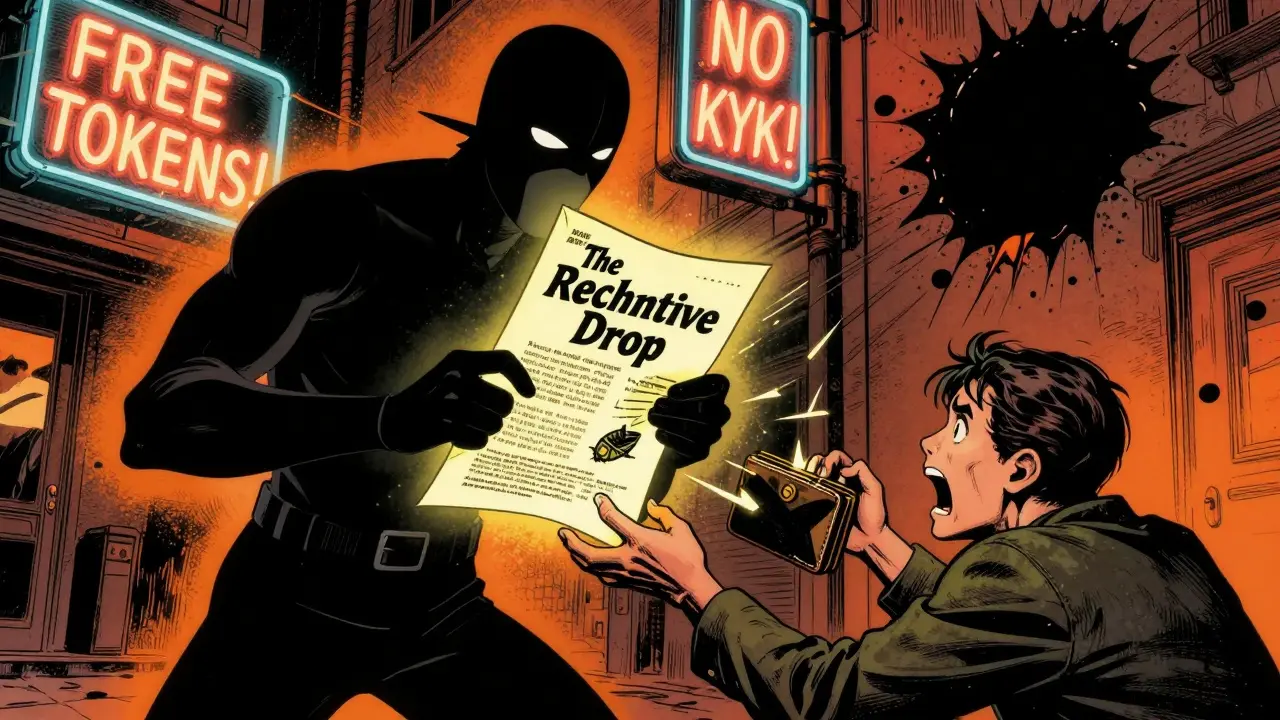
There’s no verified information about a crypto airdrop called The Recharge Incentive Drop. No official website, no whitepaper, no social media presence from a known team, and no mention on trusted platforms like AirdropAlert, CoinGecko, or CoinMarketCap. That’s not normal. Legitimate airdrops don’t hide in the shadows. They announce themselves clearly-with details, timelines, and verifiable smart contracts. If you’ve seen ads or DMs promising free tokens from this airdrop, you’re being targeted by something risky.
Airdrops used to be a way for new blockchain projects to build communities. You’d follow a Twitter account, join a Discord, maybe swap a small amount of ETH, and get rewarded with tokens. Some worked out great. Uniswap gave out 400 UNI to early users. ENS handed out .ETH domains to people who had registered names before a certain block. These weren’t random. They were tracked, documented, and fair.
But today? A lot of airdrops are just noise. And The Recharge Incentive Drop fits the pattern of a scam. No one knows who’s behind it. No one can verify the project’s existence. That’s the first red flag. If you can’t find who made it, you can’t trust it.
How Legitimate Airdrops Work
Real airdrops follow a clear structure. They’re tied to a live blockchain project with a public team, GitHub repo, and audited smart contracts. They usually fall into one of four types:
- Task-based: You do something simple-like sharing a post or joining a Telegram group. No money needed. Just time.
- Interaction-based: You use the protocol-swap tokens, bridge assets, or interact with a dApp. You pay gas fees, but rewards can be higher.
- Staking-based: You lock up your crypto for a while. Higher rewards, but your funds are tied up. Riskier if the project fails.
- Retroactive: You already used the service, and they reward you after the fact. Uniswap did this. So did Arbitrum.
Each type has rules. You get a snapshot of your wallet activity. You’re eligible if you met the criteria before a certain block. Then, tokens are automatically sent to your wallet. No one asks for your private key. No one asks you to send crypto first.
Why The Recharge Incentive Drop Raises Red Flags
If this airdrop is real, why is there zero trace of it? Here’s what’s missing:
- No official website or domain
- No GitHub repository
- No Twitter, Telegram, or Discord with verified badges
- No mention on CoinGecko, CoinMarketCap, or DeFiLlama
- No blockchain explorer records showing token creation or distribution
That’s not oversight. That’s silence. And silence in crypto is usually a warning sign.
Scammers love airdrop hype. They’ll create fake websites with fancy graphics, copy-paste whitepapers from real projects, and use bots to flood social media with fake testimonials. Then they’ll ask you to:
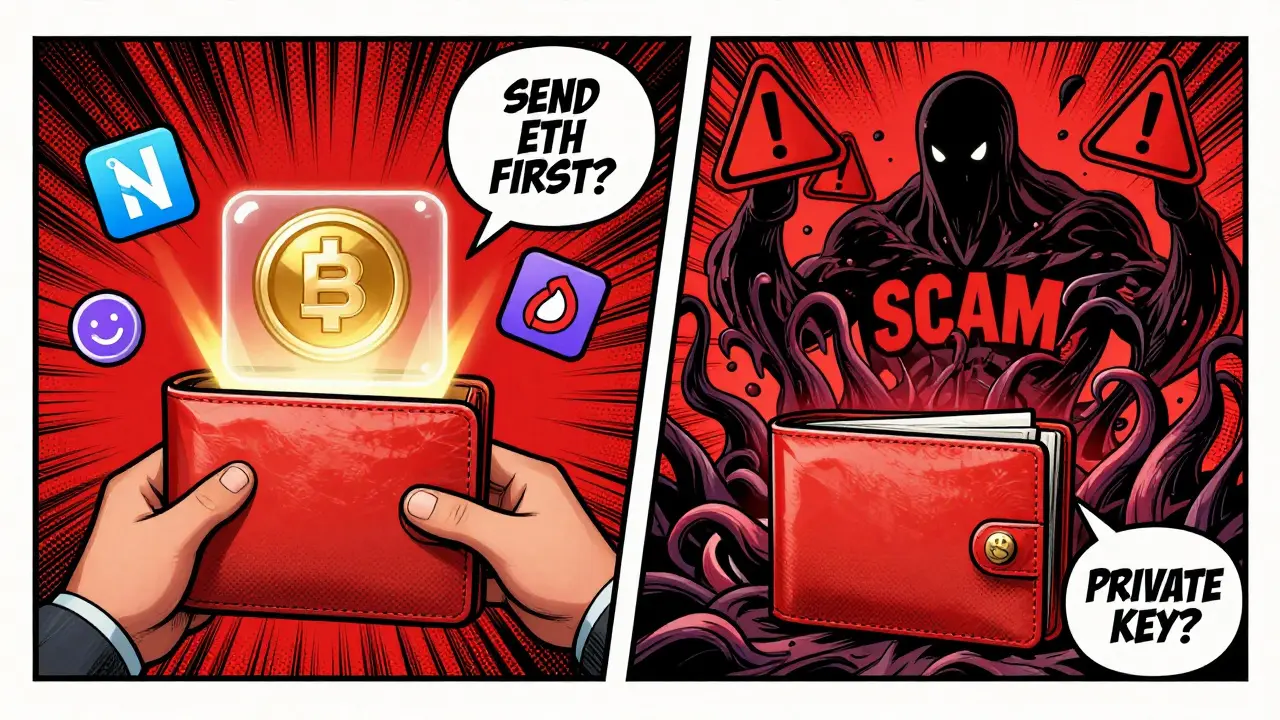
- Send ETH or USDT to a wallet to "unlock" your tokens
- Connect your wallet to a phishing site
- Enter your seed phrase to "verify eligibility"
None of these are legitimate. Ever. If anyone asks for your private key, your seed phrase, or money upfront, close the tab. Immediately.
What You Should Do Instead
If you’re looking for real airdrops, here’s how to find them safely:
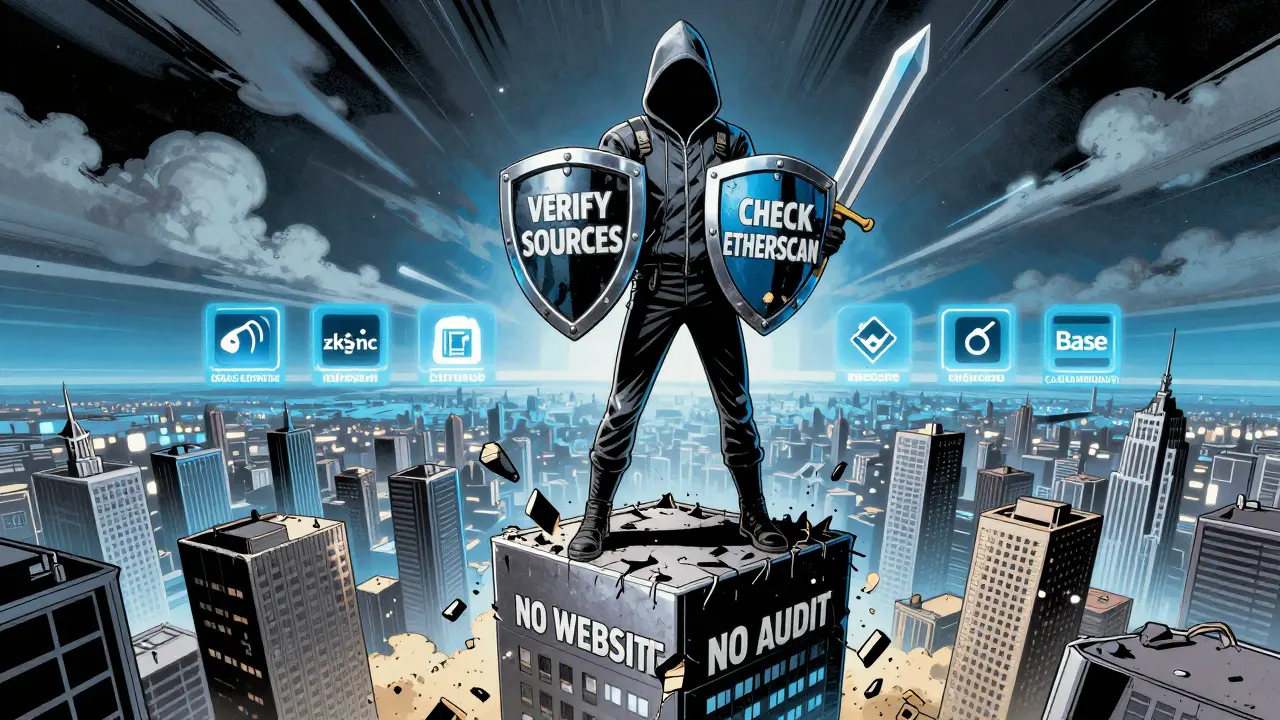
- Check official sources-the project’s website, not a Reddit post or TikTok video.
- Look for verified social accounts. A blue checkmark isn’t foolproof, but it’s a start. Cross-check with Twitter, Discord, and Telegram links on their official site.
- Use trusted tracking sites like AirdropAlert, CoinGecko’s Airdrop section, or TokenUnlocks.
- Search for the project on Etherscan or Solana Explorer. If you can’t find a contract address, it’s not real.
- Read the community. Look for posts on Reddit, Twitter threads, or Discord channels from long-time users. Scams have no real community-just bots.
Legitimate airdrops don’t need to beg you to join. They’re announced because they’ve already built something valuable. If you have to chase it, it’s probably chasing you.
What Happens If You Participate Anyway?
Let’s say you ignore the red flags and go through with it. Here’s what could happen:
- You connect your wallet to a fake site. They drain your ETH, stablecoins, NFTs-all of it.
- You send a small amount of crypto to "unlock" tokens. You never get anything back.
- You enter your seed phrase. Your entire wallet is wiped clean. No recovery.
- You get "tokens" that are worthless. They’re not listed anywhere. You can’t sell them. They’re just numbers in a scammer’s contract.
There’s no middle ground. Either you get nothing, or you lose everything.
What to Watch For in 2026
Airdrops aren’t dead-they’re just smarter. The next big wave is coming from Layer 2s like zkSync, Base, and Scroll. They’re rewarding users who tested their testnets. Sui and Aptos had big retroactive drops last year. These were announced months in advance, with clear rules, and verified by the community.
Look for these signs of legitimacy:
- Public team members with LinkedIn profiles
- Code on GitHub with regular commits
- Smart contract audits from firms like CertiK or PeckShield
- Clear terms: "Tokens will be distributed to wallets that interacted before block 12,345,678"
If it doesn’t have those, it’s not worth your time-or your wallet.
Final Warning
There is no such thing as a "secret" airdrop that only a few people know about. If someone tells you that, they’re lying. Real airdrops are public. They’re documented. They’re tracked on block explorers. If you can’t find proof, it doesn’t exist.
The Recharge Incentive Drop is not a real opportunity. It’s a trap. Don’t engage. Don’t click. Don’t send anything. Walk away.
The crypto space is full of real chances to earn free tokens. But they’re not hidden. They’re out in the open. You just need to know where to look-and what to avoid.
There are 15 Comments
Sharon Tuck
Sherry Kirkham
Jennifer Pilot
jay baravkar
Ian Thomas
Ethan Grace
Brian T
Nash Tree Service
Jane Darrah
Nancy Jewer
Ken Kemp
Julie Potter
nalini jeyapalan
Drago Fila
prasanna tripathy
Write a comment
Your email address will not be published. Required fields are marked *