

Getting a free token sounds like a dream, but in the crypto world, the real story is usually what happens *after* the tokens hit your wallet. The Peanut.Trade airdrop is a classic example of how community-building strategies and market volatility collide. While the event brought thousands of new eyes to the project, the long-term value of those tokens has been a rollercoaster of extreme highs and deep lows.
If you're looking for the specifics of how the NUX distribution worked or trying to figure out if the token still holds potential, you're in the right place. We'll break down the exact mechanics of the airdrop, how the underlying protocol actually works, and what the current market data says about the token's future.
How the Peanut.Trade Airdrop Worked
The Peanut.Trade (NUX) distribution wasn't a random giveaway; it was a coordinated marketing push executed through CoinMarketCap is a leading cryptocurrency data aggregation site that provides price-tracking and airdrop hosting services . This partnership allowed the project to cast a wide net, targeting users who were already tracking market trends.
The campaign focused on a pool of 71,000 NUX tokens, with a total estimated value of $22,000 USD at the time. Instead of giving a few people a massive amount, the team opted for a broad distribution strategy, selecting 2,000 winners. Each winner was eligible to receive up to 35.50 NUX tokens. For those who participated, the requirements were a standard "social quest" checklist: adding NUX to a watchlist, joining the Peanut Telegram groups, following their Twitter account, and filling out a registration form.
Winners were announced on August 27, 2021, and tokens were sent out through August 31. Interestingly, the math suggests the tokens were valued at roughly $0.31 during the giveaway-a far cry from the token's all-time high, but still significantly more than where it sits today.
Understanding the Peanut Protocol (NUX)
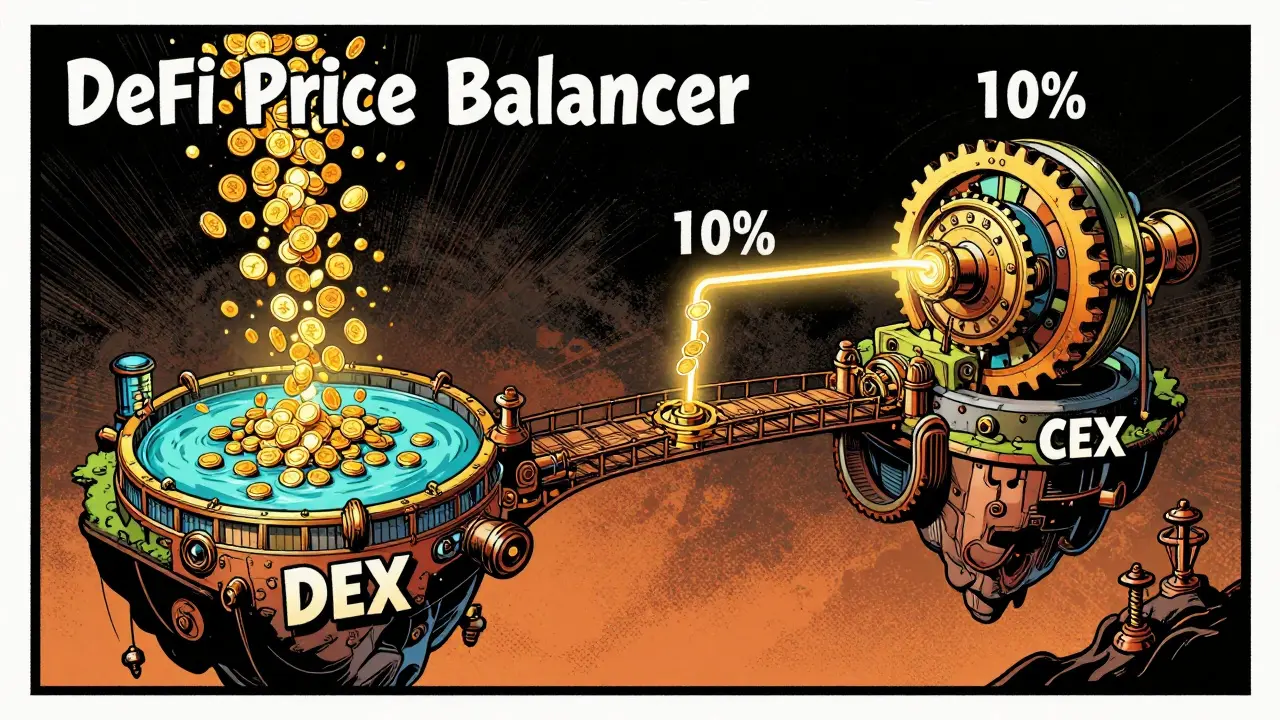
To understand why the token exists, you have to look at the problem it tries to solve. Peanut.Trade is a DeFi price balancer designed to minimize slippage and maximize gains for traders moving between different exchange types . In simple terms, it acts as a bridge that fixes inefficiencies in the market.
Most traders use Automated Market Makers (AMMs) is decentralized protocols that use algorithms to price assets without a traditional order book , like Uniswap. The problem is "slippage"-where the price of a token changes between the time you submit a trade and when it's executed. This often happens because of price gaps between decentralized exchanges (DEXs) and centralized exchanges (CEXs).
The Peanut protocol tackles this by splitting its assets: 90% stay in the DEX for liquidity, while 10% are channeled through an intermediary mechanism. This 10% is the "secret sauce" that balances the prices, making the trading experience smoother. Additionally, the project built in protections against DeFi bots is automated scripts that exploit tiny price differences across exchanges via front-running , which usually screw over regular retail traders.
| Attribute | Value / Detail |
|---|---|
| Token Symbol | NUX |
| TGE Date | February 15, 2021 |
| Total Funds Raised | $7.96 Million |
| All-Time High (ATH) | $31.69 |
| Circulating Supply | 50,000,000 NUX |
| Primary Exchange | Gate.io |
The Brutal Reality of NUX Price Action
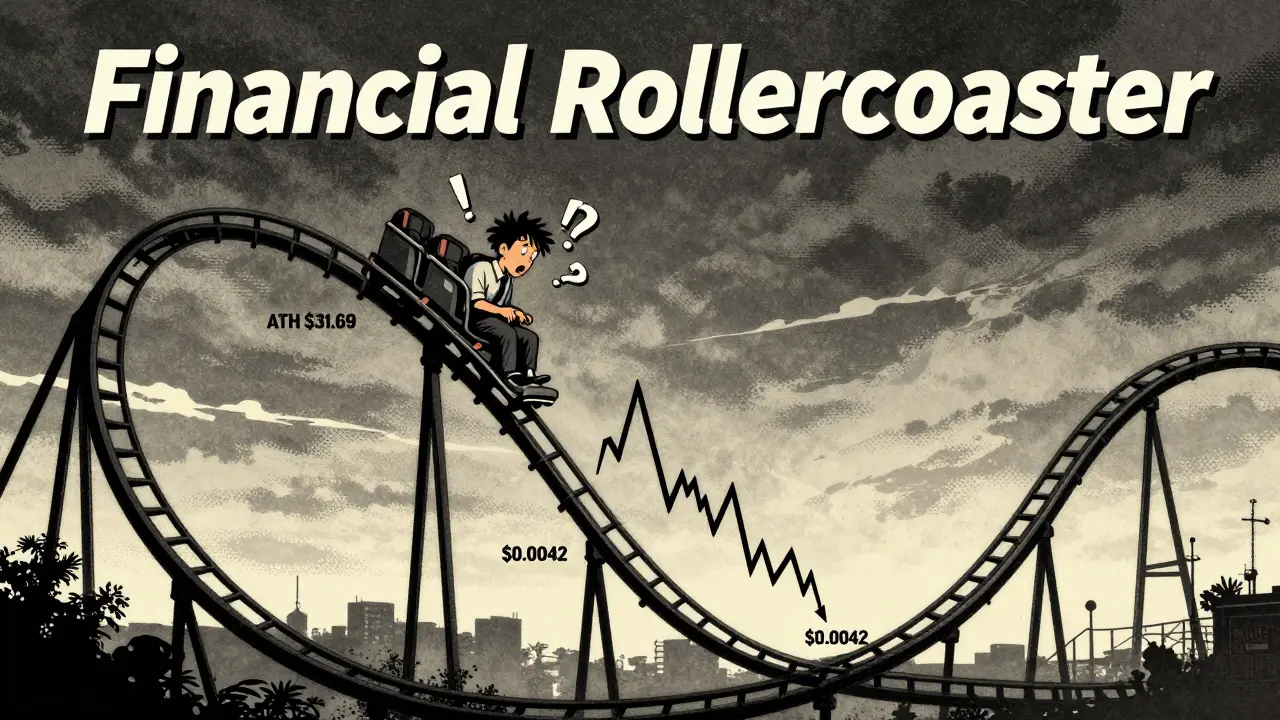
If you were one of the 2,000 lucky airdrop winners who held onto your 35.50 NUX tokens, the journey has likely been painful. At the absolute peak of $31.69, that small airdrop would have been worth over $1,100. Fast forward to 2026, and the token has seen a staggering 99.99% decline. Current prices hover around $0.0042, meaning those same tokens are now worth roughly $0.15.
This kind of crash is common in small-cap tokens that lack sustained utility or lose momentum after their initial hype cycle. While the project raised nearly $8 million across several funding rounds, the market has been unforgiving. The token's current market cap is approximately $210,121, which is a tiny fraction of its early valuation.
Despite the crash, there is some activity. Trading volume on Gate.io remains the most active, and some traders are still using Uniswap V2 on the Ethereum is the leading smart contract platform that powers most DeFi applications and the NUX token network to swap NUX. But with a 24-hour trading volume often dipping below $100,000, liquidity is tight.
Future Outlook: Bullish Dreams vs. Bearish Reality
When you look at price predictions for NUX, you'll find a massive gap between optimistic AI models and conservative technical analysis. It's a perfect example of why you shouldn't bet your life savings on a single forecast.
On one side, you have platforms like CoinLore. They use a mix of RSI (Relative Strength Index) and MACD (Moving Average Convergence Divergence) to project a massive comeback. Their models suggest NUX could hit $1.80 in 2026 and eventually climb to over $28 by 2041. These forecasts usually assume a massive bull market returns and the protocol finds a new, viral use case.
On the other side, technical analysts at CoinCodex and CoinDataFlow offer a much more grounded view. They look at the 50-day and 200-day Simple Moving Averages (SMA) and see a token struggling to maintain even a few cents. Their predictions keep NUX well below $0.01 through 2025, suggesting that any growth will be marginal and slow.
The discrepancy comes down to how you view the project. Is it a dead token in a permanent slide, or a deeply undervalued tool that just needs a catalyst? With the current "Greed" sentiment in the broader market (often measured by the Fear & Greed Index), some speculators are hunting for "bottom-tier" tokens hoping for a sudden pump.
Lessons from the NUX Airdrop
The Peanut.Trade experience teaches us a few key things about the airdrop game. First, airdrops are great for getting a foot in the door, but they aren't a guaranteed lottery ticket. The requirement to follow social media and join Telegram groups is a standard way for projects to inflate their numbers, but social growth doesn't always equal financial growth.
Second, the "vesting schedule" matters. NUX had a linear unlock over about 700 to 750 days. When a huge amount of tokens are released slowly into the market, it can create a constant supply pressure that keeps the price down unless there is a massive amount of buying demand to offset it.
Finally, always check the liquidity. A token can have a "predicted price" of $1.00, but if there is no one buying on Gate.io or Uniswap, that price is theoretical. If you can't sell your tokens without crashing the price further, the value doesn't really exist.
Did the Peanut.Trade airdrop happen recently?
No, the primary airdrop campaign mentioned took place in August 2021 via CoinMarketCap. It distributed 71,000 NUX tokens to 2,000 winners.
What is the current price of NUX?
As of late 2025/early 2026 data, NUX has traded around $0.0042, representing a near 100% drop from its all-time high of $31.69.
Where can I trade Peanut (NUX) tokens?
The most active trading pair is NUX/USDT on Gate.io. You can also find it on LATOKEN or use Uniswap V2 if you are trading on the Ethereum network.
How does the Peanut protocol actually work?
It acts as a price balancer. It puts 90% of assets in a DEX (like Uniswap) and uses the other 10% in an intermediary system to reduce slippage and balance prices between decentralized and centralized exchanges.
Are the price predictions for NUX reliable?
They vary wildly. Some AI models predict a return to $1.80 or more by 2026, while technical analysis suggests it will stay below $0.01. Given the 99.99% drop from ATH, these should be viewed as speculative, not guaranteed.
Next Steps for NUX Holders
If you're currently holding NUX, your strategy depends on your risk appetite. For those who got in at the airdrop or very low levels, the current price is a wash. However, if you're looking to enter now, keep these scenarios in mind:
- The Speculator: You're betting on the optimistic long-term AI forecasts. In this case, you'd buy a small amount and forget about it for years, hoping for a massive market shift.
- The Analyst: You're looking at the 200-day SMA and the low volume. You'll likely wait for a confirmed trend reversal (higher lows and higher highs) before putting any capital at risk.
- The Exit-Strategist: If you have a large amount of tokens and want to avoid slippage, you'll likely use a limit order on Gate.io rather than a market swap on Uniswap to ensure you get the best possible price.

There are 25 Comments
Arlen Medina
This is exactly why the US dominates the DeFi space because we actually build things that can solve slippage while the rest of the world just copies scripts
vijendra pal
Bro this is basically a rug pull if you look at the numbers!! 📉 a 99.99% drop is insane lol but that's how these small caps work 🚀
Trish Swanson
Absolute carnage!!
Bruce Micciulla Agency
the fundamental failure here is the lack of a sustainable burn mechanism which means the linear unlock just flooded the market with sell pressure and honestly anyone believing in a 2041 recovery is just gambling on a ghost chain that has no real TVL to support a price rebound
Patty Levino
It's really tough to see such a drop, but for anyone still holding, focusing on the utility rather than the price might help with the stress of it all
Alexandra Lance
Oh sure, let's just trust the "AI models" 🙄 as if they aren't just programmed by the same whales who dumped on us 🤡 total scam vibes
Arwyn Keast
Typical low-cap garbage with zero liquidity depth. The arbitrage mechanism is a joke and the tokenomics are fundamentally flawed from a regulatory standpoint in the UK
Manisha Sharma
Only a fool would trust these western analysts when India is the real hub of tech now anyway this token is just a small drop in the ocean of true wisdom
david head
totally agree with the point about liquidity 💯 it's the most important part lol
gladys christine
my heart breaks for everyone who missed the peak omg just imagine the tragedy of seeing that 1100 dollars turn into 15 cents it is actually a crime
Taylor Meadows
I can feel the desperation in these comments. You're all just clinging to hope because you can't admit you were greedy. It's a spiritual failure as much as a financial one
Hugo Lopez
Let's try to stay positive everyone! 😊 It's a great learning experience for those new to DeFi! ✨
Earnest Mudzengi
The 10% intermediary mechanism is obviously a back-door for the devs to manipulate the order book while the feds track every single transaction on the Ethereum mainnet probably using an AI-driven surveillance grid to flag any whale movement
Sharhonda Walker
just a heads up if u use uniswap make sure u check the slippage settings or u might lose even more on the trade because the liquidty is so low righ now
Deepak Prusty
The airdrop was a marketing gimmick. The product is a price balancer, but without volume, it is useless.
Evan Borisoff
The strategic deployment of capital in the initial funding round was clearly mismanaged given the lack of an institutional floor price and the subsequent cascading liquidation of early seed investors which is a textbook example of failed US-led venture capital in the micro-cap sector
Krystal Moore
It is honestly disgusting that these projects lure people in with "free tokens" just to leave them holding a bag of nothing. Where is the morality in this industry
Susan Wright
If you're trying to exit, I'd definitely suggest the limit order on Gate.io as mentioned, it'll save you a lot of headache with the current thin order books
sekhar reddy
WHAT A JOKE!!! 🤡 99% drop and people are still talking about 2041 predictions!! absolute madness in this market!!
Suzanne Robitaille
The cycle of boom and bust is such a mirror to the human condition, showing our infinite greed and our sudden, crashing despair
Diana Martín Prieto
I can help anyone who's confused about how to move their tokens to a safer wallet if they're still holding! Just reach out and we can walk through it together
Susan Payne
The lack of professionalism in these price predictions is utterly appalling. One does not simply use an AI model to predict a price twenty years into the future
Siddharth Bhandari
The technical architecture of the 90/10 split is interesting but it fails if the gap between CEX and DEX is too wide for the 10% to bridge effectively
akash temgire
Volume is dead. Utility is nonexistent. This is a zombie coin.
Matthew Wright
I'm just watching from the sidelines... but man, the 200-day SMA really doesn't lie, does it?? The trend is clearly down!!
Write a comment
Your email address will not be published. Required fields are marked *