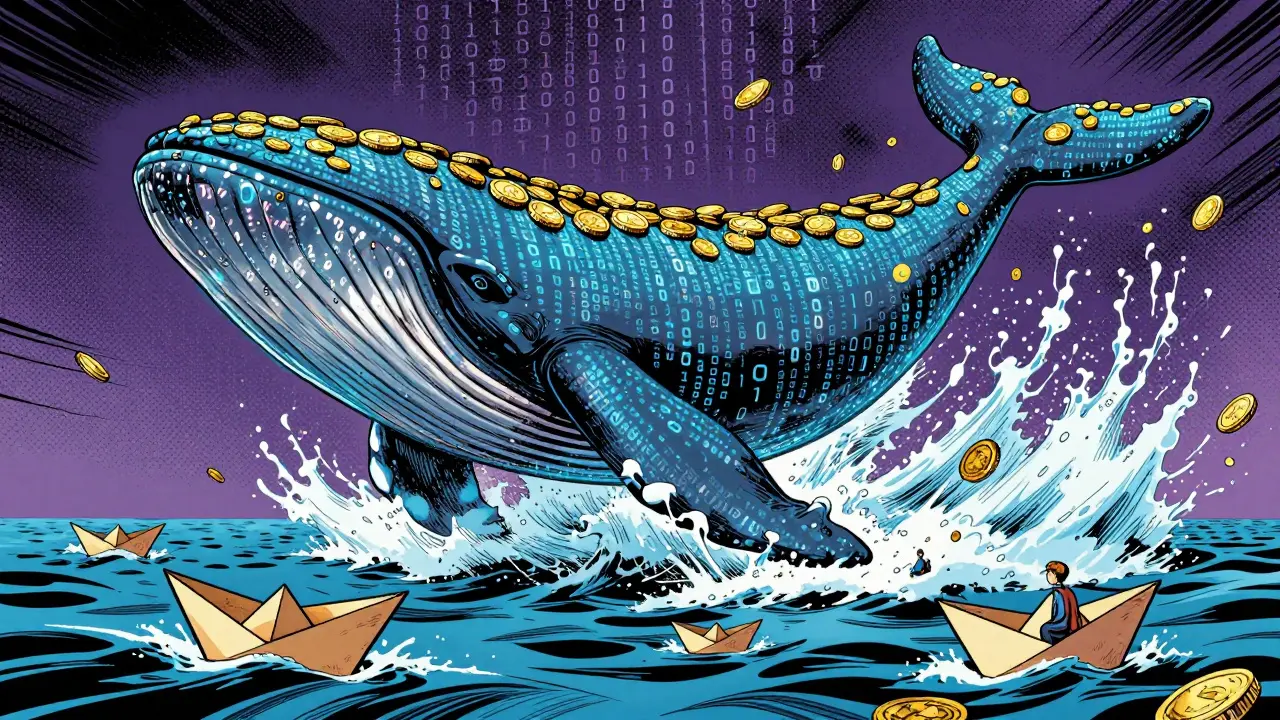
Imagine watching a giant ship turn in the ocean. The water doesn't just ripple; it creates a current that pulls smaller boats along with it. In cryptocurrency markets, Crypto Whales are large holders or institutions that possess enough capital to significantly influence market prices through their transactions. They hold more than 1% of a cryptocurrency's circulating supply. When they move, prices react. That is the core idea behind Whale Trading Strategies are methods employed by retail traders to track and mimic the market activities of large institutional traders and high-net-worth individuals. You are not trying to outsmart the market. You are trying to ride the wave they create.
This approach relies on transparency. Unlike traditional stock markets where big moves are hidden until after the fact, blockchain data is public. Every transaction is recorded. This allows you to see when a wallet holding thousands of Bitcoin suddenly moves funds. The goal is simple: identify these movements early, understand their intent, and position your trades accordingly before the broader market catches on.
Understanding the Mechanics of Whale Activity
To follow whales, you first need to know what you are looking for. Not every large transfer matters. Some are internal exchange transfers that do not affect price. Others are genuine accumulation or distribution events. The key difference lies in context.
A Whale Scoop Strategy is a technique focusing on identifying when whales deliberately trigger retail stop-loss orders through liquidity sweeps before reversing positions. Here is how it works. A whale sees a cluster of stop-loss orders just below a support level. They sell enough to hit those stops, creating a dip. Retail traders panic and sell. The whale then buys back at a lower price, sweeping up the liquidity. Once they have accumulated enough, they push the price back up. If you can spot this pattern, you buy the dip instead of selling into it.
Look for these specific signals:
- Liquidity Sweeps: Sharp drops followed by immediate reversals within 30-60 minutes.
- Volume Spikes: High volume without price continuation beyond previous resistance.
- Order Book Depth: Large buy walls appearing just after a dip.
These patterns are most common in highly liquid markets like Bitcoin (BTC) is the largest cryptocurrency by market capitalization, known for its relative stability compared to altcoins and Ethereum (ETH) is the second-largest cryptocurrency, widely used for smart contracts and DeFi applications. In smaller altcoins, a single whale move can cause 30-50% swings, making entry and exit risky due to slippage.
Essential Tools for Tracking Whales
You cannot track whales manually. The volume of data is too high. You need specialized tools that scan the blockchain in real-time. Here are the top platforms used by professional traders in 2026.
| Platform | Primary Feature | Cost Estimate | Best For |
|---|---|---|---|
| Whale Alert is a popular service providing real-time alerts for large cryptocurrency transactions via social media and API | Real-time Transaction Alerts | Free / $29.99/mo (Pro) | Quick notifications of large moves |
| Glassnode is an on-chain analytics platform offering deep metrics on network health, investor behavior, and market cycles | Deep On-Chain Metrics | $49-$499/mo | Fundamental analysis and long-term trends |
| Nansen is a blockchain analytics tool that labels wallets and tracks smart money flows in real-time | Wallet Labeling & Smart Money | $299/mo | Identifying specific whale entities |
| Arkham Intelligence is a platform specializing in de-anonymizing blockchain addresses to reveal entity relationships | Entity Clustering | $299/mo | Tracking complex multi-wallet strategies |
Start with Whale Alert if you are new. It sends Twitter-style notifications for transactions over $1 million. Upgrade to Nansen or Glassnode as you gain experience. These tools provide context, showing whether a whale is accumulating (buying) or distributing (selling). Look for "Smart Money" labels on Nansen, which identify wallets with historically high win rates.
Step-by-Step Implementation Guide
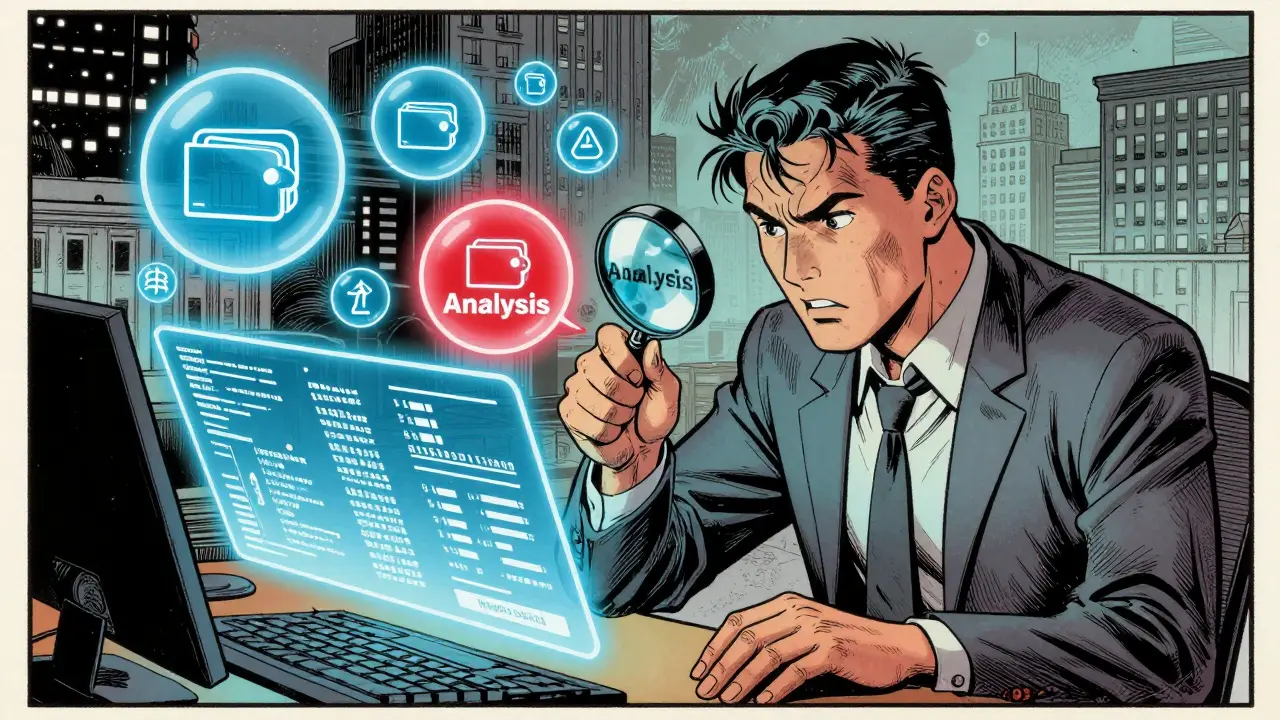
Setting up your strategy requires discipline. Do not chase every alert. Most large transactions are noise. Follow this process to filter signal from noise.
- Define Your Thresholds: Set alerts based on your account size. If you have $10,000, ignore $100,000 moves. Focus on transactions that represent significant liquidity shifts relative to the asset's daily volume.
- Verify the Wallet Type: Use tools like Arkham or Etherscan to check if the sender/receiver is an exchange hot wallet, a cold storage address, or a known entity. Exchange-to-exchange transfers often mean OTC deals and do not impact spot prices.
- Analyze Price Action: Did the price move immediately after the transaction? If yes, the market reacted. If no, it might be a private transfer.
- Check Volume Profile: Use TradingView to see if the volume spike aligns with a breakout or breakdown. High volume at resistance suggests distribution. High volume at support suggests accumulation.
- Enter with Confirmation: Wait for a candle close above/below the key level. Do not front-run the whale blindly.
For example, if you see a whale moving 1,000 BTC to an exchange, check the order book. Are there large sell walls forming? If so, expect a drop. If the whale moves BTC to a cold wallet, expect less selling pressure, potentially leading to a price increase.
Risks and Pitfalls to Avoid
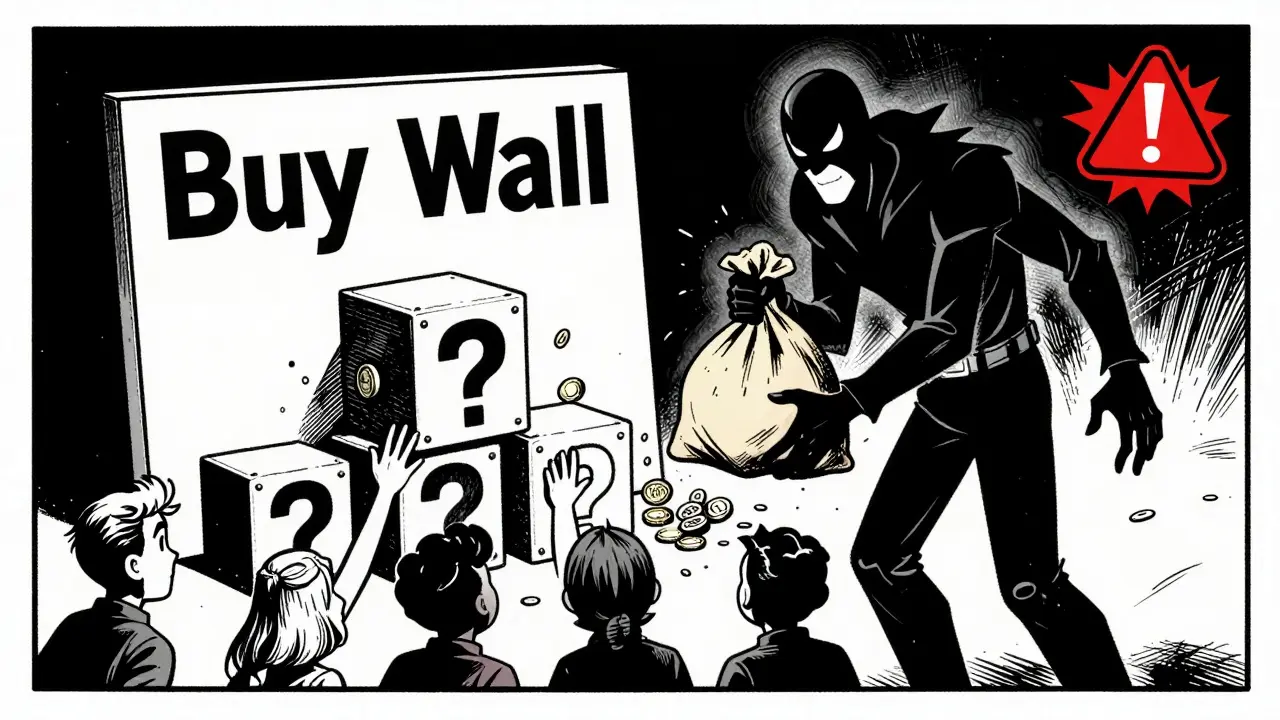
Whale tracking is not a crystal ball. It has significant risks. The biggest danger is spoofing. Whales know you are watching them. They may create fake buy walls to lure retail traders in, only to pull the wall and dump their holdings. This is called "spoofing."
Another risk is information lag. Free tools often have delays of 2-5 minutes. By the time you see the alert, the price may have already moved. Institutional services like Chainalysis Reactor offer near-real-time data but come at a high cost. Always use stop-losses. Place them beyond the liquidity pool extremes, typically 1.5-2x the Average True Range (ATR).
Also, beware of confirmation bias. Just because a whale bought does not mean the price will go up. They might be hedging. Combine whale data with technical analysis. A whale buy supported by a bullish RSI divergence is stronger than a whale buy alone.
Regulatory Landscape in 2026
The regulatory environment is tightening. In 2024, the SEC issued guidance stating that while retail traders face no restrictions, platforms providing whale data must comply with market surveillance rules. The CFTC launched "Project Whale Watch" to scrutinize spoofing and wash trading. This means some whale tactics may become less effective or illegal. Stay informed about regulatory updates, especially regarding market manipulation laws in your jurisdiction.
What is the minimum amount to be considered a whale?
There is no fixed dollar amount. However, CoinLedger defines a whale as holding more than 1% of a cryptocurrency's circulating supply. For Bitcoin, this is roughly 210,000 BTC. For smaller altcoins, it could be much less. Most tracking tools default to alerts for transactions exceeding $100,000 to $1,000,000.
Can I make money following whale alerts?
Yes, but it is not guaranteed. Success depends on filtering noise, understanding market context, and managing risk. Many alerts are false positives or internal transfers. Combining whale tracking with technical analysis improves win rates significantly.
Is whale tracking legal?
Yes, using public blockchain data to inform your trades is legal. However, engaging in coordinated manipulation or spoofing is illegal. Ensure your strategies comply with local regulations, such as those enforced by the SEC or CFTC.
Which platform is best for beginners?
Whale Alert is the best starting point due to its free tier and simple interface. As you gain experience, consider upgrading to Nansen or Glassnode for deeper insights and wallet labeling capabilities.
Do whales always move the market?
Not always. Large transactions on low-liquidity altcoins can cause massive swings, but on Bitcoin or Ethereum, they may have minimal impact if the overall market sentiment is strong. Context is key.