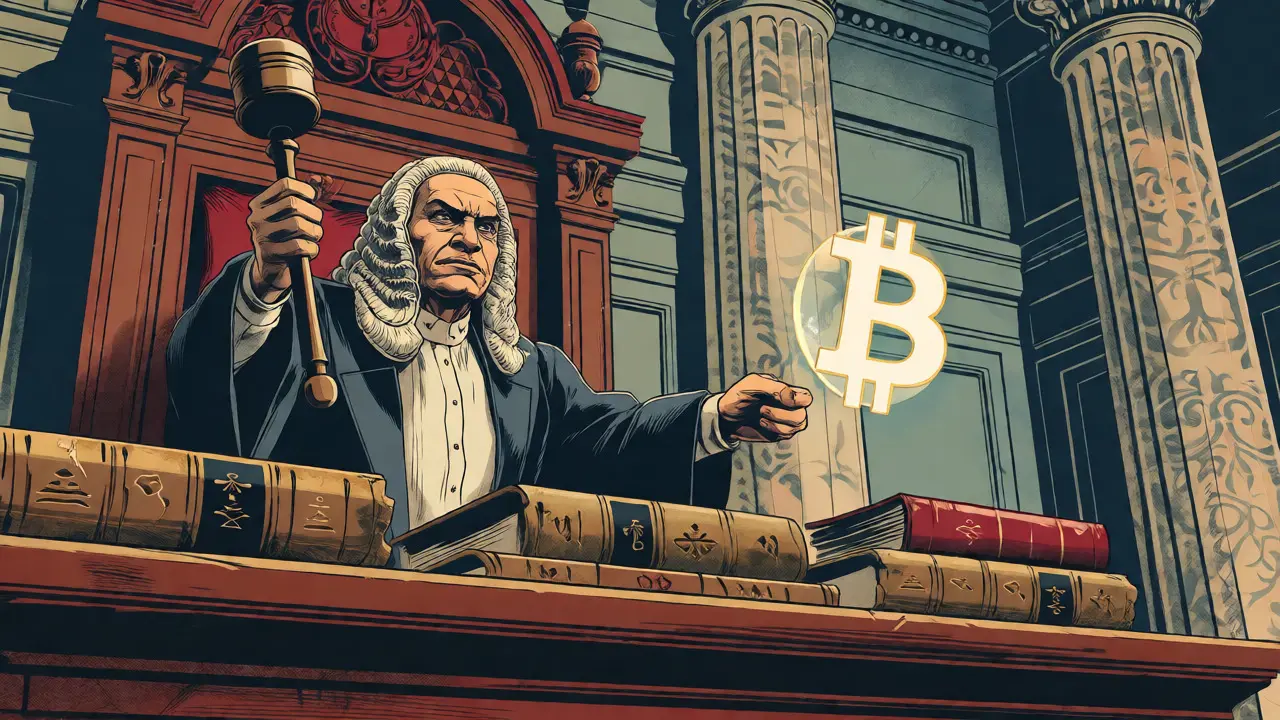
Imagine buying a cup of coffee in Dhaka with Bitcoin. In most of the world, that’s just a transaction. In Bangladesh, it’s potentially a crime. But here is the twist that keeps lawyers up at night: the law used to stop you was written in 1947, long before anyone dreamed of digital coins.
If you are trying to understand why your crypto wallet is technically illegal in Bangladesh, or if you are wondering whether you can actually get arrested for holding Bitcoin, you need to look past the headlines and into the legal machinery. The core issue isn’t just a simple "no." It’s a complex clash between an old banking law, modern technology, and a central bank that wants total control over money flow.
| Aspect | Status | Legal Basis / Note |
|---|---|---|
| Legality | Prohibited | Bangladesh Bank warnings since 2017 |
| Primary Law | Foreign Exchange Regulations Act (FERA) 1947 | Defines "currency" narrowly; no explicit crypto mention |
| Enforcement | Banking Channel Blockage | Cards flagged; local agents used for P2P |
| Taxation | Ambiguous | NBR treats as property under Income Tax Ordinance 1984 |
| Regional Context | Restrictive | Pakistan regulates; India taxes; Bangladesh bans |
The 1947 Law That Can’t See Bitcoin
The backbone of Bangladesh’s crypto prohibition is the Foreign Exchange Regulations Act (FERA), enacted in 1947. This law was designed to control foreign currency movement in a post-colonial economy where physical notes and bank drafts were the only tools available.
Here is where it gets tricky. Section 2(b) of FERA defines "currency" in two ways. First, it lists specific physical instruments like notes, cheques, and letters of credit. Second, it allows the Bangladesh Bank to declare any other instrument as currency via an official gazette notification.
So, is Bitcoin currency? Legally, probably not yet. The Bangladesh Bank has never issued that specific gazette notification declaring crypto as "currency" under section 2(b)(ii). And Bitcoin doesn’t fit the list in category one-it’s not a cheque or a postal order. This creates a massive legal gap. If crypto isn't legally defined as currency under FERA, how can trading it violate the Foreign Exchange Act? Legal experts argue that while the government warns against it, the statutory basis for criminal prosecution is shaky. You aren’t breaking a clear definition; you’re operating in a gray zone that the state chooses to treat as black.
Why the Central Bank Says No
If the law is vague, why is the ban so strict? The answer lies in risk management rather than pure statutory clarity. The Bangladesh Bank, the country’s central monetary authority, issued its first major warning in 2017. Their stance wasn’t about technical definitions but about financial stability.
They cite three main fears:
- Money Laundering: Crypto’s pseudonymous nature makes it hard to track illicit funds entering or leaving the country.
- Terrorism Financing: Unregulated flows can bypass traditional banking oversight.
- Capital Flight: In a developing economy, every dollar matters. If people move savings into volatile digital assets held abroad, it drains local liquidity.
For a nation managing a delicate balance of payments, the idea of citizens freely moving value outside the controlled banking system is a nightmare scenario. So, even if the 1947 law doesn’t explicitly say "Bitcoin," the regulator uses its power to block banks from facilitating these trades, effectively strangling the market through access rather than outright arrest.
The Underground Market Thrives Anyway
You might think a ban stops everything. It doesn’t. Walk through a tech hub in Dhaka, and you’ll find plenty of people trading on Binance or KuCoin. How? They don’t use their Bangladeshi Taka cards directly on global exchanges, which would trigger immediate flags from banks.
Instead, they use a robust peer-to-peer (P2P) network. Here is how it works in practice:
- An individual wants to buy USDT (a stablecoin).
- They contact a local agent or use a P2P platform.
- They transfer BDT from their local bank account to another local bank account owned by the seller.
- The seller releases the crypto to the buyer’s wallet.
To the bank, this looks like a normal domestic transfer between two individuals. There is no mention of "crypto" in the transaction memo. This method allows thousands of transactions daily, bypassing the formal restriction. While the government monitors large USD-denominated card charges, small-scale P2P trades often slip through the cracks. It’s a cat-and-mouse game where the mice have adapted surprisingly well.
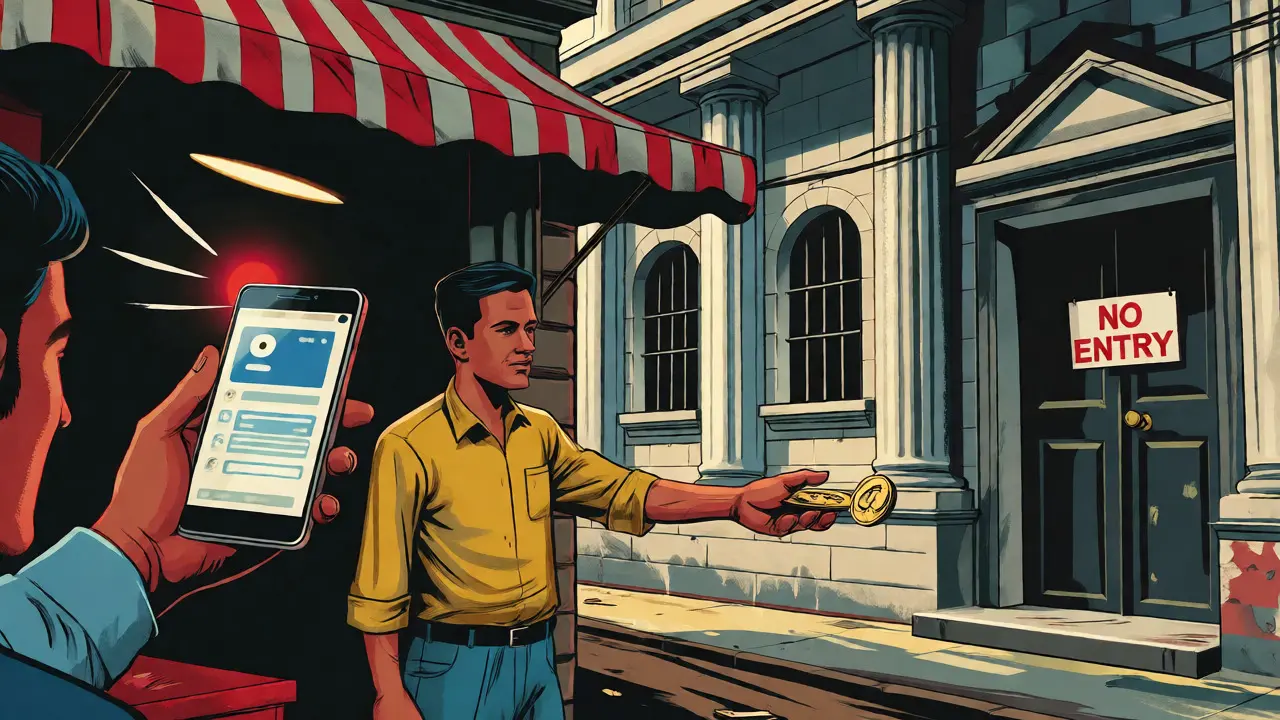
The Tax Paradox
Here is the irony that frustrates many traders: if crypto is banned, why does the taxman still want his cut? The National Board of Revenue (NBR) operates under the Income Tax Ordinance of 1984. Currently, there is no specific "crypto tax" law. However, the NBR generally treats digital assets as property.
This means if you sell Bitcoin for a profit, that gain is theoretically taxable as capital gains. You end up in a bizarre situation where the state says, "You shouldn’t be doing this," but also says, "If you do make money, pay us our share." This lack of a dedicated regulatory framework leaves taxpayers guessing. Do you report it? If you report it, do you admit to engaging in a prohibited activity? For now, most underground traders simply ignore the tax obligation, assuming the risk of detection is lower than the hassle of compliance.
How Bangladesh Compares to Neighbors
Bangladesh’s approach stands out in South Asia for its rigidity. Let’s look at the region:
- India: Adopted a structured regulatory model. They impose a flat 30% tax on crypto profits and a 1% Tax Deducted at Source (TDS) on transactions. This generated roughly $1.8 billion in tax revenue in FY 2024-2025. They regulate, not ban.
- Pakistan: Recently moved toward regulation. In May 2025, they established the Pakistan Digital Assets Authority (PDAA) to oversee exchanges and wallets. They even allocated electricity for mining operations.
- Bangladesh: Maintains a comprehensive prohibition. No licensing regime, no specific tax code, just a blanket warning backed by banking pressure.
This isolation risks leaving Bangladesh behind in the emerging digital asset economy. While neighbors build institutional frameworks to capture value from blockchain technology, Bangladesh focuses primarily on containment.

What Experts Think About the Ban
Is banning crypto working? Many academics say no. Dr. B M Mainul Hossain, a professor at Dhaka University, has argued publicly that prohibition is ineffective. His view reflects a broader sentiment among economists: you cannot ban technology. You can only regulate how it interacts with the formal economy.
The persistence of the underground market proves that demand exists. People want faster remittances, cheaper cross-border transfers, and inflation hedges. By banning crypto, the government pushes these activities into informal channels, making them harder to monitor and tax. A regulated framework could bring billions in potential tax revenue and reduce the reliance on informal hundi/hawala systems that already compete with formal banking.
Future Outlook: Will the Law Change?
As of late 2026, there is no concrete timeline for reform. Government officials maintain their cautious stance, prioritizing financial stability over innovation. However, the pressure is mounting. The definitional gaps in FERA are becoming harder to ignore as more countries integrate digital assets into their legal systems.
We might see one of two paths:
- Strengthened Prohibition: The government amends FERA to explicitly include cryptocurrencies in the definition of restricted instruments, closing the legal loophole.
- Regulatory Framework: A new law is introduced that licenses exchanges, sets tax rates, and defines consumer protections, similar to India or Pakistan.
Until then, crypto in Bangladesh remains a high-risk, high-reward frontier. It’s accessible via mobile apps, traded through informal networks, and legally ambiguous. For the average user, the risk isn’t necessarily jail time-it’s the sudden freezing of bank accounts or the inability to cash out profits through formal channels.
Is owning Bitcoin illegal in Bangladesh?
Technically, possession itself is not explicitly criminalized under current statutes, but the Bangladesh Bank prohibits all usage, trade, and possession due to risks of money laundering. Trading through formal banking channels is strictly blocked, and using crypto can lead to bank account freezes or investigations.
Which law governs cryptocurrency in Bangladesh?
The primary legislation cited is the Foreign Exchange Regulations Act (FERA) of 1947. However, critics note that FERA does not explicitly define cryptocurrency, leading to legal ambiguities regarding enforcement.
Do I have to pay taxes on crypto profits in Bangladesh?
There is no specific crypto tax law. However, the National Board of Revenue (NBR) treats digital assets as property under the Income Tax Ordinance of 1984. Profits may be subject to capital gains tax, though enforcement in the underground market is minimal.
Can I use Binance in Bangladesh?
Yes, users can access platforms like Binance via the Google Play Store or App Store. However, direct deposits and withdrawals using Bangladeshi bank cards are often blocked or flagged. Most users rely on Peer-to-Peer (P2P) trading to move funds between BDT and crypto.
How does Bangladesh's policy compare to India's?
Bangladesh maintains a restrictive ban, while India has adopted a regulatory approach. India imposes a 30% tax on crypto profits and a 1% TDS on transactions, actively integrating digital assets into the formal economy rather than prohibiting them.