
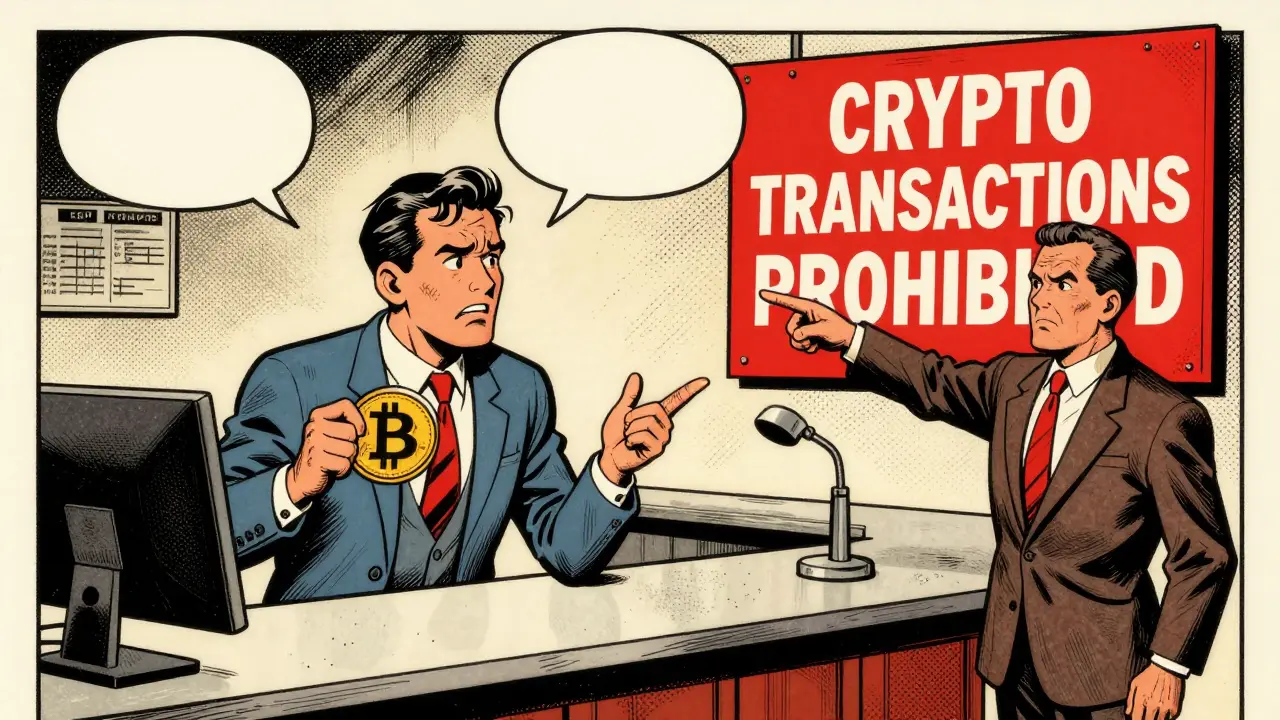
Colombia doesn’t ban cryptocurrency. But if you try to use your bank account to buy, sell, or send Bitcoin, Ethereum, or any other digital asset, you’ll hit a wall. That’s because Colombia’s banking system is legally forbidden from touching crypto in any way - not even to help you move money between your wallet and an exchange. This isn’t a glitch. It’s policy. And it’s shaping how millions of Colombians interact with digital assets every day.
What the Ban Actually Means
The Financial Superintendency of Colombia (SFC) issued clear rules in 2022: supervised banks, credit unions, and fintechs cannot hold, trade, invest in, or process payments involving cryptoassets. That means Bancolombia, Davivienda, or any other regulated financial institution can’t offer you a crypto wallet, let alone let you link your checking account to Binance or Kraken. Even if you buy Bitcoin on a local exchange, you can’t withdraw those funds directly into your bank account. You need to use third-party payment processors or peer-to-peer platforms - and even then, you’re on your own. This isn’t just about blocking transactions. It’s about cutting off the entire financial pipeline. Banks can’t custody crypto. They can’t offer crypto-backed loans. They can’t even let you pay for a subscription using Bitcoin through their app. The rule is blanket and absolute.Why Did Colombia Do This?
The SFC says it’s about risk. Crypto’s volatility, lack of central oversight, and history of scams and money laundering raised red flags. In 2022, global exchange collapses like FTX made regulators nervous. Colombia’s financial system is still recovering from past banking crises, and officials didn’t want to expose it to unregulated digital assets. But there’s more. The Central Bank of Colombia holds exclusive authority to issue currency - and it doesn’t want private digital tokens, even stablecoins, to compete. Finance Minister Ricardo Bonilla said it plainly in 2023: “Cryptocurrencies are a reality, but primary issuance must remain with the Central Bank.” That’s the real core of the ban - control over the monetary system.How It Affects Real People
For everyday users, this creates friction. If you earn crypto from freelancing, you can’t directly deposit it into your salary account. You have to use P2P platforms like LocalBitcoins or Paxful, where you meet someone in person or use a third-party payment app like Nequi or DaviPlata to convert your crypto to pesos. These methods are slower, less secure, and often come with higher fees. Small businesses that accept crypto for goods or services face the same problem. They can’t settle payments directly into their business bank accounts. Many end up using intermediaries - which increases costs and exposes them to fraud. One Medellín-based digital agency reported losing over $12,000 in 2024 when a payment processor froze their funds after flagging a crypto deposit as suspicious.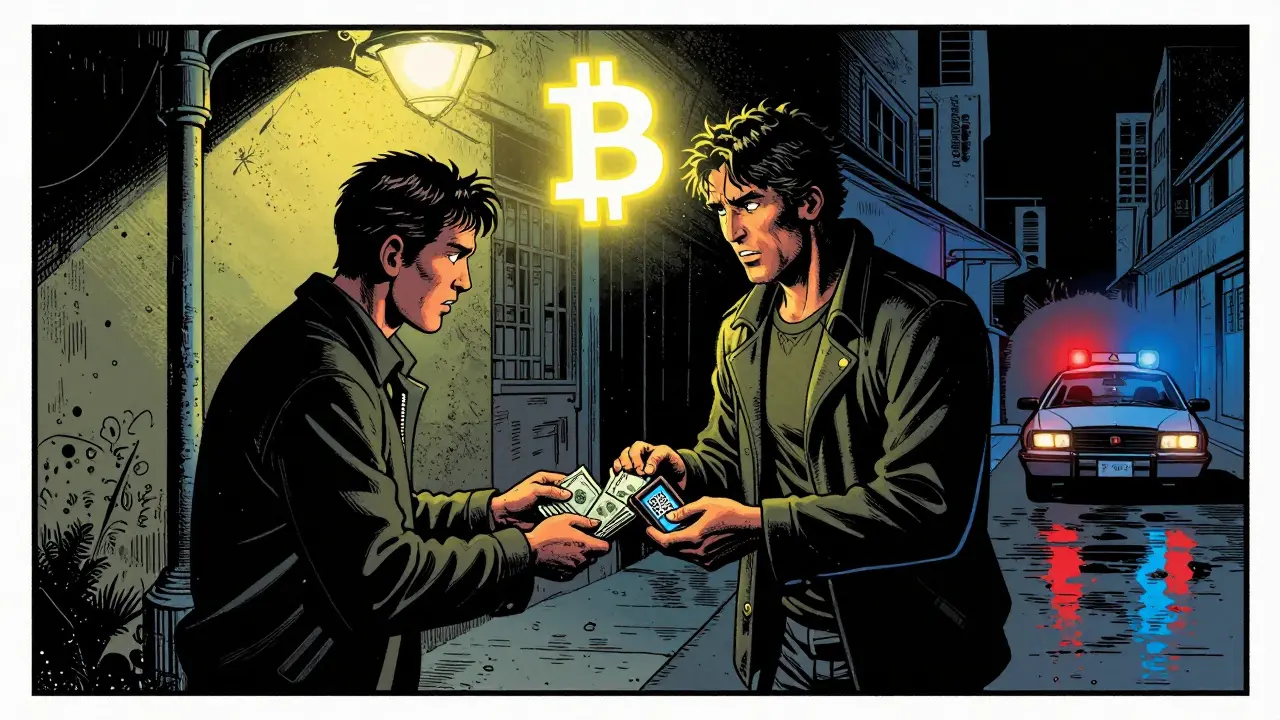
Compliance Costs Are Skyrocketing
Payment service providers (PSPs) that handle crypto transactions - even if they’re not banks - must now report every transaction over $150 to the Financial Information and Analysis Unit (UIAF). They must collect full names, IDs, and bank details for both sender and receiver. That’s not easy. Many small fintechs spend 40% of their budget just on compliance software. In 2024, the UIAF fined five PSPs over $1.5 million total for missing data or late reports. One company, PayCrypto Colombia, shut down entirely after being hit with a $400,000 fine. Others are turning to RegTech tools - automated systems that scan transactions in real time and flag anomalies. But these tools cost tens of thousands of dollars a year, putting them out of reach for startups.Who’s Still Operating? The Exceptions
Despite the ban, big players are finding loopholes. Bancolombia - Colombia’s largest bank - launched Wenia, a crypto exchange, in 2023. It also created COPW, a peso-backed stablecoin. How? Because Wenia operates under a different legal entity, not as part of the bank. It’s technically not a “banking service,” so it doesn’t violate the SFC ban. This is a key detail: the ban applies to financial institutions, not to crypto companies. So exchanges, wallet providers, and stablecoin issuers can exist - as long as they don’t use banks to move money. That’s why Wenia doesn’t let you deposit pesos from your Bancolombia account. You have to fund it via P2P or third-party gateways. Other companies like Bitso and Ripio operate in Colombia too, but they rely on the same workaround. No direct bank links. No instant cashouts. Just manual transfers and waiting.How Colombia Compares to Neighbors
Colombia’s approach is middle ground. It’s not as open as Chile, where banks can custody crypto, or as strict as Ecuador, which requires 100% reserve audits for stablecoins. But it’s also not as free as Costa Rica, where crypto is legal but unregulated. Brazil passed crypto tax laws in 2025, requiring all trades to be reported. Argentina now lets Bitcoin be used for international trade. Mexico updated its Fintech Law to include crypto custody. Peru is testing blockchain for government bonds. Colombia? Still stuck in a gray zone. The difference? Colombia has the most active crypto user base in Latin America - over 7 million people. But it’s the only country in the region where banks are completely blocked from participating. That’s creating a disconnect between market demand and financial infrastructure.
What About Taxes?
Even though you can’t use your bank for crypto, the tax man still wants his cut. The Colombian tax authority (DIAN) treats crypto as an intangible asset. If you sell Bitcoin for a profit, you owe income tax. If you run a crypto business - mining, trading, or staking - you pay corporate tax. No one’s auditing every transaction, but audits are increasing. In 2024, DIAN launched a data-matching program with major P2P platforms. If you made over $5,000 in crypto gains and didn’t report it, you’re now on their radar. Fines start at 30% of undeclared income - plus interest.The Future: Will the Ban Change?
The SFC’s regulatory sandbox for stablecoins expired in December 2023. No replacement has been announced. That’s a bad sign for innovation. Startups building new crypto products now have no official path to test them. But pressure is growing. Over 60% of Colombian fintechs say they’re planning to lobby for clearer rules in 2026. The Central Bank has hinted at exploring a digital peso - a central bank digital currency (CBDC). If that happens, crypto could be forced into a more controlled ecosystem, possibly leading to regulated integration. For now, the ban stands. But experts agree: Colombia won’t stay here forever. The market is too big. The demand is too strong. The question isn’t if the rules will change - but when.What Should You Do?
If you’re in Colombia and use crypto:- Never try to deposit crypto directly into your bank account. It will be blocked - and could trigger a compliance review.
- Use only licensed P2P platforms with strong KYC. Avoid unregulated brokers.
- Keep records of every transaction. Save receipts, wallet addresses, and timestamps.
- Report crypto income to DIAN. Don’t wait for an audit.
- If you’re a business, invest in compliance software. Fines are real.




There are 18 Comments
Krista Hoefle
lol why are banks even involved in crypto anyway? it’s supposed to be decentralized. this is just bureaucracy wearing a suit.
greg greg
So let me get this straight - Colombia’s banking system can’t touch crypto, but they’re okay with third-party payment processors that have zero regulatory oversight? That’s like banning cars from highways but letting people ride horses on the interstate. The compliance burden on PSPs is insane - 40% of their budget just to report transactions over $150? That’s not regulation, that’s administrative terrorism. And the fact that Bancolombia created Wenia as a separate entity to bypass the ban? Classic corporate loophole theater. They’re not innovating, they’re gaming the system while small players get crushed under fines. Meanwhile, the Central Bank’s obsession with monetary control ignores the fact that people aren’t asking for permission to use Bitcoin - they’re just doing it, because the system’s broken for them. This isn’t about risk. It’s about power.
Valencia Adell
Colombia’s crypto ban is just a fancy way of saying they’re terrified of financial freedom. People don’t need banks to transact. They need autonomy. This whole setup is a relic - and the fact that DIAN is auditing P2P users now? Pathetic. You’re punishing the poor for using a tool that actually works when the system fails them.
Katrina Recto
People in Medellín are losing thousands because payment processors freeze funds over crypto deposits? That’s not a bug, that’s a feature of a broken system. The banks didn’t protect them - they just enabled the middlemen who do. And now the tax authority’s watching? Great. Now you’ve got surveillance on top of exclusion. Real progress.
Tracey Grammer-Porter
It’s wild how many people still think crypto is about getting rich quick. For a lot of Colombians, it’s just about survival - getting paid for freelance work, sending money home, avoiding inflation. The fact that banks won’t touch it doesn’t mean people aren’t using it. It just means they’re doing it in the shadows, with more risk and less safety. Maybe instead of banning it, we should be building bridges - not walls.
Natalie Kershaw
Y’all need to stop acting like crypto is some wild west frontier. The real innovation isn’t avoiding banks - it’s building compliant, user-friendly rails that work within the system. RegTech tools aren’t evil, they’re necessary. Startups that can’t afford them? That’s a policy failure, not a crypto one. The answer isn’t to ban banks from crypto - it’s to make it affordable for devs to play by the rules. We need sandbox access, not just fines and shutdowns.
Kelley Ramsey
Wait, so the Central Bank says private digital tokens can’t compete with the peso… but they’re okay with a bank-owned stablecoin called COPW? That’s not control - that’s hypocrisy. If they’re so scared of competition, why not just launch their own CBDC and be done with it? Instead, they’re letting a bank create a crypto product that’s literally just a digital peso with extra steps. The whole thing feels like a power play disguised as regulation.
Charlotte Parker
Oh wow, Colombia banned crypto transactions so they can protect people from volatility… while letting them use P2P platforms where scammers sell BTC for $500 in cash and vanish. Brilliant logic. The only thing more dangerous than crypto is regulation written by people who don’t understand it. This isn’t risk management - it’s performative incompetence.
Don Grissett
you think this is bad? try living in a country where the government owns your money. at least here you can still use p2p. most people dont even know what a wallet is. theyre just using localbitcoins like its a flea market. this isnt innovation. its chaos with a side of taxes.
Brittany Slick
There’s something beautiful about how people in Colombia are turning a broken system into a grassroots movement. No bank? No problem. They’re building trust through face-to-face trades, using Nequi like a lifeline, documenting every transaction like it’s a sacred ritual. This isn’t crypto adoption - it’s community resilience. The regulators are trying to freeze the future, but people are already living in it. And they’re not asking for permission.
Jacob Clark
Okay but like… why is everyone acting like this is some revolutionary moment? It’s not. It’s just another country being scared of change. Brazil’s taxing trades, Argentina’s using Bitcoin for trade, Mexico’s updating laws - but Colombia? Still stuck in 2022 with a clipboard and a panic attack. The fact that over 7 million people are using crypto here and the banks won’t touch it? That’s not a failure of crypto - that’s a failure of the banking system. They’re not protecting the people. They’re protecting their own irrelevance.
Becky Chenier
It’s kind of sad how much energy goes into fighting the system instead of working with it. If you want crypto to be part of the future, you need to stop treating regulation like the enemy. The sandbox expired? Fine. Lobby for a new one. The compliance costs are too high? Advocate for subsidies. The banks won’t help? Build tools that work around them - not against them. Progress doesn’t come from rage. It comes from persistence.
Sarbjit Nahl
Colombia’s stance is philosophically consistent: the state must control the medium of exchange. This is not anti-crypto. This is pro-sovereignty. The moment private entities issue digital currency, the social contract fractures. The Central Bank is not resisting innovation - it is preserving the foundation of monetary order. To demand otherwise is to demand anarchy dressed in blockchain.
Danyelle Ostrye
the whole thing feels like a slow-motion train wreck. people are using crypto because they have to, not because they want to. and now the government is making it harder by turning every small p2p transaction into a compliance nightmare. no one wins. just more stress, more fees, more lost money.
Jessie X
if you’re a small business and you get flagged for a crypto deposit, you’re screwed. no appeal, no explanation, just frozen funds and a fine. this isn’t regulation. it’s harassment with paperwork.
Calen Adams
Let’s be real - the real innovation here isn’t the stablecoin or the exchange. It’s the RegTech stack. Companies are building AI-driven compliance engines that auto-flag suspicious flows, match KYC data across silos, and generate audit trails in real time. This isn’t just about surviving fines - it’s about building the next-gen financial infrastructure. The banks won’t do it? Fine. The fintechs will. And when they do, the regulators will have no choice but to adapt. This is the quiet revolution.
Paul Johnson
you think you're being smart using p2p but you're just giving your data to strangers and hoping for the best. your wallet address is linked to your phone number your id your bank account. you think the government isn't watching? they are. and when they come for you, you'll be the one with no records and no lawyer.
Katrina Recto
That Medellín agency losing $12k? That’s the human cost of this policy. No one’s talking about that. Just the rules. The fines. The loopholes. But real people are getting burned. And the regulators? They’re too busy writing compliance manuals to notice.
Write a comment
Your email address will not be published. Required fields are marked *