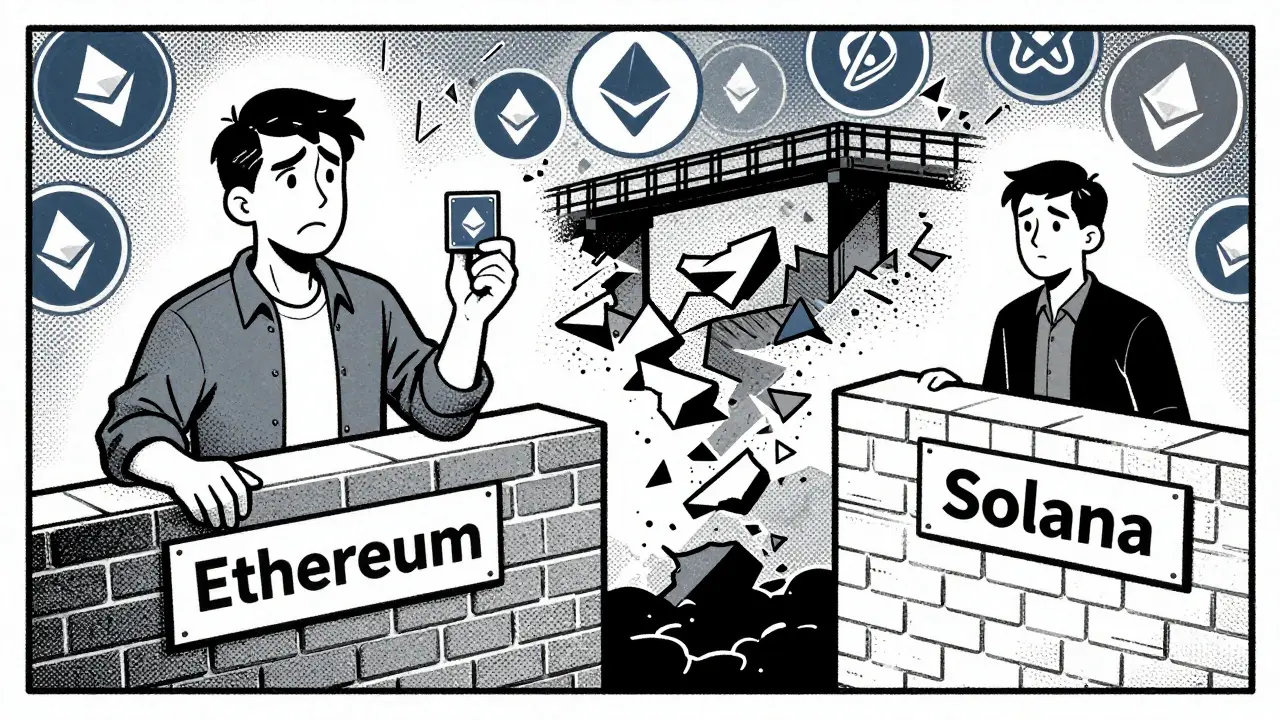
Remember when buying an NFT meant picking a side? You chose Ethereum, and that was it. If you wanted to trade on Solana or Polygon, you needed a completely different wallet, a different account, and often a different mindset. That fragmentation is gone. Today, Cross-Chain NFT Marketplace Support is the ability of digital asset trading platforms to facilitate the buying, selling, and trading of non-fungible tokens across multiple blockchain networks simultaneously. It’s not just a buzzword anymore; it’s the standard for any platform worth using.
If you’re holding assets on one chain but see better opportunities on another, staying siloed costs you money. Cross-chain support bridges these isolated ecosystems, letting you access diverse markets, better liquidity, and lower fees without jumping through hoops. Let’s look at how this works, which platforms are leading the charge in 2026, and what you need to watch out for.
Why Cross-Chain Matters More Than Ever
The core problem with early NFT marketplaces was fragmentation. Liquidity-the ease with which you can buy or sell-was trapped behind chain walls. If your favorite collection launched on Polygon but your funds were on Ethereum, you faced two choices: bridge your crypto (which takes time and carries risk) or miss the opportunity entirely.
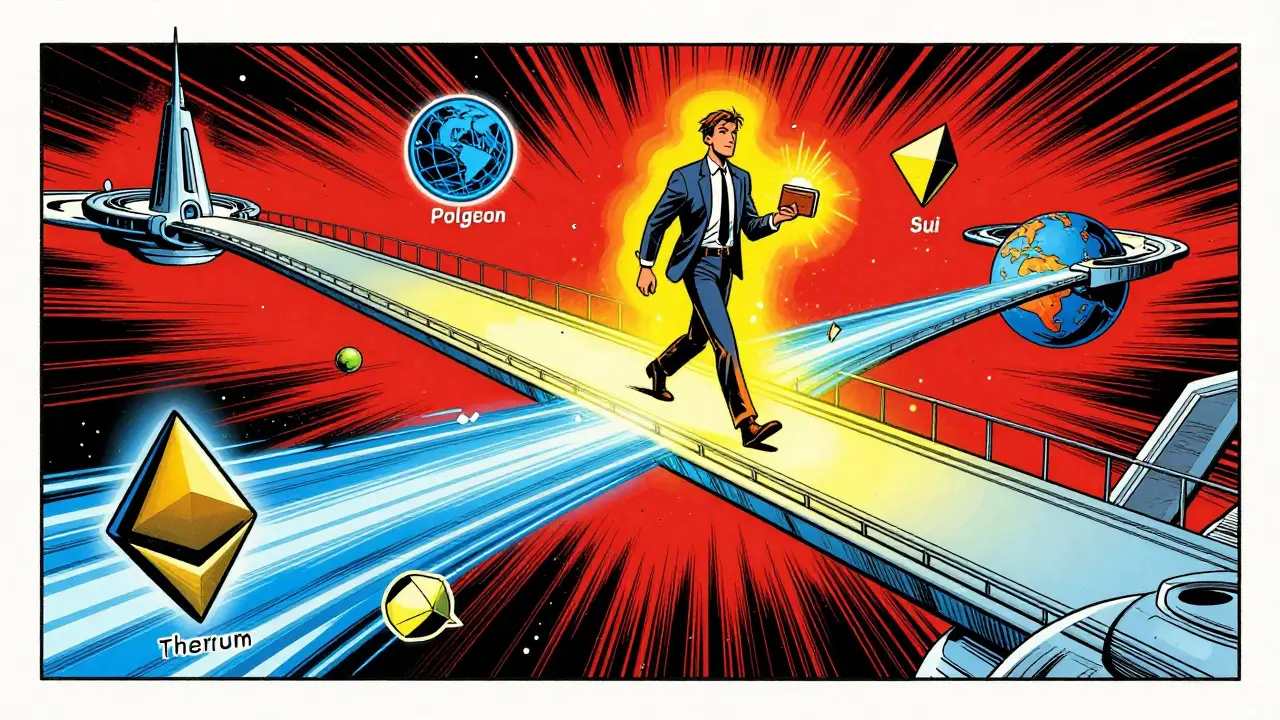
Cross-chain marketplaces solve this by acting as a unified layer. They don’t just display NFTs from different chains; they enable actual interoperability. This means you can browse, bid, and trade assets from Ethereum, Solana, Polygon, and newer networks like Sui or Aptos all from one interface.
The benefits are practical:
- Unified Liquidity: Buyers and sellers from all chains meet in one place, making it easier to find matches for your trades.
- Cost Efficiency: You can choose the cheapest chain for a specific transaction type without abandoning your preferred platform.
- Simplified UX: No more managing five different wallets for five different marketplaces. One login, one dashboard.
How Cross-Chain Technology Actually Works
You might wonder if this magic trick compromises security. It shouldn’t. The architecture behind reliable cross-chain platforms relies on sophisticated components that keep your assets safe while moving them between networks.
At the heart of this system are Cross-Chain Smart Contracts. These aren’t just standard contracts; they operate across different blockchain ecosystems to automate interactions like transfers and swaps. When you list an NFT on Chain A but accept payment from Chain B, these contracts handle the complex handshake in the background.
Here’s the technical breakdown of what happens under the hood:
- API Integration: Specialized APIs communicate between disparate blockchain protocols, ensuring real-time data sync.
- Immutable Storage: Asset metadata and ownership records are stored on decentralized servers across multiple networks. This redundancy ensures that even if one chain experiences issues, your proof of ownership remains intact.
- Layer 2 Scaling: Many platforms utilize Layer 2 solutions to increase transaction throughput. This keeps fees low and speeds up confirmation times, addressing the scalability bottlenecks that plagued early single-chain attempts.
- Audit Trails: The blockchain maintains a complete log of every action across all supported chains. This creates a transparent audit trail that enhances trust and security.
The result? Ownership remains tamper-proof. Breaking into these systems to steal assets is described by experts as practically impossible due to the cryptographic security measures employed. You get the convenience of multi-chain access without sacrificing the immutability that makes blockchains valuable.
Top Cross-Chain Platforms in 2026
Not all marketplaces are created equal. Some focus on volume, others on niche communities, and some on specific technical architectures. As of 2025 and carrying into 2026, several platforms have emerged as leaders in cross-chain support.
| Platform | Supported Chains | Key Strength | Best For |
|---|---|---|---|
| OpenSea | Ethereum, Solana, Polygon, Base, zkSync | Largest user base, broadest compatibility | General collectors, beginners, high-volume traders |
| TradePort | Sui, Aptos, NEAR, Stacks | Advanced analytics, price fluctuation graphs | Traders focused on earning from price movements |
| BlueMove | Sui, Aptos | Search/filter tools, creator launchpad | NFT hunters, creators launching new collections |
| Magic Eden | Solana, Bitcoin, Ethereum, Polygon | Solana dominance, expanding cross-chain reach | Solana natives exploring other chains |
OpenSea remains the most popular NFT marketplace globally due to its sheer scale and cross-chain flexibility. It supports a wide array of networks, including Ethereum, Solana, and Polygon, making it the default choice for many users who want maximum exposure.
For those interested in newer, high-performance chains, TradePort has carved out a strong position. Supporting Sui, Aptos, NEAR, and Stacks (a Bitcoin Layer 2), TradePort focuses heavily on analytics. If you’re looking to spot trends and earn on price fluctuations, their concise graphs and trade data are invaluable.
BlueMove takes a different approach. While also supporting Sui and Aptos, it emphasizes search functionality and creator tools. It’s built for "hunters" who know exactly what they want and for creators who need robust launchpads to mint and launch their own collections.
Choosing the Right Platform: Decision Criteria
With so many options, how do you pick? In 2025, industry analysis weighted several factors heavily when evaluating platforms. Here’s what you should prioritize:
- User Experience (20%): Is the interface intuitive? Can you navigate, buy, sell, and mint without confusion? Poor UX leads to abandoned carts and lost trades.
- Security and Trust (20%): Does the platform use two-factor authentication? Are smart contract codes transparent? Look for platforms with a history of zero major hacks.
- Blockchain Support (15%): Does it support the chains you care about? Multi-chain compatibility is no longer optional; it’s a baseline requirement.
- Transaction Fees (15%): Gas fees vary wildly. Ethereum can be expensive during peak times, while Polygon and Solana offer near-instant, pennies-per-transaction costs. Choose a platform that lets you optimize for cost.
- Marketplace Volume (10%): Higher volume means deeper liquidity. You’re more likely to sell quickly if there are active buyers.
Also consider the types of NFTs you trade. Art, gaming items, music, and virtual worlds each have different communities. ManaMarketplace, for example, specializes in gaming items, while SuperRare focuses on curated art by individual artists. Ensure the platform aligns with your asset class.
Enterprise Adoption and Future Trends
Cross-chain technology isn’t just for hobbyists. Enterprises are adopting this architecture for serious commercial applications. Imagine a luxury fashion brand launching digital twins of physical products. By using a cross-chain marketplace, they can reach customers on Ethereum, Solana, and Bitcoin networks simultaneously, maximizing their market reach without fragmenting their brand presence.
This enterprise adoption drives innovation. Companies like Calibraint specialize in building enterprise-grade marketplaces with bulletproof security and seamless scalability. They leverage Layer 2 scaling solutions to ensure that as user bases grow, the platform doesn’t slow down.
The future trajectory points toward even greater interoperability. We’re seeing a shift from hype-driven adoption to utility-driven infrastructure. The next wave will be powered by robust architecture that scales efficiently and supports seamless cross-chain operations. Expect to see more automated transfers via smart contracts, reducing manual intervention and technical complexity for users.
As we move through 2026, the line between separate blockchain ecosystems continues to blur. The goal is simple: one identity, one portfolio, infinite possibilities. Whether you’re a casual collector or a professional trader, choosing a platform with strong cross-chain support is the smartest move you can make today.
What is a cross-chain NFT marketplace?
A cross-chain NFT marketplace is a platform that allows users to buy, sell, and trade non-fungible tokens across multiple blockchain networks (like Ethereum, Solana, and Polygon) from a single interface. It eliminates the need to switch between different apps or wallets for different chains.
Is trading across chains secure?
Yes, reputable cross-chain marketplaces use advanced smart contracts and decentralized storage to ensure security. Ownership records are immutable and stored across multiple networks, making tampering virtually impossible. Always check for transparent smart contract audits and strong user verification features.
Which blockchain has the lowest fees for NFT trading?
Generally, Polygon and Solana offer significantly lower transaction fees compared to Ethereum. Polygon uses Layer 2 scaling to reduce costs, while Solana’s architecture is designed for high-speed, low-cost transactions. However, fee structures can change based on network congestion.
Do I need multiple wallets for cross-chain trading?
Ideally, no. Modern cross-chain marketplaces allow you to connect one compatible wallet (like MetaMask or Phantom) and interact with multiple chains. However, you may still need native currency (ETH, SOL, MATIC) on each respective chain to pay for gas fees, though some platforms abstract this away.
What are the best cross-chain marketplaces in 2026?
Top platforms include OpenSea for its broad support and volume, TradePort for analytics on newer chains like Sui and Aptos, BlueMove for hunting and creation tools, and Magic Eden for its strong Solana presence expanding to other chains.