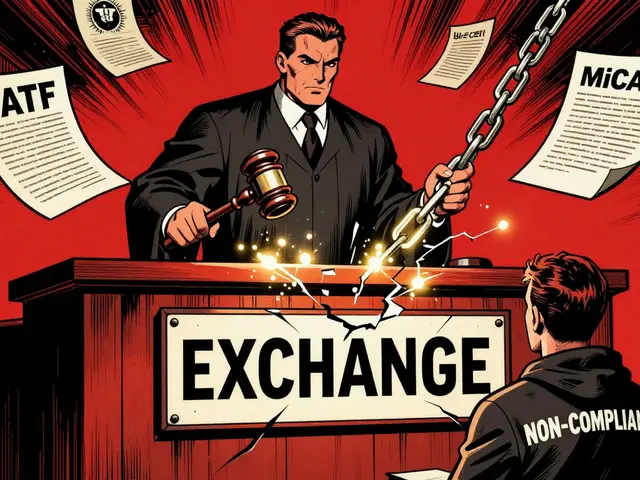

Imagine handing your house keys to a stranger who promises to keep them safe in their pocket. Now imagine that stranger gets mugged, or worse, decides to sell the keys on the black market. This is exactly what happens when you use a centralized service without proper encryption safeguards. In the world of cryptocurrency, where transactions are irreversible and there is no customer support hotline to call if things go wrong, end-to-end encryption isn't just a feature-it’s the difference between keeping your wealth and losing it forever.
You might have heard the term thrown around in tech circles, but what does it actually mean for your digital assets? Simply put, end-to-end encryption (E2EE) ensures that only you-and no one else-can read your data. Not the wallet provider, not the cloud server storing your backup, and certainly not hackers intercepting your internet traffic. When applied to crypto wallets, this technology guarantees that your private keys remain scrambled into unreadable gibberish until they reach your specific device and you enter your password.
The Core Mechanism: How E2EE Works in Wallets
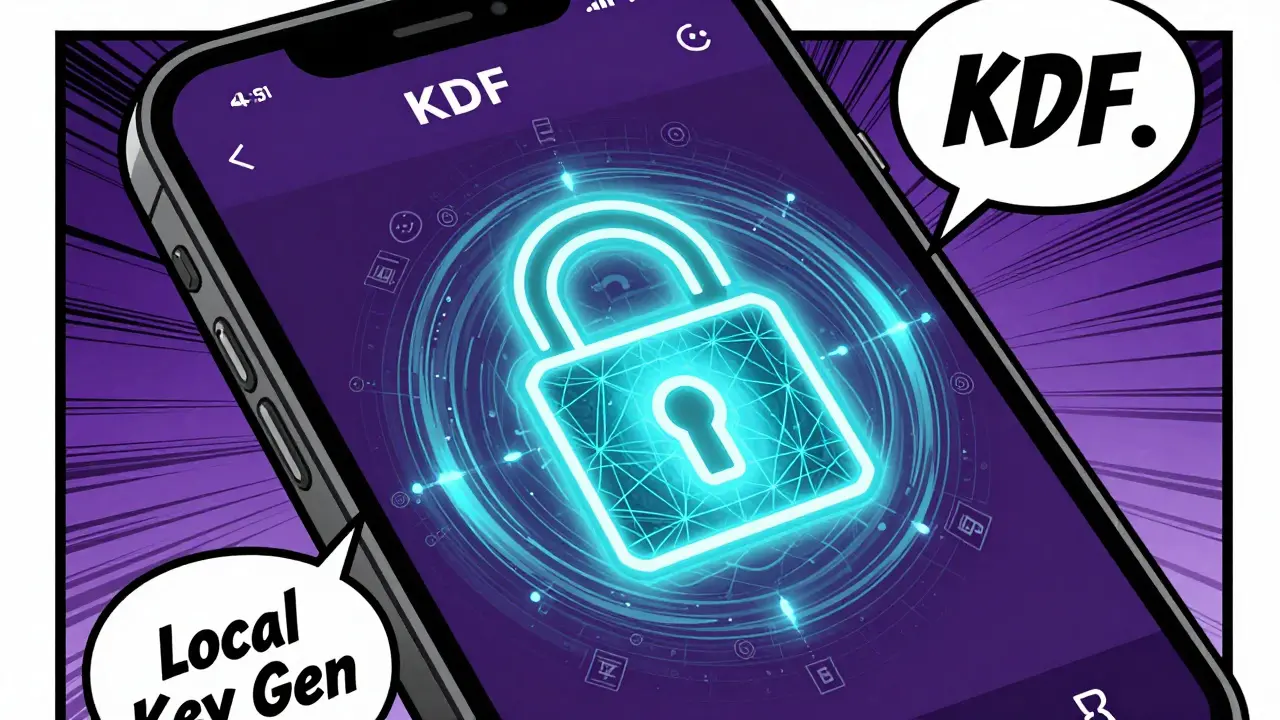
To understand why E2EE is so critical, we need to look under the hood. The process follows a strict four-stage protocol designed to keep your cryptographic credentials isolated from the outside world. It starts with local key generation. When you create a new wallet, your device generates a private key and a recovery phrase right there on the hardware. These secrets never leave your phone or computer during creation. They are born secure.
Next comes local encryption. You set a password or passphrase. The wallet uses a Key Derivation Function (KDF)-a specialized algorithm-to turn that password into a strong encryption key. This step is vital because it means even if someone steals your encrypted file, they can’t crack it without your specific password. The data then moves to secure storage. Whether you save it locally on your device or back it up to iCloud or Google Drive, the file remains encrypted. Finally, when you want to send funds, the wallet prompts you for your password. It derives the decryption key locally, unlocks the private key in memory, signs the transaction, and then discards the key. At no point does the unencrypted private key travel over the internet.
Does my wallet provider see my private key?
No. In a properly implemented end-to-end encrypted wallet, your private key is generated and stored locally on your device. The provider only sees the encrypted version of your data, which is useless without your password.
Asymmetric Cryptography: The Public vs. Private Dynamic
E2EE relies heavily on asymmetric encryption, also known as public-key cryptography. Think of it like a mailbox. Anyone can drop a letter into the slot (the public key), but only the person with the key (the private key) can open the box and read the letters. In crypto terms, your public address is shared openly so others can send you funds. However, moving those funds requires your private key.
When you initiate a transaction, your wallet uses your private key to create a digital signature. This signature proves you own the funds without revealing the key itself. Advanced implementations also use hash functions to verify integrity, ensuring that the transaction details haven’t been tampered with during transmission. If a hacker tries to alter the amount or recipient while the data is in transit, the signature will fail, and the network will reject the transaction.
Custodial vs. Non-Custodial: The Security Trade-off
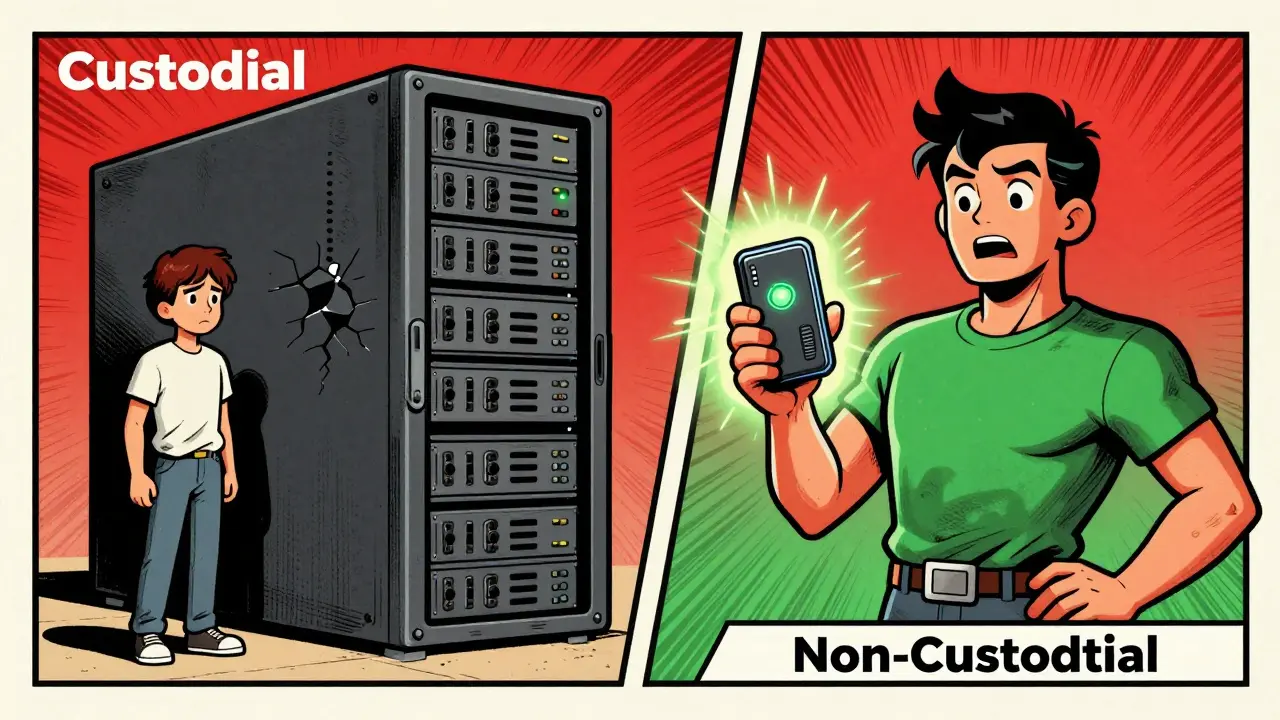
Not all wallets handle encryption the same way. The biggest divide is between custodial and non-custodial models. Custodial wallets, often found on exchanges like Coinbase or Binance, store your private keys on their servers. While convenient, this creates a single point of failure. If the exchange is hacked, thousands of users lose access simultaneously. Here, the encryption protects the database, but the company holds the master key.
Non-custodial wallets, such as MetaMask, Trust Wallet, or Ledger hardware devices, use E2EE to ensure you are the sole owner of your keys. There is no central server holding your balance. Instead, your wallet interacts directly with the blockchain. This eliminates the risk of a third-party breach compromising your assets. However, it shifts the burden of security entirely onto you. If you lose your password or recovery phrase, there is no "forgot password" button. Your funds are mathematically locked away forever.
| Feature | Custodial Wallets | Non-Custodial (E2EE) Wallets |
|---|---|---|
| Key Ownership | Service Provider | User |
| Recovery Process | ID Verification & Support | Recovery Phrase Only |
| Hack Risk | High (Centralized Target) | Low (Decentralized) |
| User Responsibility | Low | High |
Real-World Implementation: Beyond Messaging Apps
You’ve likely seen E2EE in action elsewhere. Apps like Signal, WhatsApp, and ProtonMail use similar principles to protect messages and emails. In these cases, the goal is privacy. In crypto wallets, the goal is asset preservation. The stakes are higher because money cannot be refunded once sent. Major providers like Exodus and Trezor implement robust E2EE protocols as standard practice. Regulatory bodies in the EU and US are increasingly mandating strong encryption standards for financial apps, pushing the industry toward better security hygiene.
Modern developments are trying to bridge the gap between security and usability. Technologies like Multi-Party Computation (MPC) split the private key into shards, requiring multiple parties or devices to reconstruct it for a transaction. Social recovery mechanisms allow trusted friends or family members to help restore access if you lose your primary device. These innovations aim to reduce the fear of permanent loss while maintaining the core benefit of user-controlled encryption.
Common Pitfalls and User Errors
Even the best encryption fails if the user makes a mistake. The most common error is poor password management. Using a weak password like "123456" undermines the strength of the Key Derivation Function, making brute-force attacks feasible. Another major issue is insecure storage of recovery phrases. Writing down your 12-word seed phrase and taking a photo of it, then uploading that photo to the cloud, defeats the purpose of E2EE. The phrase must be stored offline, preferably on metal or paper, in a physically secure location.
Phishing remains a significant threat. Hackers don’t always break encryption; they trick users into entering their passwords on fake websites. Always verify URLs and use hardware wallets for large holdings. Biometric authentication, like FaceID or fingerprint scanners, adds a layer of convenience but should complement, not replace, strong password practices.
Future Trends in Wallet Security
As decentralized finance (DeFi) grows, so do the complexities of key management. Future E2EE implementations will likely integrate zero-knowledge proofs, allowing users to prove they have sufficient funds without revealing their balance or identity. Secure enclaves in modern processors offer hardware-level protection, isolating cryptographic operations from the main operating system. These advancements promise to make E2EE wallets more accessible to beginners while providing enterprise-grade security for advanced users.
Ultimately, end-to-end encryption empowers you. It removes intermediaries and places control firmly in your hands. By understanding how it works-from local key generation to asymmetric cryptography-you can navigate the crypto landscape with confidence. Just remember: with great power comes great responsibility. Guard your keys wisely.
What happens if I forget my wallet password?
If you forget your password, you cannot access your encrypted wallet file. However, you can usually reset the password by importing your recovery phrase into a new wallet instance. The recovery phrase is the ultimate backup.
Is cloud backup safe for crypto wallets?
Yes, provided the backup file is end-to-end encrypted. Services like iCloud or Google Drive will store the file, but they cannot read its contents. Ensure you use a strong password before uploading any wallet backups to the cloud.
Do hardware wallets use end-to-end encryption?
Hardware wallets like Ledger and Trezor generate and store private keys securely within the device. They sign transactions internally, ensuring the private key never leaves the hardware. This is a form of physical E2EE.
Can hackers decrypt my wallet if they steal my device?
Only if they can guess your password. With a strong password and modern KDFs, cracking the encryption would take centuries. Keep your device locked and your password complex to stay safe.
Why is my recovery phrase important?
Your recovery phrase (seed phrase) is the master key to your wallet. It allows you to regenerate your private keys if your device is lost or stolen. Without it, your funds are unrecoverable. Store it offline and never share it.