
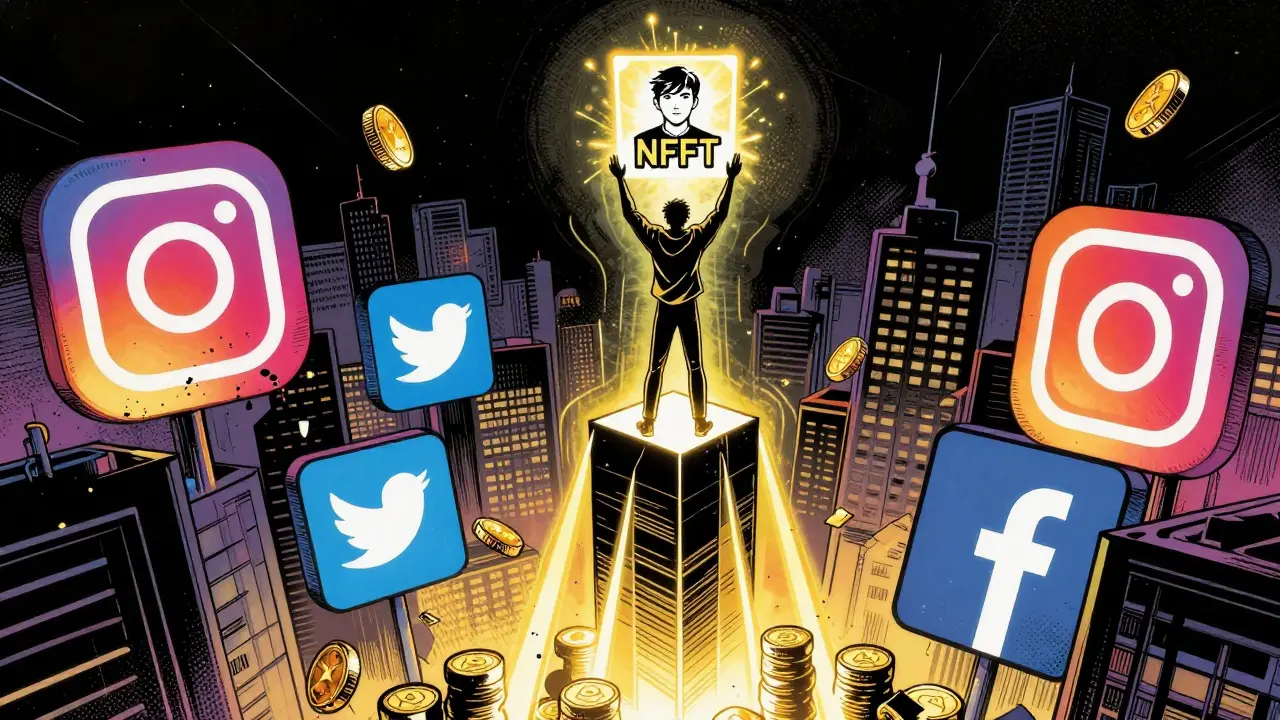
By 2026, blockchain social media isn't just a tech experiment anymore - it's a real alternative to platforms like Instagram, Twitter, and Facebook. But it’s not what you think. This isn’t about crypto prices or NFTs you can’t sell. It’s about blockchain social media giving you back control over your content, your audience, and your income - without asking for your data or running ads in the background.
Think about it: every time you post on a regular social network, you’re not the owner. The platform owns your followers, your posts, your likes, even your profile picture. They decide who sees your content, how much you get paid (if anything), and when to ban you. Blockchain social media flips that. Your identity, your connections, your content - all stored on a blockchain. No company can delete it. No algorithm can bury it. You own it. Period.
How Blockchain Social Media Actually Works
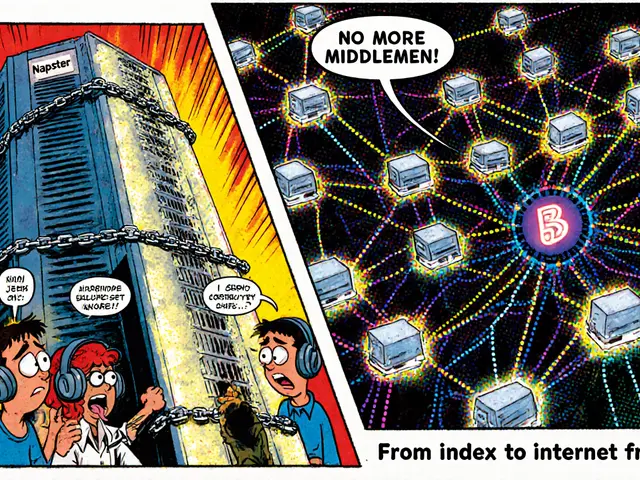
Unlike traditional platforms, blockchain social networks don’t run on servers owned by a single company. Instead, they use decentralized protocols - open software rules anyone can build on. Your profile is an NFT. Your posts are stored on IPFS, a peer-to-peer network. Your followers? They’re recorded on-chain as verifiable links.
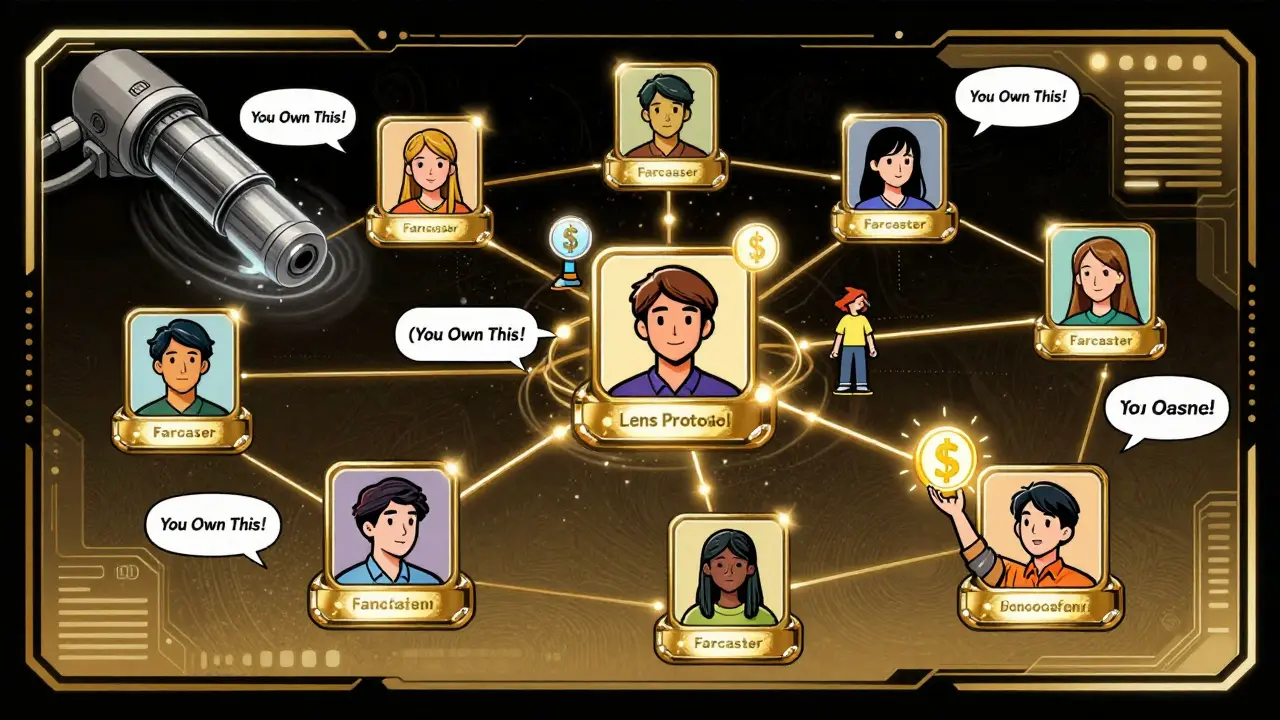
Take Lens Protocol, for example. Launched by the team behind Aave, it turns every user into a digital asset. Your profile is an NFT on Ethereum. Every time someone follows you, comments, or reposts your content, that interaction is recorded on the blockchain. You can earn tokens directly from your audience - no middleman. And because it’s open, anyone can build a new app that uses your profile. Want to use a minimalist text app? A video-first client? A voice-only feed? All possible, because your data isn’t locked inside one app.
Farcaster takes a different route. It’s not fully decentralized, but it’s designed to feel like Twitter - without the ads or shadow bans. User identities are anchored on Ethereum, but posts are stored on decentralized storage. It’s faster than Lens, with apps like Warpcast handling millions of daily posts. It’s popular among crypto-savvy creators who want simplicity without sacrificing ownership.
Then there’s Bluesky, which many mistake for a blockchain platform. It’s not. It uses the AT Protocol - a federated system, like email. You can join any server, and your profile moves with you. It’s not on a blockchain, but it’s the most accessible option for non-crypto users. Over 10 million people signed up by the end of 2024, mostly because it feels familiar - no wallet needed.
Who’s Making Money and Who’s Not
The big promise of blockchain social media? Creators get paid directly. And for some, it’s working.
@NFTArtistJen on Farcaster earned $8,500 in December 2024 from tips and collectibles - more than five times what she made on Instagram. On Lens Protocol, users report earning thousands from tokenized posts, NFT comments, and direct supporter payments. One creator on Diamond App, built on the DeSo blockchain, turned a single viral post into $12,000 in creator coin sales.
But here’s the catch: most people still earn next to nothing. A 2024 study found that 89% of new creators on Steemit (one of the oldest blockchain social networks) made less than $5 per month. The same winner-takes-all dynamic exists here. A small fraction of users - often those with existing audiences - reap the rewards. The rest struggle to get noticed.
Why? Because blockchain doesn’t fix attention. If no one sees your content, no amount of token rewards matters. And unlike Instagram, where the algorithm pushes viral posts, most blockchain networks have no built-in discovery engine. You’re on your own.
The Usability Problem Nobody Talks About
Here’s the reality: if you’ve never used crypto before, getting started is a nightmare.
You need to:
- Create a non-custodial wallet (like MetaMask or Phantom)
- Fund it with crypto (ETH, SOL, or native tokens)
- Connect it to the platform
- Understand gas fees, transaction confirmations, and recovery phrases
- Learn how to claim rewards without losing access
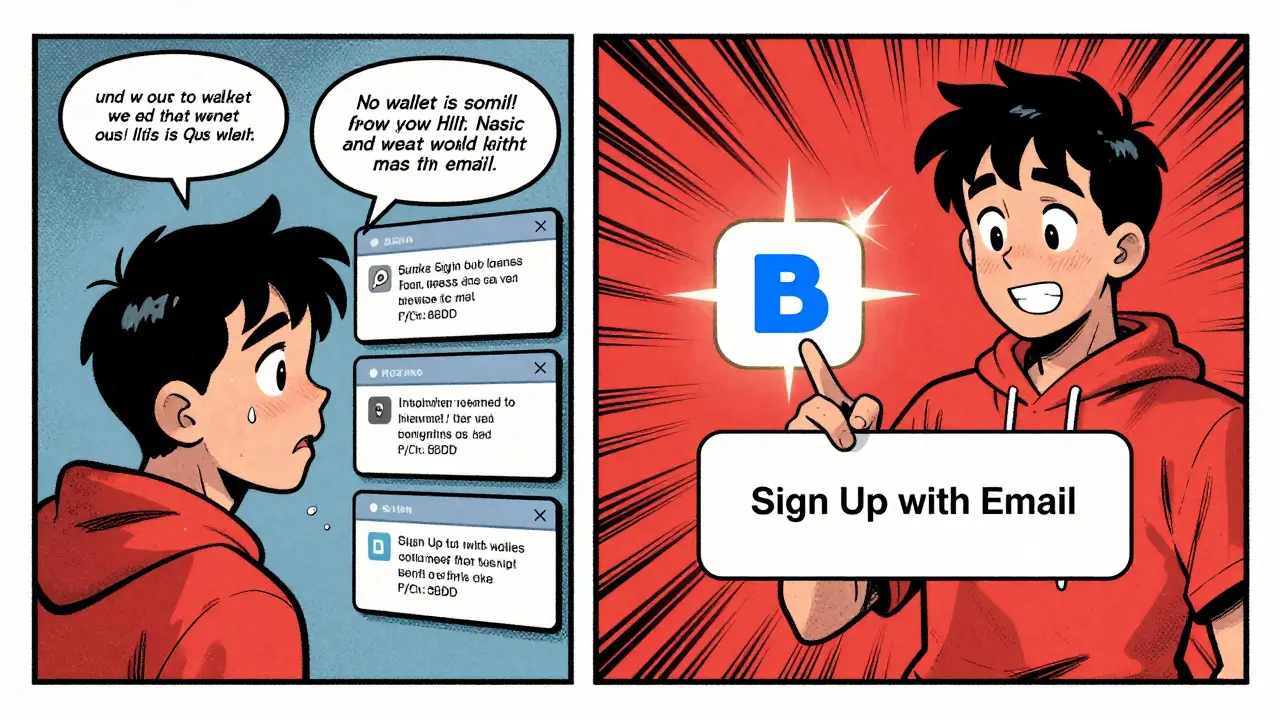
That’s five steps - compared to one click to sign up on Instagram. A January 2025 survey found that 78% of people who started the onboarding process for Lens or Farcaster abandoned it at the wallet creation stage. Wallet fatigue is real. People are juggling three or more wallets just to use different platforms.
That’s why Bluesky’s email sign-up is so powerful. It bypasses crypto entirely. And it’s why platforms like Backpack Exchange are building unified wallets - one interface to manage all your SocialFi profiles. By mid-2025, expect more platforms to offer fiat on-ramps - allowing creators to cash out earnings directly to their bank accounts without touching crypto.
The Regulatory Shadow
Blockchain social media isn’t just fighting usability - it’s fighting governments.
In late 2024, the U.S. Securities and Exchange Commission (SEC) issued a framework calling certain creator tokens - like those on Friend.Tech - potential securities. That means platforms that let users buy shares in creators’ social influence could be violating federal law. Dozens of creators pulled back. Projects froze development.
Meanwhile, Southeast Asia is moving fast. Singapore and the Philippines have clear rules for blockchain-based monetization. As a result, 42% of new SocialFi users in 2024 came from that region. Europe is cautious. The U.S. is confused. And the rest of the world is watching.
What’s Next? The Inflection Point
By 2026, we’re past the hype. The novelty of earning crypto for posting is gone. What’s left is the real question: can blockchain social media become a practical, everyday tool - not just for crypto fans, but for teachers, artists, small business owners, and parents?
Two trends are shaping the answer:
- Interoperability is winning. If your profile can move from Lens to Farcaster to a new app that hasn’t even launched yet, the network becomes more valuable than any single platform. That’s why Lens Protocol’s 47 third-party apps are a big deal.
- AI is helping, not hurting. Early blockchain networks were flooded with spam because token rewards encouraged low-effort posts. Now, AI tools built into platforms like Lens and Mastodon are filtering out noise, promoting quality, and even suggesting content to the right audiences - without central control.
Deloitte predicts that by 2027, blockchain social networks could capture 15-25% of the $207 billion social media ad market. But that only happens if usability improves, regulations clarify, and creators actually make money - not just from tokens, but from real, sustainable income.
The future of blockchain social media isn’t about replacing Instagram. It’s about giving people a choice. A choice to own their voice. A choice to be paid fairly. A choice to leave a platform without losing everything.
That’s not just technology. That’s power.
Frequently Asked Questions
Is blockchain social media really decentralized?
It depends on the platform. Lens Protocol is fully decentralized - your profile is an NFT, and no single entity controls it. Farcaster calls itself "sufficiently decentralized" - it uses Ethereum for identity but relies on a few core servers for data. Bluesky is federated, not blockchain-based, so it’s decentralized in structure but not in ledger. True decentralization means no company can shut you down. Only a few platforms currently meet that standard.
Can I earn real money on blockchain social media?
Yes - but not easily. Top creators on Lens, Farcaster, and Diamond App report earnings from $500 to over $10,000 per month from tips, collectibles, and creator tokens. But most users earn less than $10. Success requires an existing audience, consistent posting, and understanding token mechanics. It’s not a get-rich-quick scheme - it’s a long-term creator business model.
Do I need cryptocurrency to use blockchain social media?
Not anymore. Platforms like Bluesky let you sign up with email. But if you want to earn tokens, tip creators, or own your profile as an NFT, you’ll need a crypto wallet. New tools now let you buy crypto with a credit card inside apps, and some platforms offer fiat payouts - so you can get paid in USD without handling crypto yourself.
What happens if I lose my wallet password?
You lose everything. Unlike Instagram, where you can reset your password, blockchain wallets have no recovery option. If you lose your seed phrase, your profile, followers, and earnings are gone forever. That’s why backups and secure storage are non-negotiable. Some platforms now offer social recovery - letting trusted friends help you regain access - but it’s still rare.
Will blockchain social media replace Instagram and Twitter?
Not soon. Traditional platforms have billions of users, AI-driven feeds, and polished mobile apps. Blockchain networks are still clunky, niche, and slow to grow. But they’re not trying to replace them - they’re offering an alternative for creators who want ownership. Think of it like email vs. social media. You don’t need to abandon Gmail to use Signal. Same here: you can use both.
There are 26 Comments
Brenda White
Tobias Wriedt
S F
Anastasia Thyroff
Kira Dreamland
shreya gupta
Derek Lynch
Shreya Baid
Christopher Hoar
Robert Kunze
Sarah Zakareckis
Heather James
Sarah Hammon
iam jacob
Jesse Pals
Diane Overwise
Ann Liu
Dionne van Diepenbeek
Graham Smith
anshika garg
Bruce Doucette
Jessica Beadle
Tony Weaver
Patty Atima
Lucy de Gruchy
Brenda White
Write a comment
Your email address will not be published. Required fields are marked *