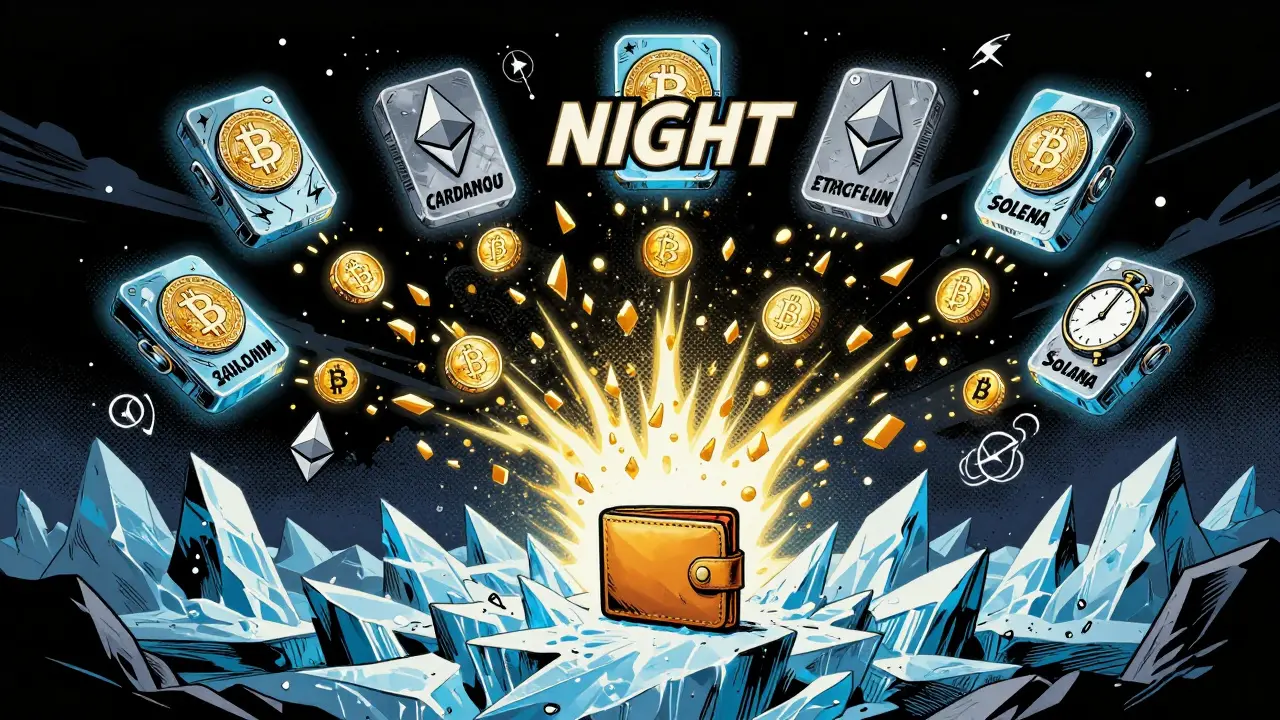
On August 6, 2025, one of the biggest cryptocurrency airdrops in history went live - the Midnight (NIGHT) Glacier Drop. It wasn’t just another token giveaway. This was a carefully engineered redistribution of 24 billion NIGHT tokens across eight blockchains, designed to build a real privacy network - not just hype. And if you held crypto on any of those chains before June 11, 2025, you were eligible. But here’s the catch: if you didn’t claim by October 4, 2025, you missed it. And no, there’s no second chance for this phase.
Who Got Eligible for the Midnight Airdrop?
The Glacier Drop didn’t care if you were into Ethereum, Bitcoin, or Solana. It didn’t ask you to join a Discord, post on Twitter, or watch videos. All it needed was one thing: at least $100 worth of native cryptocurrency in your self-custody wallet on June 11, 2025.
That snapshot was taken at a random, undisclosed time - not midnight, not noon - just a random moment. That stopped people from buying crypto right before the cutoff. It also meant that if you had $100 in Bitcoin, Ethereum, Cardano, or even Brave’s BAT token, you qualified. You didn’t need to hold all of them. Just one.
The distribution wasn’t equal. Cardano holders got the lion’s share - 50% of all NIGHT tokens (12 billion) - because Midnight is built as a privacy sidechain on Cardano. Bitcoin holders got 20%. The other 30% was split among Ethereum, XRP, Solana, Avalanche, BNB Chain, and BAT based on how much value each chain had in eligible wallets. So if you held $500 in ADA and $200 in BTC, you’d get a bigger slice than someone who only held $150 in ETH.
And here’s the deal: if you held crypto on multiple chains, you could claim from each one. Someone with $100 in ADA and $100 in BTC got two separate allocations. That’s rare. Most airdrops only give you one shot. This one rewarded multi-chain users.
How to Claim - The Two-Step Process
Claiming wasn’t automatic. You had to prove you owned the wallet. And you had to do it right.
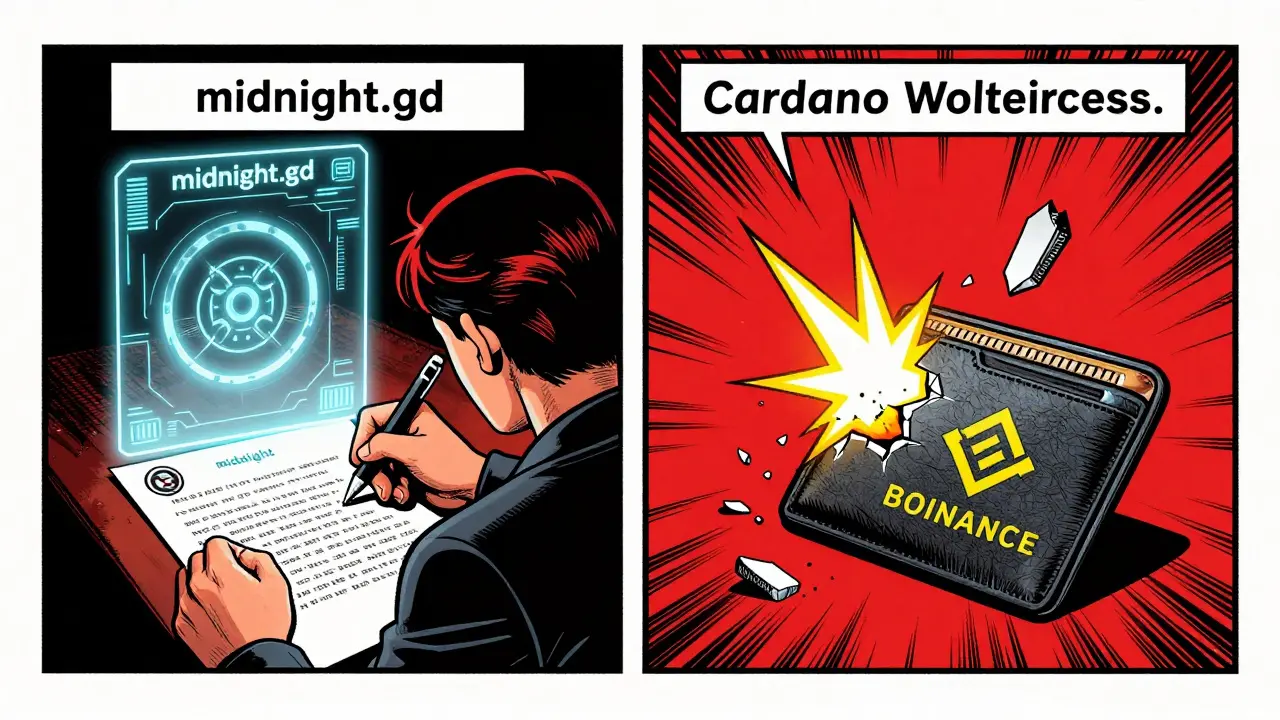
First, you connected your wallet - Eternl, Lace, Yoroi, or MetaMask - to the official portal at midnight.gd. Then came the first proof: you signed a message. That showed you controlled the private key without moving any funds. Simple. Secure.
Second, you had to enter a fresh, unused Cardano wallet address. Not your old one. Not your exchange wallet. A brand-new one. This was non-negotiable. The system wouldn’t let you claim if you used an address that had ever been used before. That stopped people from trying to claim multiple times or using recycled wallets.
And here’s the kicker: exchange wallets didn’t count. If your Bitcoin or Ethereum was on Binance, Coinbase, or Kraken, you were out of luck - unless your exchange decided to claim for you. And almost none did. That’s because handling airdrops on custodial accounts is messy, risky, and expensive for exchanges. So if you didn’t hold your crypto in a wallet you controlled, you didn’t get anything.
The whole process had to be done within 60 days. From August 6 to October 4, 2025. After that? The portal closed. No extensions. No exceptions.
What Happened to the Tokens After Claiming?
Most airdrops hand you tokens and let you sell them immediately. Midnight didn’t. It wanted users to stick around.
Claimed NIGHT tokens were locked in a Cardano smart contract. They didn’t appear in your wallet right away. Instead, they began a 360-day vesting schedule. Every 90 days, 25% of your allocation unlocked - but not all at once. The unlock times were randomized. One person’s first 25% might unlock on Day 92. Another’s on Day 107. No one could predict it.
This "gradual thawing" was intentional. It stopped massive dumps. If everyone got their tokens on Day 1 and sold, the price would crash. But if they unlock slowly, randomly, and over a year, people are more likely to use the network - build apps, run nodes, join governance - instead of cashing out.
And here’s the twist: the 360-day clock didn’t start when you claimed. It started when Midnight’s mainnet launched. And as of now, that launch date hasn’t been announced. So even if you claimed, you still don’t know when you’ll get full access to your tokens.
What Happened to the Unclaimed Tokens?
Over 10 million eligible addresses never claimed. That’s billions of NIGHT tokens left over.
Midnight didn’t burn them. It didn’t hoard them. It didn’t give them to investors.
Instead, they went into Phase Two: The Scavenger Mine.
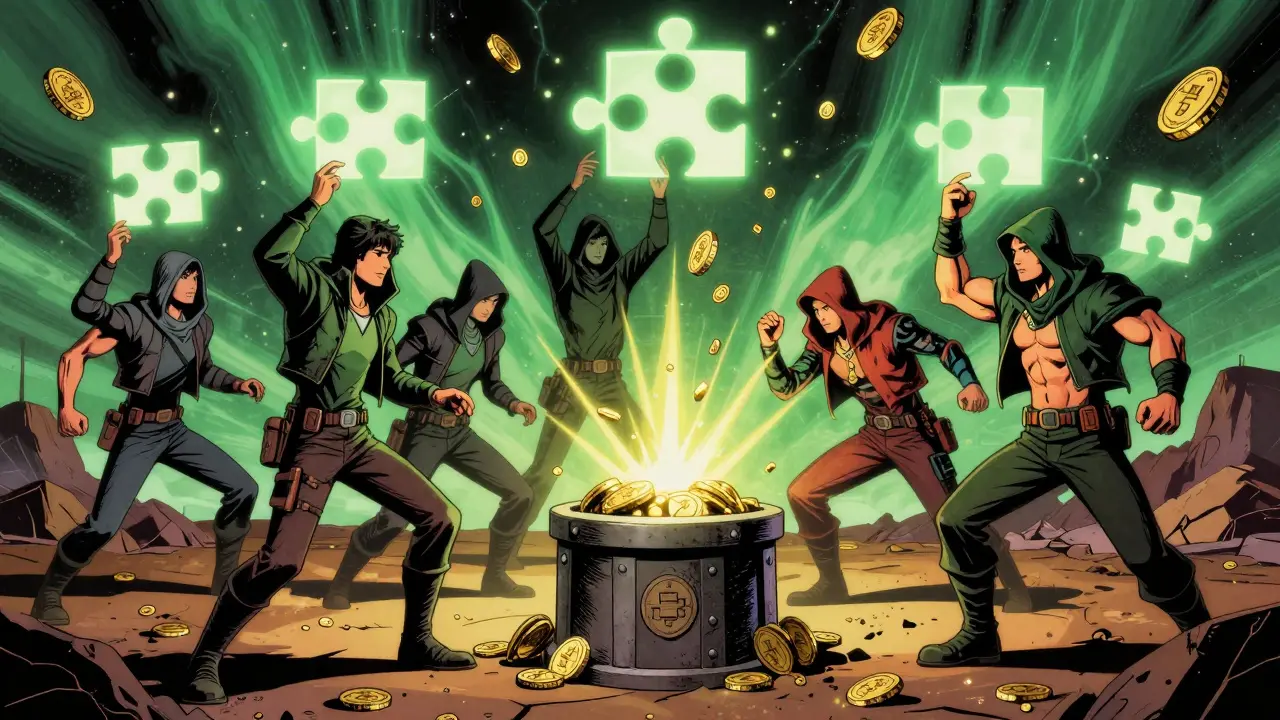
This is where things get clever. To earn these unclaimed tokens, you had to solve public-good computational puzzles. Not mining like Bitcoin - but solving math problems that helped build core network infrastructure. Think of it like a hackathon with rewards. People who contributed real work - running nodes, testing privacy tools, optimizing code - got paid in NIGHT. The harder the puzzle, the bigger the reward.
And if any tokens still remained after the Scavenger Mine? They rolled into Phase Three: Lost-and-Found. This is a final recovery window after mainnet launch. If you missed the first two phases, you still had a shot - but only if you actively helped the network grow.
This three-phase system turns an airdrop from a one-time giveaway into a long-term community-building engine. It’s not about free money. It’s about free participation.
Why This Airdrop Was Different
Most airdrops are marketing tools. Midnight’s was infrastructure.
- Cross-chain: Targeted 8 blockchains. No other airdrop has done this at scale.
- Merit-based: No social media, no tasks. Just wallet holdings.
- Anti-speculation: 360-day randomized vesting. No immediate dumps.
- Self-custody only: No exchange participation. No bots.
- Compliance-first: OFAC screening blocked sanctioned addresses. No anonymity.
- Three-phase recovery: Unclaimed tokens didn’t vanish - they got redistributed to contributors.
This wasn’t a launch. It was a foundation.
What’s Next for Midnight?
The testnet is live. Developers are building privacy apps on it. The dual-token model - NIGHT for governance and utility, DUST for transaction fees - is being tested. But none of it matters if no one uses it.
The Glacier Drop was meant to seed that usage. It gave 34 million addresses a reason to care. Now, the real test begins: will those who claimed stick around? Will the Scavenger Mine attract builders? Will mainnet launch with real activity - not just empty wallets?
If it does, Midnight could become the first blockchain that proves you don’t have to choose between privacy and utility. You can have both. And that’s worth more than any airdrop token.
Why You Should Still Care
Even if you missed the Glacier Drop, this matters.
Midnight proved you can design an airdrop that doesn’t just attract speculators - it attracts builders. It showed that vesting can work. That cross-chain eligibility can scale. That compliance and privacy aren’t opposites.
And if you’re still holding crypto across multiple chains? Keep an eye out. The next big airdrop might follow this model. Not because it’s trendy - but because it works.