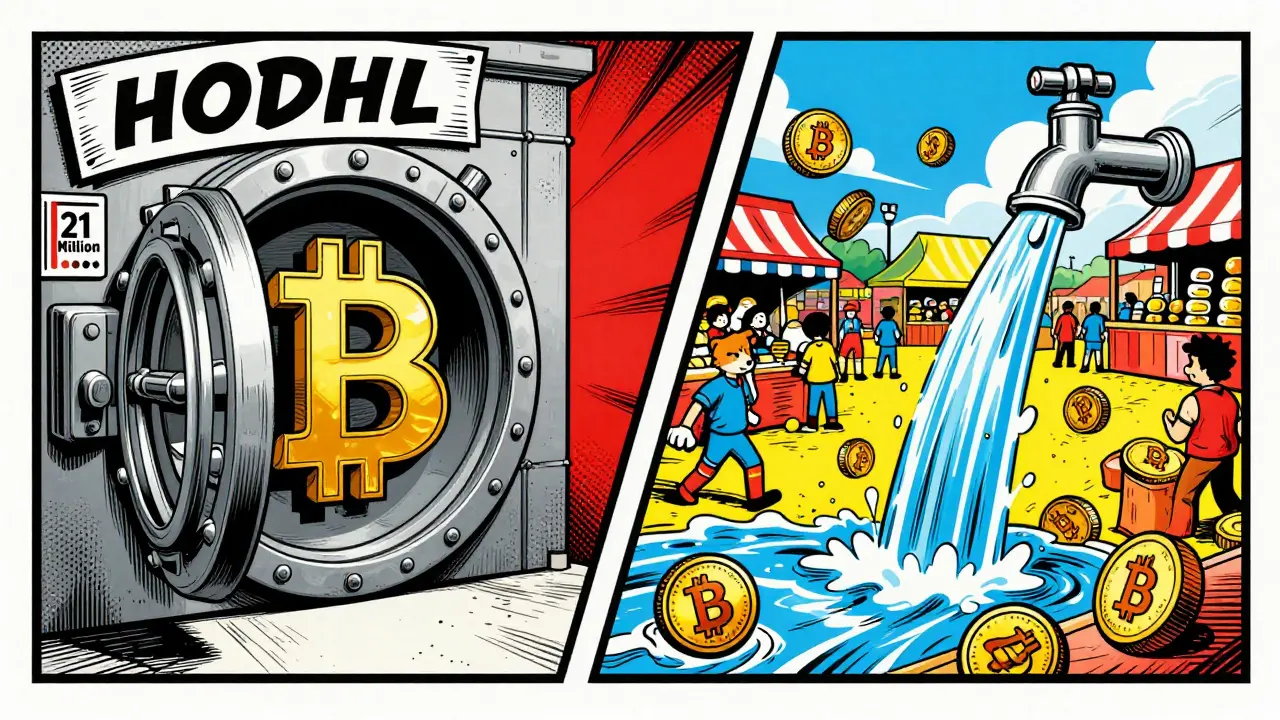
You’ve probably noticed that some cryptocurrencies seem to get more expensive simply because there are fewer of them, while others flood the market with new coins. It’s not magic; it’s math. The difference lies in whether a token is deflationary or inflationary. These two models dictate how much value a coin can hold, how people use it, and whether you should spend it today or stash it away for tomorrow.
If you’re navigating the crypto space in 2026, understanding these supply mechanics isn’t just academic-it’s essential for making smart investment decisions. One model encourages spending, while the other rewards holding. Getting this wrong can mean missing out on gains or losing purchasing power when you need it most.
What Makes a Token Deflationary?
A deflationary token is designed to become scarcer over time. Think of it like gold: there’s a limited amount available, and as demand grows, the price tends to rise because supply cannot increase to meet it. In the crypto world, this scarcity is engineered through code.
The most famous example is Bitcoin, which has a hard cap of 21 million coins. Once all those bitcoins are mined, no new ones will ever exist. But Bitcoin isn’t the only player here. Many modern projects use "token burning"-a process where tokens are permanently removed from circulation. This happens automatically when transaction fees are destroyed or when a protocol decides to buy back and burn its own tokens.
| Feature | Impact on Users | Common Mechanism |
|---|---|---|
| Fixed Supply Cap | Encourages long-term holding (HODLing) | Hard-coded maximum issuance (e.g., Bitcoin’s 21M limit) |
| Token Burning | Increases scarcity with every transaction | Fees sent to an unspendable address |
| Price Volatility | Higher potential upside, but sharper drops | Supply shocks during high demand periods |
Why does this matter? Because scarcity creates urgency. If you know a token’s supply is shrinking, you might feel pressured to buy now before it gets even harder to find. This psychological effect drives up prices, especially during bull markets. However, it also discourages everyday spending. Who wants to buy coffee with a currency that might be worth twice as much next month?
How Inflationary Tokens Work
In contrast, inflationary tokens have supplies that grow over time. New coins are constantly created and distributed to miners, validators, or users who participate in the network. This model mimics traditional fiat currencies like the US dollar, where central banks regularly print more money to stimulate economic activity.
Dogecoin is a classic example. Unlike Bitcoin, Dogecoin has no maximum supply limit. Every year, roughly 5 billion new DOGEs are added to circulation. This constant influx ensures there’s always enough liquidity for transactions, preventing the hoarding behavior seen in deflationary assets.
Another major player is Ethereum. While Ethereum introduced fee-burning mechanisms with EIP-1559, it remains largely inflationary due to staking rewards. Validators earn new ETH for securing the network, meaning the total supply continues to rise unless network usage is exceptionally high enough for burns to outweigh issuance.
The benefit here is usability. When tokens are abundant and cheap to acquire, they’re easier to spend. Merchants don’t worry about volatility killing their margins if the supply adjusts to match demand. Plus, continuous issuance helps fund development teams and incentivize early adopters without needing external venture capital.
Behavioral Incentives: Spend vs. Hold
The core difference between these models isn’t just technical-it’s behavioral. Your mindset changes depending on which type of token you hold.
With deflationary tokens, the incentive is clear: hold. As supply shrinks, each remaining unit becomes more valuable. This turns holders into passive investors rather than active participants in the economy. You see this in Bitcoin communities where “HODL” culture dominates. People treat BTC like digital gold, storing wealth rather than circulating it.
Inflationary tokens flip this script. Since your holdings lose value relative to the growing supply, sitting on them feels like losing money. Instead, you’re motivated to use them-whether that means swapping for other assets, providing liquidity in DeFi protocols, or paying for goods and services. This keeps ecosystems vibrant and liquid.
Consider this scenario: Imagine you’re running a small online store accepting crypto payments. Would you prefer customers pay you in a deflationary token that might double in value overnight (making your profit margins unpredictable)? Or would you choose an inflationary token that stays relatively stable because its supply expands to meet demand? Most businesses opt for stability, which explains why many payment-focused projects lean toward inflationary designs.
Market Dynamics and Price Behavior
Supply mechanics directly influence how volatile a token’s price can be. Deflationary tokens tend to experience wilder swings. Why? Because when demand spikes against a fixed or decreasing supply, prices shoot up rapidly. Conversely, if interest wanes, there’s little buffer to absorb the shock, leading to steep declines.
Inflationary tokens generally exhibit smoother price curves. The steady drip of new supply acts as a pressure valve, dampening extreme movements. Sure, they can still crash, but the risk of sudden, parabolic pumps is lower. This makes them attractive for traders looking for predictable patterns and merchants seeking reliable valuation.
However, neither model guarantees safety. A deflationary token with no real-world utility will eventually stagnate, regardless of its scarcity. Similarly, an inflationary token with unchecked issuance can spiral into hyperinflation, rendering it worthless. Context matters. Always look beyond the supply schedule to assess actual demand drivers.
Hybrid Models: The Best of Both Worlds?
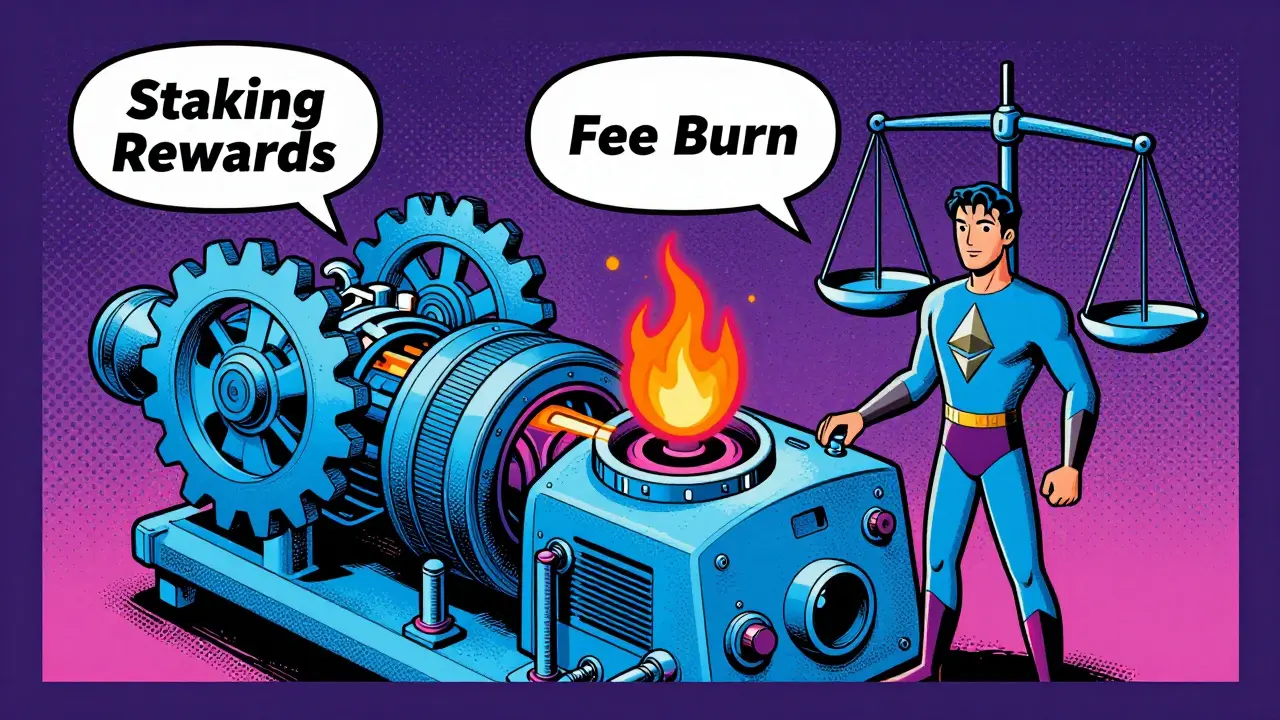
As the industry matures, we’re seeing more sophisticated approaches that blend both strategies. Ethereum’s post-Merge design is a prime example. By combining staking rewards (inflationary) with fee burning (deflationary), it creates a dynamic equilibrium. During busy periods, more fees are burned than new ETH is issued, resulting in net deflation. During quiet times, issuance exceeds burns, maintaining inflation.
This flexibility allows networks to adapt to changing conditions. Rather than locking into one rigid philosophy, hybrid models let governance decide what works best at any given moment. Some experimental tokens even adjust their emission rates based on algorithmic feedback loops tied to user activity levels.
For investors, this means doing deeper homework. You can’t rely solely on labels like “deflationary” or “inflationary.” You need to understand the specific rules governing each project’s tokenomics. What triggers a burn? How fast does inflation scale? Are there caps on issuance? These details determine long-term viability far more than broad categories do.
Which Model Fits Your Goals?
Your choice depends entirely on what you want to achieve. Are you looking to preserve wealth against traditional inflation? Then deflationary assets like Bitcoin may align better with your goals. They offer protection against currency debasement and serve as hedges during economic uncertainty.
On the other hand, if you’re interested in participating in decentralized applications, earning yield through staking, or facilitating microtransactions, inflationary tokens provide superior functionality. Their liquidity supports complex financial instruments and seamless transfers across borders.
Don’t fall into the trap of thinking one model is inherently superior. Each serves distinct purposes within the broader ecosystem. Even institutions recognize this duality. Pension funds allocate portions of portfolios to deflationary stores of value while deploying operational budgets via inflationary mediums of exchange.
Is Bitcoin truly deflationary?
Yes, Bitcoin is considered deflationary due to its fixed supply cap of 21 million coins. Additionally, periodic halving events reduce the rate at which new bitcoins enter circulation, effectively decreasing annual supply growth over time.
Can an inflationary token appreciate in value?
Absolutely. Appreciation depends on demand exceeding supply growth. If adoption accelerates faster than new token issuance, prices can rise significantly despite ongoing inflation. Examples include early-stage altcoins gaining rapid traction.
What causes token burning?
Token burning occurs when tokens are sent to addresses inaccessible by private keys, removing them from circulation permanently. Common reasons include reducing supply to boost scarcity, funding development costs, or eliminating unused allocations.
Why do some projects prefer unlimited supply?
Unlimited supply prevents artificial scarcity bottlenecks, ensuring ample liquidity for transactions. It also enables perpetual reward structures for network participants, supporting sustained engagement without exhausting finite resources.
Does Ethereum switch between inflationary and deflationary states?
Yes. Under EIP-1559, Ethereum experiences net deflation during high-usage periods when transaction fee burns exceed newly minted staking rewards. During low-activity phases, it reverts to mild inflation driven by validator emissions.