Imagine logging into your crypto wallet and finding thousands of dollars in new tokens just sitting there. You didn't buy them. You didn't trade for them. They were simply given to you because you held a specific asset. This is the reality of the Bit2Me B2M airdrop ecosystem. For holders of the B2M token, these distributions aren't just marketing gimmicks; they are substantial financial incentives designed to reward loyalty and long-term commitment.
Bit2Me, a major Spanish cryptocurrency exchange founded in 2014, has built one of the most aggressive and rewarding holder programs in the industry. With over $51 million in daily trading volume and a massive educational platform, they have the resources to distribute millions of tokens regularly. If you hold B2M or are thinking about acquiring it, understanding how these airdrops work is critical. Missing out on a single campaign could mean leaving free money on the table.
The Big Picture: What Is the B2M Token?
To understand the value of the airdrops, you first need to understand the vehicle carrying them. The B2M token is the native utility token of the Bit2Me exchange, operating on the Ethereum blockchain as an ERC20 standard asset. It isn't just a coin you buy and forget. It acts as a key that unlocks exclusive features, lower fees, and yes, those lucrative airdrops.
Because B2M is an ERC20 token, it lives on the Ethereum network. This means you can hold it in compatible wallets like MetaMask, Trust Wallet, or directly within the Bit2Me app itself. The token's primary function within the Bit2Me ecosystem is governance and utility, but its secondary-and often more exciting-function is serving as eligibility proof for reward campaigns. When Bit2Me launches a new project or partners with another protocol, they look at their B2M holders first.
Campaign 1: The CoinMarketCap Partnership (8 Million Tokens)
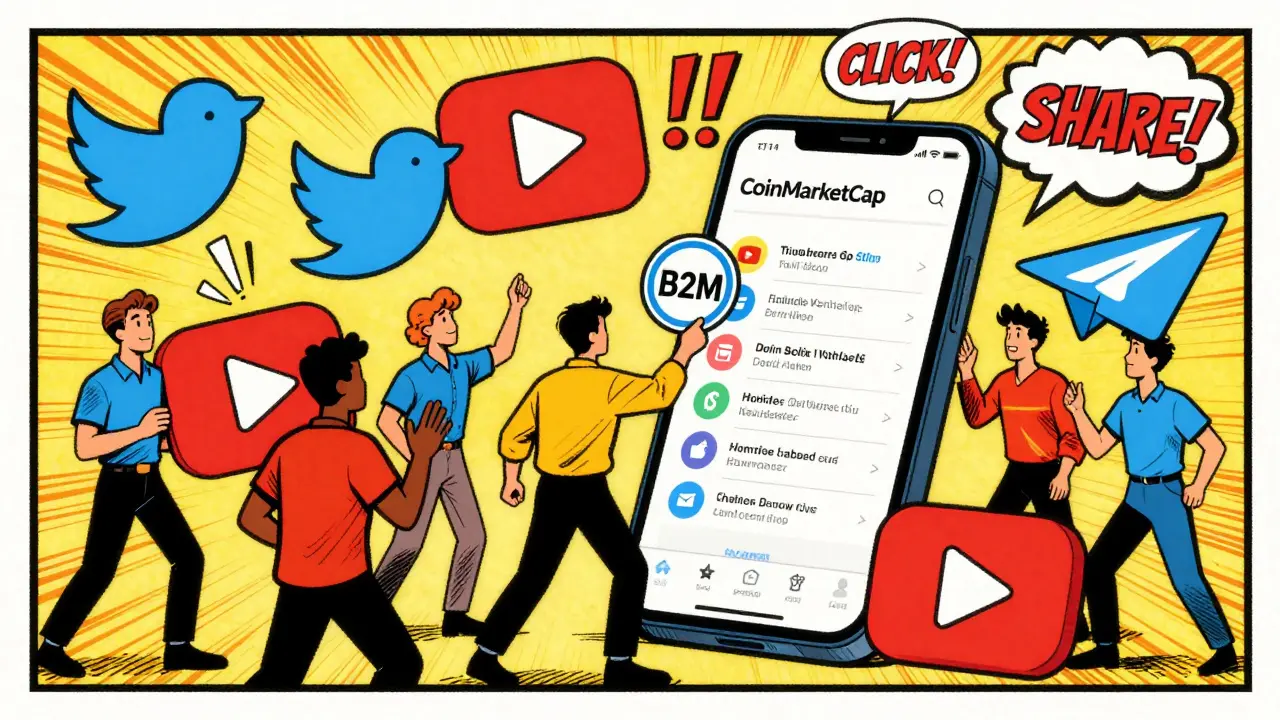
Not all Bit2Me airdrops require you to be a whale holding millions of dollars in B2M. Some are open to the broader community, designed to bring in new users. The most famous example is the collaboration with CoinMarketCap, one of the world's largest cryptocurrency data aggregators and market tracking platforms.
This campaign distributed a massive 8,000,000 B2M tokens. The goal was simple: expand visibility. To participate, you didn't need to deposit funds immediately. Instead, you needed to complete eight specific social and engagement tasks. These included:
- Adding B2M to your CoinMarketCap watchlist.
- Following Bit2Me Global and Bit2Me Twitter accounts.
- Subscribing to the official Bit2Me YouTube channel.
- Joining both the English and Spanish B2M Telegram groups.
- Providing a valid ERC20 wallet address (like MetaMask).
- Retweeting a specific promotional post.
Out of this pool, exactly 13,238 winners were selected. Each winner received up to 50,000 B2M tokens. While the entry barrier was low (just time and social media clicks), the competition was high. This type of airdrop is great for beginners who want to build a position in B2M without significant upfront capital. However, keep in mind that these opportunities are time-sensitive. Once the campaign window closes, the chance to claim those free tokens vanishes forever.
Campaign 2: The A1X Token Drop (Holder Exclusive)
If you are serious about holding B2M, this is where the real value lies. In June 2025, Bit2Me executed one of its most substantial distributions: the A1X Token Airdrop. This wasn't open to the public. It was exclusively for B2M holders who had demonstrated long-term commitment through staking.
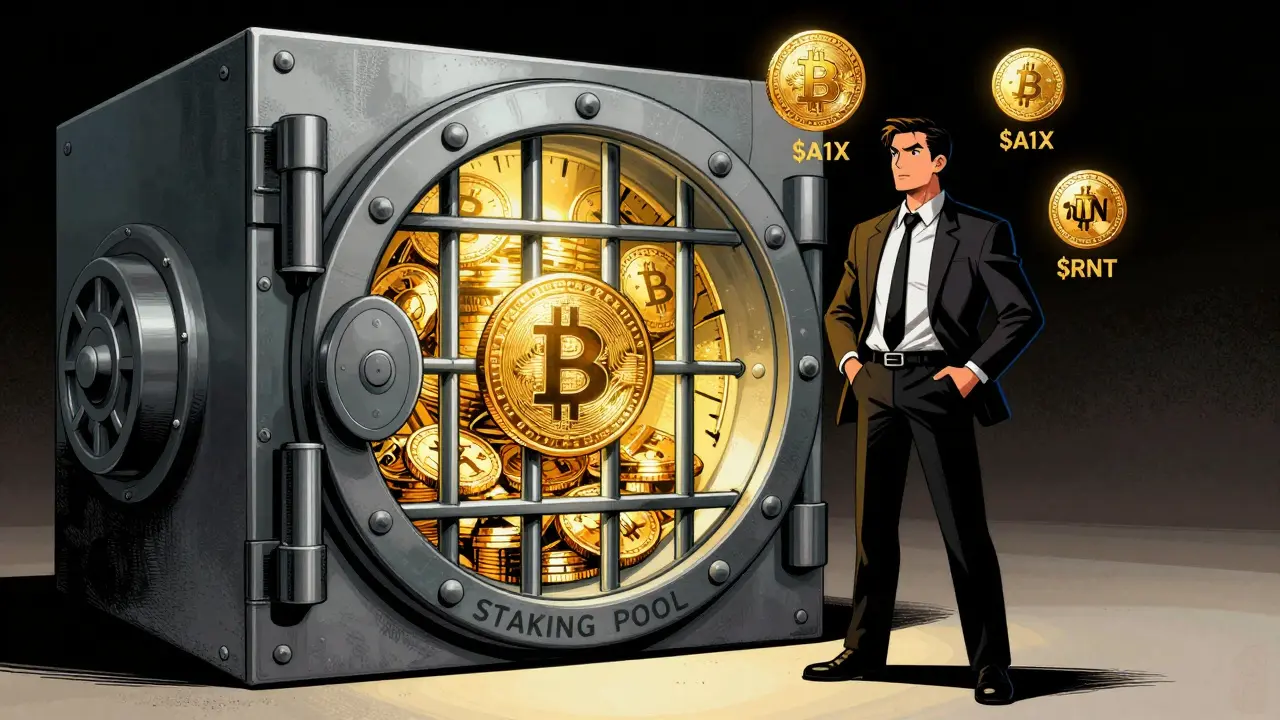
A total of 5.5 million $A1X tokens were distributed. But here is the catch: you couldn't just hold B2M in a cold wallet. You had to lock your tokens into either a 6-month or 12-month staking pool within the Bit2Me platform. This strategy serves two purposes for Bit2Me. First, it reduces the circulating supply of B2M, which can help stabilize or increase the token's price. Second, it rewards users who are willing to tie up their assets, creating a sticky user base.
By July 2025, reports indicated that "all of them without exception" had received their allocations. This highlights the importance of timing. If your stake unlocked after the snapshot date, you missed out. This campaign reinforced the idea that passive holding isn't enough; active participation in the platform's staking mechanisms is required to maximize returns.
| Campaign Name | Token Distributed | Total Supply | Eligibility Requirement | Target Audience |
|---|---|---|---|---|
| CoinMarketCap Airdrop | B2M | 8,000,000 | Social tasks & Watchlist | New Users / Community |
| A1X Holder Drop | $A1X | 5,500,000 | 6-12 Month Staking | Long-Term Holders |
| Reental (RNT) Drop | $RNT | 95,000 | High Balance Holding | Whales / Large Holders |
Campaign 3: The Reental (RNT) Distribution
While the A1X drop rewarded time-locked stakers, the Reental (RNT) Airdrop targeted pure wealth accumulation. Scheduled for March 2025, this campaign distributed 95,000 $RNT tokens. Unlike the previous examples, this was strictly proportional to your balance. The more B2M you held, the more RNT you got.
The requirements were steep. You needed to maintain one of two thresholds prior to March 26, 2025:
- 10,000+ B2M tokens held continuously for 6 months.
- 50,000+ B2M tokens held continuously for 12 months.
Participants had to register using the code B2MRNTUG on the promotion page or within the app. The distribution was calculated based on the average B2M balance from the moment of registration until the end of the period. This meant you couldn't just dump tokens in at the last second; you had to sustain the balance. The distribution occurred within 30 days after the promotion ended. This model favors "whales"-large investors-who benefit disproportionately compared to smaller retail holders.
How Staking Mechanics Enable Airdrops
You might notice a pattern: Bit2Me loves staking. Their platform offers flexible, 3-month, 6-month, and 12-month pools. Why does this matter for airdrops? Because staking creates verifiable proof of commitment.
Recently, Bit2Me improved its staking interface significantly. Users can now add funds to existing pools without resetting the lock-up timer. You can also move funds between different pool types or renew pools starting 30 days before they unlock. There is even a "redeem" function that converts B2M into permanent points in the "Space Center" platform. These technical improvements make it easier for you to manage your holdings strategically. For instance, if you see a rumor about an upcoming airdrop requiring a 6-month lock, you can adjust your position accordingly without losing your original stake's maturity date.
Strategic Advice: Maximizing Your Returns
So, how do you actually profit from this system? It requires a proactive approach rather than a passive one. Here is a practical framework for navigating Bit2Me's airdrop landscape:
1. Diversify Your Lock-Up Periods
Don't put all your B2M into a single 12-month pool. Split it. Keep some in flexible pools for liquidity, some in 6-month pools for medium-term campaigns, and some in 12-month pools for the highest-tier rewards. This ensures you are eligible for whatever type of snapshot Bit2Me decides to take next.
2. Monitor "B2M Holder Week"
This is a recurring monthly initiative. Bit2Me announces specific benefits for each month. March featured RNT; June featured A1X. Follow their announcements closely. The rules change every cycle. What worked in March won't necessarily work in October.
3. Engage Socially for Free Entry
Even if you are a large holder, don't ignore the social tasks. Campaigns like the CoinMarketCap drop allow you to acquire additional B2M for free, which then increases your baseline for future proportional drops like RNT. It compounds your holdings.
4. Use Compatible Wallets
Ensure you have a reliable ERC20 wallet set up. MetaMask is the standard, but ensure you have backup phrases secured. If you miss the submission window for your wallet address during a social airdrop, you cannot claim the tokens later. There is no "undo" button in blockchain airdrops.
Risks and Considerations
Free money sounds too good to be true, and in crypto, caution is always warranted. While Bit2Me is a regulated entity in Spain with robust risk management systems (including automated liquidation alerts at 65%, 75%, 82%, and 85% risk levels), you should still consider the risks.
First, tax implications. In many jurisdictions, including New Zealand and parts of Europe, airdropped tokens are considered taxable income at the time of receipt. You may owe taxes on the value of the B2M, A1X, or RNT tokens when they hit your wallet, not just when you sell them. Consult a local tax professional.
Second, opportunity cost. Locking your B2M for 12 months means you cannot sell it if the market crashes or if a better opportunity arises elsewhere. Liquidity is valuable. Only lock what you can afford to leave untouched.
Third, token volatility. The value of the airdropped tokens (like A1X or RNT) may fluctuate wildly. Receiving 1,000 tokens is only valuable if the token retains utility or price stability. Do your own research on the projects behind the airdropped tokens before assuming they are instant cash.
Do I need to be a Bit2Me user to receive B2M airdrops?
For social campaigns like the CoinMarketCap drop, you typically only need a compatible ERC20 wallet address (like MetaMask) and must complete social tasks. You do not necessarily need a funded Bit2Me account. However, for holder-exclusive drops like A1X or RNT, you must hold B2M tokens, which usually implies having an account on the exchange or holding the tokens in a personal wallet linked to the platform's registry.
What happens if my staking pool unlocks before the airdrop distribution?
It depends on the specific campaign rules. For the A1X drop, eligibility was tied to being locked *during* the snapshot period. If your pool unlocked before the snapshot, you likely would not have been eligible. Always check the exact dates of the "snapshot" versus the "distribution." Bit2Me allows you to renew pools 30 days before they unlock, so plan ahead to stay locked if a new campaign is announced.
Is the B2M token available outside of the Bit2Me exchange?
Yes, B2M is an ERC20 token on the Ethereum blockchain. This means it can be traded on other decentralized exchanges (DEXs) or centralized exchanges that list it, and it can be stored in any Ethereum-compatible wallet such as MetaMask, Ledger, or Trezor. However, to participate in Bit2Me-specific airdrops, you often need to interact with the Bit2Me platform directly.
How are taxes handled for airdropped tokens in New Zealand?
In New Zealand, the Inland Revenue Department (IRD) generally treats crypto assets as property. If you receive an airdrop, it may be considered taxable income depending on your intent (e.g., if you are actively trading). It is crucial to record the fair market value of the tokens at the time of receipt. Always consult with a qualified tax advisor familiar with NZ crypto regulations, as rules can change.
Can I lose my staked B2M tokens if the market drops?
If you are using simple staking (locking tokens for yield), you generally retain ownership of your principal B2M tokens regardless of price fluctuations. However, if you are using margin trading or leveraged products within Bit2Me, there is a risk of liquidation. Bit2Me sends automated notifications at 65%, 75%, 82%, and 85% risk levels, with automatic liquidation at 85% if no action is taken. Simple staking does not carry this liquidation risk.