
You’ve probably heard of Dogecoin. Maybe you even know about Shiba Inu. But have you seen Togo (TOGO)?
If you’re scrolling through decentralized exchanges or checking obscure market cap lists, you might have stumbled upon this token. It’s themed around the famous sled dog who led the 1925 serum run to Nome, Alaska. The marketing pitch is simple: "Before DOGE Barked, TOGO Ran." It positions itself as a tribute to endurance and loyalty in the harshest crypto winters.
But here is the hard truth before you click "buy": TOGO is not a utility coin. It has no complex technology behind it. It is a low-capitalization memecoin with extremely thin liquidity, high risk, and almost zero institutional backing. If you are looking for a safe investment, look elsewhere. If you are curious about how these micro-cap meme assets work-or if you want to gamble on a narrative-this guide breaks down exactly what TOGO is, how to find it, and why you should be incredibly careful.
The Story Behind the Token
To understand TOGO, you first need to separate the history from the hype. The real Togo was a Siberian Husky who played a critical role in saving Nome, Alaska, from a diphtheria outbreak in 1925. He ran nearly 90 miles in blizzard conditions to deliver life-saving serum. That story is inspiring. It represents grit.
The cryptocurrency team behind $TOGO leans heavily on this narrative. They claim the token is more than just a meme; they frame it as a symbol for "going full degen" (degenerate gambler) through market crashes. However, when you dig into the project’s documentation, you hit a wall. There is no whitepaper. There are no named founders. There is no roadmap visible on major tracking sites like CoinMarketCap or LiveCoinWatch.
This lack of transparency is standard for many memecoins but dangerous for beginners. Unlike Bitcoin or Ethereum, which have clear technical foundations, TOGO exists primarily because people agree it has value based on its story. If the story loses interest, the value evaporates.
Tokenomics: Supply and Scarcity
Let’s look at the numbers, because in crypto, supply matters. According to data from CoinMarketCap and Crypto.com, TOGO has the following structure:
- Total Supply: 1,000,000,000 (1 Billion) TOGO
- Max Supply: 1,000,000,000 (1 Billion) TOGO
- Circulating Supply: 1,000,000,000 (1 Billion) TOGO
Notice that the circulating supply equals the total supply. This means all tokens are technically "out there." However, "self-reported" is a key phrase here. The project claims this distribution, but independent audits often reveal that large portions of supply are held by a few wallets controlled by the developers.
Without a verified vesting schedule or a transparent breakdown of team allocations, you cannot know if the creators hold 90% of the coins. If they do, they could dump their holdings at any moment, crashing the price to zero. This is a common trap in the memecoin sector.
| Metric | Value | Risk Level |
|---|---|---|
| Total Supply | 1,000,000,000 | Fixed Cap |
| Circulating Supply | 1,000,000,000 | Self-Reported |
| Market Cap Rank | #45,000 - #51,000 | Extremely Low Liquidity |
| Audit Score | 2.7 / 10 (CertiK) | High Risk |
Security and Trust: The Red Flags
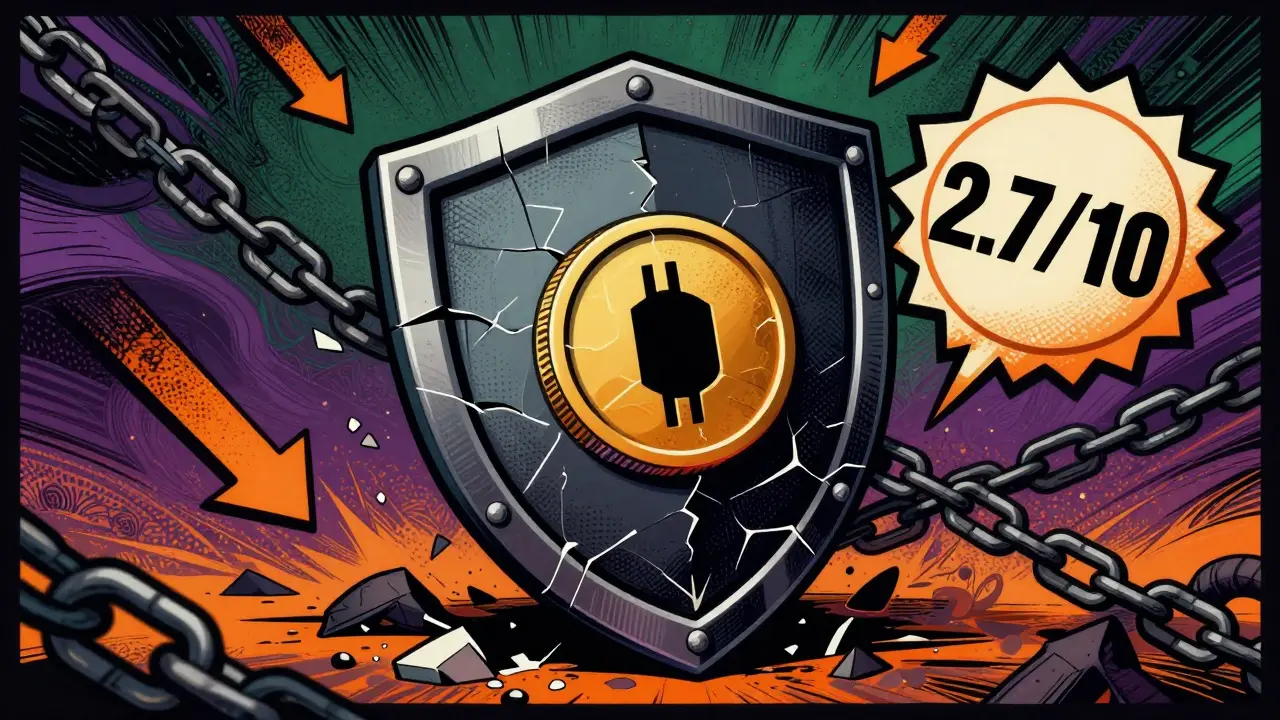
If you care about safety, pay attention to this section. Security firm CertiK has assigned TOGO a rating of 2.7 out of 10. In the world of smart contract security, this is a failing grade. A score this low usually indicates significant vulnerabilities, such as:
- Centralization Risks: The ability for the owner to pause transactions or mint new tokens.
- Code Vulnerabilities: Bugs that could allow hackers to drain funds.
- Lack of Renounced Ownership: The developers still control the contract.
Furthermore, there is no mention of bug bounties or formal verification reports on major aggregators. When you buy TOGO, you are trusting code that has been flagged as risky by professionals. Do not put money into this that you aren’t prepared to lose entirely.
Where Can You Buy TOGO?
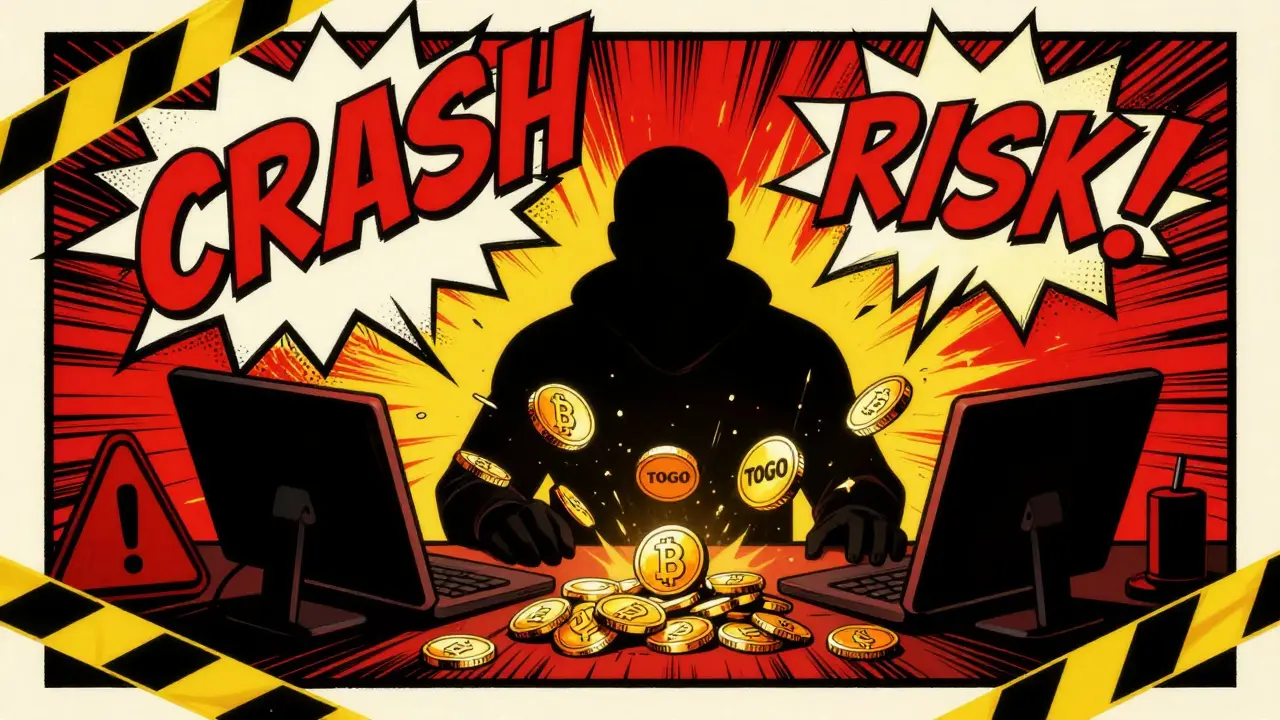
Here is where things get tricky. You won’t find TOGO on the main trading pages of Binance, Coinbase, or Kraken. In fact, Crypto.com explicitly states that TOGO is not tradable yet on their platform.
To buy TOGO, you must use a Decentralized Exchange (DEX). Here is the general process:
- Set Up a Web3 Wallet: You’ll need a non-custodial wallet like MetaMask, Trust Wallet, or the Binance Web3 Wallet.
- Add the Correct Network: TOGO is an EVM-compatible token. You need to identify which chain it lives on (likely Ethereum, BNB Chain, or a Layer 2). The contract address starts with
0x150f…205E90. - Fund Your Wallet: Buy the native currency of that chain (e.g., ETH or BNB) on a centralized exchange and send it to your wallet.
- Connect to a DEX: Use platforms like Uniswap, PancakeSwap, or Raydium (depending on the chain).
- Paste the Contract Address: Never search by name alone. Always paste the exact contract address to avoid buying a fake copycat token.
- Swap: Exchange your ETH/BNB for TOGO. Be aware of high slippage fees due to low liquidity.
This process requires technical knowledge. If you mess up the network settings or send funds to the wrong address, those funds are gone forever. There is no customer support to call.
Price Volatility and Market Reality
Let’s talk about the price. As of recent snapshots, TOGO trades in the range of $0.000008 to $0.000011. That is less than one-tenth of a cent. While this sounds cheap, remember the math: with a 1 billion supply, the total market value is only around $10,000 to $11,000.
This makes TOGO a nano-cap asset. It is ranked between #45,000 and #51,000 globally. For context, Bitcoin is #1. Ethereum is #2. Even popular memecoins like Dogecoin are in the top 20. TOGO is virtually invisible to the broader market.
Why does this matter? Because liquidity is thin. If you try to sell $100 worth of TOGO, you might drop the price by 10% or more because there aren’t enough buyers waiting in the pool. Conversely, a single large buyer could spike the price artificially. This volatility creates opportunities for quick gains but also massive losses in seconds.
Is TOGO a Good Investment?
I’m going to be direct: No. Not in the traditional sense of investing.
An investment implies underlying value, cash flow, or utility. TOGO has none of these. It is a speculative asset driven purely by community sentiment and internet culture. Its value depends entirely on whether other people believe the "sled dog hero" narrative is cool right now.
However, some traders enjoy this space. They treat it like a lottery ticket. They allocate 1% of their portfolio-money they are happy to burn-in hopes of catching a viral trend. If you fall into this category, proceed with extreme caution.
Compare TOGO to established players:
- Dogecoin (DOGE): Has payment infrastructure, celebrity endorsements, and deep liquidity.
- Shiba Inu (SHIB): Has built an ecosystem with Shibarium and charity initiatives.
- TOGO: Has a story, a low security score, and no visible development activity.
The gap in maturity is enormous. Buying TOGO is akin to betting on a horse that hasn’t even entered the track yet, while DOGE is already winning races.
How to Protect Yourself
If you decide to interact with TOGO despite the warnings, follow these rules to minimize harm:
- Use a Burner Wallet: Never connect your main wallet holding significant assets to a DEX for a risky swap. Create a new wallet specifically for high-risk interactions.
- Verify the Contract: Double-check the contract address against multiple sources. Scammers create fake tokens with the same name.
- Check Slippage: Set your slippage tolerance appropriately. Low liquidity means prices change rapidly during swaps.
- Take Profits Early: If the price goes up, sell immediately. Don’t get greedy. These coins can crash as fast as they rise.
- Ignore DMs: Support teams will never message you first on Telegram or Discord. Any offer to "help" you withdraw is a scam.
Conclusion: Proceed with Caution
Togo (TOGO) is a fascinating case study in the wild west of crypto. It leverages a noble historical figure to sell a digital token with almost no fundamental value. It appeals to the part of us that loves underdogs and heroes. But in the financial world, stories don’t pay bills-liquidity and trust do.
With a CertiK score of 2.7, no listed presence on major exchanges, and a nano-cap market size, TOGO is one of the riskiest assets you can encounter. It is not for the faint of heart, nor for those seeking long-term growth. Treat it as entertainment, not finance. And always, always keep your private keys safe.
Is Togo (TOGO) a scam?
While we cannot definitively label it a "scam" without proof of malicious intent, TOGO exhibits many red flags associated with rug pulls and honeypots. These include a very low security audit score (2.7/10), anonymous developers, and self-reported supply data. Treat it as highly suspicious until proven otherwise.
Can I buy TOGO on Binance?
You cannot buy TOGO directly on Binance’s centralized exchange. However, you can use the Binance Web3 Wallet feature to connect to decentralized exchanges (DEXs) where TOGO is traded. This requires manual configuration and carries higher risk than standard spot trading.
What is the contract address for TOGO?
The reported contract address starts with 0x150f…205E90. Always verify the full address on a block explorer like Etherscan or BscScan before swapping. Never rely solely on names, as scammers can create duplicate tokens.
Why is the CertiK score so low?
A score of 2.7 out of 10 indicates severe issues in code security, centralization, or market risk. It suggests that the smart contract may have vulnerabilities that allow owners to manipulate the token or that the code has not been properly audited for safety.
Is TOGO better than Dogecoin?
No. Dogecoin has a larger market cap, deeper liquidity, wider acceptance, and a longer track record. TOGO is a micro-cap memecoin with negligible adoption and higher risk. They are not comparable in terms of stability or utility.