
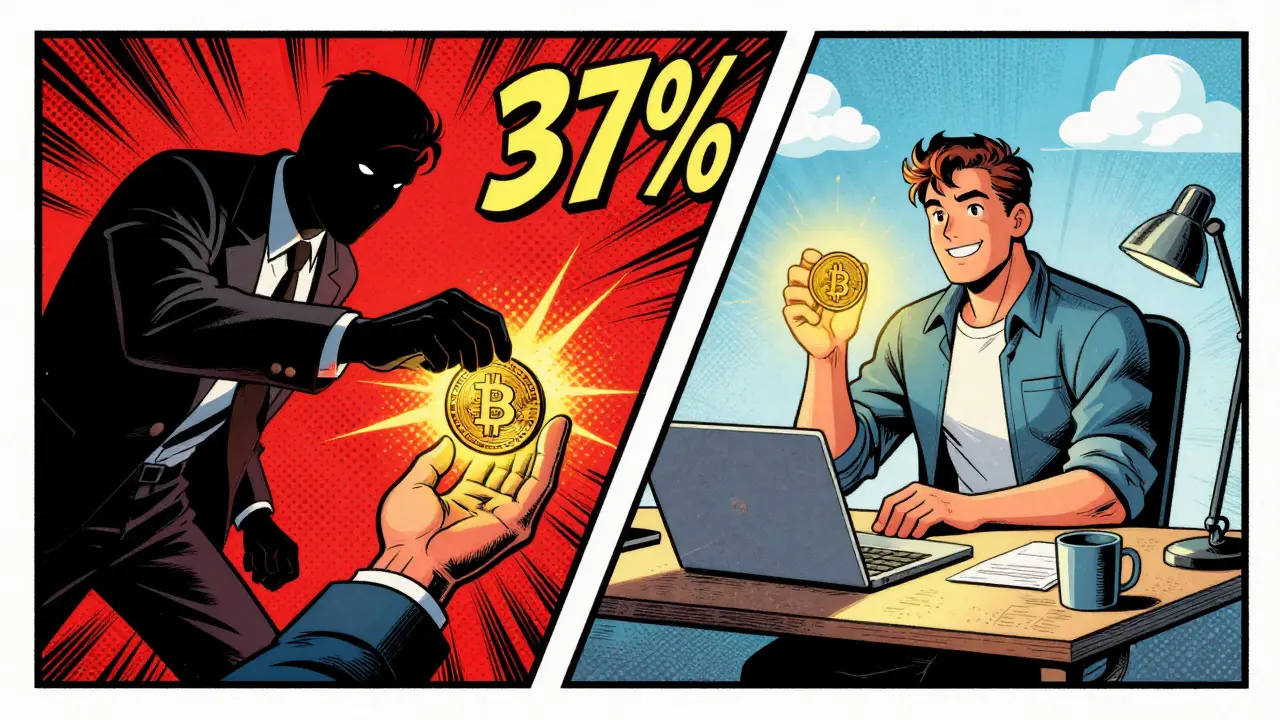
Picture this: you just made a massive profit on a Bitcoin trade. In one country, the government takes up to 37% of that gain immediately. In another, they don’t touch it at all. The difference isn't just about money; it's about freedom, security, and how much hassle you face when trying to move your assets. With the global cryptocurrency market cap hitting $3.96 trillion in September 2025, the question isn't whether to trade-it's where to trade from.
Choosing the right jurisdiction is no longer just a niche strategy for digital nomads. It’s a core part of risk management for serious traders. We are looking at three main factors: regulatory clarity (will they shut down your exchange tomorrow?), tax efficiency (how much do you keep?), and infrastructure (can you actually bank your profits?). Here is the breakdown of the best countries for crypto trading in 2025 based on real-world data and regulatory frameworks.
The Regulatory Gold Standard: Switzerland
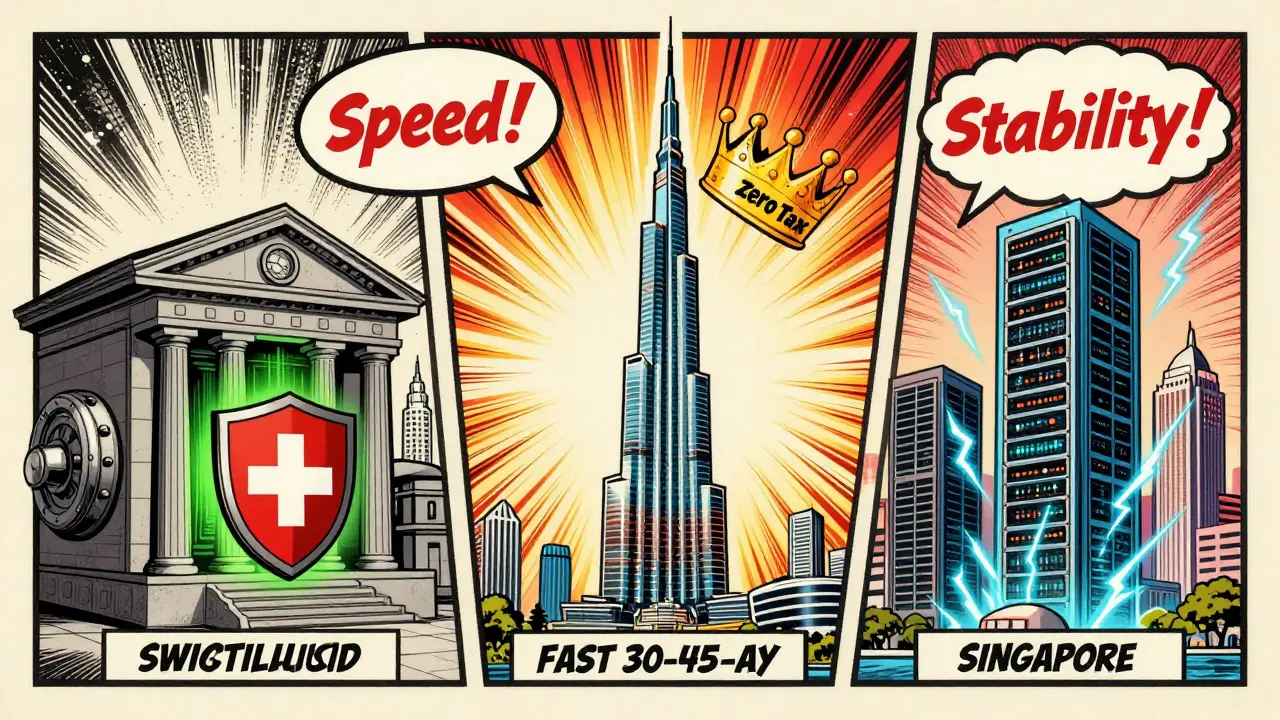
If you want stability without sacrificing innovation, Switzerland is the leading European hub for blockchain technology and crypto-friendly banking. The Swiss Federal Act on Distributed Ledger Technology (DLT Act), effective since February 2021, provides legal certainty that few other nations can match. Dr. Garrick Hileman from Blockchain.com calls this approach the "gold standard" because it balances investor protection with technological progress.
Here is what makes Switzerland unique:
- Tax Efficiency: There is no capital gains tax on personal crypto investments if you hold them as private wealth. However, if you are deemed a professional trader, you pay standard corporate rates, which range from 12% to 15% depending on the canton.
- Crypto Valley: The Canton of Zug hosts over 1,000 blockchain companies, including the Ethereum Foundation. The average corporate tax rate here is 13.67%, making it highly attractive for businesses.
- Banking Access: Unlike many countries where banks refuse to work with crypto firms, Switzerland leads with 68% of crypto businesses maintaining functional banking relationships, thanks to specialized institutions like Sygnum and SEBA Bank.
The catch? Complexity. Navigating cantonal tax variations requires about 150 hours of compliance preparation. While Zug offers 0% capital gains tax for individuals holding long-term, Geneva might apply a 24% rate. You need a good accountant here.
The Zero-Tax Powerhouse: United Arab Emirates
The United Arab Emirates (UAE) is a zero-tax jurisdiction with dedicated virtual asset regulation through VARA. In March 2022, Dubai launched the Virtual Assets Regulatory Authority (VARA), becoming the world’s first dedicated regulator for virtual assets. By 2025, Sumsub ranked the UAE #1 for regulatory clarity.
Why do traders flock to Dubai?
- Zero Taxes: There is 0% corporate tax and 0% personal income tax on crypto trading profits. This is a massive advantage compared to Western jurisdictions.
- Speed: VARA processes license applications in 30-45 days. Compare this to 6-12 months in EU jurisdictions, and you see why startups prefer Dubai.
- Business Infrastructure: Abu Dhabi’s AD DART offers 24-hour license approval for business accounts, according to Trustpilot reviews from local exchanges.
However, it’s not free. Maintaining a VARA license costs a minimum of AED 1.2 million ($326,000) annually, including mandatory professional indemnity insurance. For high-volume institutional traders, this fee is negligible. For small retail traders, it’s prohibitive. Most individual traders use the UAE’s Investor Visa, requiring AED 750,000 ($204,000) investment, with processing times of just 30-60 days.
The Asian Hub: Singapore
Singapore is a premier financial center with strict but clear crypto regulations under the Monetary Authority of Singapore (MAS). Singapore ranks #3 in Sumsub’s 2025 clarity index. The Monetary Authority of Singapore (MAS) enforces no capital gains tax for individual investors, which is a huge draw.
Singapore excels in infrastructure. According to CoinGecko’s 2025 report, exchanges here boast 99.99% uptime, and API response times average a lightning-fast 127ms. This is critical for algorithmic traders who rely on speed.
The downside is the barrier to entry for businesses. To get a Major Payment Institution license, you need a minimum paid-up capital of SGD 1 million ($740,000). The Chainalysis 2025 User Experience Report notes that while 68% of professional traders praise the transparency of MAS licensing, many startups find the capital requirement too high. If you are an individual trader, however, Singapore is arguably the best place in Asia due to its stability and lack of capital gains tax.
The High-Adoption Contenders: Ukraine & Moldova
When we talk about "best," we often mean "most active." Chainalysis’ 2025 Global Crypto Adoption Index puts Ukraine at the top spot for organic crypto adoption relative to population, followed closely by Moldova (#2) and Georgia (#3). These Eastern European nations dominate in retail centralized service value and DeFi activity.
Why are they so high? Necessity and low barriers. In Ukraine, crypto is often used to bypass traditional banking restrictions or send remittances. However, there is a major caveat: operational instability. The ongoing conflict creates risks that offset the strong adoption metrics. Additionally, banking integration is tough-only 37% of local crypto businesses in these regions can establish traditional banking relationships.
If you are looking for a stable environment to build a business, these countries are risky. But if you are analyzing market trends, understanding that Eastern Europe drives a significant portion of global retail volume is crucial.
The Tax Haven with a Catch: Portugal
Portugal is a popular destination for crypto expats due to favorable tax treatments for non-habitual residents. For years, Portugal offered zero taxation on crypto gains for individuals. This attracted thousands of traders, especially after the US tightened its IRS enforcement.
A user on Reddit’s r/cryptoforeign shared their experience: moving to Lisbon via the Golden Visa program saved them €38,000 annually on taxes compared to living in the US. But there is friction. The Golden Visa requires a €500,000 investment, and processing times stretch to 18-24 months. Bureaucracy is slow, and the tax landscape can shift. Always verify current non-habitual resident (NHR) status rules, as governments frequently adjust these incentives.
Comparison Table: Top Jurisdictions at a Glance
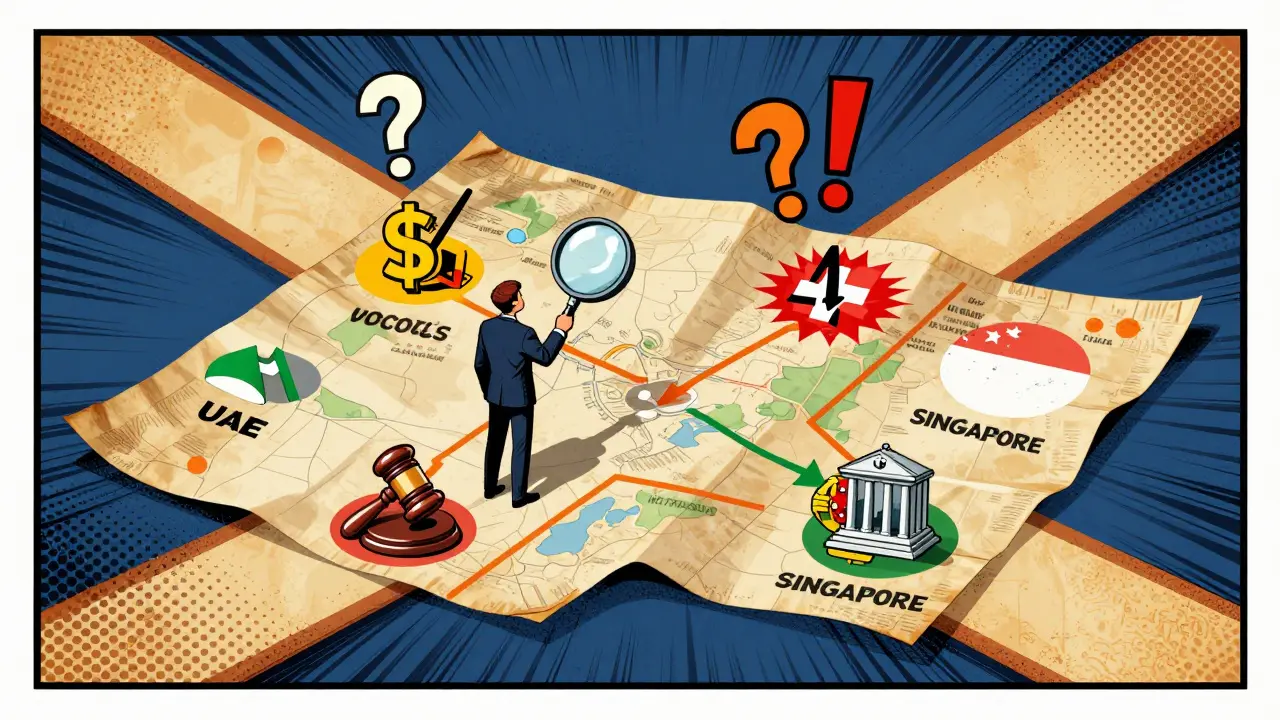
| Country | Personal Capital Gains Tax | Regulatory Body | License Processing Time | Key Advantage |
|---|---|---|---|---|
| Switzerland | 0% (Private Wealth) / 12-15% (Professional) | FINMA | Variable (Canton-dependent) | Banking access & Legal certainty (DLT Act) |
| UAE (Dubai) | 0% | VARA | 30-45 Days | Zero tax & Fast licensing |
| Singapore | 0% | MAS | 3-6 Months | Infrastructure quality & Stability |
| Portugal | 0% (For NHRs) | Banco de Portugal | 18-24 Months (Residency) | Lifestyle & Low cost of living |
| USA (Wyoming) | 0-37% (Federal + State) | SEC/CFTC | 6-12 Months | Market size & Institutional depth |
Practical Steps: How to Choose Your Jurisdiction
You can't just pick a country based on tax rates alone. You need a plan. Here is a decision tree to help you decide:
- Define Your Status: Are you a retail trader (buying/selling for yourself) or a professional/business entity? Professionals face stricter scrutiny and higher fees everywhere.
- Calculate Total Cost of Ownership: Include visa costs, annual license fees, accounting fees, and cost of living. For example, while the UAE has 0% tax, the AED 1.2 million annual compliance cost means it’s only viable for high-volume operations.
- Check Banking Access: Can you easily convert crypto to fiat and move it to a local bank account? Switzerland and Singapore excel here. Many emerging markets struggle with this.
- Assess Regulatory Risk: Will the laws change next year? The EU’s MiCA regulation, fully implemented in June 2025, standardized rules across 27 member states, reducing arbitrage but increasing compliance costs by 37% for pan-European operators. Stability matters more than short-term tax breaks.
Future Outlook: What to Watch in 2026
The landscape is shifting fast. The World Economic Forum predicts that by 2027, 65% of G20 countries will have comprehensive crypto frameworks. We are seeing a convergence of standards. The EU’s Transfer of Funds Regulation (TFR), implemented in July 2025, reduced cross-border transaction costs by 22%. This means "hidden" havens are disappearing.
Look out for Switzerland expanding its DLT framework to cover Decentralized Autonomous Organizations (DAOs) by Q3 2025. Also, watch Singapore’s Project Guardian, which is testing cross-border tokenized asset settlements with 17 major financial institutions. These moves signal that the future of crypto trading is not in the shadows, but in regulated, integrated financial systems.
Is crypto trading legal in all the countries mentioned?
Yes, crypto trading is legal in Switzerland, UAE, Singapore, Portugal, and the USA. However, the level of regulation varies significantly. For instance, El Salvador adopted Bitcoin as legal tender, but the IMF warns of financial stability risks, with 80% of its Bitcoin Bond remaining unsold. Always check specific local laws regarding exchanges and custody.
Which country has the lowest taxes for crypto traders?
The UAE and Singapore offer 0% personal capital gains tax on crypto trading. Portugal also offers 0% for Non-Habitual Residents (NHR), though residency requirements are strict. Switzerland does not tax private wealth crypto gains, but professional traders pay corporate rates.
How long does it take to get a crypto license in Dubai?
Under the VARA framework, license applications are typically processed within 30-45 days. This is significantly faster than the 6-12 months required in many EU jurisdictions. However, maintaining the license involves substantial annual costs, including insurance and operational fees.
Why is Ukraine ranked #1 in crypto adoption?
Ukraine ranks #1 in Chainalysis' 2025 Global Crypto Adoption Index due to high retail usage relative to its population and economy. Factors include ease of access, use for remittances, and hedging against currency instability. However, banking integration remains challenging, with only 37% of crypto businesses having traditional banking relationships.
What is the impact of the EU's MiCA regulation?
MiCA (Markets in Crypto-Assets Regulation), fully implemented in June 2025, standardized crypto rules across 27 EU member states. It reduced regulatory arbitrage, with 78% of previously unregulated firms now seeking licenses. While it increased compliance costs by 37% for pan-European operators, it provided greater legal certainty and consumer protection.




There are 15 Comments
Mauricio Contreras Loredo
Oh great, another article telling us to move to Dubai because the tax man is nice there. Like any of us have $326k lying around for a license fee lol.
Suman Patil
The regulatory clarity in Switzerland is genuinely impressive when you look at the DLT Act implementation. It creates a stable environment for institutional adoption without stifling innovation which is rare globally. The cantonal variations are annoying but manageable with proper legal counsel. I think many people underestimate how much banking access matters compared to just tax rates. You can keep your profits but if you can't move them to a bank it's useless. The 68% banking relationship stat for Swiss crypto firms is a huge differentiator against other EU nations. We need more hubs like Zug that balance investor protection with tech progress rather than just banning everything out of fear.
Kumaran sowkarpet
hmm interesting point about swiss banking :D i always thought it was all secret accounts but maybe times have changed? the vara license cost in dubai seems steep tho..
Grace Newman
One must consider the underlying geopolitical machinations driving these so-called 'friendly' jurisdictions. The UAE and Singapore are merely fronts for deeper surveillance states that track every satoshi movement under the guise of regulation. The Western powers allow this facade to persist only until they decide to consolidate total financial control through CBDCs. Do not be fooled by the zero-tax rhetoric; it is a bait-and-switch operation designed to gather data on global capital flows before the inevitable crackdown. Trust no government entity that claims to support decentralization while simultaneously enforcing strict KYC/AML protocols that centralize power further.
Kenneth Riley
you guys are missing the forest for the trees here the real play is wyoming because despite the taxes the legal structure for DAOs is actually usable unlike the vague promises from europe. stop looking for shortcuts and build actual infrastructure or go back to trading meme coins on your phone
Abby Sivertsen
I feel like the pressure to relocate is overstated for most retail traders. Unless you're moving millions, the hassle of visas and compliance outweighs the tax savings. Just pay your taxes and sleep well at night.
Mark Brunschwiler
Why do we run? Why do we seek shelter in foreign lands when the digital realm offers true freedom? The soul of crypto is not in the bank account but in the code itself. Moving your body does not move your mind. The chains are invisible yet we build physical cages for ourselves. Consider the philosophical weight of displacement versus the spiritual lightness of being stateless in spirit even if bound by law. Perhaps the real escape is internal.
Benjamin Eisen
Good point about the hassle factor. I tried looking into portugal last year and the bureaucracy was a nightmare. 18 months for residency approval is too long when markets move fast. Maybe stick to local exchanges unless you are really serious about scaling up.
Filbert Reeves
everyone ignores the fact that the eu micaregulation is basically a death sentence for small players and now they want us to celebrate it as stability? its all part of the plan to kill privacy and force everyone onto their digital euro platform. the us sec is just waiting for the right moment to ban mining entirely under environmental pretexts. dont trust these rankings they are written by lawyers who profit from compliance. the only safe place is offshore anonymous servers but even those are getting monitored by five eyes alliance satellites now so we are all doomed anyway
Nick Rice
Let's keep the discussion focused on the facts presented in the article. Singapore's infrastructure metrics are objectively superior for high-frequency trading strategies. The 127ms API response time is not something you can fake or ignore if you rely on arbitrage bots. Regulatory clarity reduces counterparty risk significantly which is vital for long-term portfolio preservation. While conspiracy theories may be entertaining they do not help optimize your trade execution costs or legal standing.
Amit Thakur
The alpha is clearly in the Asian hubs right now especially with the liquidity flowing into singaporean exchanges. If you are not leveraging the low latency networks there you are leaving money on the table. Stop whining about regulations and start adapting your tech stack to handle the volume. The market rewards speed and precision not complaints about paperwork.
Sonya O'Brien
I appreciate the detailed breakdown of the costs involved in each jurisdiction because it really highlights that there is no free lunch in this industry. For instance, while the UAE offers zero personal income tax, the mandatory professional indemnity insurance and annual license fees create a significant barrier to entry for individual traders who are not operating at an institutional level. This suggests that the strategy should be tailored carefully to one's specific trading volume and risk tolerance rather than following a generic recommendation. Furthermore, the comparison between Switzerland's cantonal variations and Singapore's centralized approach provides valuable insight into how regulatory frameworks can impact operational flexibility. It would be beneficial for readers to consult with local experts to understand the nuances of these requirements before making any drastic moves.
Eric Scheinberg
The analysis regarding banking integration in Eastern Europe is particularly noteworthy. The statistic indicating that only 37% of local crypto businesses can establish traditional banking relationships underscores the systemic friction present in emerging markets. This limitation severely restricts the ability to scale operations legally and efficiently. Therefore, jurisdictions with robust banking partnerships such as Switzerland and Singapore remain preferable for serious commercial entities despite higher initial compliance costs.
pankaj chawla
I agree with the assessment of Singapore. The stability is key for long term planning. However the capital requirement for major payment institution license is still very high for startups. Maybe they should look at smaller licenses first.
ravi mahla
Wow look at all these smart people talking about million dollar licenses. Meanwhile I am just trying to figure out how to withdraw my gains without paying 30% tax in India. Thanks for the info but feels like reading a menu at a restaurant I cannot afford lol.
Write a comment
Your email address will not be published. Required fields are marked *