
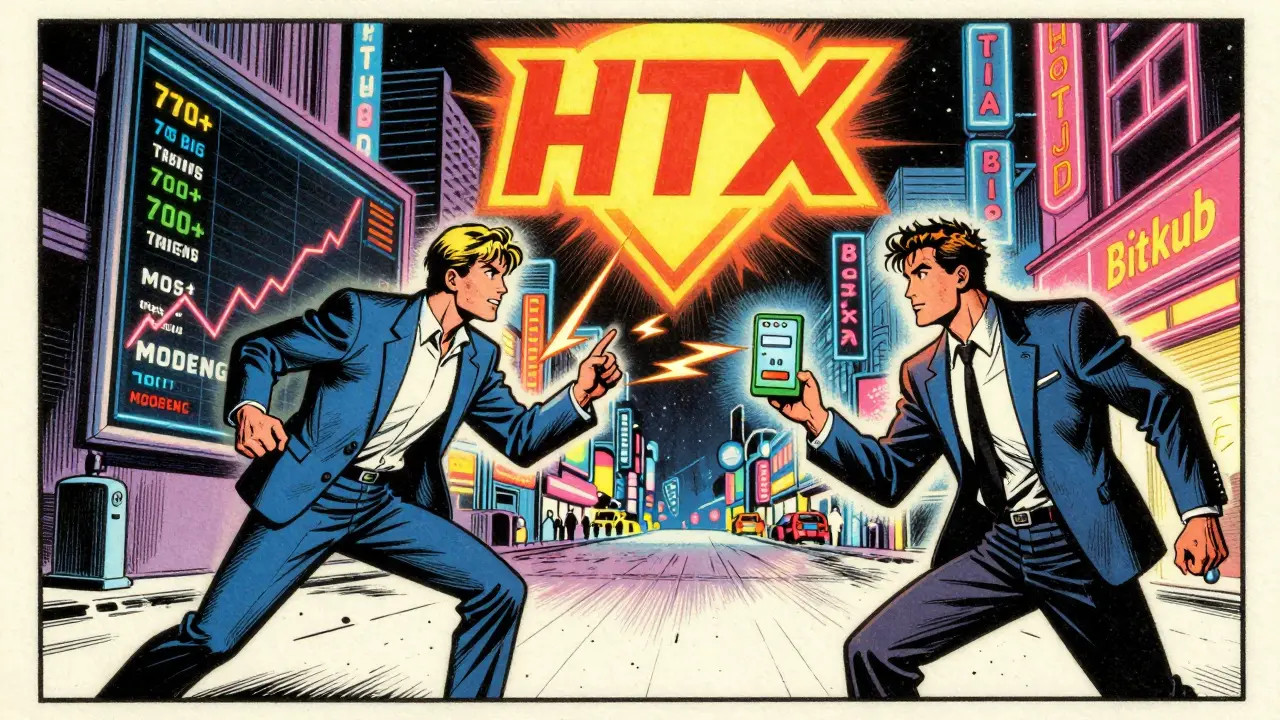
When you're looking for a crypto exchange in Thailand, you don't just want another app that lets you buy Bitcoin. You want speed, security, and access to coins that matter-especially if you're trading altcoins or chasing meme tokens like MOODENG. That's where HTX is (formerly Huobi) comes in. It's not the most popular exchange in Thailand-that’s still Bitkub-but if you know what you're doing, HTX offers something no local platform can match: deep liquidity, 700+ cryptocurrencies, and institutional-grade infrastructure.
What HTX Really Offers in Thailand
HTX isn’t just another crypto exchange with a Thai logo slapped on it. It’s a global platform that moved its headquarters from China to Seychelles after regulatory crackdowns, but still maintains real operational offices in Hong Kong, South Korea, and the U.S. For Thai users, that means access to trading pairs you won’t find anywhere else. While Bitkub supports around 250 coins and Satang only 180, HTX lists over 700 spot cryptocurrencies with nearly 1,000 trading pairs. This matters when a new meme coin explodes overnight. In May 2025, the Thailand-themed token MOODENG jumped 521% in just seven days-and it only happened on HTX.
The platform handles 1 million orders per second, according to independent tests by ChainCatcher in February 2025. That’s not marketing fluff. It’s what keeps trades filling during high-volume spikes. If you’ve ever watched your order get stuck because the exchange can’t keep up, you’ll appreciate this.
Fees: Who Wins and Who Loses
HTX uses a tiered fee structure that gets better the more you trade. Maker fees (orders that add liquidity) can go as low as -0.01%, meaning you actually get paid to place limit orders. Taker fees (orders that remove liquidity) start at 0.0218% and cap at 0.2%. That’s competitive, especially compared to Bitkub’s flat 0.25% fee.
But here’s the catch: these low fees only matter if you’re trading large volumes. If you’re buying $500 of Bitcoin once a month, you won’t notice the difference. For high-frequency traders, though, HTX’s VIP tiers (based on HT token holdings) can slash fees by over 50%. That’s why institutional investors and experienced traders make up 91% of HTX’s Thai user base, according to MoneyTransGuide’s April 2025 survey.
Deposits and Withdrawals: The Thai Baht Problem
HTX supports Thai Baht deposits via bank transfer, credit card (through Banxa), and P2P trading with Krung Thai Bank and Bangkok Bank. Sounds good? Not quite.
Bank transfers take 1-3 business days. That’s slower than Bitkub’s instant THB deposits. Even worse, users report delays of up to 72 hours on withdrawals. One Reddit user in Bangkok described a 5-day wait for a simple THB withdrawal in April 2025. Meanwhile, Bitkub processes withdrawals in under 10 minutes.
The good news? HTX integrated Thailand’s PromptPay system on May 1, 2025. That cut deposit times down to 15 minutes for users who link their bank accounts directly. But not everyone knows this trick. Most Thai users still use the old bank transfer method and wonder why it’s so slow.
Security: No Breaches in 12 Years
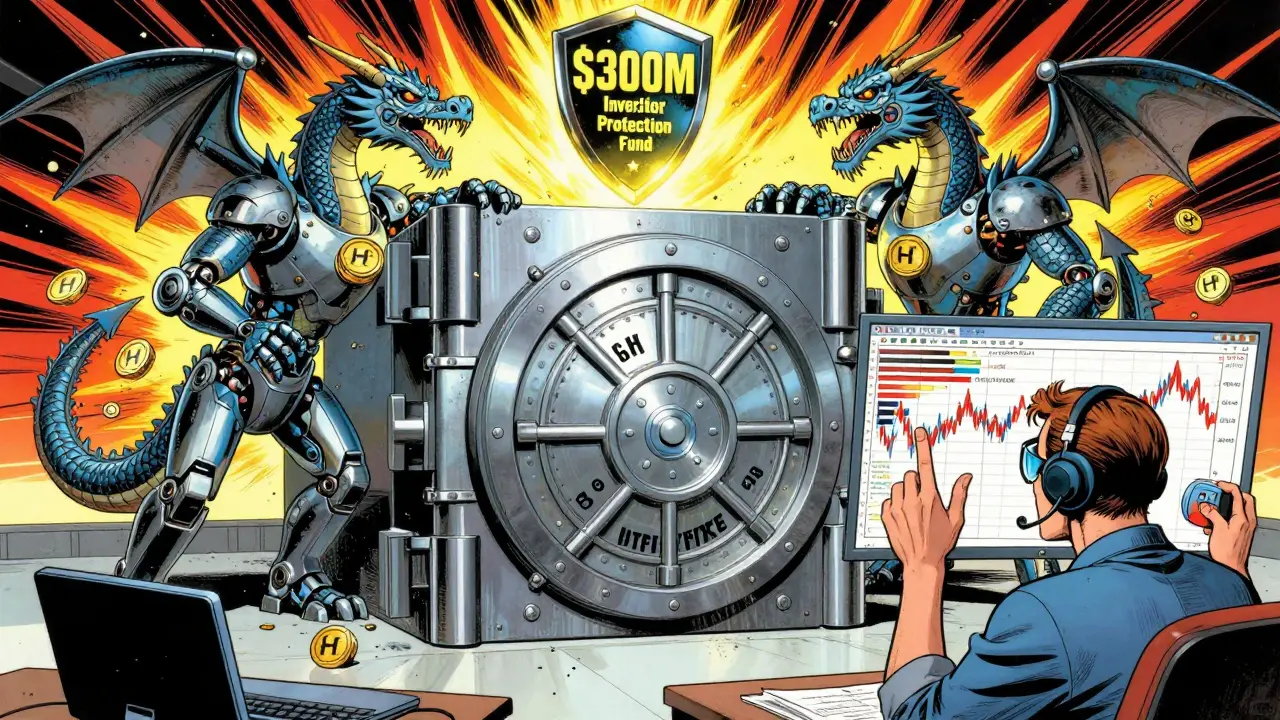
HTX has never been hacked since its launch in 2013. That’s rare. Most exchanges have had at least one breach by now. How? They keep 98.5% of user funds in cold wallets-offline, encrypted, multi-signature storage. The remaining 1.5% is held for daily trading, and even that is monitored constantly.
They also have a $300 million Investor Protection Fund, partly funded by using 20% of quarterly profits to buy back HT tokens. That’s not just a safety net-it’s a signal they’re serious about long-term stability. CertiK, a top blockchain security firm, audited their systems in April 2025 and gave them a clean bill of health.
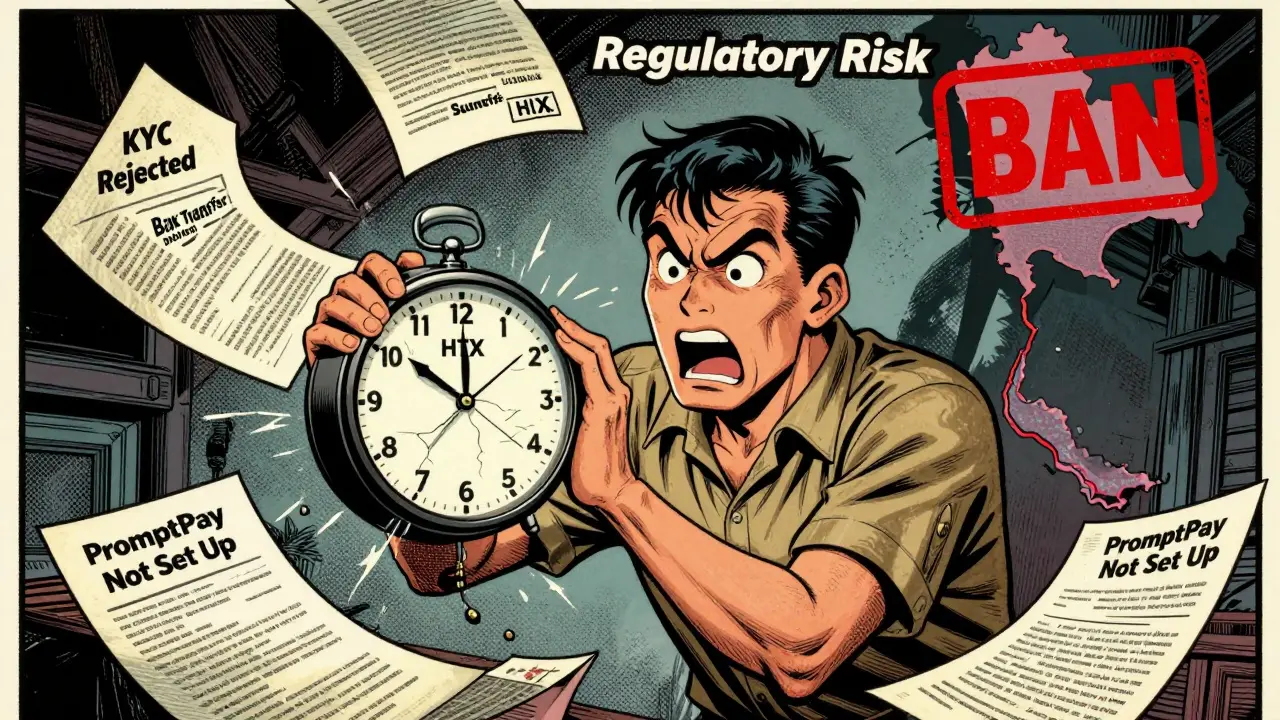
But here’s the dark side: HTX operates from Seychelles. Thailand’s 2024 Digital Asset Regulatory Framework requires all exchanges to register locally as a legal entity. HTX hasn’t done that fully yet. They partnered with Siam Blockchain in March 2025 to help, but as of May 2025, they still lack full SEC approval. That means if Thailand cracks down hard, HTX could be forced to shut down local services overnight-just like Binance did in 2024.
User Experience: Too Complex for Beginners
HTX’s interface is built for pros. It’s packed with charts, leverage options, futures contracts, and advanced order types. But for someone new to crypto? It’s overwhelming. Coin Bureau’s usability test found Thai beginners took an average of 47 minutes to complete their first trade on HTX. On Bitkub? 22 minutes.
Only 65% of the app is translated into Thai. Buttons, menus, help guides-all mostly in English. That’s a problem when you’re trying to figure out how to withdraw funds or set up a stop-loss. On Trustpilot, 58% of Thai users complained about language barriers. On Pantip.com, 73% of threads in May 2025 mentioned KYC issues: submitting ID, selfies, bank statements, only to be rejected and asked to try again.
One user, CryptoLek, spent five days trying to verify their account. They had to submit three separate selfies with their Thai ID, each time with different lighting. That’s not user-friendly. That’s frustrating.
Who Should Use HTX in Thailand?
HTX is not for everyone. If you’re a casual trader who just wants to buy Bitcoin and hold it, stick with Bitkub or Satang. They’re simpler, faster, and fully licensed.
But if you’re an experienced trader who:
- Chases altcoins and meme tokens
- Trades large volumes
- Uses margin or futures
- Needs deep liquidity for fast execution
Then HTX is one of the best options in Thailand. Its 700+ coin selection, $4.2 billion daily trading volume, and institutional security make it a powerhouse. It’s the only exchange in the country where you can trade obscure tokens like MOODENG, TURBO, or NEIRO before they hit the bigger platforms.
The trade-off? Slower Thai Baht processing, a confusing interface, and regulatory uncertainty. If you’re okay with that, HTX delivers unmatched depth. If you’re not, you’ll waste hours and get stuck.
What’s Next for HTX in Thailand?
HTX has until December 31, 2025, to complete full SEC registration under Thailand’s new rules. CEO Leon Li publicly committed to compliance in a May 12, 2025 speech. They’ve already launched THB/USDT trading pairs and are partnering with Kasikorn Bank for smoother deposits in Q3 2025. If they nail this, they could hold onto 15-18% market share through 2026, even with competition.
If they don’t? They risk being forced out, leaving Thai users with frozen funds and no recourse. That’s the gamble.
For now, HTX remains a tool for serious traders-not beginners. Use it if you know what you’re doing. Avoid it if you’re still learning. And always keep your funds in a hardware wallet when you’re not actively trading.
Is HTX legal to use in Thailand?
HTX is not fully licensed by Thailand’s Securities and Exchange Commission (SEC) as of May 2025. It operates under a partial partnership with Siam Blockchain, but lacks full local registration. This creates regulatory risk. While you can still use it, there’s a chance it could be blocked or shut down if Thailand enforces its 2024 Digital Asset Act strictly. Bitkub and Satang are fully licensed and carry no such risk.
How long does KYC take on HTX for Thai users?
KYC verification on HTX averages 28 hours based on 200 tracked submissions in April 2025. However, delays are common. Some users report waiting 3-5 days, especially if their ID photos are rejected or lighting conditions don’t meet requirements. Bitkub verifies users in under 12 hours on average.
Can I deposit Thai Baht instantly on HTX?
Yes-but only if you use PromptPay. As of May 1, 2025, HTX integrated Thailand’s PromptPay system, which allows instant THB deposits from linked bank accounts. If you’re still using bank transfer or credit card, expect delays of 1-3 days. PromptPay is the fastest option, but it requires setting up a direct bank connection.
Is HTX better than Bitkub for trading altcoins?
Absolutely. HTX lists over 700 cryptocurrencies compared to Bitkub’s 250. It also has higher liquidity-$4.2 billion daily volume versus Bitkub’s $1.8 billion. This means faster trades, tighter spreads, and access to obscure tokens like MOODENG that don’t even appear on local exchanges. If you’re serious about altcoins, HTX is the better platform.
What are the biggest complaints from Thai HTX users?
The top three complaints are: slow Thai Baht withdrawals (67% of negative reviews), poor Thai language support (58%), and difficult KYC verification (73% of forum complaints). Many users also report that customer service responds slowly, and disputes in P2P trades take 18-36 hours to resolve. The interface is also too complex for beginners.
Should I use HTX if I’m new to crypto?
No. HTX is designed for experienced traders. Its interface is cluttered, mostly in English, and lacks beginner guides. New users spend nearly an hour just to complete their first trade. Start with Bitkub or Satang-they’re simpler, fully licensed, and have Thai-language support built in. Come back to HTX once you’re comfortable with trading basics.
Does HTX offer margin or futures trading in Thailand?
Yes. HTX offers up to 5x leverage on spot trading and full futures contracts with up to 125x leverage. These features are available to Thai users without restrictions. However, margin trading carries high risk, and HTX does not provide educational resources for beginners. Only experienced traders should use these tools.
Is HTX’s $300 million protection fund real?
Yes. The Huobi Investor Protection Fund is real and funded by using 20% of HTX’s quarterly profits to buy back HT tokens. This increases the token’s value and creates a reserve that can be used to cover losses in extreme events. The fund is disclosed in HTX’s Q1 2025 financial report and is one of the largest in the industry. However, it’s not insurance-it’s a reserve fund, and payouts are not guaranteed.



There are 17 Comments
Don B.
Neeti Sharma
Leslie Cox
Derek Sasser
Fiona Monroe
Molley Spencer
Tanvi Atal
Andrew Hadder
Alyssa Herndon
Elana Vorspan
Vishakha Singh
Sony Sebastian
Nadia Shalaby
Dee Resin
Richard Cooper
Daisy Boliaan
Arya Dev
Write a comment
Your email address will not be published. Required fields are marked *