
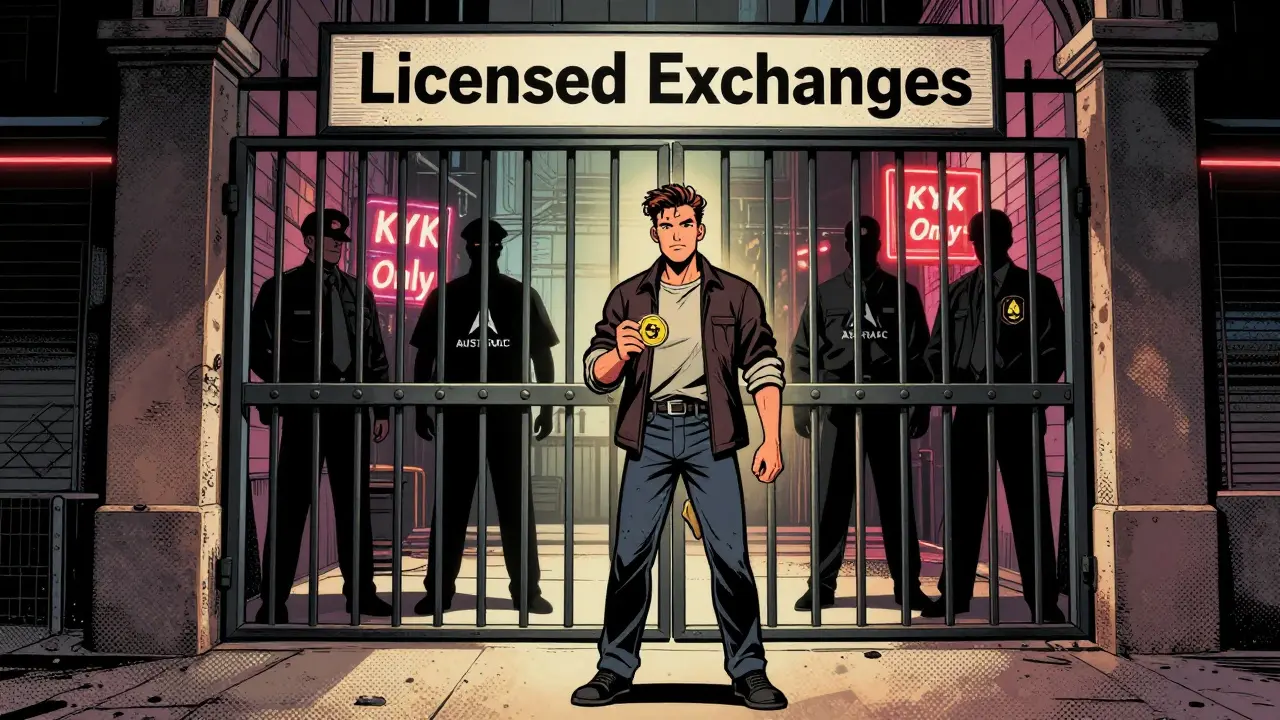
If you own Monero, Zcash, or Dash in Australia, you can still hold them. But if you try to trade them on any major local exchange like Independent Digital Assets Exchange or CoinSpot, you’ll hit a wall. Since early 2025, Australian crypto platforms have quietly but firmly removed all privacy coins from their trading pairs. It’s not a law that says you can’t own them - it’s a rule that says exchanges can’t list them. And that makes all the difference.
Why privacy coins got banned
Privacy coins are designed to hide who sent money, who received it, and how much was transferred. Monero uses ring signatures and stealth addresses. Zcash uses zero-knowledge proofs. These aren’t just fancy tech - they’re built to make transactions untraceable. That’s great if you want financial privacy. It’s a nightmare for regulators trying to stop money laundering and terrorist financing. Australia’s financial watchdogs, ASIC and AUSTRAC, don’t ban ownership. They ban the platforms that make trading easy. Why? Because exchanges are required to know their customers - that’s KYC (Know Your Customer) and AML (Anti-Money Laundering) rules. If you can’t see who’s sending funds or where they’re going, you can’t comply. And non-compliance means losing your license, facing fines, or even criminal charges. In 2025, 73 global exchanges delisted privacy coins. Australia wasn’t the first, but it was one of the most consistent. Japan banned them outright in 2018. South Korea’s top five exchanges followed in early 2025. Binance pulled them from U.S. and European platforms in February 2025. Kraken did the same in Canada. Poloniex removed Monero globally after pressure from the U.S. Treasury. Australia’s move wasn’t extreme - it was expected.Who’s enforcing the ban?
It’s not a single decree. It’s a slow, steady pressure. AUSTRAC, which oversees digital currency exchanges under the Anti-Money Laundering and Counter-Terrorism Financing Act, has been cracking down on non-compliant platforms since 2022. They’ve canceled registrations, suspended operations, and refused new applications from exchanges that couldn’t prove they could track transactions. ASIC, the corporate regulator, has been equally aggressive. They’ve taken legal action against Qoin, Block Earner, and Finder Wallet for offering unlicensed financial products. In 2022, they issued stop orders against Holon Investments for selling crypto funds to retail investors without proper disclosures. The message is clear: if you’re handling crypto as a service, you’re subject to the same rules as banks. The new rules coming March 31, 2026, will expand AUSTRAC’s reach to cover every digital asset service provider - including wallets, staking platforms, and peer-to-peer facilitators. That means even if you try to build a workaround, the regulatory net will catch you.What can Australians still do?
You’re not illegal if you own privacy coins. But you’re locked out of the mainstream system. The only way to buy or sell them now is through peer-to-peer (P2P) platforms like LocalMonero or anonymous OTC desks. These aren’t regulated. There’s no buyer protection. No chargebacks. No dispute resolution. If someone scams you, you’re on your own. Users report price swings of up to 30% between P2P listings and exchange rates. One Reddit user in Melbourne said they paid $1,200 for 0.5 Monero on LocalMonero - a 22% premium over the global market price. Another said they waited six days for a seller to confirm a transfer, only to get scammed. The risk is real. Some Australians turn to offshore exchanges like KuCoin or Binance (outside regulated regions). But those platforms don’t offer AUD deposits, don’t follow Australian consumer laws, and can freeze accounts without warning. There’s no legal recourse if something goes wrong.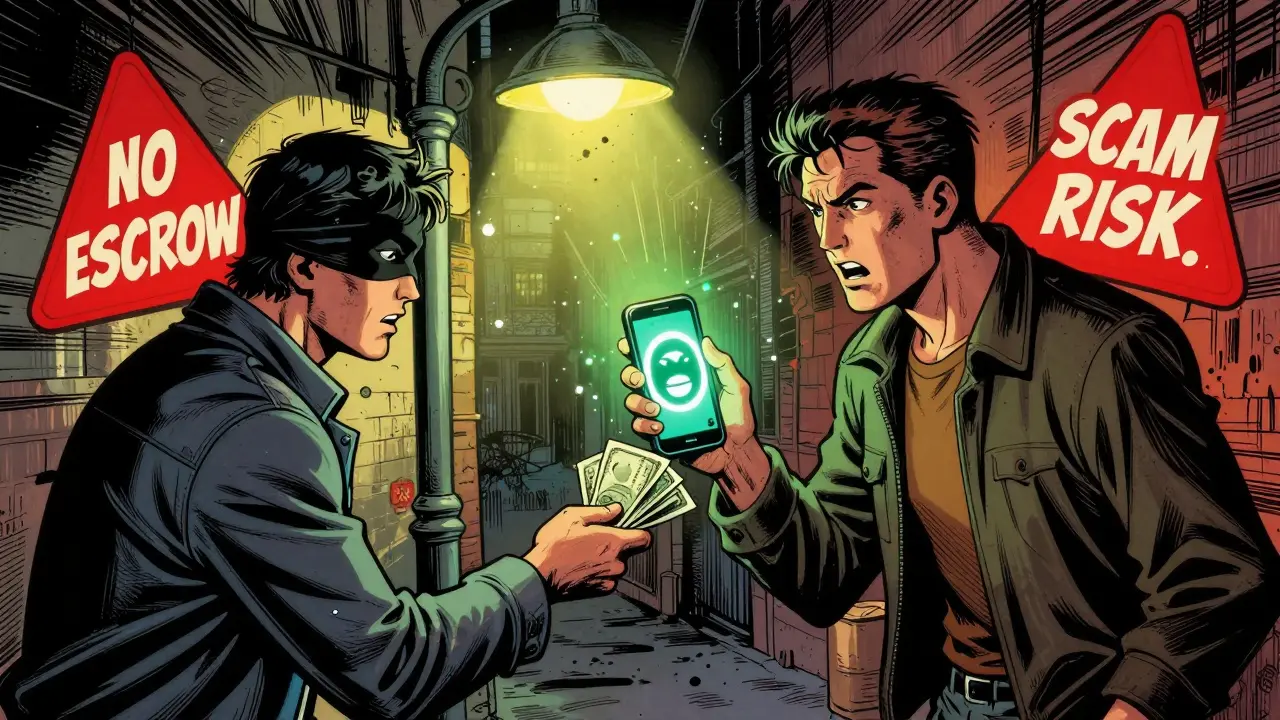
Why do institutions support the ban?
It’s not just regulators pushing this. The biggest institutional investors in Australia - hedge funds, family offices, superannuation funds - are all in favor. Why? Because they want to work with banks. Banks still treat crypto as high-risk. If an exchange lists privacy coins, banks may cut off its correspondent banking relationships. That means no AUD deposits, no withdrawals, no access to traditional finance. For institutions, that’s a dealbreaker. IDAX, one of Australia’s largest crypto platforms, found that 78% of its institutional clients supported the removal of privacy coins. One fund manager told me: “We’re not against privacy. We’re against uncertainty. If we can’t audit the flow of funds, we can’t justify it to our investors.”How does this compare to other countries?
Australia isn’t the strictest. Japan banned privacy coins completely. Dubai has a total ban. The EU will ban them outright in July 2027. But Australia is also not the most lenient. Switzerland and Liechtenstein still allow privacy coins - but only if exchanges implement strict AML checks and report suspicious activity. Even then, they’re rare. Most major global exchanges - Bittrex, Huobi, Kraken - have removed privacy coins everywhere, not just in Australia. That’s because compliance is cheaper than legal risk. Why run separate platforms for different countries? Just remove them globally. Australia’s approach is middle-ground: no law says “don’t trade,” but the rules make it impossible to do so legally on licensed platforms. It’s a de facto ban - enforced by market pressure, not legislation.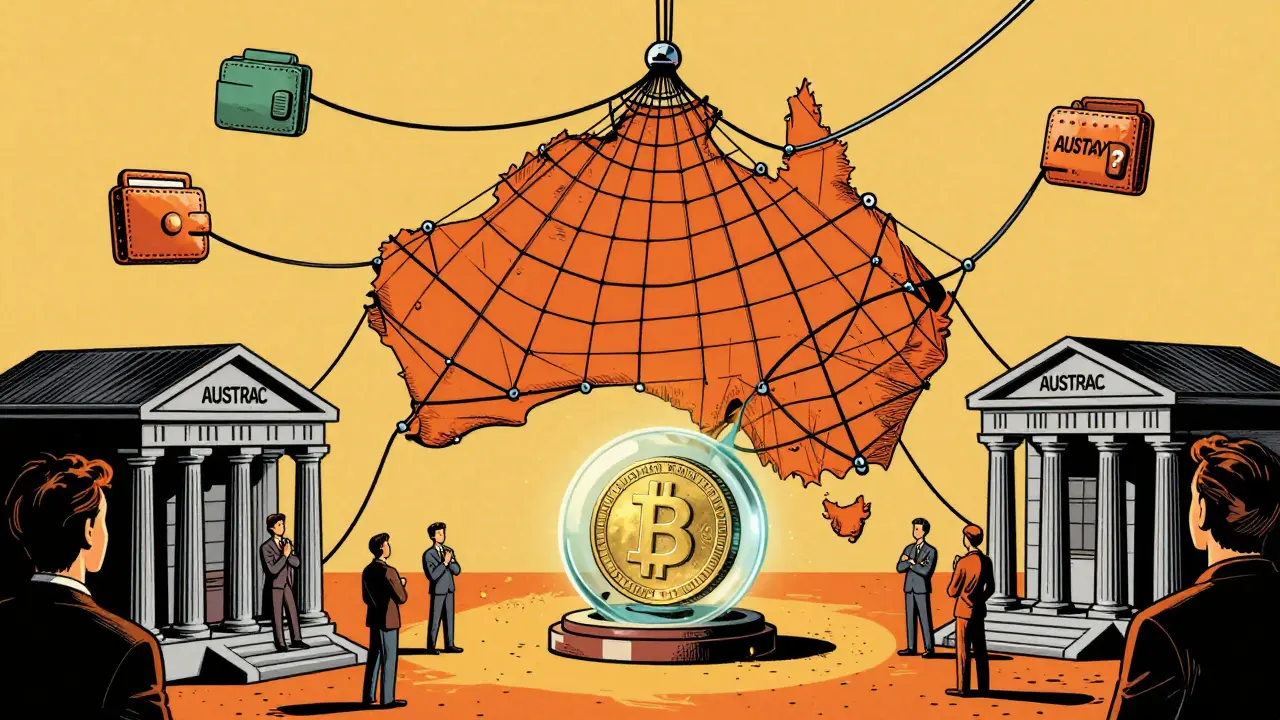

There are 25 Comments
Denise Paiva
ASIC doesn't protect consumers. They protect banks from disruption. And that's not regulation. That's corporate capture dressed in a suit.
Charlotte Parker
Calen Adams
Meenakshi Singh
Kelley Ramsey
Michael Richardson
Sabbra Ziro
Krista Hoefle
Jessie X
Kip Metcalf
Natalie Kershaw
Mujibur Rahman
Mollie Williams
Tre Smith
Jordan Leon
Brittany Slick
greg greg
LeeAnn Herker
Staci Armezzani
sathish kumar
jim carry
Don Grissett
Katrina Recto
kris serafin
Gideon Kavali
Write a comment
Your email address will not be published. Required fields are marked *