Crypto Regulations 2025: What’s Enforced, Who’s Watching, and How It Affects You
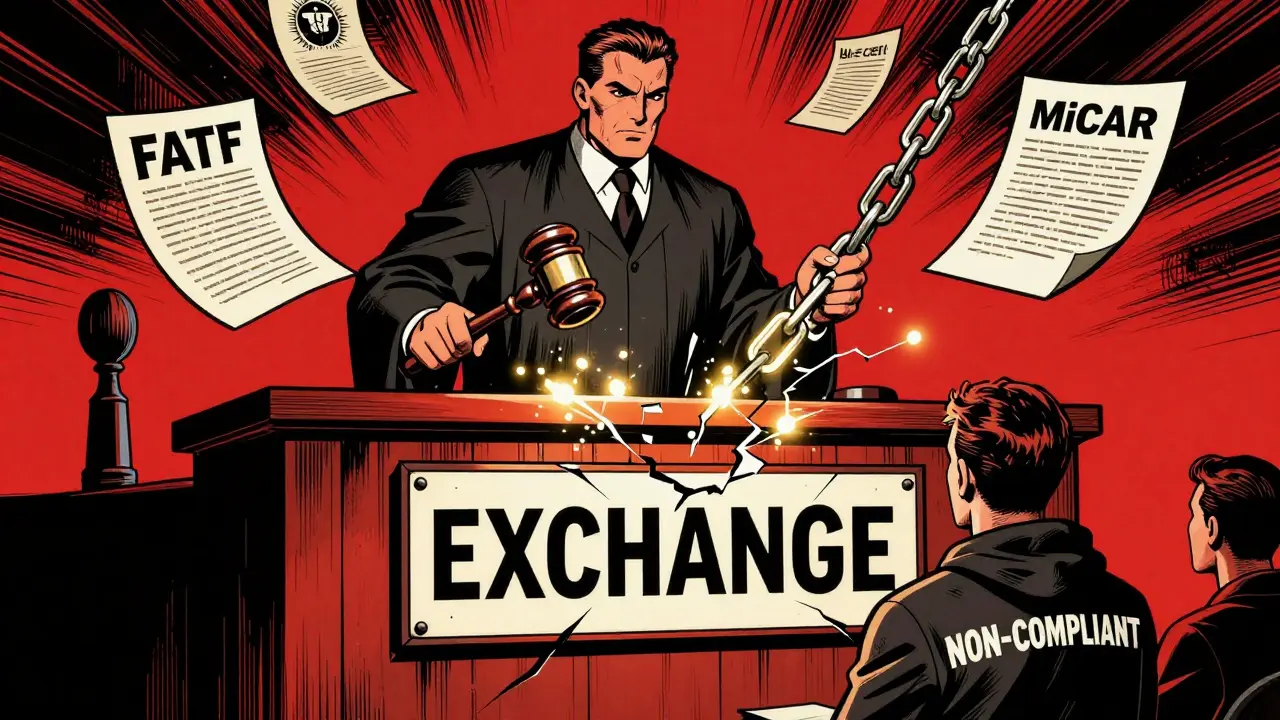
When it comes to crypto regulations 2025, the legal rules governing digital assets in the current year, shaped by new laws, enforcement actions, and global coordination. Also known as digital asset regulation, it’s no longer about if crypto will be regulated—it’s about how strictly and how fast. The era of vague warnings and regulatory gray zones is over. In 2025, the U.S. has passed the GENIUS Act, a federal law that defines stablecoins as securities or payment instruments, requiring issuers to be licensed and audited and the CLARITY Act, which classifies major cryptocurrencies as digital commodities under the CFTC, forcing exchanges to comply with clear reporting and custody rules. These aren’t suggestions. They’re enforceable laws with real penalties.
Across the Atlantic, the MiCA, the European Union’s comprehensive framework for crypto assets, covering everything from stablecoins to tokenized securities is fully live. Exchanges operating in the EU must now be registered, audited, and transparent about their reserves. Meanwhile, central banks aren’t sitting still. The CBDC, a digital version of national currency issued and controlled by a country’s central bank, like the digital euro or e-CNY is no longer theoretical. Nine countries have launched them, and over 130 are testing them. These aren’t alternatives to Bitcoin—they’re replacements for cash, and they come with built-in tracking.
It’s not just about big governments. Enforcement is real. In South Korea, Upbit faced a $34 billion potential fine for failing KYC checks—even though the fine was never paid, the suspension forced global changes in how exchanges verify users. In Tunisia, crypto trading is banned outright, but the central bank runs its own blockchain sandbox, showing how governments are split: they hate decentralized money but love control. Meanwhile, projects like PAXW and BODA vanished overnight because regulators cracked down on fake airdrops and zero-liquidity tokens. The message is clear: if there’s no real product, no team, and no compliance, you’re not investing—you’re gambling with your money.
What does this mean for you? If you’re trading on Alterdice, Blockchain.com, or Coinzo, you’re now under stricter rules. Wallets need to support compliance tools. Airdrops like Arch Network’s Archstronaut Program require identity checks. Even mining pools now track KYC for institutional clients. You can’t ignore this anymore. The rules aren’t going away—they’re getting sharper. And the ones who win in 2025 aren’t the ones who chased the highest meme coin. They’re the ones who understood the game changed.
Below, you’ll find real breakdowns of the laws that matter, the exchanges that comply, the scams that got shut down, and the tools that help you stay legal. No fluff. No hype. Just what you need to know to move safely in this new world.