GENIUS Act: What It Is, Why It Matters, and How It Shapes Crypto Regulation
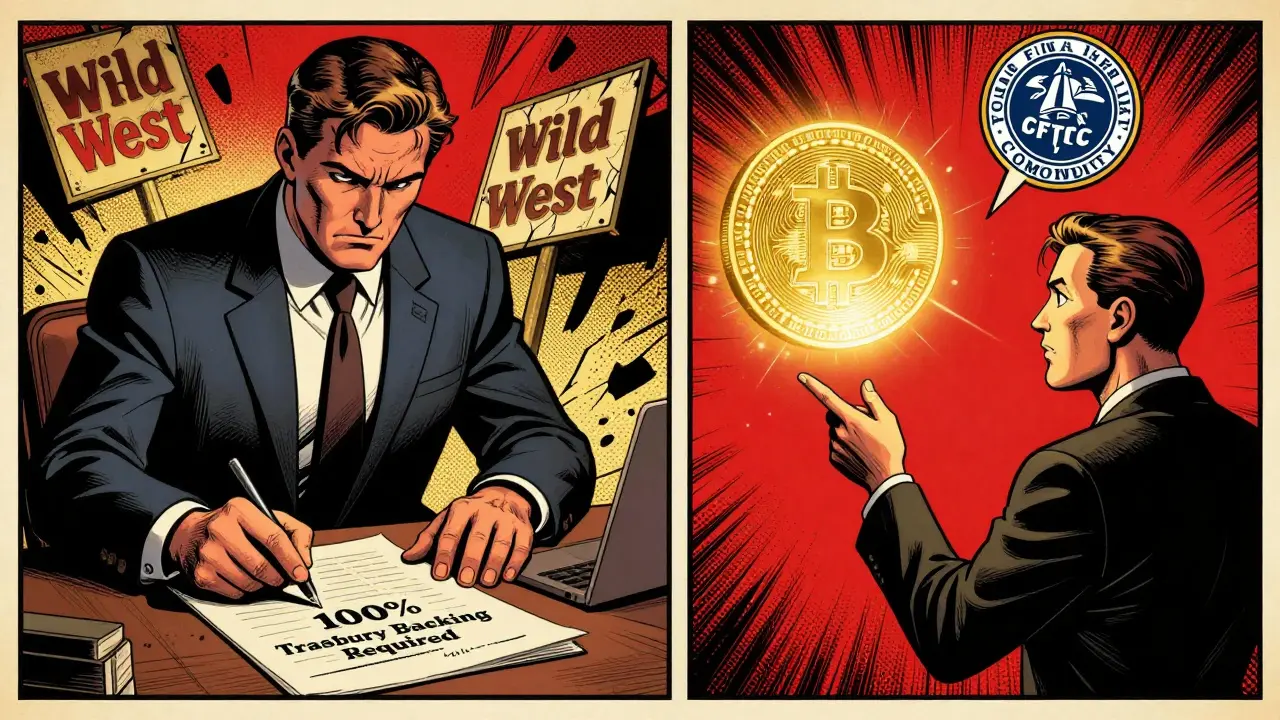
When people talk about the GENIUS Act, a proposed U.S. legislative framework aimed at clarifying cryptocurrency regulation and fostering innovation in digital assets. Also known as the Generating Energy and Innovation for a Unified Society Act, it’s not just another bill—it’s a potential turning point for how crypto fits into the financial system. Unlike vague regulatory statements from agencies, the GENIUS Act tries to draw clear lines: what counts as a security, who needs to register, and how stablecoins should be treated. It’s the closest thing we’ve seen to a real rulebook for crypto in the U.S.
This law doesn’t exist yet, but its ideas are already showing up in real-world rules. Take KYC crypto, the requirement for exchanges to verify user identities to prevent money laundering and fraud. The GENIUS Act pushes for standardized KYC rules across states, which would end the patchwork system we have now. That’s why you’re seeing more exchanges like Upbit and Narkasa under pressure—they’re not just worried about fines, they’re trying to stay ahead of what’s coming. And then there’s CBDC, digital money issued by central banks, like the ones being tested in over 130 countries. The GENIUS Act doesn’t ban CBDCs—it actually prepares the ground for them to coexist with decentralized crypto, which is why Tunisia’s blockchain sandbox and the U.S. stablecoin laws are part of the same conversation.
The bill also touches on blockchain law, the legal framework governing how decentralized networks operate, who is liable, and how smart contracts are enforced. Right now, if a DeFi protocol gets hacked or a token vanishes, there’s no clear answer on who’s responsible. The GENIUS Act tries to fix that by defining roles: developers aren’t automatically guilty, but exchanges and issuers have clear duties. That’s why posts about abandoned airdrops like PAXW or risky tokens like BODAV2 keep popping up—because without clear rules, scams fill the gaps.
What’s in the posts below isn’t random. You’ll find deep dives into how mining pools adjust fees under regulatory pressure, why validator rewards matter when staking becomes mandatory, and how exchanges like Blockchain.com and Alterdice handle KYC delays that could soon be federal law. You’ll see how CBDCs are being tested in places like Tunisia while the U.S. debates whether crypto should be treated like stocks or like cash. And you’ll see why projects with no team, no liquidity, or no real use case—like HIF or AGVE—are getting squeezed as compliance becomes the new baseline.
This isn’t about speculation anymore. It’s about survival. Whether you’re staking Ethereum, trading on a Turkish exchange, or just trying to avoid a fake airdrop, the GENIUS Act—or something like it—is coming. And the better you understand it now, the less likely you are to get caught off guard when it does.