Verifiable Credentials: What They Are and How They Protect Your Digital Identity
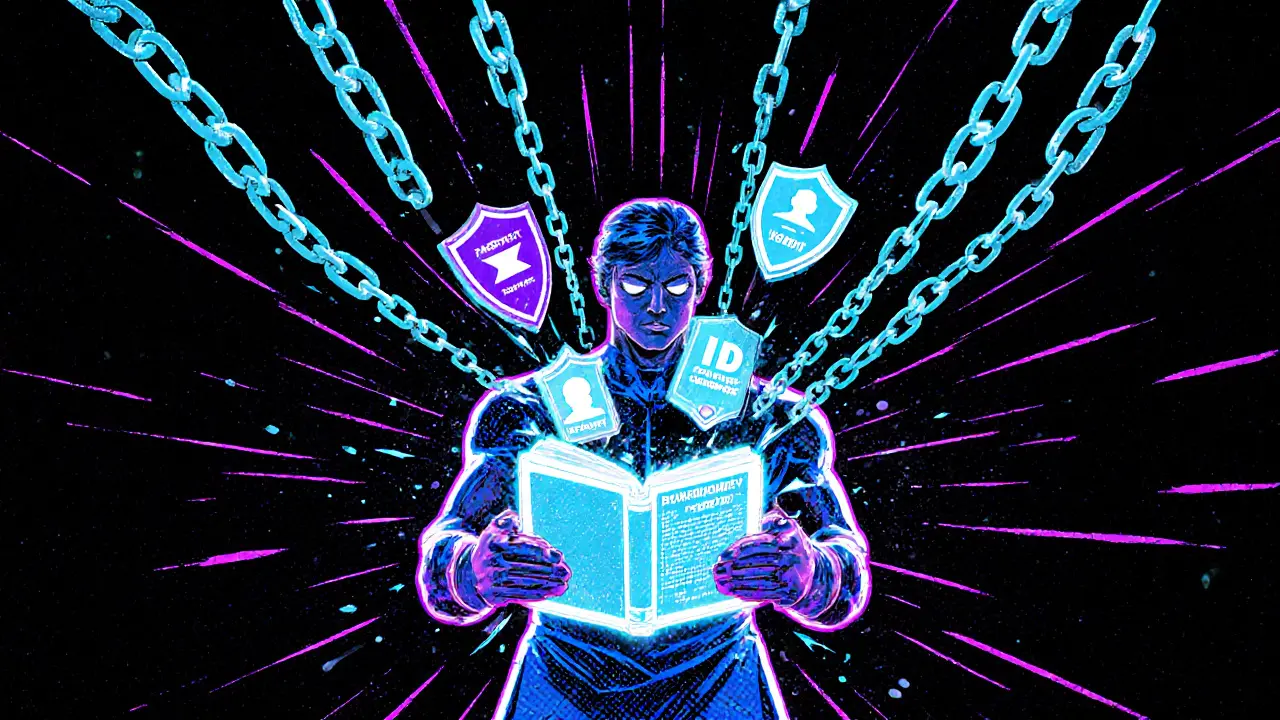
When you need to prove who you are online—whether it’s for a crypto exchange, a job application, or a government service—you usually hand over sensitive data to a third party. That’s where verifiable credentials, digital, tamper-proof proofs of identity issued by trusted entities and controlled by the user. Also known as decentralized identity, it lets you share only what’s necessary without giving away your whole life story. Unlike traditional IDs that get stored on servers vulnerable to hacks, verifiable credentials live in your wallet. You decide when, where, and how much to share. This isn’t theory—it’s already being used by exchanges like Blockchain.com to speed up KYC, and by governments exploring CBDCs to prevent fraud.
Verifiable credentials rely on blockchain tech, but they’re not cryptocurrencies. Think of them like digital diplomas or driver’s licenses that can’t be forged. When Upbit faced a $34 billion penalty for KYC failures, the root problem wasn’t just bad policy—it was outdated identity systems. Verifiable credentials fix that by making identity verification transparent, auditable, and user-owned. They’re also tied to standards like ERC-721, which enables unique digital ownership, and work alongside blockchain node synchronization to ensure every verification is consistent across networks. You don’t need to be a developer to use them. Platforms like EQIFI and WhiteBIT are starting to integrate them so you can prove your age, address, or citizenship without uploading a scan of your passport.
But here’s the catch: if a token like Wrapped USDR doesn’t even exist, how do you trust a credential claiming to represent it? That’s why verifiable credentials demand trusted issuers—banks, governments, or regulated platforms—not random smart contracts. The same risk applies to meme coins like Wiener AI or Hedgehog in the Fog: no real utility, no real identity. Verifiable credentials change that. They turn anonymous crypto users into accountable participants. They’re the missing link between DeFi’s openness and the real-world need for trust. And they’re not just for crypto. From NFTs on Dragon Verse to institutional investors avoiding regulatory traps, secure identity is the foundation. Below, you’ll find real cases where bad identity systems led to scams, fines, and losses—and where better ones are already making things safer.