
Remember the days when buying a cryptocurrency meant trusting a centralized exchange with your life savings? Those days are fading. Enter Pillar (PLR), a project that flips the script by putting control back in your hands. But what exactly is this coin, and why should you care?
If you’ve stumbled upon the ticker PLR on a chart or heard whispers about "digital identity" in Web3, you’re looking at more than just another speculative token. Pillar is fundamentally a wallet ecosystem. The PLR token is the key that unlocks governance, utility, and access within that system. It’s not a standalone blockchain like Bitcoin or Ethereum; it’s an engine part inside a larger machine designed to manage your digital assets and identity across multiple networks.
The Core Concept: A Wallet That Belongs to You
To understand PLR, you first have to understand the product it powers: the Pillar Wallet. Most people start their crypto journey with simple wallets-apps where you hold keys and send transactions. But as crypto grows, so do the headaches. Managing passwords, bridging assets between chains, and verifying who you are online becomes a nightmare.
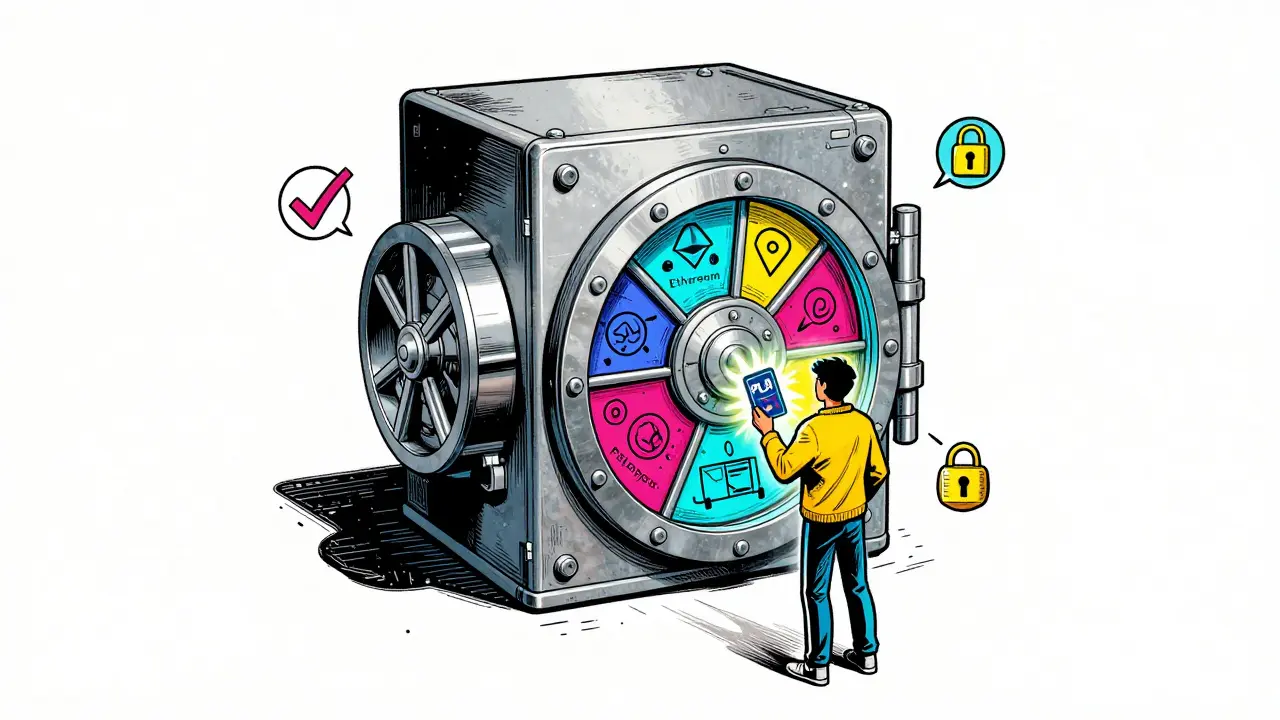
Pillar aims to solve this by acting as a "smart contract wallet." Think of it as a secure vault that lives on the blockchain, rather than just an app on your phone. This architecture allows for features standard wallets can’t touch:
- Multichain Support: You don’t need different wallets for Ethereum, Polygon, or other EVM-compatible chains. Pillar aggregates them into one view.
- Digital Identity: Instead of logging in with email/passwords everywhere, Pillar helps create a persistent, user-owned identity layer for Web3.
- Non-Custodial Security: No company holds your funds. If the Pillar team disappears tomorrow, your assets remain safe because they are secured by smart contracts, not a corporate database.
The PLR token is the fuel for this ecosystem. It’s governed by the community, meaning holders vote on future developments. This aligns the interests of users and developers-a core tenet of decentralized autonomous organizations (DAOs).
Tokenomics and Market Reality
Let’s get straight to the numbers. Understanding the market structure of PLR is crucial before you even think about clicking "buy." As of mid-2026, Pillar operates as a micro-cap asset. This means high potential volatility but also significant liquidity risks.
| Metric | Value / Detail |
|---|---|
| Ticker Symbol | PLR |
| Circulating Supply | ~260 Million |
| Price Range (Recent) | $0.0005 - $0.0031 USD |
| Primary Trading Venues | Uniswap V2, LBank, Gate.io, MEXC |
| Network Type | ERC-20 (Ethereum), Polygon Ecosystem |
Notice the price range. Data from aggregators like CoinGecko and Kraken shows wild swings. In some snapshots, the price hovers around $0.00056, while others show spikes to $0.0031. Why such disparity? Liquidity. With daily trading volumes sometimes dipping below $30 on major DEX pairs, large orders can move the price drastically. This isn’t a flaw; it’s a characteristic of niche, community-driven projects.
Historically, Pillar traces its roots back to a 2017 ICO era initiative. While many projects from that time faded, Pillar pivoted. It shed its early fundraising narrative to focus on being a functional Web3 gateway. Today, it sits alongside competitors like Trust Wallet (TWT) and Safe (formerly Gnosis Safe), though it occupies a smaller market share. Its classification under both Ethereum and Polygon ecosystems highlights its strategy: leverage Ethereum’s security while utilizing Polygon’s speed and low fees for user interactions.
How Does PLR Actually Work?
You might wonder, "If I buy PLR, what do I get?" Unlike Bitcoin, which you hold for store-of-value purposes, PLR is a utility and governance token. Here is how it functions in practice:
- Governance Voting: Holders propose and vote on changes to the Pillar Wallet protocol. Want a new chain supported? Vote for it. This makes the wallet truly "community-run."
- Ecosystem Access: Certain premium features or lower fees within the Pillar DeFi integrations may require staking or holding PLR.
- Incentivization: Early adopters and active users are often rewarded with PLR, encouraging network growth without relying on traditional marketing budgets.
This model creates a flywheel effect. More users mean more data and activity in the wallet, which increases the value of the governance token, which in turn attracts more developers to build on top of Pillar’s identity layer.

Buying Pillar (PLR): A Step-by-Step Guide
Acquiring PLR is straightforward if you know where to look. Because it’s an ERC-20 token, you primarily interact with it on the Ethereum network, though bridges allow movement to Polygon. Here are the two most common paths:
Method 1: Using MetaMask (Fiat On-Ramp)
This is the easiest route for beginners who want to use credit cards or PayPal.
- Open your MetaMask wallet and ensure you have ETH for gas fees.
- Click the "Buy" button in the top left corner.
- Select your region and currency (e.g., USD, EUR).
- Search for "Pillar" or "PLR" in the asset list. Ensure you select the version on the Ethereum network.
- Enter the amount you wish to spend (e.g., $50).
- Choose your payment method (Credit Card, Apple Pay, etc.).
- Review the quote from the provider (like MoonPay or Transak).
- Complete the transaction on the provider’s portal.
- Confirm the order in MetaMask. Your PLR will arrive shortly.
Method 2: Decentralized Exchange (DEX) Swap
For those already holding crypto, swapping on Uniswap is often cheaper regarding fees, provided you have ETH.
- Navigate to Uniswap.org and connect your wallet.
- In the "Swap" interface, select ETH (or DAI) as the input token.
- Paste the PLR contract address for the output token to avoid scams. Note: Always verify the official contract address from Pillar’s verified social channels.
- Set your slippage tolerance. Due to low liquidity, you may need to set this higher (e.g., 1-3%), but be aware of potential price impact.
- Approve the transaction and confirm the swap.
Pro Tip: Centralized exchanges like LBank, Gate.io, and MEXC also list PLR. These platforms offer higher liquidity than Uniswap V2 for spot trading. If you plan to trade larger amounts, check these CEXs first to minimize slippage.
Risks and Considerations
No investment is without risk, and PLR demands caution. First, consider the liquidity trap. With thin order books, selling a large position could crash the price temporarily. Second, remember the volatility. A -35% drop over a year is not uncommon for micro-caps. Finally, while Pillar is non-custodial, smart contracts always carry code risk. Always check for recent audits if the protocol introduces new features.
However, for believers in the "self-sovereign identity" narrative, Pillar offers a unique play. It’s not trying to be the next Bitcoin. It’s trying to be the infrastructure layer for your digital self in a fragmented web. If that vision resonates, PLR is the ticket to participate.
Is Pillar (PLR) a good investment?
Whether PLR is a "good" investment depends entirely on your risk tolerance. As a micro-cap token with low liquidity, it carries high volatility. However, it backs a functional product (Pillar Wallet) with real utility in Web3 identity and multichain management. It is suitable for investors who believe in the long-term adoption of smart contract wallets and DAO governance, rather than short-term traders seeking stable returns.
What blockchain is Pillar (PLR) on?
PLR is primarily an ERC-20 token on the Ethereum blockchain. However, the Pillar Wallet ecosystem is multichain, meaning it supports and interacts with other networks like Polygon to reduce gas fees and improve transaction speeds for users.
Can I buy PLR with a credit card?
Yes. You can buy PLR using a credit card via integrated fiat on-ramps in wallets like MetaMask or through centralized exchanges like LBank and Gate.io that support direct bank transfers or card payments.
What is the total supply of PLR?
The circulating supply of Pillar (PLR) is approximately 260 million tokens. This fixed supply structure helps prevent inflationary pressure on the token value, assuming demand remains steady or grows.
How does Pillar Wallet differ from MetaMask?
While MetaMask is a popular externally owned account (EOA) wallet, Pillar is a smart contract wallet. This means Pillar offers advanced features like batched transactions, programmable permissions, and built-in digital identity management. Additionally, Pillar has a native governance token (PLR), whereas MetaMask does not have a native token governing its protocol.