You might think that sending Bitcoin from a wallet generated on your laptop keeps you invisible. You pick a random string of characters as your address, send the funds, and assume the blockchain’s pseudonymity protects you. But here is the hard truth: while the ledger hides your name, it does not hide your location. In fact, the very way cryptocurrency networks are built makes them surprisingly easy to track down if you know where to look.
For years, users believed that because no one asked for their ID when creating a wallet, they were anonymous. That assumption is crumbling. Law enforcement agencies, fraud investigators, and even curious researchers have been using IP address tracking and geolocation verification to link those anonymous wallet addresses directly to physical locations-and often, real identities. If you hold digital assets, understanding how this works isn't just technical trivia; it's essential risk management.
The Hidden Link Between Wallets and Wi-Fi
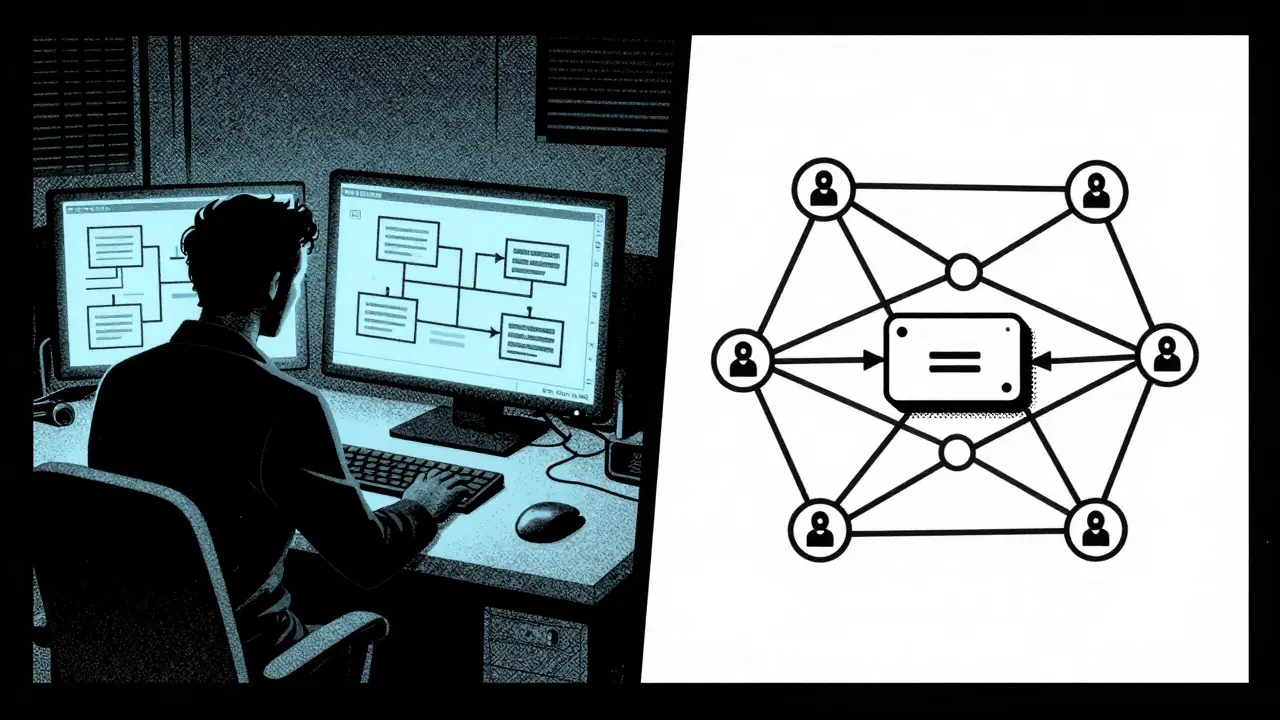
To understand why your location is exposed, we need to look at how cryptocurrencies like Bitcoin is a decentralized digital currency that operates on a peer-to-peer network actually function. Unlike a bank transaction that happens behind closed servers, Bitcoin relies on a distributed network of computers, called nodes, talking to each other.
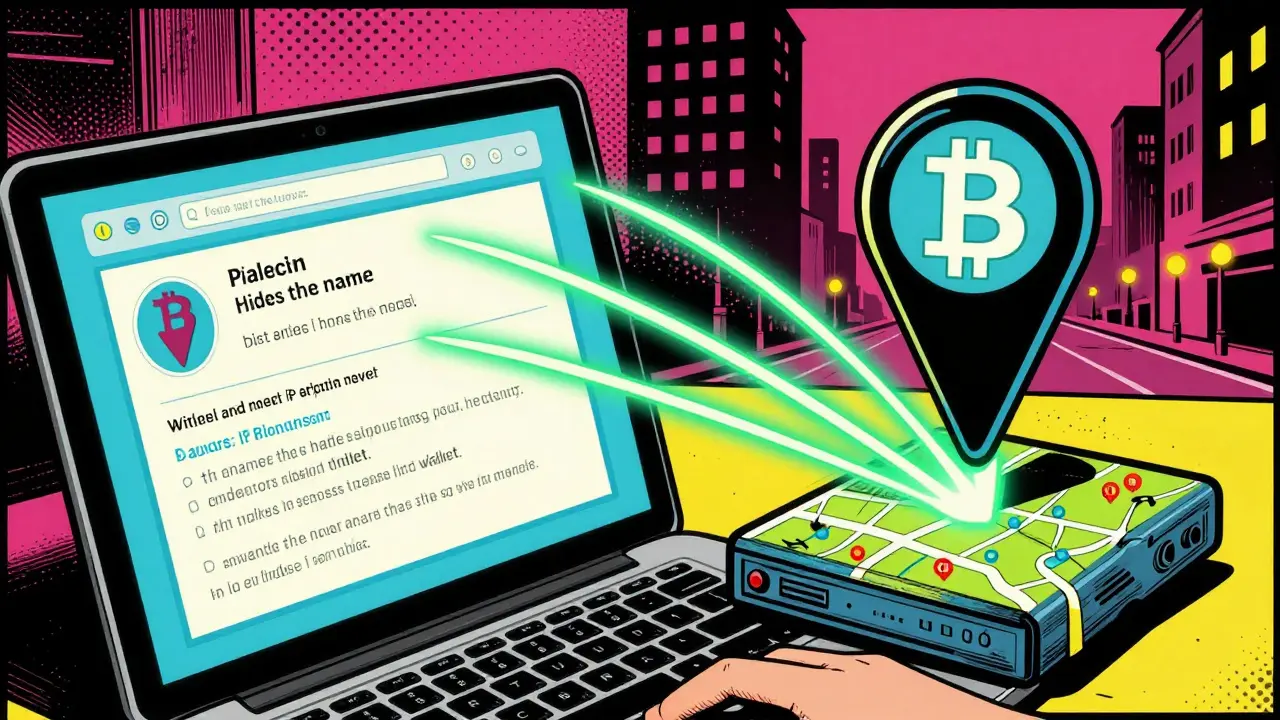
When you broadcast a new transaction-say, sending 0.5 BTC to a friend-your computer doesn't just shout it into the void. It sends that data packet to nearby nodes in the network. Those nodes then pass it along to others until the whole network sees it. This process is called propagation. Here is the catch: every time your computer speaks to another node, it reveals its Internet Protocol (IP) address is a unique identifier assigned to each device connected to a computer network. Think of your IP address as your home address for the internet. It tells the world exactly where your signal is coming from.
If someone else is listening to that conversation, they can see two things simultaneously:
- The specific Bitcoin address initiating the transaction.
- The IP address broadcasting that transaction.
By connecting these two dots, an observer creates a direct map: "This wallet belongs to the person at this IP address." Once you have the IP address, geolocation databases can pinpoint your city, neighborhood, or sometimes even your exact street. This is the core mechanism behind IP-based de-anonymization.
How Investigators Map Your Digital Footprint
This isn't science fiction. Academic research published around 2018 demonstrated that monitoring clients could operate undetected as regular Bitcoin nodes. Researchers deployed modified software on over one hundred computers to record these propagating messages. They didn't need to hack anyone; they simply listened.
Using statistical models, specifically something called a Naive Bayes classifier is a probabilistic machine learning model used for classification tasks, they could assign Bitcoin addresses to the client IPs that most likely controlled them. The math works by analyzing timing and propagation patterns. If Node A receives a transaction milliseconds before Node B, and Node C broadcasts it immediately after, the algorithm calculates the probability that Node C originated it.
Law enforcement agencies have taken this further. Companies like Chainalysis is a leading blockchain analysis firm providing compliance and investigation tools and Elliptic is a global provider of enterprise blockchain analytics now offer commercial tools that combine this network-level data with traditional financial intelligence. They don't just look at the IP; they cross-reference it with Know Your Customer (KYC) data from exchanges. If you withdraw funds from Coinbase (which knows who you are) to a private wallet, and that private wallet broadcasts a transaction from your home IP, the veil is lifted instantly.
Not All Cryptocurrencies Are Equal in Privacy
The level of exposure depends heavily on which cryptocurrency you use. Not all blockchains are built the same way, and their resistance to IP tracking varies wildly.
| Cryptocurrency | Network Structure | IP Exposure Risk | Privacy Mechanism |
|---|---|---|---|
| Bitcoin | Public Peer-to-Peer | High | Pseudonymous (Address only) |
| Ethereum | Public Peer-to-Peer | High | Pseudonymous (Address only) |
| Zcash | Hybrid | Medium/Low* | zk-SNARKs (Shielded addresses) |
| Monero | Private Network | Low | Ring Signatures & Stealth Addresses |
*Note on Zcash: While technically private, studies show less than 15% of transactions are fully shielded due to user error or exchange defaults.
Bitcoin and Ethereum are highly susceptible. Their transparency is a feature, not a bug, but it means every transaction is visible, and the network protocol requires open communication that leaks IP data.
Zcash offers optional privacy through zero-knowledge proofs (zk-SNARKs). However, it has two types of addresses: transparent (t-addresses) and shielded (z-addresses). Many users accidentally use t-addresses or fail to manage shielded funds correctly, revealing their activity. A 2020 study found that improper handling of these addresses significantly reduced actual privacy.
Monero is designed differently. It uses ring signatures to mix your transaction with others, making it hard to tell who sent what. It also employs stealth addresses. Crucially, Monero’s network structure is more resistant to simple IP correlation because it obscures the sender-receiver relationship inherently. However, even Monero isn't immune to sophisticated state-level surveillance if endpoints (like exchanges) are compromised.
Why VPNs Aren't Enough (And What Works Instead)
Most crypto users hear about IP tracking and immediately install a Virtual Private Network (VPN). Is that enough? Often, no.
A standard VPN masks your IP address by routing your traffic through a third-party server. If you send Bitcoin while connected to a VPN, the network sees the VPN server's IP, not yours. That sounds great, right? There are two major problems.
First, many cheap or free VPNs keep logs. If law enforcement serves a subpoena to the VPN provider, they can hand over your connection timestamps and original IP address. Second, VPNs can be detected. Some blockchain nodes are configured to reject connections from known VPN IP ranges because spammers and bots abuse them. If your node gets banned, your transaction propagation slows down, potentially causing failures.
The gold standard for hiding your IP in the crypto space is Tor (The Onion Router) is free software for enabling anonymous communications. Tor routes your traffic through multiple volunteer-run relays, encrypting it at each step. To the outside observer, the traffic looks like noise, and the origin IP is completely hidden.
However, using Tor with Bitcoin requires care. You must configure your Bitcoin client to connect exclusively through Tor. If your client accidentally leaks a direct connection (a "DNS leak"), your true IP is exposed despite the Tor tunnel. Additionally, some full-node operators ban Tor connections, which can limit your ability to sync with the network efficiently. For maximum security, experts recommend running a personal Bitcoin node configured to use Tor for both incoming and outgoing connections.

The Real-World Consequences of Being Tracked
Why does this matter if you're just holding coins? Because context changes everything. If you never interact with the regulated financial system, your IP-linked wallet might remain just a data point in a researcher's database. But the moment you bridge the gap between crypto and fiat currency, you become vulnerable.
Consider tax compliance. Governments are increasingly using blockchain analytics to identify citizens who haven't reported crypto gains. If your unreported wallet broadcasts transactions from your home IP, and that IP matches the address on your utility bills or social media profiles, the link is established. This has already led to successful investigations into tax fraud in multiple jurisdictions.
For businesses, the stakes are higher. Regulatory bodies require strict Anti-Money Laundering (AML) checks. If a business accepts crypto payments without verifying the source, they risk being shut down or fined. Conversely, if they do verify sources using KYC, they create a permanent record linking customer identities to wallet addresses. Any subsequent transaction from those wallets is now tied back to the individual.
Fraudsters also use this data. If you publish your Bitcoin address publicly-on a forum, a donation page, or a smart contract-you invite scrutiny. Attackers can monitor that address, analyze your spending habits, and correlate them with your online presence. This is known as "doxxing" via blockchain analysis. Once your financial behavior is mapped to your identity, you lose the ability to separate your professional, personal, and financial lives.
Practical Steps to Protect Your Location Data
If you want to maintain privacy, you need to adopt a defense-in-depth strategy. Relying on a single tool is rarely sufficient. Here is a checklist for minimizing IP exposure:
- Use Tor for Transactions: Configure your wallet to route all network traffic through the Tor network. Avoid mixing Tor and non-Tor connections.
- Never Reuse Addresses: Generate a new receiving address for every transaction. This prevents observers from aggregating your entire history under one label.
- Avoid Centralized Exchanges for Privacy: Every time you deposit or withdraw from a KYC-compliant exchange, you link your identity to your wallet. Use decentralized exchanges (DEXs) or peer-to-peer platforms when possible, though be aware that DEXs still interact with public chains like Ethereum.
- Run Your Own Node: Connecting to trusted, self-hosted nodes reduces reliance on third-party servers that might log your connections.
- Separate Devices: Consider using a dedicated device or virtual machine for crypto activities. This isolates your crypto IP footprint from your daily browsing habits, which are easier to track and correlate.
- Be Wary of Mixing Services: Coin mixers or tumblers attempt to break the trail by pooling funds. However, many are scams, and using them can flag your account for suspicious activity on exchanges. Furthermore, for large amounts, mixing services often fail to provide true anonymity against sophisticated clustering algorithms.
Remember, privacy is a spectrum. Total anonymity is nearly impossible in a connected world, but raising the cost and complexity for trackers is entirely achievable. The goal is to make the effort required to deanonymize you greater than the value of the information they seek.
Can my ISP see that I'm using Bitcoin?
Yes, your Internet Service Provider (ISP) can see that you are connecting to Bitcoin nodes. While they cannot see the content of your transactions (the amount or recipient), they can see the destination IP addresses of the nodes you communicate with. Using Tor or a reputable VPN encrypts this metadata, preventing your ISP from knowing you are interacting with the Bitcoin network.
Is Monero truly untraceable?
Monero provides strong privacy features like ring signatures and stealth addresses that make transaction tracing extremely difficult compared to Bitcoin. However, "untraceable" is a strong word. If you make mistakes, such as withdrawing from a KYC exchange to a Monero wallet and then back to a centralized service, or if you reuse addresses, your privacy can be compromised. Additionally, government agencies may target Monero users specifically, increasing scrutiny.
Does using a VPN protect me from IP tracking?
A VPN hides your IP address from the Bitcoin network, replacing it with the VPN server's IP. However, it does not protect you from the VPN provider itself. If the provider keeps logs and is compelled to share them, your identity is exposed. Furthermore, some Bitcoin nodes block known VPN IPs, which can disrupt your connection. Tor is generally considered more robust for cryptographic privacy because it distributes trust across many relays rather than relying on a single company.
How do law enforcement agencies link a Bitcoin address to a person?
They typically use a combination of methods. First, they may use IP tracking to link a wallet to a physical location. Second, they analyze blockchain data to find interactions with known entities like exchanges (which have KYC records). Third, they use heuristics to cluster addresses that likely belong to the same person based on change addresses and spending patterns. Finally, they may subpoena email providers or cloud storage services if the wallet files or keys are stored there.
What is the risk of publishing my Bitcoin address online?
Publishing your Bitcoin address allows anyone to view your entire transaction history associated with that address. While the address itself is pseudonymous, if you ever link that address to your identity (even indirectly), your entire financial history becomes public. Hackers and scammers can use this data to profile you, determine your net worth, and target you for phishing attacks or extortion. Always use unique, unused addresses for public donations or displays.

![What Is Sun [New] (SUN) Crypto? Tokenomics, Governance, and TRON DeFi Guide](/uploads/2026/07/thumbnail-what-is-sun-new-sun-crypto-tokenomics-governance-and-tron-defi-guide.webp)