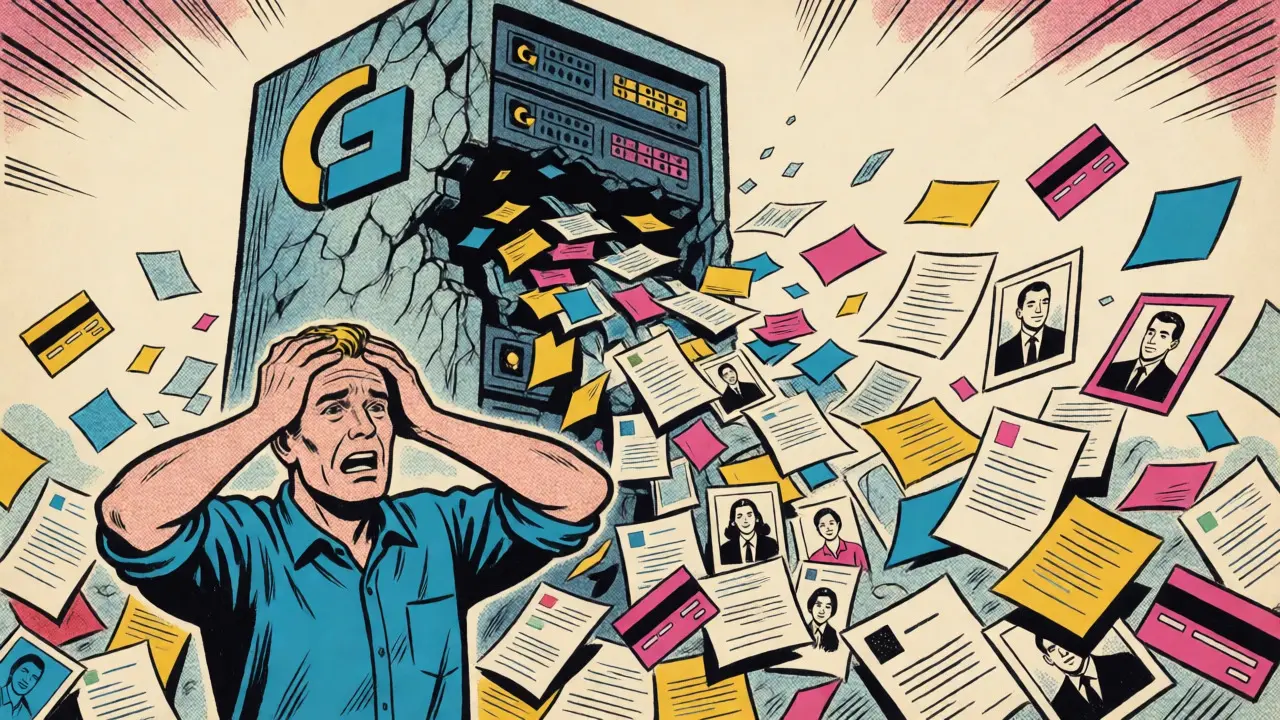
Imagine losing your house keys. You’d be locked out, right? Now imagine those keys also open every bank account, medical record, and social media profile you own. That’s essentially what happens when a centralized database gets hacked. Your entire digital life is exposed because one company held the master key. Decentralized Identity flips this script. It puts the keys back in your pocket, literally. Instead of trusting Facebook or your bank to guard your personal data, you hold it yourself in a digital wallet. This isn't just tech jargon; it's a fundamental shift in how we prove who we are online.
The Core Problem with Centralized Identity
For years, we’ve accepted a broken model. We hand over our passport scans, birth dates, and addresses to dozens of companies. Each of these companies becomes a honeypot for hackers. When Equifax got breached, 147 million Americans had their data stolen. They didn’t lose money directly, but they lost control. The risk was concentrated in one place. If that one place fails, everyone suffers. Self-Sovereign Identity (SSI) solves this by removing the middleman. There is no central server to attack. No single point of failure. Your identity lives on your device, secured by cryptographic keys that only you possess.
How Decentralized Identifiers Work
You might wonder, "If I don't have an account with a company, how do they know it's me?" Enter Decentralized Identifiers (DIDs). These are unique, cryptographically generated strings that don't rely on any central registry. Think of a DID as a URL that points to your public key, but instead of pointing to a website, it points to a blockchain ledger. When you want to log into a service, you use your DID. The service checks the blockchain to verify the signature matches your key. No password required. No username needed. Just math.
This system relies on Verifiable Credentials, which are the digital equivalent of physical documents like driver's licenses or university degrees. But unlike a PDF scan, a Verifiable Credential is tamper-proof. It contains a cryptographic proof from the issuer (like the DMV) that says, "Yes, this person has a valid license." Because the credential is signed, anyone can verify its authenticity without contacting the DMV again. This saves time, reduces server load, and enhances privacy.
Privacy Through Zero-Knowledge Proofs
Here is where it gets really interesting. Traditional identity verification asks for too much. To buy alcohol, you show your ID. The cashier sees your name, address, photo, and exact birth date. Do they need all that? No. They just need to know you’re over 18. With Zero-Knowledge Proofs (ZKP), you can prove you are over 18 without revealing your actual birthday. You share nothing more than the truth of the statement. This principle, known as data minimization, drastically reduces the amount of personal data floating around the internet. Less data means less risk if something goes wrong.
| Feature | Centralized Identity | Decentralized Identity |
|---|---|---|
| Data Storage | Company servers (honeypots) | User’s digital wallet |
| Control | Provider decides access | User grants/revoke access |
| Breach Risk | High (single point of failure) | Low (distributed network) |
| Interoperability | Siloed per platform | Cross-platform via W3C standards |
| Verification Method | Passwords, SMS codes | Cryptographic signatures, ZKPs |
Security Benefits Beyond Passwords
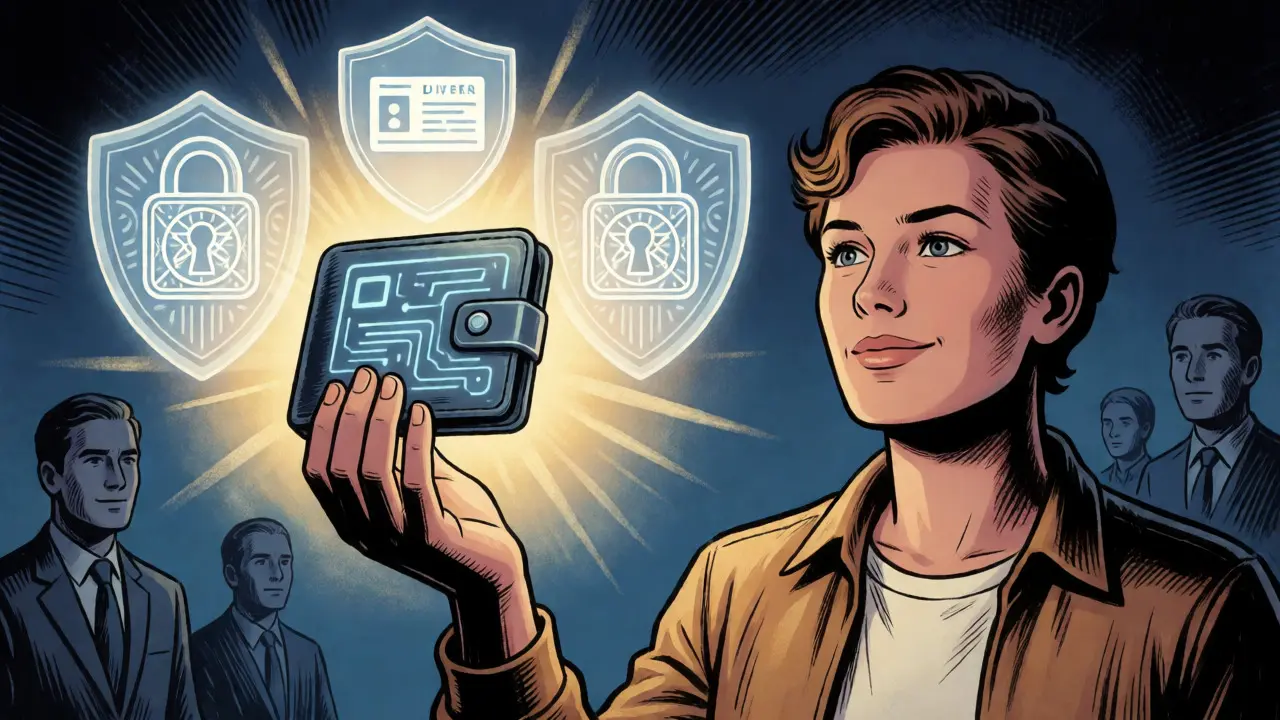
Passwords are terrible. We reuse them, forget them, and write them on sticky notes. Phishing attacks exploit this human error constantly. Decentralized identity removes passwords from the equation. Since authentication is based on private keys stored securely in your device’s hardware enclave, there is nothing to phish. A hacker can trick you into clicking a link, but they can’t steal your private key unless they physically steal your unlocked phone and know your biometric passcode. Even then, the damage is limited to that specific interaction, not your entire digital footprint.
Furthermore, because data isn't stored in massive corporate databases, businesses become less attractive targets. If a company doesn't hold your Social Security number, a breach at that company doesn't leak your SSN. This shifts the liability landscape significantly. Companies spend less on compliance and security infrastructure because they aren't hoarding sensitive PII (Personally Identifiable Information).
Interoperability and User Experience
One of the biggest headaches in digital identity today is fragmentation. You have separate accounts for Amazon, Spotify, and your local library. Each requires a new sign-up process. Decentralized identity promotes interoperability. Once you have a verified credential-say, a government-issued digital ID-you can use it across different platforms that support the standard. You present your credential once, and the service trusts the cryptographic proof. No re-entering forms. No waiting for email confirmations. It creates a seamless web of trust that actually works across borders and industries.
Early adopters report that while setting up a digital wallet takes some initial effort, the long-term convenience outweighs the learning curve. You stop carrying physical cards. You stop uploading passport photos for every rental car booking. The friction disappears.
Regulatory Alignment and Compliance
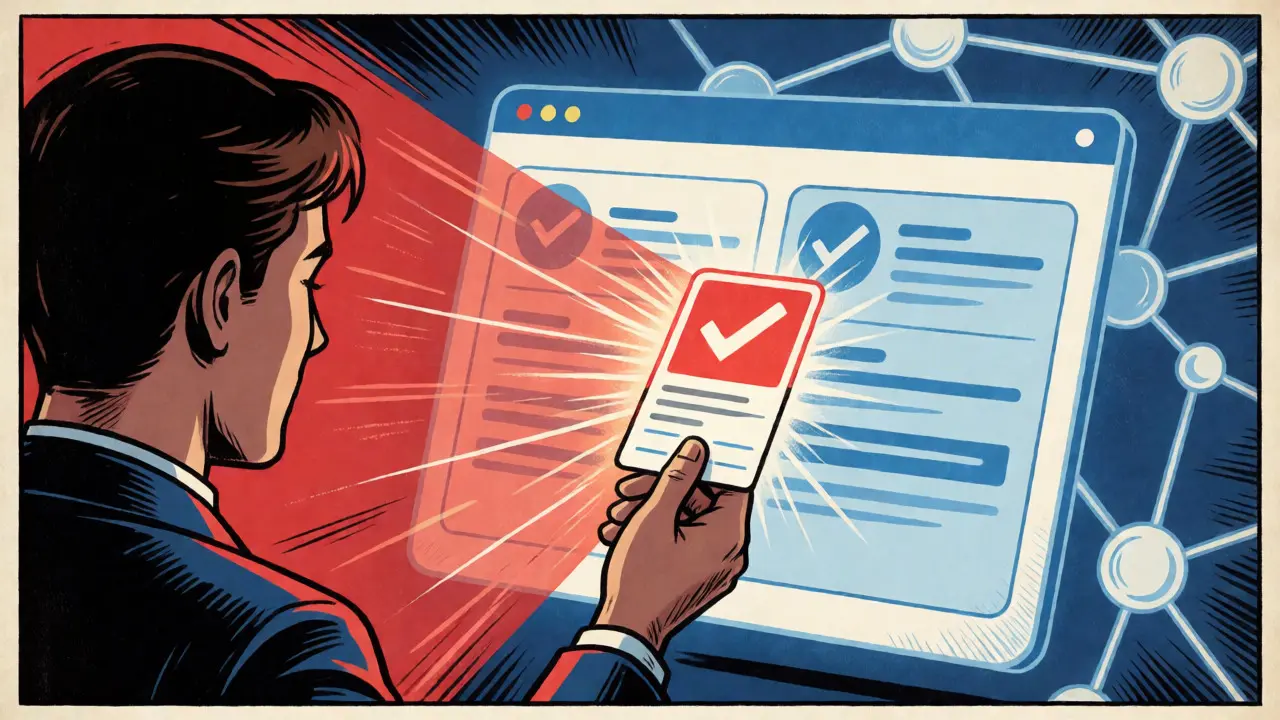
Governments worldwide are tightening privacy laws. GDPR in Europe and CPRA in California demand strict control over user data. Centralized systems struggle with this because they store data indefinitely, often without clear purpose limitation. Decentralized systems align naturally with these regulations. Since the user holds the data, the concept of "right to be forgotten" is easier to implement. You simply delete the credential from your wallet. The company never had it to begin with, so there’s nothing left to erase. This simplifies compliance audits and reduces legal risks for organizations.
Challenges and Adoption Hurdles
It’s not all smooth sailing. The main barrier is usability. Managing cryptographic keys is scary for non-tech-savvy users. Lose your private key, and you could lose access to your identity forever. Recovery mechanisms are still being refined. Also, widespread adoption requires critical mass. Services won’t accept decentralized IDs until enough people have them, and people won’t get them until enough services accept them. However, with major tech firms and governments exploring implementations, this chicken-and-egg problem is starting to crack.
What is the difference between Decentralized Identity and Blockchain?
Blockchain is the underlying technology-a distributed ledger that records transactions. Decentralized Identity is an application built on top of blockchain (or similar DLTs). While blockchain provides the immutable record for verifying credentials, Decentralized Identity focuses specifically on managing personal identifiers and proofs without central authorities.
Do I need a cryptocurrency wallet for Decentralized Identity?
Not necessarily. While many DID solutions integrate with crypto wallets, specialized identity wallets exist that focus solely on storing Verifiable Credentials. Some hybrid wallets handle both crypto assets and identity credentials, allowing you to pay for services and prove your identity from the same app.
What happens if I lose my digital wallet?
This is a critical concern. Most modern SSI systems include recovery options, such as multi-signature setups, trusted guardians, or backup phrases. Unlike traditional passwords, you cannot simply call customer support to reset your identity. Proper backup procedures are essential during setup.
Are Decentralized Identities anonymous?
They are pseudonymous by default. Your DID is a random string, not your name. However, when you share a Verifiable Credential (like a driver's license), you reveal specific attributes linked to that identity. You choose how much to reveal, balancing anonymity with necessary verification.
Who issues Verifiable Credentials?
Trusted entities issue credentials. This includes governments (passports, licenses), educational institutions (diplomas), employers (employment status), and even other individuals. The issuer signs the credential with their private key, proving its validity to anyone who verifies it.