
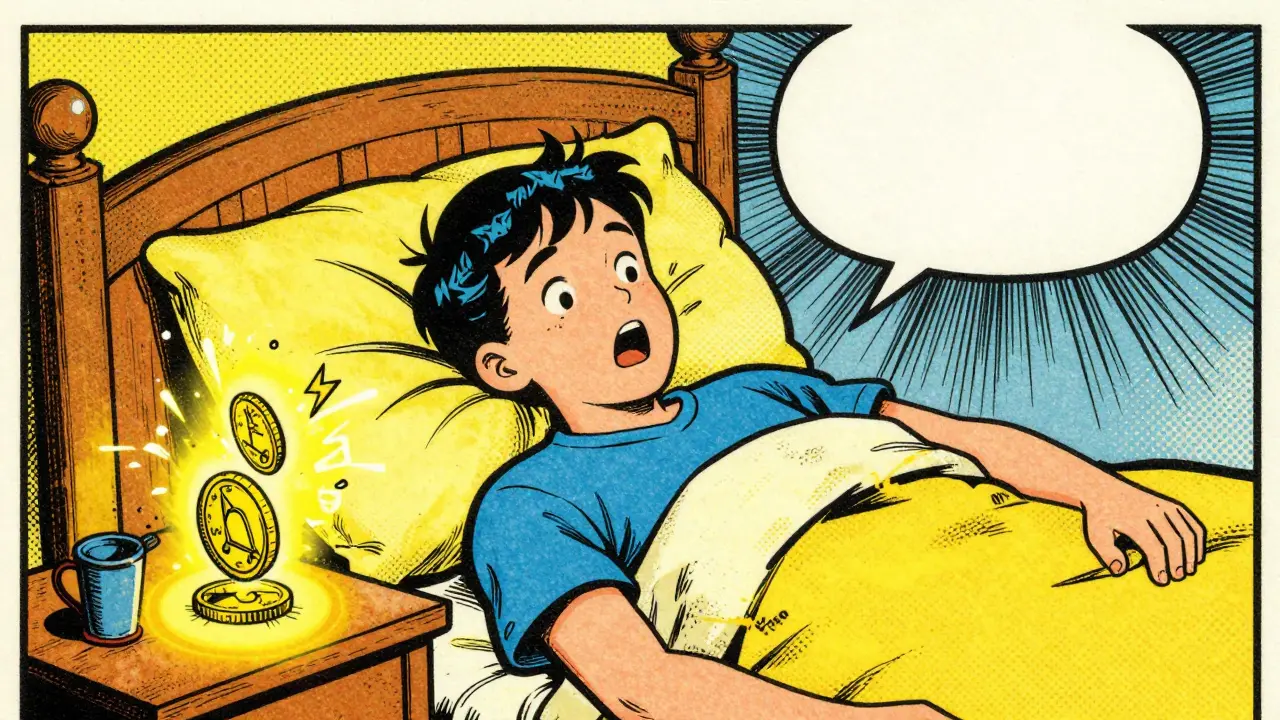
Imagine waking up to find your digital assets have grown, not because the market rallied, but because your coins were working for you while you slept. That is the core appeal of staking. However, the world of Proof-of-Stake (PoS) is a consensus mechanism where participants lock up coins to validate transactions and secure blockchain networks in exchange for rewards. In 2025, the landscape has shifted from simple "lock and earn" schemes to a sophisticated economy of yield optimization and liquid derivatives.
If you are looking for the best cryptocurrencies for staking, you have to look past the flashy headline numbers. A 20% annual percentage yield (APY) looks great on a brochure, but if the coin's value drops by 30% or inflation eats your gains, you are actually losing money. The goal is to find the sweet spot where network security, price stability, and real reward rates intersect.
Quick Take: Which Coin Fits Your Strategy?
Before we dive into the technical weeds, here is a fast way to categorize your options based on your risk appetite and goals for 2025.
| Asset | Expected APY | Risk Level | Best For... |
|---|---|---|---|
| Ethereum | 4% - 6% | Low | Institutional safety & long-term growth |
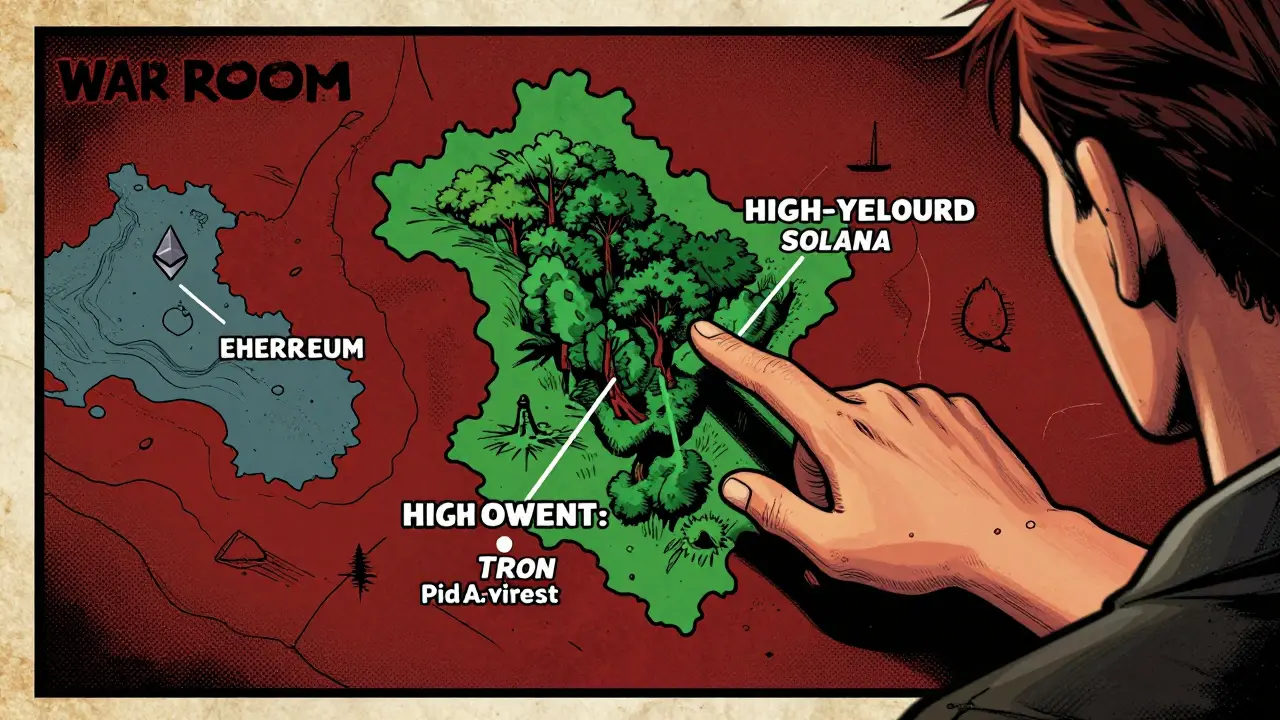
| Solana | 6% - 7% | Medium | High speed & ecosystem growth |
| BNB | 7.43% (Real) | Medium | Balanced real returns |
| Polkadot | 10% - 12% | Medium/High | Interoperability enthusiasts |
| Tron | ~20% | High | Maximum nominal yield |
The Gold Standard: Ethereum Staking
When it comes to reliability, Ethereum is the heavyweight champion. Since "The Merge" in 2022, it has become the foundation for institutional staking. With a projected market cap of over $466 billion, it is widely considered one of the safest coins to stake because of the sheer amount of value securing the network.
The downside? The entry barrier is steep. To run your own validator, you need 32 ETH-which, at recent prices, is over $120,000. Most regular people avoid this by using Lido or exchange-based staking. Lido's stETH (staked ETH) is a Liquid Staking Derivative (LSD) that allows you to earn rewards while still keeping your assets liquid for other trades. Just be aware that unstaking can take 24 to 36 hours, so don't lock up funds you might need for an emergency tomorrow.
Speed and Scale: Solana's High-Performance Yield
If Ethereum is the slow and steady tortoise, Solana is the hare. It uses a unique hybrid Proof-of-History mechanism that allows it to process up to 65,000 transactions per second. For stakers, this means a highly active ecosystem with a 6% to 7% APY that is generally easier to access than Ethereum's.
Using a Phantom Wallet, you can set up staking in under five minutes with no minimum requirement. However, Solana has a history of network hiccups. A six-hour outage in late 2024 reminded everyone that high speed sometimes comes with stability trade-offs. The good news is the 2025 rollout of the Firedancer validator client, which is designed to boost resilience and potentially push throughput even higher, making the network more robust for long-term stakers.

The "Real Reward" Strategy with BNB
Many investors make the mistake of chasing the highest nominal APY. But as expert Charles Edwards points out, real reward rates are what actually matter. BNB is a fascinating case here. While its headline percentage might look lower than a speculative coin, its real reward rate-which accounts for token inflation-is around 7.43%.
Staking BNB is incredibly streamlined, especially if you use the Binance ecosystem, offering same-day withdrawals. Because BNB is tied to the massive utility of the Binance Smart Chain, the staking rewards are backed by actual network usage rather than just printing new tokens to pay users. It is a pragmatic choice for those who want a balance between risk and actual profit.
High Yield, High Risk: Polkadot, Tron, and MoonBull
For those who can handle more volatility, there are "aggressive" staking options. Polkadot offers an attractive 10% to 12% APY through its Nominated Proof-of-Stake system. The catch? It's technical. You have to nominate 16 different validators to maximize your returns, which is a bit of a headache for beginners.
Then there is Tron. With a 20% APY and a tiny minimum requirement of 10 TRX, it is very accessible. But there is a reason the yield is so high: centralization. Tron is secured by a very small number of "super representatives," meaning it lacks the decentralized security of Ethereum. You are trading security for a bigger paycheck.
Finally, we have the outliers like MoonBull ($MOBU), which has claimed rewards as high as 95%. Be extremely careful here. These aren't traditional validation rewards; they rely on transaction reflections and token burns. If trading volume dries up, those rewards vanish. This is more like gambling than investing.
Practical Steps to Start Staking in 2025
Ready to put your coins to work? Follow this logical flow to avoid the most common pitfalls.
- Audit Your Wallet: Decide if you want a custodial solution (like Coinbase or Binance) for ease of use, or a non-custodial solution (like Ledger or Phantom) for maximum security.
- Check the Unstaking Period: Before locking your coins, check how long it takes to get them back. Some coins are instant; others, like Ethereum, can take over a day.
- Calculate Real Yield: Subtract the estimated inflation rate from the APY. If a coin has a 15% APY but 20% annual inflation, you are losing purchasing power.
- Diversify Your Stakes: Don't put all your assets into one network. Split your portfolio between a "Safe Haven" (Ethereum), a "Growth Play" (Solana), and a "Yield Booster" (Polkadot or BNB).
Avoiding the Staking Traps
Staking isn't free money; it comes with specific risks. The biggest one in 2025 is regulatory pressure. The SEC has previously clarified that some staking services are "investment contracts," which can lead to platforms freezing assets or changing terms overnight. To mitigate this, many experienced stakers are moving toward non-custodial platforms like Everstake, which allows you to keep control of your private keys.
Another trap is "slashing." In networks like Ethereum, if your validator behaves badly or goes offline for too long, the network can take a portion of your staked coins as a penalty. While this is rare for those using reputable staking pools, it is a risk you must accept when participating in PoS security.
What is the safest cryptocurrency to stake in 2025?
Ethereum is generally considered the safest due to its massive market capitalization, high number of active validators (over 1.2 million), and institutional backing. Its lower APY (4-6%) reflects its stability and lower risk profile.
Can I get my money back immediately after staking?
It depends on the coin. Solana has a short warm-up/cool-down period of about 8-12 hours. Ethereum can take 24-36 hours for withdrawals. Some centralized exchanges offer "flexible" staking with instant withdrawals, though these often have lower yields.
What is the difference between nominal APY and real reward rate?
Nominal APY is the raw percentage a platform promises you. The real reward rate subtracts the inflation of the token. For example, if you earn 10% in new coins, but the total supply of that coin increases by 5% annually, your real return is closer to 5%.
Is staking environmentally friendly?
Yes, compared to Proof-of-Work (like Bitcoin mining). Ethereum's transition to PoS reduced its energy consumption by 99.95%, making staking a much more eco-friendly way to secure a network.
What are Liquid Staking Derivatives (LSDs)?
LSDs, like Lido's stETH, provide you with a tradeable token that represents your staked assets. This means you can earn staking rewards while simultaneously using those assets in other DeFi protocols to earn additional yield.
There are 22 Comments
Heather Warren
Keeping a diverse portfolio is definitely the way to go here. I usually split mine between a safe bet like Ethereum and a bit of Solana for the extra growth potential!
Kieran Smith
i always wondered about that real reward thing...’s crazy how inflation can just eat your gains without u even noticing
Surender Kumar
nice guide man,’s helpful for beginners to see it all laid out like this
daniella davis
um, obviously anyone with an actual brain knows that liquid staking is the only way to survive in this market. imagine just locking your funds in 2025 and not using a derivative... literally so prehistoric lol
Lela Singh
Absolute goldmine of a guide! Diversify or die, folks! 🚀
7stargee Emmanuel Obani
MoonBull is a straight scam 🙄 anyone actually putting money in that is just asking to be rugged. typical
Kelly Cantrell
The SEC is just trying to kill financial independence so they can keep us in their debt-trap system. I'm moving everything to non-custodial wallets because I don't trust any government agency to not freeze my assets the second they decide we're too independent. It's all a game of control and we need to get out of their reach before the Great Reset actually hits. Keep your keys or keep your chains, people.
Terrance Hausmann
It is really important to remember that while high yields are tempting, they often come with a level of risk that can be overwhelming for those who aren't prepared for a total loss. If you can stay patient and focus on the long-term health of the network rather than the short-term dopamine hit of a 20% yield, you will likely find much more peace and stability in your investment journey over the next few years.
Will Dixon
jus use a ledger man. keep your coins safe
Carroll Foster
Oh wow, look at us using PoS to "save the planet" while the validator nodes probably run on a coal-powered server farm in some tax haven. The sheer irony of the eco-friendly narrative while we chase 7% APY in a hyper-capitalist digital casino is just peak 2025. Truly a masterclass in cognitive dissonance.
ssjuul z
Let's keep it positive and help each other out! 🌟 If you're new, just start small!
Rima Dinar
I honestly feel that for most people, the journey into staking is more about the learning process than the actual money made, because once you start reading about slashing and validator uptime, you realize how much responsibility actually falls on the user, and it can be quite daunting to manage multiple wallets and seed phrases while also trying to keep track of which tokens are currently in a lock-up period, so I always tell my friends to take it slow and not rush into the high-yield coins until they've mastered the basics of a simple wallet.
Hope Johnson
We must consider the ethical implications of moving toward a system where those who already possess the most capital are the ones who gain the most power in securing the network, as this essentially mirrors the feudal systems of the past where land ownership dictated political influence. If we are not careful, we are simply recreating the same systemic inequities we claimed blockchain would solve, merely replacing physical land with digital tokens. It invites a deep reflection on whether decentralization is a technical reality or just a comforting myth we tell ourselves to justify the accumulation of wealth in a new, digital form.
aletheia wittman
omg the drama with solana outages is actually so funny... like imagine losing your money cuz the network just decided to take a nap lol
Artavius Edmond
I think there is room for everyone here, whether you're into the safe stuff or the risky plays. It's all about what makes you comfortable!
Jason Davis
The Firedancer update for Solna should realy fix those stability issues. Its a big deal for long term holders.
Prasanna Shembekar
im just here for the 20% yield lol
jennelle williams
just be patient
Lauren Abrams
The distinction between nominal and real yield is an important point that often gets ignored in hype cycles.
william manes
USA coins only 🇺🇸 🦅 Stop buying garbage! 🤡
Tyler Webb
Always be careful with your private keys, everyone. Stay safe out there! :)
James Bone
The irony is that most people reading this think they are "investing" when they're actually just gambling on a different set of numbers. You aren't a genius for staking ETH, you're just renting your money to a network that will eventually inflate your rewards into oblivion. It's a classic case of the herd following a trend because they're too lazy to understand the actual tokenomics of the assets they hold. Truly pathetic.
Write a comment
Your email address will not be published. Required fields are marked *