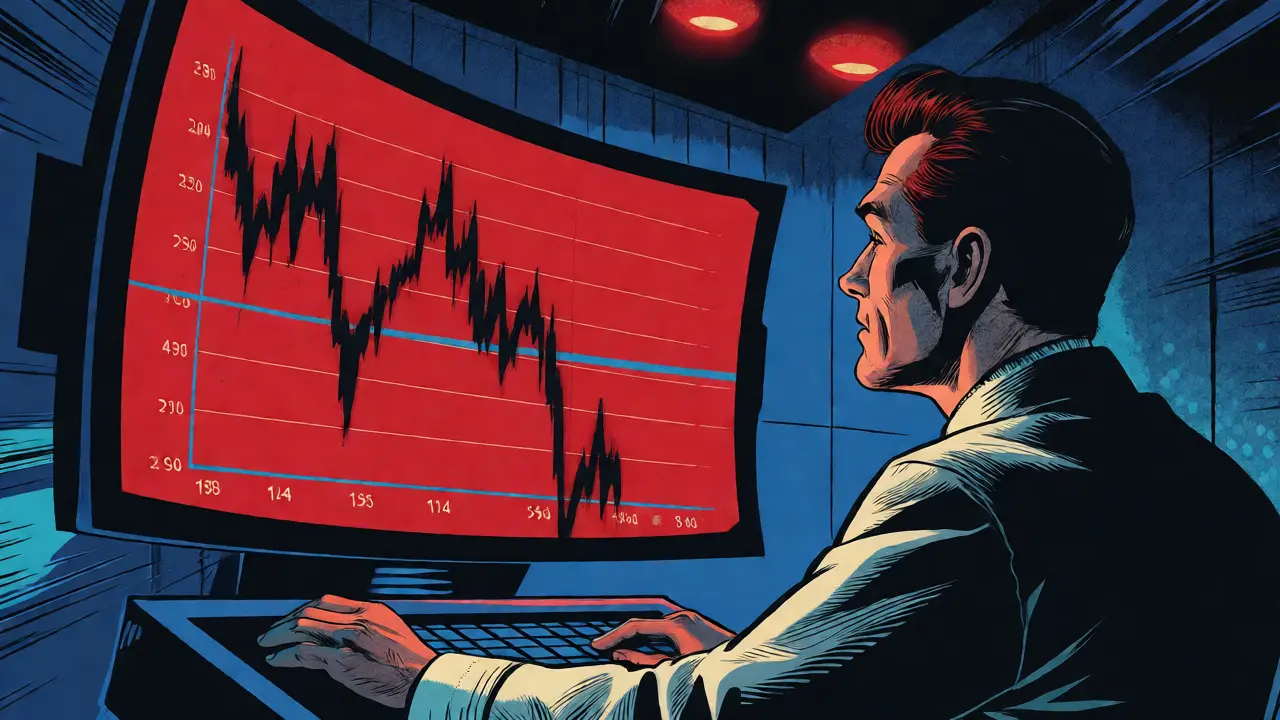
You’re staring at a chart. Bitcoin just dropped 8% in an hour because some regulator tweeted something vague. Your spot holdings are bleeding value, but you don’t want to sell and trigger a tax event. Or maybe you think the drop is overdone and want to double down without buying more coins outright. This is where Bitcoin futures become your Swiss Army knife. Unlike holding actual BTC, futures let you bet on price direction-or hedge against it-without moving your main capital. But here’s the catch: futures amplify both gains and losses. Use them wrong, and you get liquidated before lunch. Use them right, and you can navigate volatility like a pro.
This guide cuts through the noise. We aren’t talking about abstract theory. We’re looking at actionable strategies that work in the current market environment of October 2026. Whether you’re a retail trader managing a small portfolio or someone trying to protect institutional assets, understanding how to deploy these tools is non-negotiable.
Why Trade Futures Instead of Spot?
Before we jump into tactics, let’s clarify the mechanism. A futures contract is a legal agreement to buy or sell a specific asset at a predetermined price at a specified time in the future. For Bitcoin, this started with the Chicago Mercantile Exchange (CME) in December 2017. Today, the landscape includes traditional exchanges and crypto-native platforms offering perpetual swaps.
The biggest advantage? Leverage. On platforms like Bybit or Binance, you can control a large position with a fraction of the capital. If you have $1,000 and use 10x leverage, you’re controlling $10,000 worth of Bitcoin exposure. This means a 1% move in Bitcoin’s price translates to a 10% change in your equity. It sounds great until it doesn’t. That same 1% move against you wipes out 10% of your margin. If you go too far, you get liquidated-your position is forcibly closed, and you lose your initial margin.
Another key feature is shorting. In spot markets, you only profit if prices go up. With futures, you can open a short position, betting that prices will fall. This is crucial during bear markets when spot holders are stuck watching their portfolios shrink while cash sits idle.
Core Strategy 1: Directional Trading with Perpetual Swaps
Perpetual swaps are the most popular instrument for retail traders. Why? They have no expiration date. You can hold a long or short position indefinitely, as long as you maintain enough margin. The trade-off is the funding rate-a periodic payment exchanged between longs and shorts to keep the perpetual price close to the spot price.
How to execute:
- Identify the trend: Use higher timeframes (4-hour or daily charts) to determine the dominant direction. Don’t fight the trend unless you have a very strong reason.
- Entry point: Look for pullbacks in an uptrend or bounces in a downtrend. Indicators like the Relative Strength Index (RSI) can help identify oversold conditions in an uptrend.
- Leverage management: Start low. In 2026, with market maturity increasing, extreme volatility still happens. Using 3x-5x leverage is safer than 20x for most traders.
- Funding rate check: Before opening a long, check the funding rate. If it’s highly positive, longs are paying shorts heavily. This might signal an overheated market, suggesting caution or a better entry later.
For example, imagine Bitcoin is trending up but has corrected 5%. You see support forming at a key level. You open a long position with 3x leverage. If the price rises 10%, you make 30% on your margin (minus fees). If it drops 5%, you lose 15%. Simple, right? But remember, if the price drops 33%, you’re liquidated. Always set stop-losses.
Core Strategy 2: Hedging Your Spot Holdings
If you hold Bitcoin for the long term but fear a short-term dip, hedging is your best friend. This isn’t about speculation; it’s about insurance.
The Short Hedge: Suppose you own 1 BTC. You expect a potential correction due to upcoming macroeconomic data releases. Instead of selling your BTC (which triggers taxes and transaction costs), you open a short futures position equivalent to 1 BTC. If the price drops 10%, your spot holding loses value, but your short futures position gains 10% (adjusted for leverage). The net effect is neutral. You’ve preserved your dollar value while keeping your coin count intact.
The Long Hedge: Conversely, if you plan to buy Bitcoin next month but worry the price will rise before then, you can open a long futures position now. If the price jumps, your futures profit offsets the higher purchase price of the spot asset later.
This strategy requires careful sizing. Over-hedging turns your portfolio into a pure derivative play, losing the upside participation of spot ownership. Under-hedging leaves you exposed. Many professionals hedge 50-70% of their exposure during uncertain periods.
Core Strategy 3: Arbitrage and Funding Rate Plays
Markets aren’t always efficient. Sometimes, the price of a perpetual swap diverges from the spot price. This creates arbitrage opportunities.
Funding Rate Arbitrage: When funding rates are extremely high (e.g., +0.1% every 8 hours), it means longs are aggressively chasing the price. Traders often employ a "basis trade": they buy spot Bitcoin and simultaneously short the perpetual swap. Since the short pays the funding fee to the long, you collect this fee as income. If the spread remains stable, you earn yield without directional risk. In bull markets, annualized yields from this strategy can reach 10-20%, though this fluctuates wildly.
Cross-Exchange Arbitrage: Prices can differ slightly between exchanges due to liquidity issues. If Bitcoin is trading at $65,000 on Exchange A and $65,050 on Exchange B, you can buy on A and short on B. When prices converge, you close both positions for a profit. Note: Transaction fees and withdrawal times can eat into these thin margins, so speed matters.
Risk Management: The Make-or-Break Factor
Most traders blow up not because their analysis was wrong, but because their risk management was poor. Here are the hard rules for 2026:
- Position Sizing: Never risk more than 1-2% of your total account balance on a single trade. If you have $10,000, your max loss per trade should be $100-$200. Calculate your position size based on your stop-loss distance, not just your available margin.
- Stop-Loss Orders: Always use them. Bitcoin can gap through levels during news events. A mental stop-loss isn’t enough; you need automated execution.
- Liquidation Buffer: Keep your liquidation price far from your entry. If you use 10x leverage, a 10% adverse move kills you. Aim for a liquidation price that would require a 20-30% move to hit, giving you room to breathe.
- Correlation Awareness: Don’t open five different long positions on BTC, ETH, and SOL thinking you’re diversified. In a crash, they all drop together. True diversification involves uncorrelated assets or hedged positions.

Technical Analysis Tools for Futures
Futures trading moves fast. You need reliable signals. Here are three indicators that remain effective:
| Indicator | Best Use Case | Signal Interpretation |
|---|---|---|
| RSI (Relative Strength Index) | Identifying overbought/oversold conditions in ranging markets | Above 70 = Potential reversal down; Below 30 = Potential reversal up. Less reliable in strong trends. |
| Bollinger Bands | Measuring volatility and identifying breakouts | Price touching upper band may indicate strength or overextension. "Squeeze" precedes major moves. |
| Open Interest (OI) | Gauging market conviction and potential reversals | Rising OI with rising price = Strong bullish trend. Rising OI with falling price = Strong bearish trend. Falling OI = Trend weakening. |
Combine these. For instance, if RSI is above 70 and Open Interest starts dropping while price stalls, it’s a sign that bulls are taking profits. A short entry might be wise.
Common Pitfalls to Avoid
Even experienced traders slip up. Watch out for these traps:
- Over-leveraging: Greed drives people to use 50x or 100x leverage. One bad candle and you’re gone. Stick to lower leverage until you’re consistently profitable.
- Ignoring Fees: High-frequency trading eats margins. Maker orders (limit orders) usually cost less than taker orders (market orders). Optimize your order types.
- Revenge Trading: After a loss, the urge to immediately re-enter to "win it back" leads to poor decisions. Step away. Analyze why you lost. Then return.
- FOMO Entries: Buying after a massive green candle often means buying the top. Wait for a retracement.
Next Steps for Your Trading Journey
Start small. Open a demo account on a platform like Binance or Bybit and practice executing these strategies with fake money. Track your wins and losses in a journal. Note what worked, what didn’t, and how you felt emotionally. Once you’re consistent, fund a live account with capital you can afford to lose completely. Remember, futures are powerful tools, but they demand discipline. Master the basics of risk management first, and the profits will follow.
What is the difference between CME Bitcoin futures and perpetual swaps?
CME Bitcoin futures are regulated contracts with fixed expiration dates (monthly or quarterly), primarily used by institutions for hedging. Perpetual swaps are crypto-native derivatives with no expiration date, allowing indefinite holding but requiring periodic funding payments. CME offers regulatory clarity and physical settlement options, while perpetuals offer higher leverage and 24/7 accessibility.
How does leverage affect my liquidation price?
Leverage inversely affects your buffer against price moves. Higher leverage reduces the price movement required to liquidate your position. For example, with 10x leverage, a 10% adverse move typically triggers liquidation. With 2x leverage, it takes a 50% move. Always calculate your liquidation price before entering a trade to ensure it aligns with your risk tolerance.
Can I lose more than my initial investment in Bitcoin futures?
In standard isolated margin mode, you generally cannot lose more than your allocated margin for that position. However, in cross-margin mode, losses from one position can deplete your entire account balance. Additionally, extreme market gaps (like flash crashes) can occasionally cause slippage that exceeds expected losses, though most exchanges have insurance funds to cover deficits.
What is a good funding rate to watch for?
A neutral funding rate is around 0.01% per 8 hours. Rates significantly above 0.05% suggest bullish overcrowding, potentially signaling a reversal. Rates below -0.01% indicate bearish sentiment, which might present long opportunities if the trend is reversing upward. Monitor these rates as a contrarian indicator rather than a primary signal.
Is technical analysis reliable for Bitcoin futures?
Yes, but with caveats. Bitcoin respects technical levels like support/resistance and moving averages, especially on higher timeframes. However, news events and whale activity can override technical setups instantly. Combine TA with fundamental awareness (regulatory news, macro trends) and strict risk management for best results.