
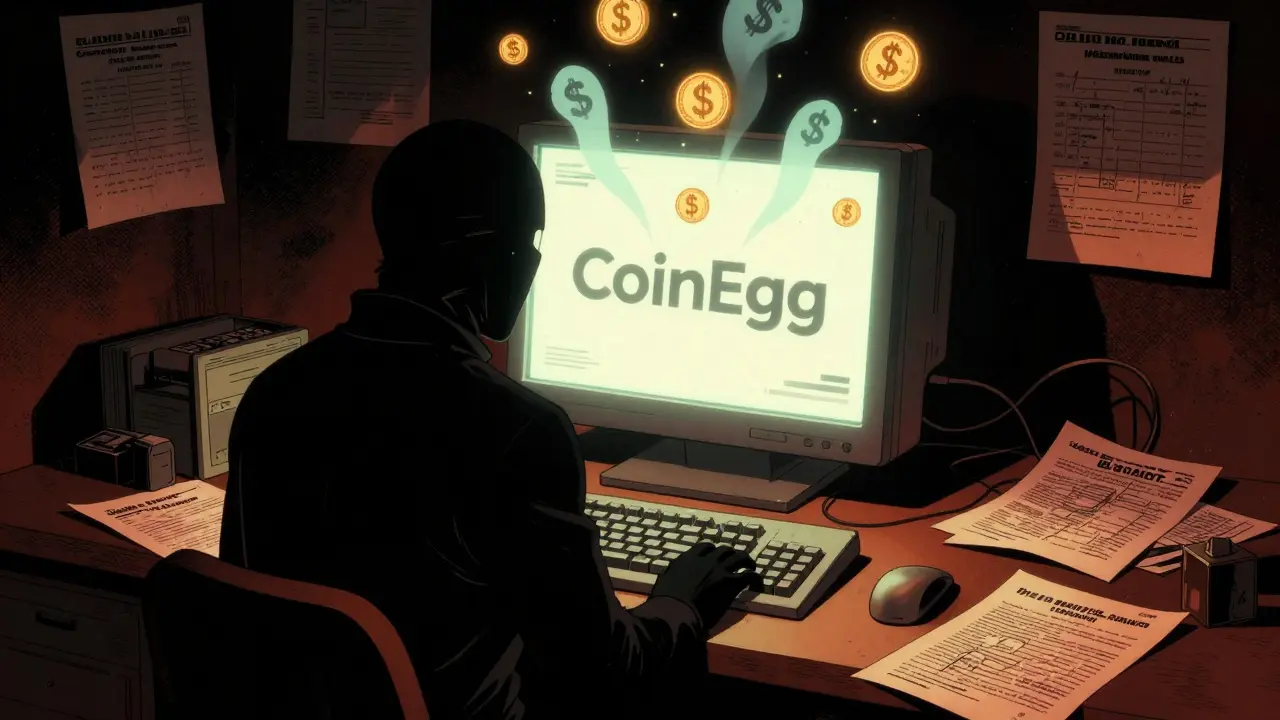
CoinEgg isn’t a crypto exchange you can use today - it hasn’t been operational since early 2020. What you’ll find now are dozens of fake websites using the CoinEgg name to steal money from unsuspecting traders. If you’ve seen an ad promising high returns on CoinEgg, or been asked to pay a ‘verification fee’ to withdraw funds, you’re dealing with a scam. This isn’t a review of a failing platform. It’s a warning about a ghost that’s still haunting the crypto space.
What CoinEgg Actually Was (Before It Vanished)
CoinEgg launched in mid-2017 as a low-fee crypto exchange based in Seychelles. It didn’t have a headquarters, no public team, and no regulatory license from any country. It didn’t need one - at the time, most small exchanges operated in this gray zone. It offered 158 cryptocurrencies, including obscure altcoins like ONT and EUSD, which made it popular among traders chasing early listings. Its trading fee was a flat 0.10%, which looked good next to Binance’s tiered model. At its peak in January 2018, it processed $15.7 million in daily volume - tiny compared to Binance’s $1.2 billion, but enough to attract users looking for quick trades.But behind the simple interface and fast listings, CoinEgg had serious flaws. It didn’t require KYC - just an email. It stored 95% of funds in cold storage, but the remaining 5% in hot wallets got hacked in 2018, losing $486,000 in ETH. Customer support took over two weeks to respond. Withdrawals were slow, and users reported being asked for extra fees just to get their own money out. By late 2019, the site stopped updating. The last official announcement was a fee change in March 2019. By November 2019, the website was frozen. The domain expired in February 2020.
Why CoinEgg Failed - And Why It Was Doomed From the Start
CoinEgg wasn’t just poorly run - it ignored the most basic rules of crypto safety. No KYC meant no AML compliance. No regulatory oversight meant no legal protection. No insurance meant if funds vanished, you were out of luck. These weren’t minor oversights. They were red flags so bright they should’ve scared off every serious trader.Compare it to exchanges that survived: Binance, Kraken, Coinbase - all got licenses, implemented KYC, and built customer support teams. CoinEgg did none of that. It relied on volume from speculators during the 2017-2018 bull run. When the market crashed, and regulators started shutting down unlicensed platforms, CoinEgg had nothing to fall back on. It didn’t have a legal structure, no compliance team, no way to prove it held users’ funds. Chainalysis later found that nearly 19% of its transaction volume in 2019 was tied to darknet markets. That’s not just risky - it’s illegal.
Dr. Michal Zając from CryptoCompare called it a Tier 4 risk - the highest possible. The CryptoRank Safety Index gave it a 2.1 out of 10. Even its supporters on Reddit and Trustpilot admitted: ‘Great for altcoins, terrible for withdrawals.’
Now It’s a Scam - Here’s How It Works
Today, CoinEgg doesn’t exist. But dozens of fake sites do. They use domains like coinegg-pro.com, ceggcc.vip, or coinegg.vc. They copy the old logo. They use fake testimonials. They even post fake ‘reviews’ on scam-monitoring sites to look real.This is a classic ‘pig-butchering’ scam. Here’s how it plays out:
- You see an ad on Telegram, Facebook, or YouTube promising 5-10% daily returns on crypto deposits.
- You’re directed to a site that looks exactly like the old CoinEgg - same colors, same layout, even the same trading charts.
- You deposit $500, $1,000, or $5,000. You see your balance go up. You think you’re making money.
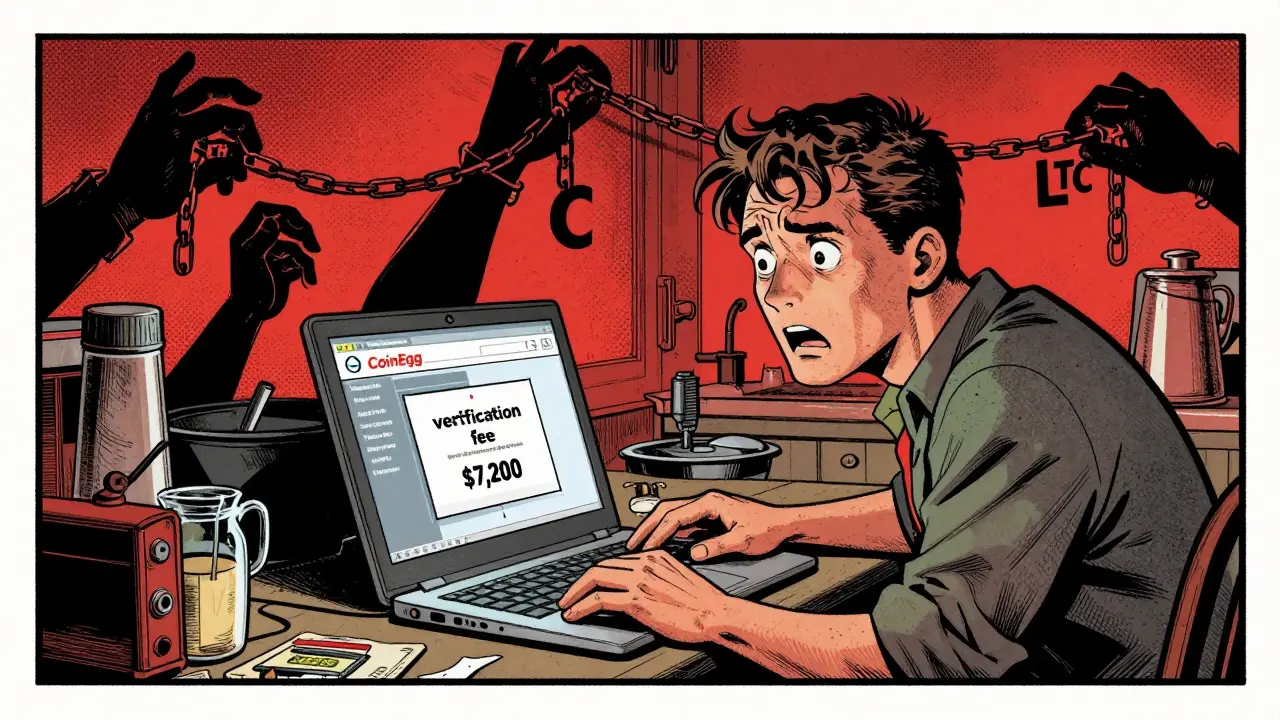
- When you try to withdraw, you’re told you need to pay a ‘verification fee,’ ‘tax,’ or ‘compliance deposit’ - usually 5-15% of your balance.
- You pay it. Then you’re asked for another. And another.
- Eventually, your account is locked. The site goes offline. Your money is gone.
According to DataVisor’s 2024 Crypto Fraud Report, these scams stole over $1.8 million from victims in just the first quarter of 2024. One user, Sarah K., lost $48,000 after being convinced to pay three separate ‘processing fees’ over three months. She thought she was trading. She was being manipulated.
How to Spot a CoinEgg Scam Site
If you’re looking at a site claiming to be CoinEgg, here’s how to tell it’s fake:- Domain name is weird: Real domains are coinegg.com - anything with a suffix like .vip, .vc, .pro, .info is fake.
- Asks for fees to withdraw: Legit exchanges never charge you to take your own money out. Ever.
- Guarantees high returns: No exchange promises daily profits. If it does, it’s a scam.
- No contact info: No physical address, no phone number, no support email that works.
- Only accepts crypto deposits: Real exchanges let you buy crypto with USD, EUR, or other fiat. CoinEgg never did - and neither do the scammers now.
- Website looks too clean: The original CoinEgg had outdated design elements. Fake sites are polished to look professional - that’s a red flag.
Check CoinGecko or CoinMarketCap. Search for CoinEgg. You’ll see a warning label: ‘Defunct - Scam Detected.’ That’s your signal to walk away.
What Happened to the Real CoinEgg Team?
No one knows. The founders were anonymous. The company was registered in Seychelles - a jurisdiction with no extradition treaties or crypto enforcement. After the platform shut down, the domain was sold. The servers were taken offline. There was no official announcement. No refund. No apology. Just silence.That’s the nature of unregulated exchanges. They come and go. Users lose money. Regulators don’t care until it’s too late. The team behind CoinEgg disappeared - likely with millions in stolen funds. There’s no legal recourse. No class-action lawsuit. No recovery.

What to Do If You’ve Been Scammed
If you sent money to a CoinEgg scam site:- Stop sending more money. No matter what they promise, you won’t get it back by paying more.
- Save everything. Screenshots of the website, transaction hashes, chat logs, emails - all of it.
- Report it. File a report with the Internet Crime Complaint Center (IC3.gov) in the U.S., or your local cybercrime unit. Include transaction IDs from Etherscan or Bitcoin Block Explorer.
- Don’t trust recovery scams. There are scammers who pretend to help you get your money back - for a fee. They’re the same people.
Recovery is rare. But reporting helps authorities track patterns and shut down these operations before they hurt more people.
Where to Trade Crypto Instead
If you want a safe, reliable exchange, use one that’s regulated, has a public team, and offers real customer support:- Coinbase: U.S.-based, SEC-regulated, insured custodial wallets.
- Binance: Global leader, supports fiat on-ramps, 24/7 support, advanced trading tools.
- Kraken: U.S. and EU licensed, strong security, transparent reserves.
- Bybit: Popular for derivatives, strong API, good mobile app.
All of these platforms have public audits, KYC, and clear withdrawal policies. None of them will ever ask you to pay a fee to access your own crypto.
Final Warning
CoinEgg is dead. The people running fake versions of it are criminals. They don’t care if you lose your life savings. They’ve done this before - and they’ll do it again. Don’t be the next victim.If you see a link, ad, or message saying ‘CoinEgg is back,’ don’t click. Don’t deposit. Don’t reply. Block it. Report it. Walk away.
There are thousands of legitimate exchanges. You don’t need to gamble on ghosts.
Is CoinEgg still operating as a real crypto exchange?
No. The original CoinEgg exchange shut down in early 2020. Its domain expired, its servers were taken offline, and its team disappeared. Any website using the CoinEgg name today is a scam.
Why do people still fall for CoinEgg scams?
Scammers copy the old design, use fake testimonials, and promise high returns. Victims see their balance increase on a fake trading interface and believe they’re making money. When they try to withdraw, they’re hit with fake fees. By then, it’s too late.
Can I get my money back if I sent crypto to a CoinEgg scam site?
Almost never. Cryptocurrency transactions are irreversible. Once sent to a scammer’s wallet, the funds are gone. Your best action is to report the incident to authorities with transaction details - this helps track and shut down the scam network, but won’t recover your money.
What’s the difference between the real CoinEgg and the fake ones?
The real CoinEgg was a poorly run but legitimate exchange that shut down. The fake ones are criminal operations designed to steal money. They use the same name to trick people into thinking it’s the same platform. The real one never asked for withdrawal fees. The fake ones demand them.
Are there any safe exchanges similar to CoinEgg?
There’s no safe exchange that matches CoinEgg’s model - because its model was dangerous. Instead, use regulated exchanges like Coinbase, Kraken, or Binance. They offer more coins, better security, and real customer support. Avoid any exchange without KYC, licensing, or transparent ownership.
How can I verify if a crypto exchange is real?
Check CoinGecko or CoinMarketCap for official listings. Look for a physical address, public team members, regulatory licenses (like FinCEN, FCA, or MAS), and verified customer support channels. If the site only accepts crypto deposits and has no contact info, it’s a scam.



There are 23 Comments
Josh V
They vanish like smoke and leave you holding the bag
Shaun Beckford
Tony Loneman
Telleen Anderson-Lozano
Ashlea Zirk
Sarah Baker
Nishakar Rath
Chris Evans
Rod Petrik
Chris O'Carroll
Christina Shrader
Vinod Dalavai
Jason Zhang
Katherine Melgarejo
Anna Gringhuis
Lauren Bontje
Deb Svanefelt
Haley Hebert
Jill McCollum
Hailey Bug
Stephen Gaskell
CHISOM UCHE
Telleen Anderson-Lozano
Write a comment
Your email address will not be published. Required fields are marked *