
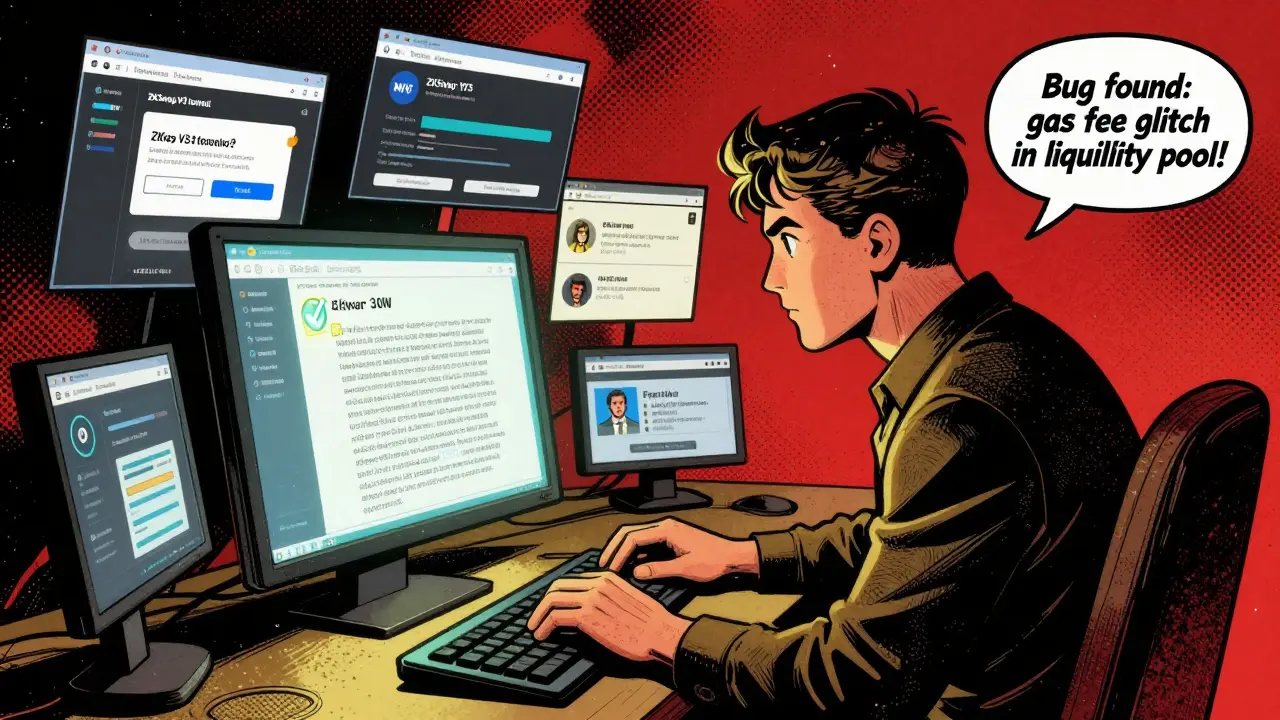
Back in 2021, the crypto world was buzzing about ZKSwap’s V3 testnet airdrop - not because it was the biggest, but because it was one of the few that actually rewarded real, hands-on testing. If you’re looking at this now in 2026 and wondering if there’s still a chance to claim ZKS tokens from that campaign, the answer is simple: no. The airdrop is long over. But understanding how it worked can help you spot legitimate future airdrops - and avoid scams pretending to be them.
First, let’s clear up a big mix-up: ZKSwap and ZKBase aren’t the same thing. ZKSwap is a decentralized exchange built on ZK-Rollup technology, designed to make trading on Ethereum fast and cheap. Its native token is ZKS. ZKBase, on the other hand, is a broader blockchain ecosystem that includes ZKSwap as one of its components, but it runs its own token: ZKB. The confusion? People thought ZKBase was running the ZKSwap airdrop. They weren’t. ZKSwap ran its own airdrops using ZKS tokens. ZKB tokens were never distributed in that campaign.
How the ZKSwap V3 Testnet Airdrop Worked
The V3 testnet airdrop wasn’t just a free token giveaway. It was a structured feedback program. ZKSwap needed real users to test its upgraded platform - especially the new NFT features and smoother UI - before launching on mainnet. So they created a reward system that rewarded effort, not just wallet addresses.
To qualify, you had to:
- Connect your MetaMask wallet to the Ethereum Rinkeby test network
- Use the ZKSwap V3 testnet interface to trade, provide liquidity, or interact with NFTs
- Write a detailed review of at least 300 words on the ZKSwap forum
- Post a link to that review on Twitter with the hashtag
#V3TestnetFeedbackand include your wallet address
That’s right - you had to write. Not just click, not just hold a wallet. You had to explain what you saw, what broke, what worked, and how it could be better. The project didn’t want hype. They wanted honest, technical feedback.
The Reward Structure
The total pool for this airdrop was 50,000 ZKS tokens. That’s not huge by today’s standards - back then, it was worth about $30,000. But the distribution wasn’t random. It was split into two tiers:
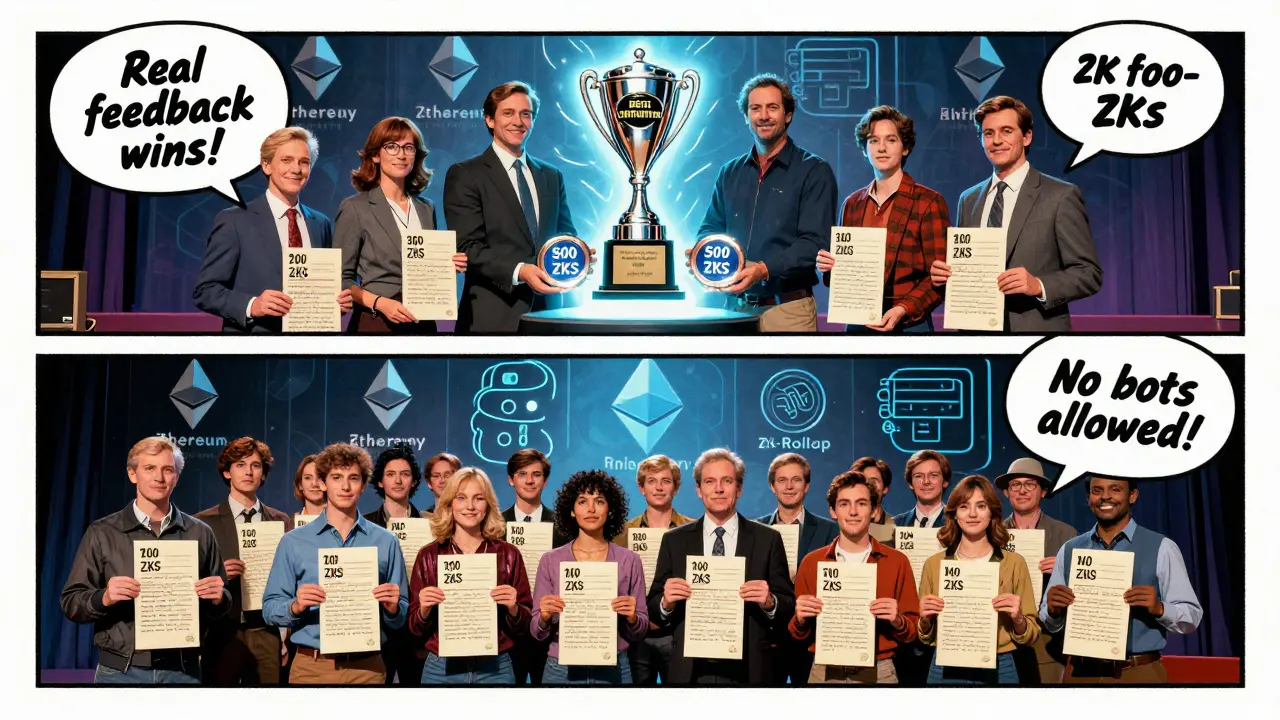
- Best Contribution Award: 60 winners got 500 ZKS each (totaling 30,000 ZKS)
- Honorable Mention Award: 200 participants got 100 ZKS each (totaling 20,000 ZKS)
Selection wasn’t based on who signed up first. It was based on the quality of the feedback. Reviews that spotted real bugs, explained them clearly, and suggested practical fixes stood out. Generic comments like “it’s cool!” got nothing. Detailed reports with screenshots, step-by-step error logs, and comparisons to the old version? That’s what got rewarded.
Also, if you used multiple wallets linked to the same IP address, you only got rewarded for the one with the highest qualifying review. No gaming the system.
What Was Being Tested?
ZKSwap V3 wasn’t just a UI refresh. It introduced major upgrades:
- Full NFT trading support - you could swap, list, and buy NFTs directly on the DEX
- Zero gas fees for liquidity providers - a huge win for traders on Ethereum
- Improved order matching speed thanks to ZK-Rollup optimizations
- A cleaner, more intuitive interface that didn’t require a tutorial just to swap tokens
These weren’t marketing buzzwords. The testnet let users experience Layer 2 trading at near-instant speeds, without the $50 gas fees that plagued Ethereum mainnet at the time. For many, this was the first time they’d seen a DeFi platform that actually felt fast.
Why This Airdrop Was Different
Most airdrops in 2021 were just snapshot-based: “Hold X token, get Y token.” ZKSwap’s V3 campaign stood out because it treated users like co-developers. You weren’t just a passive holder - you were part of the QA team. This built real trust. People who participated felt like they helped shape the product.
It also filtered out bots. If you didn’t write a review, you didn’t get anything. No wallet farming. No address stuffing. Just people who actually used the platform and took the time to tell the team what they thought.
What Happened After?
The airdrop ended on December 23, 2021. Tokens were distributed to qualifying wallets. ZKSwap V3 moved to mainnet, and the team shifted focus to scaling and partnerships. The ZKS token continued to be used for governance and fee discounts on the exchange.
ZKBase, as a parent ecosystem, kept developing ZKSquare (its payment layer) and other infrastructure. But no public ZKB airdrop ever happened. The ZKB token remains in circulation - about 197 million out of a 600 million max supply - but it’s not tied to any recent token distribution.
What You Should Know Today
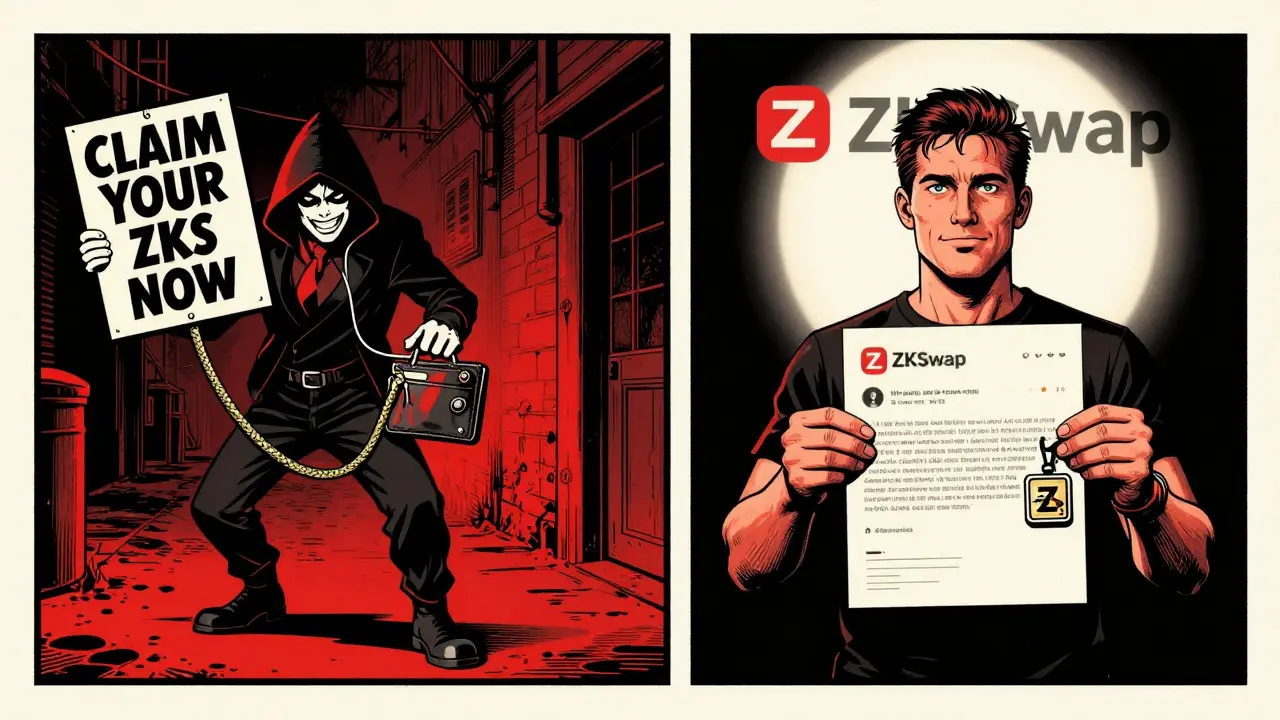
If someone messages you on Telegram or Twitter claiming you’re eligible for a “ZKSwap V3 airdrop” in 2026, it’s a scam. The campaign ended over four years ago. Any site asking for your private key or wallet seed phrase to “claim” ZKS tokens is stealing your funds.
Real airdrops don’t ask for your password. They don’t send you links. They don’t pressure you. They announce on official blogs, Twitter, or Discord - and they give clear instructions, deadlines, and eligibility rules.
Also, never confuse ZKS (ZKSwap’s token) with ZKB (ZKBase’s token). They’re separate. One was used for a testnet incentive. The other is part of a broader blockchain infrastructure. Mixing them up leads to confusion - and sometimes, lost money.
Lessons from the ZKSwap V3 Airdrop
- Quality over quantity: Writing detailed feedback is more valuable than just holding a token.
- Testnets are real opportunities: Early participation can earn you rewards - if you put in the work.
- Verify everything: Check official sources. Don’t trust random DMs or mirrors.
- Record your claims: Keep screenshots, links, and wallet addresses. You might need them for taxes.
The ZKSwap V3 airdrop didn’t make millionaires. But it did reward people who cared enough to dig in. That’s rare. And that’s what made it memorable.
Was the ZKSwap V3 airdrop real?
Yes, the ZKSwap V3 testnet airdrop was real and ran from December 1 to December 14, 2021. It was a community-driven feedback program that rewarded users who tested the new interface and wrote detailed reviews. A total of 50,000 ZKS tokens were distributed, with rewards going to 260 participants based on review quality. The airdrop was officially announced on ZKSwap’s blog and Twitter.
Did ZKBase distribute ZKB tokens in the V3 airdrop?
No. ZKBase is a separate blockchain ecosystem that uses ZKB tokens. The V3 airdrop was run by ZKSwap and distributed ZKS tokens only. There was no ZKB token distribution as part of this campaign. Confusion between ZKS and ZKB is common, but they are not interchangeable.
Can I still claim ZKS tokens from the V3 airdrop?
No. The ZKSwap V3 testnet airdrop concluded on December 23, 2021. All qualifying participants received their tokens by that date. Any website or service claiming to offer “late claims” or “unclaimed rewards” for this airdrop is a scam. Do not interact with such sites.
What’s the difference between ZKS and ZKB tokens?
ZKS is the native token of ZKSwap, used for governance, fee discounts, and liquidity mining on the decentralized exchange. ZKB is the utility token of ZKBase, the broader blockchain platform that includes ZKSwap as one of its components. ZKS is tied to trading activity; ZKB is tied to infrastructure usage. They are not the same, and one cannot be converted into the other.
How many ZKS tokens were distributed in the V3 airdrop?
A total of 50,000 ZKS tokens were distributed. This included 30,000 ZKS given to 60 top contributors (500 each) and 20,000 ZKS given to 200 honorable mentions (100 each). The rewards were based on the quality and depth of feedback, not on wallet size or activity level.
Did ZKSwap have other airdrops before V3?
Yes. In February 2021, ZKSwap conducted a major airdrop of 80 million ZKS tokens to existing holders across wallets, exchanges, and staking contracts. That was a one-time distribution to reward early adopters. The V3 testnet airdrop in December 2021 was a separate, smaller campaign focused on testing new features.


There are 19 Comments
Gaurav Mathur
Jeremy Lim
John Doyle
kelvin joseph-kanyin
Grace Mugambi
Crystal McCoun
Beth Trittschuh
Benjamin Andrew
Donna Patters
Michelle Cochran
Peggi shabaaz
Holly Perkins
Sanchita Nahar
Ben Pintilie
Sakshi Arora
Desiree Foo
Kaz Selbie
Robbi Hess
Keturah Hudson
Write a comment
Your email address will not be published. Required fields are marked *