

For years, the European Union was a regulatory patchwork for cryptocurrency. If you ran an exchange in France and wanted to serve clients in Germany, you faced a maze of conflicting national laws. That era ended on December 30, 2024. The Markets in Crypto-Assets (MiCA) is the EU's comprehensive regulatory framework for crypto-asset services is now fully operational. It brings clarity, but it also brings strict restrictions, especially if you are trying to operate across borders or from outside the bloc.
If you are a crypto service provider, understanding MiCA is no longer optional; it is your license to operate. This guide breaks down how the new rules work, who they affect, and what you need to do to stay compliant while serving customers across Europe.
How the EU Crypto Passport Works
The biggest change for businesses inside the EU is the introduction of the 'passport' system. Think of it like driving across Europe with one license. Previously, a company might have needed separate licenses in every country where it operated. Under MiCA, if you get authorized in your home member state, you can offer your services in all 27 EU countries.
This system applies to Crypto-Asset Service Providers (CASPs). To use this passport, you must submit specific information to the supervisory authority in your home country. They then notify the authorities in other member states where you plan to operate. This cuts down on red tape and lowers compliance costs significantly compared to the old fragmented approach.
However, this isn't a free pass. You still have to meet strict organizational standards. Your home regulator will check that you have proper governance, risk management systems, and enough capital to cover potential losses. Once approved, you benefit from consistent consumer protection standards across the entire union.
Strict Rules for Non-EU Providers
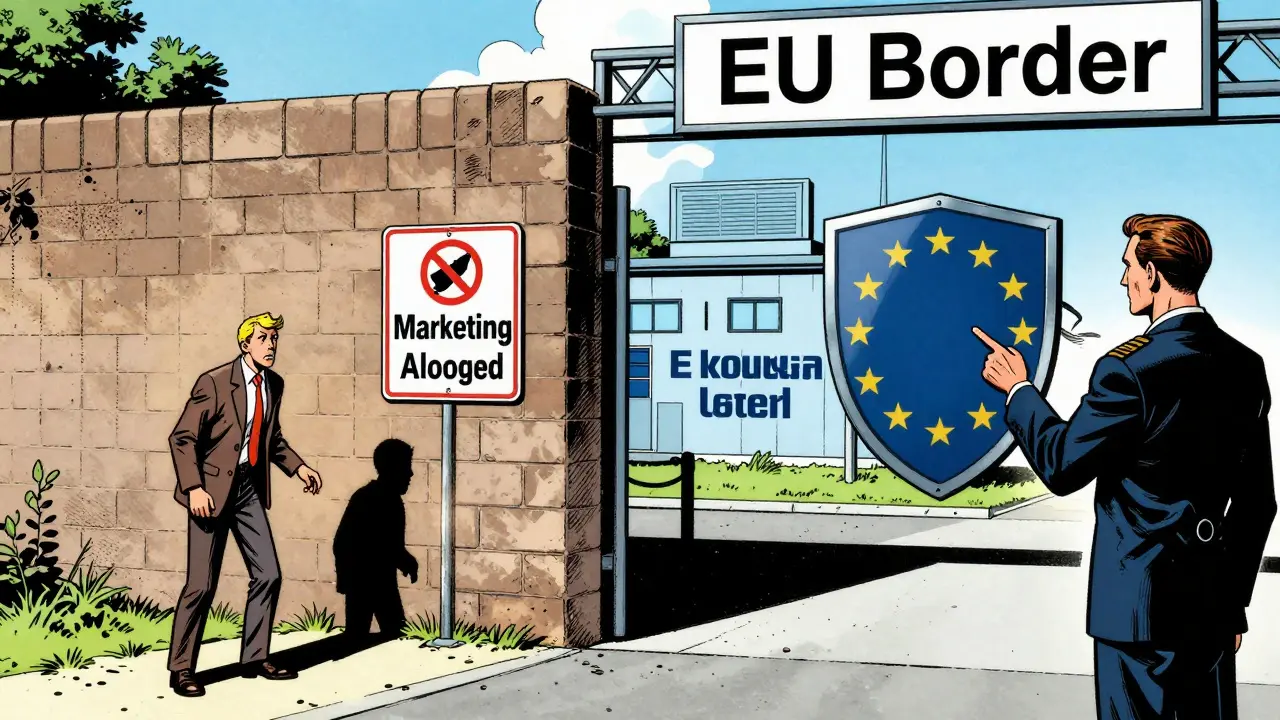
If your company is based outside the European Union, the landscape has shifted dramatically. The days of easily marketing to EU users from overseas are largely over. MiCA introduces tough restrictions for third-country providers.
To actively solicit EU clients or promote your services within the EU, you generally must establish a legal entity inside the EU and obtain full CASP authorization. There is a narrow exception known as 'reverse solicitation.' This allows non-EU firms to serve EU clients if those clients initiate the contact entirely on their own, without any prior marketing or promotion from the firm.
But don't count on reverse solicitation to save your business model. The European Securities and Markets Authority (ESMA) has issued guidelines that make this exception very hard to rely on. Any promotional activity, even subtle digital marketing, can disqualify you. National regulators also have the power to demand authorization from non-EU firms even in some cross-border scenarios. Most major international exchanges have already set up EU subsidiaries to keep their market access.
Who Needs a MiCA License?
MiCA is activity-based, not company-type-based. This means it doesn't matter if you are a pure-play crypto startup or a traditional bank adding crypto services. If you perform certain activities, you fall under the rules.
The most commonly affected groups include:
- Crypto Exchanges: Platforms that match buyers and sellers of crypto assets.
- Custodial Wallet Providers: Services that hold private keys on behalf of users. These face the same heavy obligations as centralized exchanges, including strict client asset protection measures.
- Token Issuers: Companies creating new crypto-assets must publish detailed white papers approved by regulators.
- Stablecoin Projects: Emitters of asset-referenced tokens (ARTs) and e-money tokens (EMTs) face extra scrutiny regarding reserve management and liquidity.
Even embedded finance platforms where crypto is just one part of the operation must comply if they offer these specific services to EU users.
Compliance Requirements for CASPs
Getting authorized is only the first step. Operating under MiCA requires ongoing adherence to rigorous standards. You cannot cut corners on safety or transparency.
| Requirement Area | Specific Obligation |
|---|---|
| Financial Resilience | Maintain minimum own funds and professional liability insurance policies. |
| Client Assets | Keep client funds separate from corporate funds; implement robust safekeeping procedures. |
| Market Conduct | Act honestly, fairly, and professionally; detect and report market abuse like insider trading. |
| AML/KYC | Implement customer due diligence; report suspicious transactions per EU Anti-Money Laundering Directive. |
| Outsourcing | Ensure third-party vendors meet security standards; maintain oversight of outsourced critical functions. |
You also need strong IT security and operational resilience plans. Regulators want to know that your systems can withstand cyberattacks and technical failures without losing user data or funds.
The "Significant" Provider Tier
Not all CASPs are treated equally. MiCA creates a special category for 'significant' crypto-asset service providers. If your platform serves at least 15 million active users annually within the EU, you are flagged as significant.
Being labeled 'significant' means extra supervision. You must report directly to ESMA, not just your local national authority. This tier is designed for large-scale platforms that pose systemic risks to the financial stability of the union. Expect more frequent stress tests, stricter remuneration policies for staff, and deeper audits of your governance structures.

Implementation Timeline and Current Status
MiCA rolled out in two phases. The first phase, covering stablecoins (ARTs and EMTs), started on June 30, 2024. The second phase, which covers the broader range of CASPs and other crypto-assets, became applicable on December 30, 2024.
As of early 2026, the framework is live. However, implementation details vary slightly because some member states adopted shorter transitional periods than the standard 18 months allowed. Fifteen EU countries chose faster timelines, creating a complex map of effective dates for legacy providers. New entrants should assume the full rules apply immediately upon application.
The European Commission has also released delegated acts detailing technical requirements for things like stress testing and qualified holdings. These documents provide the granular instructions needed to build compliant internal processes.
Impact on the Market
The goal of MiCA is to create a level playing field. By harmonizing rules, the EU hopes to encourage innovation while protecting consumers. Early signs suggest it is working to reduce fragmentation. Companies can now scale across Europe without navigating 27 different legal systems.
However, there is a cost. Compliance is expensive. Legal fees, technology upgrades for AML monitoring, and capital reserves eat into margins. Industry experts note that this may favor larger, well-funded incumbents over small startups. Smaller players might struggle to afford the necessary infrastructure, potentially reducing competition in niche segments.
Despite these hurdles, many view MiCA as a positive step. Clear rules attract institutional investors who previously stayed away due to regulatory uncertainty. The EU is positioning itself as a global leader in crypto regulation, setting standards that other jurisdictions may follow.
Practical Next Steps for Businesses
If you are planning to enter the EU market or expand existing operations, here is what you should prioritize:
- Assess Your Activities: Determine if your services fall under CASP definitions. If yes, you need authorization.
- Choose a Home State: Select the EU member state where you will seek initial licensing. Consider the regulator's reputation and efficiency.
- Build Compliance Infrastructure: Invest in KYC/AML tools, secure custody solutions, and transparent reporting mechanisms.
- Review Marketing Materials: Ensure all promotions comply with disclosure rules. Avoid misleading claims about returns or risks.
- Monitor Regulatory Updates: Follow ESMA guidelines and national authority communications closely, as technical standards evolve.
For non-EU firms, seriously consider establishing an EU subsidiary. Relying on reverse solicitation is risky and likely unsustainable for growth-focused businesses.
Can I still offer crypto services in the EU from outside the bloc?
Only under very limited conditions. You must either establish an EU-authorized entity or rely on 'reverse solicitation,' where EU clients initiate contact without any prior marketing from you. ESMA guidelines make reverse solicitation difficult to prove, so most serious providers set up local subsidiaries.
When did MiCA become fully effective for crypto exchanges?
The second phase of MiCA, covering Crypto-Asset Service Providers (CASPs) like exchanges, became applicable on December 30, 2024. Stablecoin rules had already started on June 30, 2024.
What is the EU crypto passport?
It is a mechanism allowing a CASP authorized in one EU member state to provide services across all 27 EU countries without needing separate licenses in each nation. It simplifies cross-border expansion significantly.
Are custodial wallets regulated differently than exchanges?
No. Custodial wallet providers face identical obligations to centralized exchanges under MiCA, including strict client asset protection, operational resilience, and disclosure requirements.
Who is considered a 'significant' crypto-asset service provider?
A CASP is deemed significant if it serves at least 15 million active users annually within the EU. These entities face enhanced supervision, direct reporting to ESMA, and stricter prudential requirements.
Does MiCA replace national AML laws?
No. MiCA complements existing EU Anti-Money Laundering Directives. CASPs must still adhere to national AML regulations, including customer due diligence and suspicious transaction reporting.




There are 15 Comments
mark valmart
I really feel for the small startups trying to navigate this mess because it seems like the big guys are going to eat them alive with all these compliance costs. It is just sad to see innovation get crushed by bureaucracy when we could have had a more open market if they just let people experiment a bit more without so much fear of getting sued or shut down overnight.
Crystal Davis
You clearly don't understand how financial systems actually work because MiCA isn't crushing innovation it's preventing another Mt Gox disaster from wiping out retail investors who have no idea what custody means. The passport system is brilliant for reducing fragmentation and anyone complaining about costs is just a lazy operator who refuses to build proper risk management frameworks into their business model from day one instead of treating crypto like a casino.
Christina Pearce
That is a very strong perspective Crystal and I can see why you would feel that way given the history of exchanges failing. I am curious though if you think the reverse solicitation rule is actually enforceable in practice or if it will just become a gray area where companies try to hide behind technicalities while still marketing subtly to EU users through social media channels that blur the line between organic growth and active promotion?
Barclay Chantel
It is absolutely pathetic that we are allowing these digital gambling dens to operate under the guise of 'financial innovation' when they are nothing more than unregulated casinos designed to fleece the working class. The pretentious elites in Brussels think they are saving us but they are just creating a monopoly for the banks that already own everything and now they want a cut of the crypto pie too which proves they never cared about decentralization at all just control.
Miss Masquer
As someone who has been following the regulatory landscape across different continents for quite some time now, I find it fascinating how the European approach contrasts sharply with the fragmented and often contradictory stances taken by other major economies which creates a unique opportunity for cross-border collaboration among compliant entities who are willing to invest in the necessary infrastructure to meet these high standards of transparency and security that ultimately benefit the consumer experience in the long run even if the initial setup feels dauntingly complex and expensive for smaller players who might otherwise struggle to compete on a level playing field.
Joshua Alcover
The ontological implications of state-sanctioned cryptographic validation mechanisms necessitate a rigorous examination of the epistemological boundaries between sovereign monetary policy and decentralized ledger technologies, thereby rendering the current MiCA framework insufficiently robust in addressing the fundamental dichotomy between nationalistic fiscal autonomy and the borderless nature of blockchain ecosystems which inherently challenge the traditional paradigms of jurisdictional authority and regulatory oversight.
Diana Morris
stop whining and start complying because the rules are clear and if you cant afford the legal fees then maybe you shouldnt be in this business anyway its simple as that and everyone needs to step up their game now
Dianne Wright
i feel so drained just reading all this talk about regulations because it seems like nobody cares about the actual people using these services and how stressful it is to keep up with changing rules that affect your daily life i just want to trade my coins without worrying about whether my exchange is licensed in france or germany but here we are dealing with bureaucrats who dont understand technology at all
kamal ifrani
This whole situation is a complete disaster for anyone who values freedom because the government is basically telling you that you need permission to store your own money which is insane and shows how much they hate individual liberty. The fact that they are targeting custodial wallets specifically proves they want to monitor every single transaction you make and report it to some central database so they can tax you and control your spending habits which is exactly what totalitarian regimes do.
saradee dee
I totally agree with the concern about monitoring but I also think having some basic rules helps protect regular people from scams and fraud which happens way too often in the crypto space. It would be great if we could find a middle ground where privacy is respected but safety is also ensured so that honest users can use these tools without fear of losing everything to bad actors or incompetent platforms.
Craig Swanson
Listen up folks because if you are serious about building a sustainable business in Europe you need to get your house in order right now or you will get left behind by the competitors who are already adapting to these new standards. I have seen too many talented founders fail because they ignored compliance until it was too late and now they are scrambling to fix problems that could have been avoided with a little bit of foresight and professional advice from experts who know the landscape inside out.
Bill Gunn
Hey team! 🚀 Just wanted to drop some knowledge bombs here 💣 The passport system is actually a huge win for scalability if you play your cards right 🃏 Think of it like getting a VIP pass to the entire EU club 🎟️ Once you are approved in one country you can expand everywhere else without jumping through hoops in each nation 🌍 It saves so much time and money in the long run 📉 Plus it makes your brand look super legit to institutional investors who love seeing that regulatory stamp of approval ✅ So don't sweat the initial cost it pays off big time later on! 💰🔥
Dana Rapoport
One must consider the philosophical shift occurring here where trust is being moved from code to institutions which fundamentally changes the ethos of the original cryptocurrency movement. While efficiency and consumer protection are noble goals, the centralization of authority under ESMA raises questions about the future resilience of decentralized networks against systemic failures that could arise from over-regulation.
Hadleigh Edwards
I remain optimistic that this regulation will eventually lead to a more mature and stable market where institutional capital can flow freely without the fear of sudden bans or seizures which has plagued the industry for years and hindered its potential to truly revolutionize finance on a global scale. The short-term pain of compliance costs is likely to be outweighed by the long-term benefits of increased legitimacy and broader adoption among mainstream consumers who previously stayed away due to uncertainty.
trisya hazriyana
oh wow another bunch of suits trying to micromanage our lives with their jargon-filled nonsense like 'prudential requirements' and 'systemic risks' as if any of us care about those buzzwords when all we want is to move our money around without filling out a novel length application form every time we want to withdraw cash from an atm
Write a comment
Your email address will not be published. Required fields are marked *