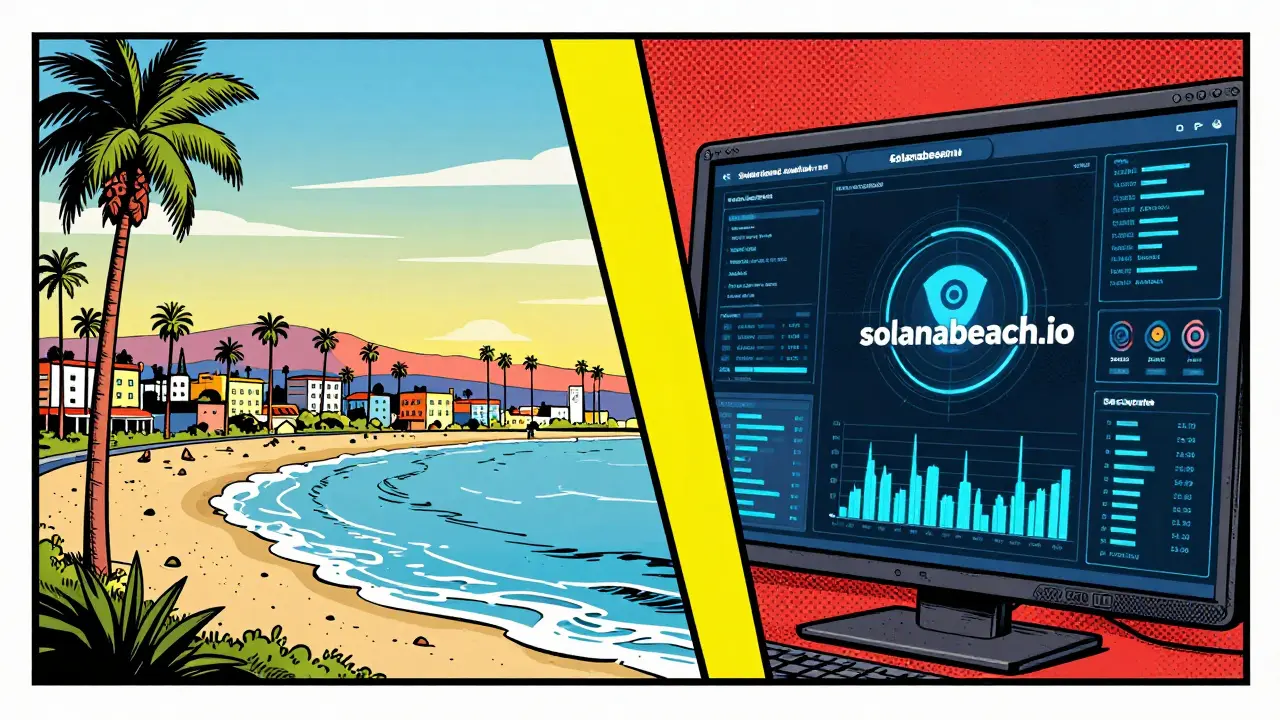
There is a massive difference between the city that inspired the Solana blockchain and the tiny, risky token named after it. If you are looking for Solana Beach, you might actually be looking for two completely different things. One is a trusted analytics tool used by serious investors to track validator performance on the Solana network. The other is a micro-cap meme coin with the ticker SOLANA or BEACH that has no official connection to the Solana Foundation.
This article cuts through the confusion. We will break down exactly what the Solana Beach token is, why its price data is all over the place, and how to tell it apart from the legitimate analytics platform. You need to know this distinction before you risk even a single dollar in a decentralized exchange swap.
The Name Game: City, Tool, and Token
To understand this asset, you first have to untangle the history. The Solana blockchain itself was named after Solana Beach, a coastal city in San Diego County, California. Anatoly Yakovenko, the co-founder of Solana Labs, lived there while working at Qualcomm. He chose the name because he liked the vibe of the place. That’s the origin story.
Then came the tools. A popular website called solanabeach.io launched as a real-time network monitor. It helps users check validator health, stake distributions, and transaction speeds. This site is run by Staking Facilities and has been active since 2020. It is a utility, not an investment product. There is no token associated with this dashboard.
Finally, we have the token. The Solana Beach cryptocurrency (often listed as SOLANA) is a standard SPL token deployed on the Solana blockchain. Its contract address is Ho2FQgg65oM1zpYuEnC8fULpBnWtqRCTrXRP56AeyCci. This token tries to ride the coattails of the brand recognition from the city and the analytics site. However, every major listing-from CoinMarketCap to Coinbase-makes it clear: there is no official affiliation with Solana Labs, the Solana Foundation, or the creators of solanabeach.io.
Tokenomics Chaos: Why the Numbers Don't Add Up
If you look up Solana Beach on different tracking sites, you will see conflicting data that makes your head spin. This is typical for illiquid micro-cap tokens where metadata is poorly maintained.
| Tracker | Total Supply Claimed | Max Supply Claimed | Market Cap Range |
|---|---|---|---|
| CoinMarketCap | 1,000,000,000 | N/A | $14,540 |
| CoinGecko | 1,000,000,000 | 100,000,000 | ~$13,890 |
| Coinbase | 1,000,000,000 | 100,000,000 | $35,670 |
Notice the math error on Coinbase? They list a circulating supply of nearly 990 million but claim that represents 990% of a max supply of 100 million. That is impossible. CoinGecko also lists a max supply of 100 million while showing a total supply of 1 billion. These discrepancies suggest that the project team never submitted accurate metadata, or worse, that the token mint authority was not properly renounced. Without a verified whitepaper or audited smart contract, you are guessing about how many tokens exist.
Price History and Liquidity Traps
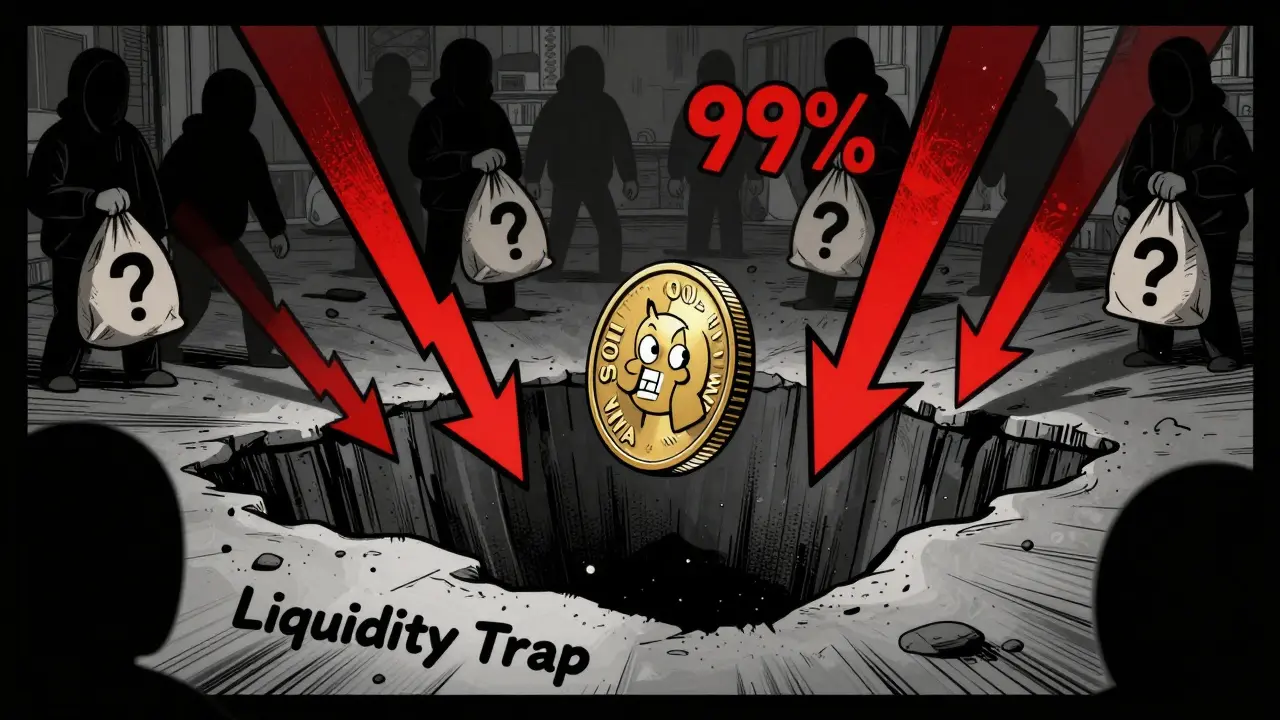
The price action for Solana Beach tells a grim story of speculative hype followed by abandonment. According to CoinGecko, the token hit an all-time high of $0.003801 in December 2023. By early 2025, it had crashed roughly 99% from that peak, hovering around $0.000013 to $0.00004.
Liquidity is virtually non-existent. Daily trading volumes often sit between $0 and $200 USD. Compare this to major Solana meme coins like BONK or dogwifhat (WIF), which trade hundreds of millions of dollars daily. With such thin liquidity, a single sell order of $500 could wipe out the entire order book on platforms like Raydium. This creates extreme slippage risk. If you buy in, you might find yourself unable to sell without losing most of your value.
No Utility, No Roadmap, Just Hype
Unlike established projects that offer governance rights, staking rewards, or access to specific applications, Solana Beach offers nothing concrete. There is no DAO. There is no revenue-sharing model. There is no active development team listed on GitHub. The only "utility" mentioned in marketing copy is the narrative connection to the city of Solana Beach.
In the world of crypto, assets without utility rely entirely on community sentiment and new buyers to keep the price afloat. When the novelty wears off-and for Solana Beach, it seems to have already-the price tends to drift toward zero. Analysts predict flat or negative returns through 2027, noting that without a catalyst, the token lacks any fundamental reason to appreciate in value.
How to Trade Solana Beach (If You Must)
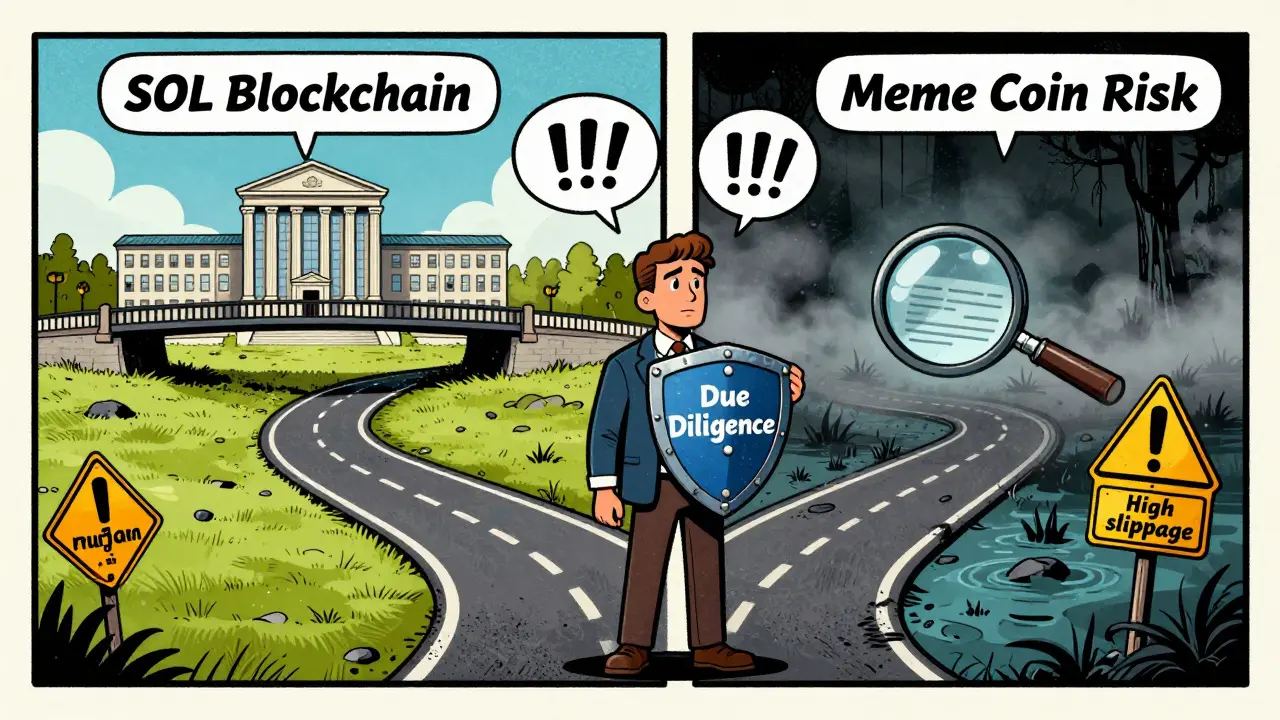
If you still decide to experiment with this token, treat it as a lottery ticket, not an investment. Here is the safest way to approach it:
- Use a Non-Custodial Wallet: Install Phantom or Solflare. Never connect your main wallet holding significant funds to unknown DEX interfaces.
- Fund with SOL: Buy SOL on a reputable exchange like Binance or Coinbase and withdraw it to your wallet. Transaction fees on Solana are fractions of a cent, making small trades feasible.
- Verify the Contract Address: Go to Jupiter or Raydium. Paste the exact contract address:
Ho2FQgg65oM1zpYuEnC8fULpBnWtqRCTrXRP56AeyCci. Do not trust search results alone; scammers create fake tokens with similar names. - Set High Slippage Tolerance: Because the pool is so shallow, you may need to set slippage to 5-20% to execute a trade. Be prepared to pay more than the quoted price.
- Start Tiny: Test with $1 or $5 first. See if the swap works and if you can sell back to SOL. If you get stuck, you now know the risk before committing real capital.
Risks You Cannot Ignore
The biggest risk here isn't just market volatility; it's structural vulnerability. Since the team is anonymous and the tokenomics are unclear, the possibility of a "rug pull" exists. This means the developers could hold a large portion of the supply and dump it all at once, crashing the price to zero. Alternatively, they could retain the ability to freeze wallets or mint new tokens, diluting your holdings instantly.
Regulatory bodies like the SEC and FCA have issued general warnings about meme coins lacking intrinsic value. Solana Beach fits squarely into this high-risk category. Unlike SOL, which is backed by a robust ecosystem and institutional custody solutions, Solana Beach operates in the shadows of the decentralized web. There is no customer support, no recourse for lost funds, and no insurance.
Is Solana Beach the same as the Solana blockchain?
No. Solana (SOL) is the native currency of the Solana blockchain network. Solana Beach (SOLANA) is a separate, unrelated meme token built on top of that network. They share a name but have no technical or financial connection.
Can I buy Solana Beach on Coinbase?
You cannot buy it directly on Coinbase Exchange. Coinbase only provides a price tracker page for informational purposes. To buy SOLANA, you must use a decentralized exchange like Raydium or Jupiter via a self-custody wallet.
Is Solana Beach a scam?
While not necessarily a fraudulent scheme in the legal sense, it exhibits many characteristics of high-risk speculative assets. It has no utility, no transparent team, and conflicting supply data. The lack of official affiliation with the Solana Foundation means you have no guarantee of legitimacy or future support.
Why is the price of Solana Beach so low?
The price is low due to extreme oversupply and lack of demand. With billions of tokens in circulation and minimal trading volume, there is little buying pressure to support the price. It has dropped over 99% from its all-time high, indicating a loss of investor interest.
What is the contract address for Solana Beach?
The verified contract address for the Solana Beach token is Ho2FQgg65oM1zpYuEnC8fULpBnWtqRCTrXRP56AeyCci. Always double-check this address when swapping on DEXs to avoid counterfeit tokens.